Playground equipment that performs well in a mild coastal park can fail in a single northern winter. For Canadian buyers — municipalities, school boards, landscape contractors, parks departments, and childcare operators in cold-climate zones — CSA Z614 is not a paperwork formality. It is the baseline around which material selection, anchoring, surfacing, clearances, and documentation should be organized [1]. This guide explains what cold-weather verification looks like in practice, which failure modes matter most when temperatures stay below freezing, and what to request before committing to an order.
What CSA Z614 Actually Requires for Cold-Climate Projects
CSA Z614:20 establishes requirements for children’s playspaces and equipment in Canada, covering structural integrity, head and neck entrapment, protrusions, impact attenuation, and installation [1]. Where the standard is adopted by provincial or municipal regulation, it becomes the enforceable technical reference for public playgrounds.
Cold-climate compliance is not a separate certificate. It is the result of demonstrating that the materials, connections, moving parts, and surfacing continue to meet the standard after exposure to the temperature range, moisture cycles, snow accumulation, and freeze-thaw conditions of the installation site.
A northern order should therefore be evaluated against the same clauses as any CSA Z614 project, but with low-temperature behavior given extra attention in the technical file and site validation process.
Cold-Weather Failure Modes Most Quotes Miss
Many cold-climate failures are not visible at the time of purchase. They appear in the second or third winter as cracked plastic shells, seized bearings, loosened fasteners, or surfacing that no longer absorbs impact as expected.
The most important failure modes to confirm include:
- Plastic embrittlement in slides, panels, seats, and connection covers when temperatures fall below the design range.
- Steel weld and fastener behavior under thermal contraction and repeated freeze-thaw cycles.
- Sealed bearing performance when grease thickens and ice forms in exposed joints.
- Impact attenuation changes in rubber tiles, poured-in-place systems, and engineered wood fiber when frozen.
- Snow and ice load on platforms, roofs, tunnels, shade elements, and overhead features.
- Coating adhesion and corrosion from road salt, slush, and repeated wet-dry exposure.
Price-driven comparisons often overlook these failure modes because they are invisible at bidding stage. They show up later as maintenance closures, replacement parts, and unsafe play areas.
Price-driven comparisons often overlook cold-climate failures because they are invisible at purchase. <Playground Equipment Balancing Price and Quality for Lasting Value covers how lifecycle cost can be more important than the lowest initial quote.
Verification Questions to Ask Before Shipment
Suppliers should be able to provide an engineering file, not just a certificate number. For northern orders, ask for the following before production begins:
| Verification area | What to request | Cold-climate issue to confirm |
|---|---|---|
| Steel frame and welds | Material certificates, Charpy impact test reports at the design low temperature [5] | Brittle fracture risk in welded joints |
| Plastic components | ISO 178 flexural test report or equivalent low-temperature impact data [6] | Crack tendency below design cold-service limits |
| UV and weathering | ISO 4892-2 or equivalent accelerated aging evidence [3] | Surface degradation after repeated sun and cold exposure |
| Moving parts | Sealed bearing specification, grease temperature range, clearance data | Rotation loss, seizing, or increased resistance in ice |
| Coatings and corrosion | ISO 9227 salt spray test and cold-adhesion evidence [4] | Salt-laden slush, coating lifting, hidden corrosion |
| Surfacing | CSA Z614-compliant surfacing with frozen-condition impact test evidence [1] | Hardness increase and reduced shock absorption when cold |
Test reports should be specific to the actual model being purchased, not a generic family certificate. This is especially important when a supplier serves multiple international markets and submits EN 1176 or ASTM F1487 documents by default.
Cross-border suppliers often present EN 1176 or ASTM F1487 documents as proof of safety. <Playground Turntable Safety EN1176 vs ASTM Standards Unpacked covers the clauses and test thresholds Canadian buyers still need to verify under CSA Z614.
Specifying Equipment for Northern Climate Orders
The specification should not only list the equipment types; it should state the site design temperature, expected snow load, and exposure conditions. This allows the supplier to confirm whether standard components are sufficient or whether material adjustments are required.
Recommended specification points include:
- Hot-dip galvanized steel frames with full weld coverage and sealed tube ends.
- UV-stabilized plastics with low-temperature impact data suitable for the regional design temperature.
- Stainless steel or coated hardware at high-corrosion points such as bearings, springs, and connection plates.
- Powder coating or paint systems with documented cold-adhesion and salt-spray performance.
- Roofed or covered elements designed for the project’s snow load rather than a generic value [7].
- Moving joints specified with cold-service grease and debris-resistant seals.
Do not accept a simple statement that the equipment is “suitable for Canada” without the supporting material and test documentation. The relevant evidence must show that performance holds at the temperatures the site will actually experience.
Installation, Surfacing, and Drainage Decisions
CSA Z614 compliance is not achieved by the equipment alone. The installation and surfacing system also affect structural behavior, clearance, and fall protection.
For northern projects, review these site conditions before finalizing the order:
- Footing depth relative to local frost line and soil bearing capacity.
- Drainage plans that prevent standing water from freezing under equipment.
- Clearances for moving parts when snow accumulation changes the play surface height.
- Edge treatment and transition areas between equipment and frozen surfacing.
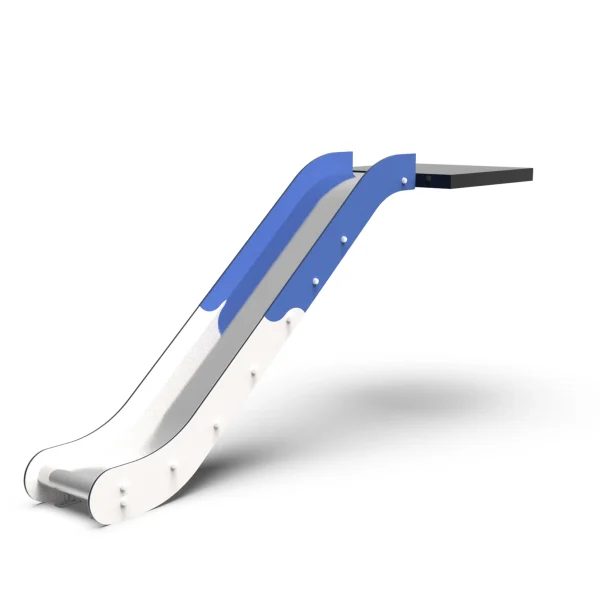
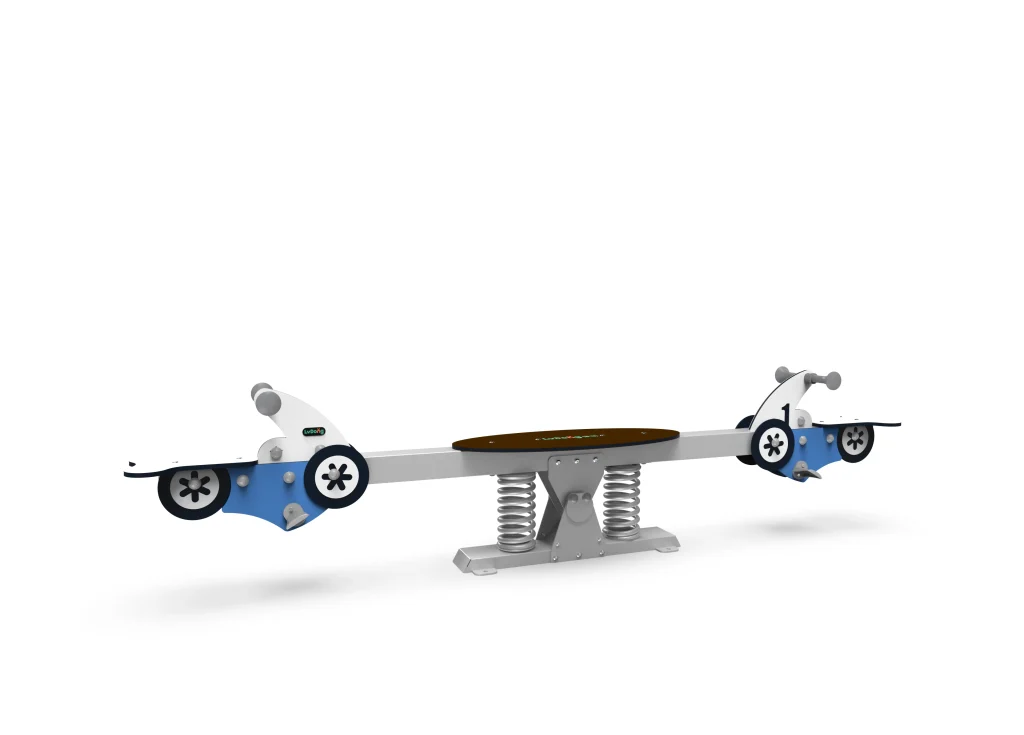
- Snow storage and maintenance access around platforms, slides, and spring equipment.
Surfacing choice should be evaluated with frozen-condition impact test evidence. Some materials that meet impact attenuation requirements at moderate temperatures can become much harder in freezing conditions, reducing their protective performance. The surfacing manufacturer should provide test data for the expected service temperature range, not only room-temperature test results [1].
Talk to a Cold-Climate Compliance Specialist
Send your site’s design temperature range, snow load data, and the equipment list you are evaluating. Our engineering team will map each item against CSA Z614 documentation and tell you which low-temperature evidence is realistic before production. Contact: [email protected] / WhatsApp: +8613915684545.
Five Checkpoints for Bid Evaluation
When comparing suppliers for a northern Canadian order, use the following checklist:
- Confirm the supplier can provide model-specific CSA Z614 test reports, not only general compliance statements.
- Ask for material certificates and low-temperature test data for all major plastic and steel components.
- Review the corrosion protection system and the maintenance requirements for moving parts.
- Obtain written confirmation of the design snow load and wind load assumptions used for any elevated or covered structure [7].
- Require installation details that address frost depth, drainage, and frozen-surfacing performance.
Site-specific design review is one of the cheapest risk filters in a cold-climate project. It can catch layout, drainage, and clearances problems before equipment is produced, rather than after it arrives on site.
Northern site layout affects drainage, snow clearing, and foundation design as much as equipment selection. <Free 3D Design for Community Park Playground Equipment Solutions covers how early design review can reduce cold-climate installation risk.
Request a Cold-Climate Verification Pack
Before you finalize an order, ask for a verification pack containing the relevant compliance statement, material batch certificates, low-temperature test evidence, coating and corrosion records, and the model-specific installation manual. This package should be organized so the site engineer, installer, and maintenance team can all review the cold-climate assumptions.
Email [email protected] or WhatsApp +8613915684545 with the required temperature range, snow load, target surfacing, and project type. Mention whether the playground is municipal, school-based, childcare, or community housing so the engineering review starts from the correct code path.
FAQ
Does CSA Z614 apply to every Canadian playground?
CSA Z614 applies where it is adopted by the relevant province, municipality, school board, or facility requirement. Many Canadian public playgrounds are required to meet CSA Z614 through regulation or procurement policy, but private or indoor facilities may follow different requirements. It is important to confirm the applicable edition and local amendments before specifying equipment [1].
What low-temperature range should I specify?
The range should come from regional climate data and the applicable building code, not from a supplier’s default wording. Northern Canadian projects often evaluate equipment for service temperatures of −30°C or colder, but no universal temperature applies to every site. Snow load and freeze-thaw frequency should also be stated separately [7].
Are EN 1176 or ASTM test reports enough for a Canadian order?
They are useful reference documents, but they do not automatically replace CSA Z614 verification. Standards differ in test methods, thresholds, and documentation expectations. Canadian buyers should confirm that the specific model and installation details meet CSA Z614 requirements for the intended site, rather than assuming equivalence [1][2].
What surfacing works best in northern climates?
There is no single best material. Engineered wood fiber, rubber tiles, and poured-in-place systems all require frozen-condition impact evaluation. The key is to obtain impact attenuation test evidence for the expected service temperature range, because surface hardness and shock absorption can change substantially when frozen [1].
How can a supplier prove cold-weather suitability without a separate cold-climate certificate?
A supplier can provide material certificates, low-temperature impact or flexural test data, corrosion test reports, and a site-specific engineering review. For structural steel, Charpy impact testing at the project design temperature is a common verification method. For plastics, flexural or impact testing at low temperature supports the material selection [5][6]. The documentation should be tied to the actual production models and the site’s design loads [7].
References
[1] CSA Group, CSA Z614:20 — Children’s playspaces and equipment, Toronto, ON, Canada, 2020.
[2] ASTM International, ASTM F1487-21 — Standard Consumer Safety Performance Specification for Playground Equipment for Public Use, West Conshohocken, PA, USA, 2021.
[3] ISO, ISO 4892-2:2013 — Plastics — Methods of exposure to laboratory light sources — Part 2: Xenon-arc lamps, Geneva, Switzerland, 2013.
[4] ISO, ISO 9227:2022 — Corrosion tests in artificial atmospheres — Salt spray tests, Geneva, Switzerland, 2022.
[5] ISO, ISO 148-1:2016 — Metallic materials — Charpy pendulum impact test — Part 1: Test method, Geneva, Switzerland, 2016.
[6] ISO, ISO 178:2019 — Plastics — Determination of flexural properties, Geneva, Switzerland, 2019.
[7] National Research Council Canada, National Building Code of Canada 2020, Ottawa, ON, Canada, 2020.
If you’re interested, check out these related articles:
Stand and Spin Equipment Essential Maintenance Safety Guide
Choosing a Soft Play Specialist Indoor Playground Equipment Expertise
Kindergarten Outdoor Play Equipment Strategic Upgrade Priorities
Advanced Tunnel Slide Support Structure and Ventilation Design
Annual Maintenance Calendar for Outdoor Play Equipment A Guide
To discuss cold-weather equipment selection, contact the LvDong team with your project requirements.