At Suzhou LvDong Amusement Equipment Co., Ltd., we’ve learned something over ten years of building playgrounds that might sound obvious but gets overlooked constantly: the engineering behind a tunnel slide matters as much as the slide itself. Support structures and ventilation aren’t afterthoughts. They’re what separate equipment that lasts from equipment that becomes a liability. Every project we take on starts with this understanding, and it shapes every decision from first sketch to final bolt.
Engineering Principles for Tunnel Slide Structural Integrity
Getting structural integrity right means accounting for forces that aren’t always intuitive. Static loads are straightforward enough—the weight of steel, plastic, and concrete sitting there day after day. Dynamic loads are trickier. Multiple kids sliding simultaneously, sudden stops, the accumulated vibration of thousands of uses over years. We run finite element analysis to map stress points across the entire structure, identifying weak spots before they become problems. Material science guides every choice we make. The support framework needs to distribute forces evenly rather than concentrating stress in predictable failure zones. This systematic approach keeps our playground equipment design aligned with the strictest slide safety standards, though real-world conditions always teach us something new.
Design Considerations for Support Frameworks
Support framework design demands a kind of paranoid attention to detail that pays off over decades of use. Structural geometries matter—truss systems handle certain load profiles better than column-and-beam configurations, depending on the installation context. Foundation selection depends heavily on local soil conditions. Sandy soil near a coastal park requires different engineering than compacted clay in an urban setting. Shallow footings work in some situations; deep pile foundations become necessary in others. Anchoring methods prevent the subtle shifts that accumulate into structural compromise. Thermal expansion gets factored in because materials expand and contract with temperature swings, and ignoring this leads to fatigue cracks. Every playground with tunnel slide we install reflects these considerations, though each site presents its own puzzles.
Optimizing Material Selection for Durability and Safety
Material selection involves trade-offs that don’t always have obvious answers. Tensile strength, impact resistance, fatigue life—these properties interact in ways that require careful analysis. High-grade galvanized steel or stainless steel handles structural loads while resisting the corrosion that coastal or humid environments accelerate. UV-stabilized rotational molded plastics or fiberglass work well for slide bodies, maintaining color and surface integrity under constant sun exposure. Fasteners seem like small details until a corroded bolt fails. Stainless steel fasteners cost more upfront but eliminate a common failure point. We also think about maintenance accessibility—materials that are difficult to clean or inspect tend to get neglected, shortening equipment lifespan and creating compliance gaps with slide safety standards.
Integrated Ventilation Systems for Enclosed Slides
Ventilation in enclosed slides addresses problems that become apparent only after installation, when complaints start rolling in. Stale air accumulates faster than most people expect. Temperature climbs on sunny days. Humidity builds up and creates slippery surfaces. We calculate air exchange rates based on slide volume and expected user density, aiming for continuous fresh air circulation. Temperature regulation combines passive airflow design with active heating or cooling where conditions demand it. Humidity control prevents the condensation that makes surfaces uncomfortable and potentially hazardous. Our ventilation system design keeps internal environments within acceptable ranges, meeting playground equipment design guidelines while solving practical problems that affect daily operations.
Preventing Heat Buildup and Ensuring Air Quality
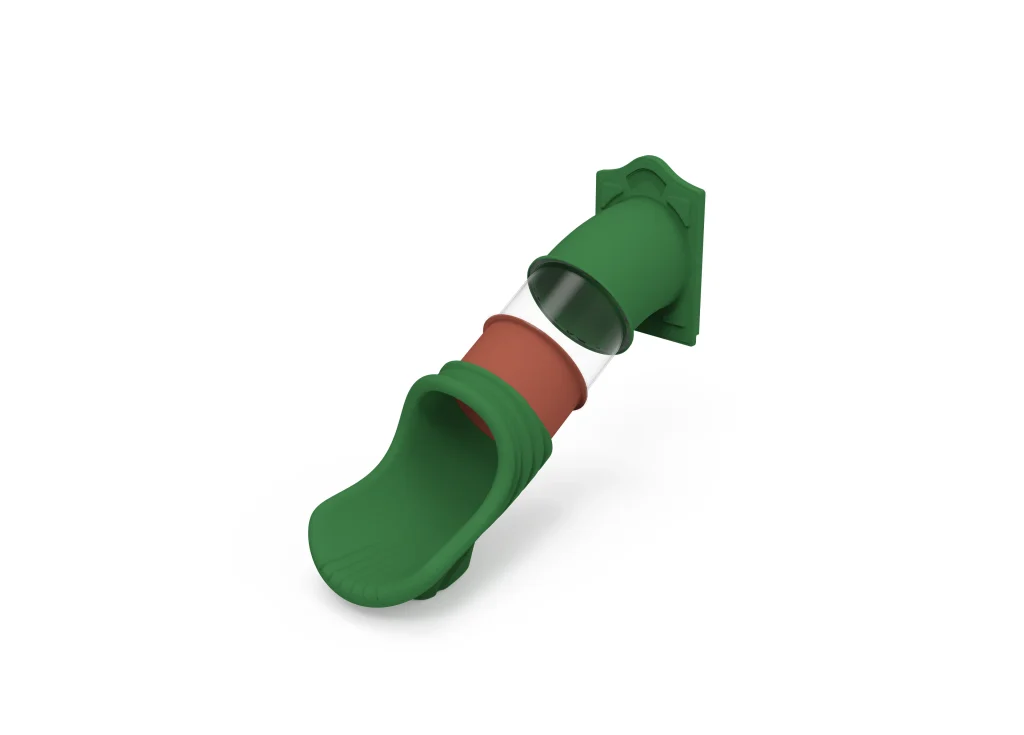
Heat buildup in enclosed slides can make equipment unusable during peak summer hours—a problem that’s easier to prevent than fix after installation. Passive ventilation uses strategically positioned vents and natural convection patterns to move air without mechanical assistance. Active systems add fans with variable speed controls, forcing air circulation when passive methods fall short. Ducting design affects efficiency more than most clients initially realize; turbulence and pressure drops reduce airflow and increase energy costs. Air filtration removes dust, pollen, and particulates that accumulate in enclosed spaces. These combined approaches create environments where kids actually want to play, which matters for any childrens tunnel slide playground that needs to justify its investment through consistent use.
Compliance and Safety Standards for Tunnel Slides
Safety standards exist because people got hurt, and we treat them accordingly. EN 1176 European Safety Standard and GB/T 34272-2017 Chinese National Standard establish requirements for structural load bearing, material properties, fall heights, and dimensional tolerances. Certification from recognized bodies provides external validation, though we’ve found that meeting minimum requirements rarely produces the best outcomes. Our design and production processes incorporate industry best practices that often exceed regulatory benchmarks. This approach ensures our playground equipment slides satisfy inspectors while actually protecting the kids who use them—two goals that should be identical but sometimes diverge in practice.
Installation and Maintenance Best Practices
Installation quality determines whether good engineering translates into safe equipment. Our teams follow detailed protocols specifying assembly sequences, torque specifications, and anchoring procedures. Post-installation inspections verify that what got built matches what got designed. Routine inspection schedules catch wear patterns, damage, and emerging hazards before they escalate. Preventative maintenance includes cleaning, lubrication, and component replacement on predictable timelines. This proactive approach reduces emergency repairs and maintains continuous compliance with slide safety standards, though every installation teaches us something about what to watch for next time.
Future Innovations in Slide Engineering
Slide engineering keeps evolving, and we’re actively exploring what’s coming next. Smart materials that respond to environmental conditions or self-repair minor damage could change durability expectations significantly. IoT integration enables real-time monitoring of temperature, humidity, and air quality inside enclosed slides, feeding data that supports predictive maintenance and automatic ventilation adjustments. Sustainable design using recycled materials and energy-efficient systems addresses environmental concerns that clients increasingly prioritize. Our commercial playground slide development incorporates these innovations as they mature, balancing proven reliability against the potential of emerging technologies.
Partner with Suzhou LvDong for Advanced Amusement Solutions
Bring your amusement projects to life with Suzhou LvDong Amusement Equipment Co.,Ltd.’s expertise in tunnel slide support structure and ventilation design. Reach out for a consultation on custom, high-performance solutions built around your specific requirements. WHATSAPP:+8613915684545 | [email protected]
FAQs
What are the critical design considerations for tunnel slide support structures?
Support structure design requires comprehensive structural load bearing analysis, selection of weather-resistant materials, and compliance with international slide safety standards. Engineers account for dynamic loads from users, environmental exposure, and long-term integrity to produce installations that remain safe and functional over their intended lifespan.
How do ventilation systems prevent heat buildup and ensure air quality in enclosed slides?
Effective ventilation combines passive and active air circulation methods. Strategic vent placement, powered fans, and sometimes climate control equipment maintain air circulation in slides, prevent heat accumulation, and keep air fresh. These systems follow playground equipment design guidelines while solving practical comfort and safety problems.
What materials are best suited for durable and safe tunnel slide construction?
High-grade stainless steel works well for support structures, while UV-stabilized rotational molded plastics or fiberglass handle slide body requirements effectively. Corrosion-resistant fasteners prevent a common failure point. Material selection for slides balances durability, wear resistance, and compliance with slide safety standards against cost and maintenance considerations.
How does Suzhou LvDong ensure the structural integrity of its tunnel slide designs?
We ensure structural integrity through rigorous research and development, advanced engineering simulations, and standardized quality management. Our designs prioritize robust structural load bearing, appropriate material selection for slides, and compliance with global slide safety standards—reflecting over a decade of accumulated experience and continuous refinement.
Can Suzhou LvDong customize ventilation solutions for unique tunnel slide installations?
Yes. We specialize in integrated full-industry-chain services, including custom design work. Ventilation system designs can be tailored to specific environmental and operational requirements, ensuring optimal air circulation in slides and user comfort across diverse settings from municipal parks to cultural tourism destinations.