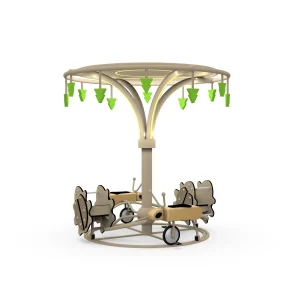
Playgrounds with continuous visitor flow expose a basic weakness in traditional merry-go-rounds: they are fun in short bursts, but they create pinch points, require near-constant supervision, and put heavy wear on exposed moving parts. A hurricane spinner is designed differently. It spreads children around a central rotation point, gives each user a secure position, and keeps the motion controlled enough for high-turnover play without sacrificing the spinning sensation children seek.
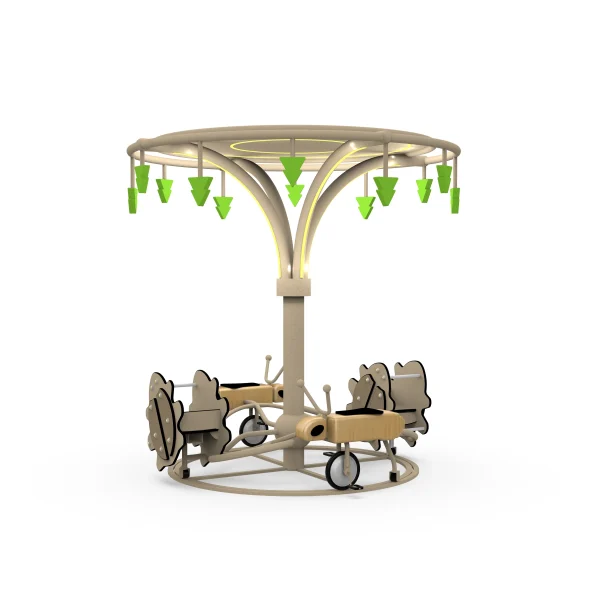
High-Traffic Parks Expose Standard Merry-Go-Round Weaknesses
Standard merry-go-rounds often rely on children pushing from the outside to build speed. In a busy park, that creates two problems. First, the children doing the pushing are frequently walking or running next to a moving platform, which increases the likelihood of collisions and awkward falls. Second, the number of children who can actually ride at one time is limited by the platform size and the availability of secure handholds.
When a playground handles hundreds of children across a peak afternoon, equipment that requires continuous teammate coordination tends to create waiting clusters. Operators then face a choice: assign staff to manage the queue, or accept that the equipment will be used in ways it was not designed for. The result is often accelerated wear and a higher risk of supervision gaps.
A hurricane spinner addresses the first part of that problem by giving each user a dedicated position—seated, standing, or gripping a stable handle—so rotation can be maintained without children running beside the platform. This does not eliminate supervision, but it reduces the number of high-risk movements that staff must monitor.
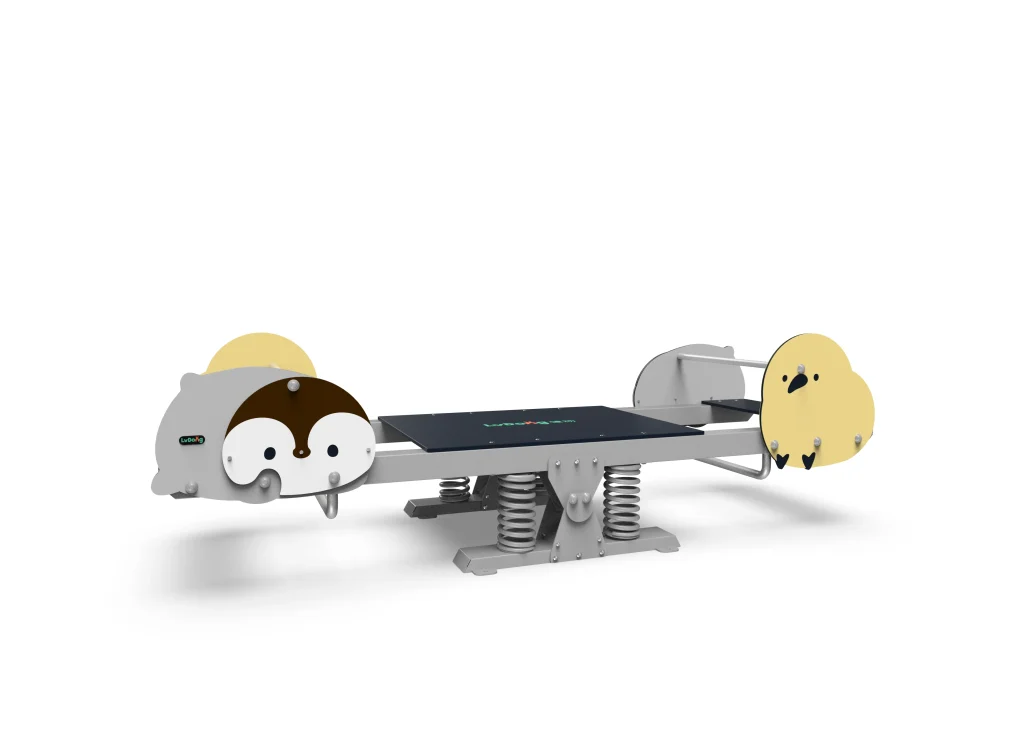
Capacity and Turnover: The Hurricane Spinner Advantage
The product configuration matters more than the category name. Multi-player spinning equipment in the LvDong range is specified for 6–10 children per unit depending on model, with an overall diameter of roughly 120–200 cm and a maximum fall height of 55–77 cm. Those figures translate into two practical benefits: more children can participate in each cycle, and the fall height remains low enough to simplify surfacing decisions.
The table below summarizes the operational difference in a high-traffic setting.
| Factor | Standard Merry-Go-Round | Hurricane Spinner |
|---|---|---|
| User position | Often mixed running and riding | Dedicated seat, stand, or handgrip position |
| Typical capacity | Limited by platform size and grip points | 6–10 children per unit |
| Rotation control | Depends on pushing force and weight distribution | Controlled rotation with stable frame support |
| Supervision burden | High during push-off and mount/dismount | Moderate, with fewer external running movements |
| Fall height | Varies widely by platform height | 55–77 cm depending on model |
The capacity advantage is not just about fitting more children. It is about shortening the perceived wait time. When a group can enter and exit cleanly, the equipment cycles faster, and the same footprint supports more users during a 15-minute break window.
For operators matching equipment to age bands and certification requirements, <Spinning Playground Equipment Age Suitability and Safety Standards> covers model-specific age ratings and the safety documentation to request before ordering.
Speed Control and Fall-Height Safety in Dense Play Areas
Safety in a busy park is less about preventing all falls and more about reducing foreseeable high-energy impacts. EN 1176-1:2017 requires playground equipment to be designed so that accessible moving parts and user positions do not create unnecessary hazards [1]. In the United States, ASTM F1487-21 sets performance requirements for public-use playground equipment, including handgrip dimensions, entrapment avoidance, and use zones [2]. CPSC guidance reinforces the need to maintain appropriate surfacing and clear use zones around rotating equipment [3].
A hurricane spinner with a low center of mass and a stable circular base keeps the predictable fall height within the 55–77 cm range. That is meaningful because a lower fall height reduces the criticality of surfacing depth while still requiring impact-attenuating material. The controlled rotation also helps prevent the sudden speed spikes that occur when a standard merry-go-round is pushed hard by older children or multiple users at once.
Another factor is handgrip security. In a compact spinner design, children can hold a fixed point without twisting their wrists or leaning outward. This is especially important in inclusive or mixed-age settings, where a child may have less grip strength or slower reaction time.
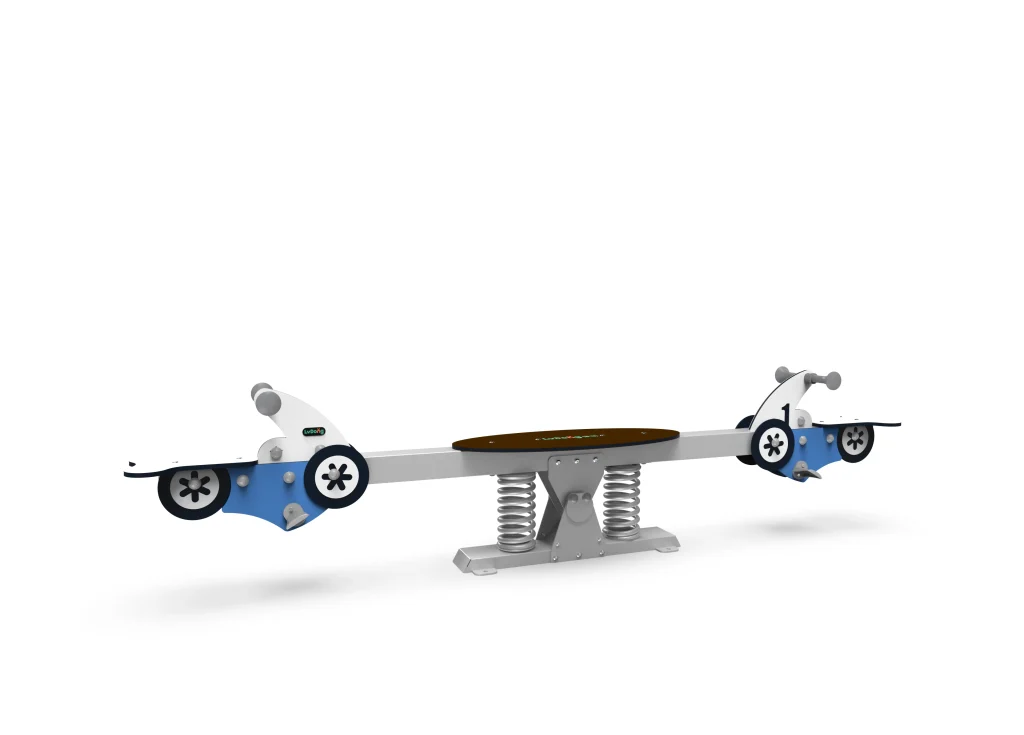
Bearing Systems and Maintenance Under Continuous Load
The maintenance record, not the initial appearance, separates durable spinning equipment from equipment that becomes stiff or noisy after one season. Standard merry-go-rounds often use an exposed central pivot or simple bushing that collects sand, dust, and grit. Under continuous load, that type of assembly can develop friction, loosen components, or require frequent relubrication.
A well-built hurricane spinner uses a sealed or enclosed bearing assembly to keep debris out and reduce the interval between major inspections. The structural frame is also important. High-humidity, coastal, or high-use sites benefit from galvanized steel and wear-resistant materials that do not degrade quickly under sun, rain, and repeated loading. The LvDong multi-player spinning wheel is built for outdoor exposure and high-frequency use, with materials selected for both structural stability and weather resistance.
Regular inspection still applies. Operators should check fasteners, handgrip condition, and surfacing depth on a fixed schedule. But the design goal is to make those checks predictable rather than emergency repairs.
If you are replacing an older merry-go-round or adding spinners to a high-traffic zone, request bearing assembly details, load-test documentation, and a site-specific capacity recommendation before ordering. You can reach the technical team at [email protected] or on WhatsApp at +8613915684545. For the full spinner range, see Playground Spinner Manufacturer OEM.
Procurement Checklist for High-Traffic Sites
Buyers who focus only on the sticker price often miss the factors that determine service life in a busy park. A more useful evaluation includes the following points.
- Confirm the exact user capacity and age range for the specific spinner model.
- Compare maximum fall height against the planned surfacing depth.
- Request EN 1176 documentation and, for North American projects, ASTM F1487-21 compliance evidence.
- Ask about bearing sealing, frame coating, and spare-part availability.
- Review installation time and foundation requirements.
- Request a sample evaluation or recent load-test report for continuous rotation.
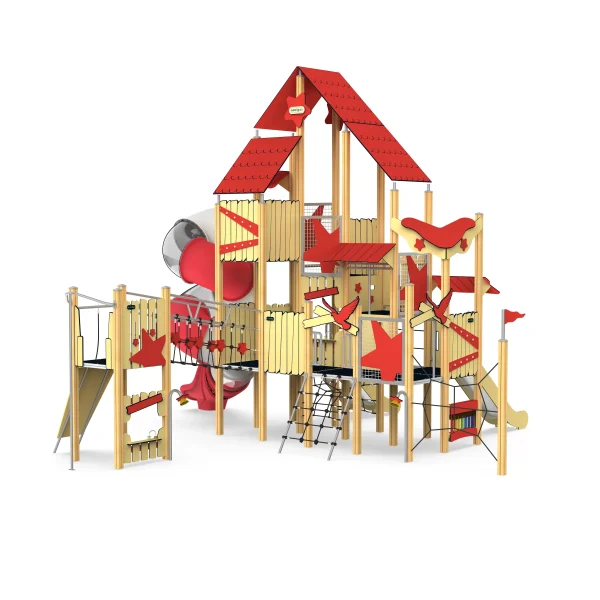
Before committing to a bulk spinner order, <Evaluate Playground Equipment Samples Before Buying A Guide> covers warehouse inspection points and the first checks to perform when a sample arrives.
When procurement moves to volume pricing, <Negotiating Bulk Playground Equipment Orders Expert Strategies> covers the terms that protect buyers across multiple units and repeat orders.
Specify the Right Spinner for Your Park
A hurricane spinner is not automatically the right product for every site, but it is a strong fit for parks that need high user throughput, controlled rotation, and a manageable fall height. The most successful installations come from a simple specification process.
Send the following information to begin a site-specific recommendation:
- Playground location and expected peak user counts
- Target age range and whether inclusive access is required
- Planned or existing surfacing material and depth
- Any regional certification requirements, such as EN 1176 or ASTM F1487
- Installation site dimensions and access constraints
Contact Suzhou LvDong Amusement Equipment Co., Ltd. at [email protected] or WhatsApp +8613915684545 to request technical documents, model drawings, or a sample evaluation plan.
FAQ
What is a hurricane spinner?
A hurricane spinner is a multi-player rotating playground unit with a stable circular base, secure seats or standing positions, and controlled rotation. It is designed to let several children spin together without the running push-off common on traditional merry-go-rounds.
How many children can use a hurricane spinner at once?
The LvDong multi-player spinning wheel range supports 6–10 children per unit depending on model. The exact capacity depends on diameter, seat configuration, and the target age group.
Does a hurricane spinner meet playground safety standards?
LvDong multi-player spinning equipment complies with EN 1176 and GB/T 34272-2017. For projects in the United States, buyers should confirm the specific model against ASTM F1487-21 requirements and request supporting documentation.
What fall surfacing is required for a hurricane spinner?
The maximum fall height is 55–77 cm depending on the model. Surfacing should comply with EN 1176 or ASTM F1487 requirements and, where applicable, CPSC guidance for the measured fall height.
Why do standard merry-go-rounds create bottlenecks in busy parks?
They often require children to push from the outside while others ride, which limits secure positions and creates running movements near a moving platform. This leads to slower loading, more supervision needs, and increased wear on exposed pivots.
Is a hurricane spinner suitable for inclusive playgrounds?
The design can support mixed-age and inclusive play when specified correctly. The low fall height, secure handgrips, and controlled rotation are useful in sensory and inclusive play settings, but the final layout should be reviewed for transfer space and accessible routes.
References
[1] European Committee for Standardization. EN 1176-1:2017, Playground equipment and surfacing — Part 1: General safety requirements and test methods. CEN, 2017.
[2] ASTM International. ASTM F1487-21, Standard Consumer Safety Performance Specification for Playground Equipment for Public Use. ASTM International, 2021.
[3] U.S. Consumer Product Safety Commission. Public Playground Safety Handbook. Publication No. 325.
If you’re interested, check out these related articles:
Small Space Solutions for Restaurant Childrens Play Areas
DIY vs Supplier Playground Equipment Installation Guide
Choosing a Soft Play Specialist Indoor Playground Equipment Expertise
Playground Equipment Warranty Comparison 1 3 or 5 Years
Kindergarten Outdoor Play Equipment Strategic Upgrade Priorities