Small restaurants rarely have the luxury of dedicating significant square footage to anything that doesn’t directly generate revenue. Yet families with young children consistently choose dining spots where their kids can stay occupied and safe. The tension between these realities pushes operators toward creative solutions that most wouldn’t consider without space constraints forcing the issue. What emerges from this pressure often works better than sprawling play areas because every element must earn its place.
Why Compact Play Zones Work Harder Than Large Ones
The assumption that bigger play areas automatically mean better experiences doesn’t hold up under scrutiny. Restaurants allocating 5-10% of total floor space to children’s areas often achieve higher engagement per square foot than establishments with expansive zones. Smaller footprints force designers to stack functions and eliminate dead space.
Vertical play solutions fundamentally change the math. Wall-mounted activity panels, climbing elements that rise rather than spread, and overhead features pull children’s attention upward without consuming floor area needed for tables. A single compact structure combining a slide with climbing holds can deliver the same play value as separate installations requiring three times the footprint.
Modular play systems add another dimension to restaurant space optimization. Configurations shift based on traffic patterns, seasonal crowds, or special events. What functions as a contained soft play area during busy Saturday lunch service reconfigures into a more open arrangement for quieter weekday afternoons. This flexibility proves particularly valuable for restaurants where children’s play competes directly with seating capacity.
| Feature Type | Equipment Example | Space Efficiency | Engagement Level |
|---|---|---|---|
| Vertical Play | Wall-mounted panels | High | Moderate |
| Multi-functional | Storage benches | High | Low |
| Compact Structure | Mini-slides | Medium | High |
| Modular System | Interlocking soft play | Medium | High |
| Interactive | Digital play tables | High | High |
Multi-functional furniture serves dual purposes without announcing itself as compromise. Benches with integrated storage beneath seating surfaces keep spare toys and cleaning supplies accessible. Play surfaces that fold flat against walls during peak adult dining hours reappear when families arrive. These solutions maintain visual cleanliness while preserving play functionality for restaurant play zones.
For broader principles on arranging play elements effectively, 《Outdoor Playground Set Layout Strategic Design for Optimal Play》 covers spatial relationships that translate well to indoor contexts.
Material Choices That Determine Long-Term Success
The materials selected for compact play areas face more intense demands than those in larger installations. Higher user density per square foot means accelerated wear patterns. Surfaces that might last years in a spacious playground show degradation within months under concentrated restaurant use.
LLDPE (Linear Low-Density Polyethylene) has become the default choice for structural play components in indoor settings. The material resists cracking under repeated impact, maintains color stability despite constant cleaning with commercial sanitizers, and carries no toxic risk if children mouth surfaces. These properties matter more in restaurant environments where hygiene standards exceed typical playground requirements.
Layout decisions in confined spaces directly affect safety outcomes. Clear sightlines from dining areas to play zones allow parents to supervise without leaving tables. This arrangement reduces anxiety for adults while giving children appropriate independence. Pathways between play elements need sufficient width to prevent collision injuries when multiple children move simultaneously.
Interactive play elements suit compact restaurant installations particularly well. Activity panels mounted at child height engage cognitive and motor skills without requiring the running space that physical play demands. Soft play components absorb impact energy in areas where fall distances remain minimal by design. These indoor play solutions concentrate engagement within controlled boundaries.
Safety Standards Governing Restaurant Play Installations
Restaurant operators face the same regulatory framework as dedicated play facilities. EN 1176 establishes European requirements covering fall heights, entrapment hazards, spacing between elements, and material safety specifications. ASTM F1487 provides equivalent guidance for North American installations. Both standards require documented risk assessment play areas before installation and ongoing maintenance protocols afterward.
Equipment meeting these standards incorporates specific design features. Openings between 89mm and 230mm are prohibited because children’s heads can become trapped. Fall zones beneath elevated elements require impact-absorbing surfacing. Edges and corners must be rounded or covered to prevent laceration injuries.
LvDong equipment complies with EN 1176 and GB/T 34272-2017 Chinese National Standard, addressing requirements across major markets. However, compliance at installation doesn’t guarantee ongoing safety. Daily visual inspections catch developing problems before they cause injuries. Monthly detailed checks verify structural integrity and surface condition. Annual professional assessments document compliance status for insurance and regulatory purposes.
Financial Returns From Family-Focused Dining Environments
The business case for children’s play areas in small restaurants rests on measurable behavioral changes. Families with young children stay longer when kids have dedicated activities. Longer visits correlate with additional orders, particularly beverages and desserts that might otherwise be skipped during rushed meals.
Customer retention strategies benefit substantially from play area investments. Parents remember which restaurants made their dining experience manageable. The mental calculation shifts from “can we handle taking the kids there” to “the kids will be occupied while we eat.” This psychological shift drives repeat visits that compound over time.
Word-of-mouth effects amplify direct revenue impacts. Parents share recommendations with other parents facing identical challenges. Social media posts featuring children enjoying restaurant play areas reach precisely the audience most likely to respond. This organic marketing generates customer acquisition at zero marginal cost.
Strategic Value Beyond Immediate Revenue
Competitive differentiation in crowded restaurant markets often comes down to details that competitors overlook. A thoughtfully designed children’s play area signals that management understands family needs. This perception extends beyond the play zone itself, suggesting attention to service quality generally.
Brand reputation family associations develop gradually but prove remarkably durable. Restaurants known as family-friendly destinations maintain that positioning even as specific menu items or staff members change. The ROI children’s play area calculations should account for this long-term brand equity alongside immediate revenue effects.
Community engagement restaurants achieve through family focus creates relationships that survive economic fluctuations. Families who view a restaurant as “their place” continue visiting during periods when discretionary spending tightens. This loyalty provides revenue stability that purely transactional customer relationships cannot match.
Equipment Selection for Budget-Conscious Operators
Small restaurant budgets demand equipment that delivers maximum play value per dollar invested. Durability directly affects total cost of ownership because replacement cycles consume capital and disrupt operations. Maintenance requirements matter because staff time spent on play area upkeep cannot be spent serving customers.
Unpowered amusement equipment eliminates electrical costs and reduces mechanical failure points. Moving parts that rely on child energy rather than motors require less maintenance and pose fewer safety risks. These designs align well with restaurant environments where simplicity supports operational efficiency.
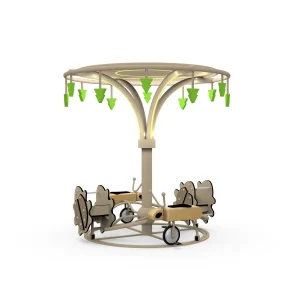
Specific equipment choices illustrate how compact footprints accommodate meaningful play experiences. The Multi Player Playground Spinning Wheel accommodates several children simultaneously while occupying minimal floor space. Its structural stability handles the forces generated by enthusiastic spinning without requiring frequent adjustment or repair.
For individual play, the Single Player Playground Spinner develops balance skills within a footprint smaller than a standard dining table. Children engage in self-directed activity that doesn’t require adult facilitation or interaction with other children who might not be present.
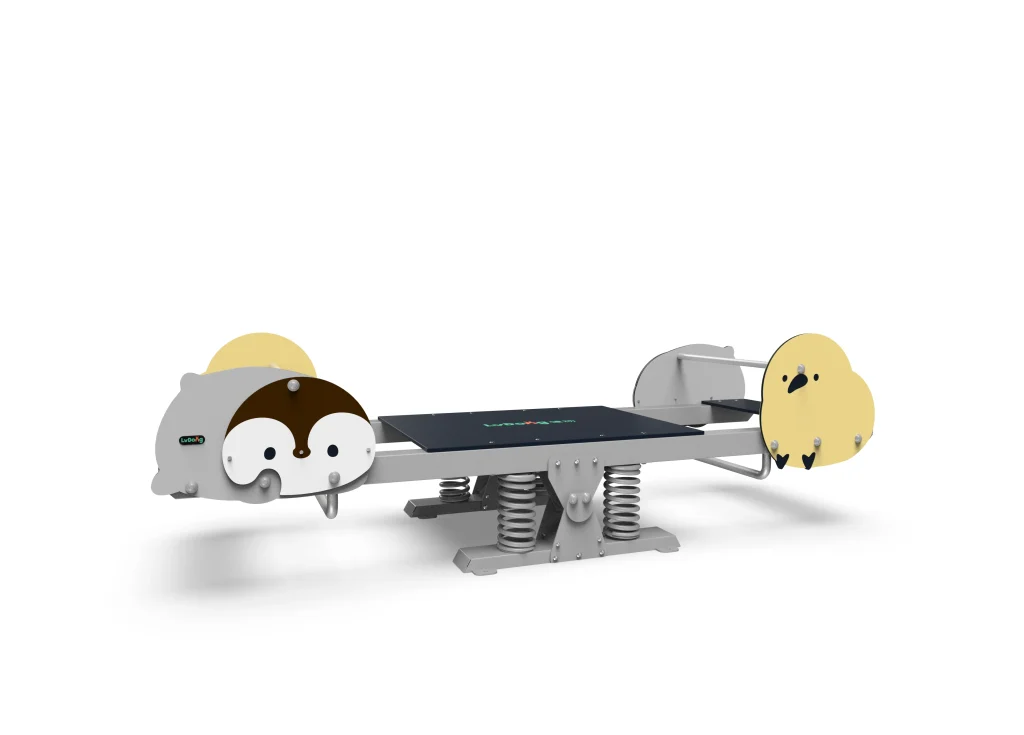
Younger children benefit from Spring Playground Equipment that provides gentle motion within a contained area. Low fall heights reduce surfacing requirements while the single-user design prevents conflicts over access. These characteristics make spring equipment particularly suitable for restaurant play equipment budget constraints.
!Commercial teeter totter
 | Equipment Type | Space Requirement | Maintenance Level | Engagement | LvDong Product Example |
| :————- | :—————- | :—————- | :——— | :——————– |
| Wall-Mounted Games | Very Low | Low | High | Interactive Play Panels |
| Mini-Slides | Low | Low | Medium | Curved Playground Slide |
| Soft Play Elements | Medium | Medium | High | Modular Soft Play |
| Spinning Equipment | Low | Low | High | Single Player Playground Spinner |
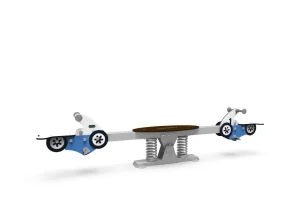
| Seesaws | Medium | Low | High | Multi Person Playground Seesaw |
Material performance varies significantly across product categories. 《Playground Slide Materials LLDPE vs 304 Steel Performance》 examines how different materials handle wear patterns relevant to high-traffic restaurant installations.
Practical Options for Severe Space Constraints
Wall-mounted games represent the most space-efficient category for restaurants where every square foot affects seating capacity. Activity boards, puzzles, and manipulative panels mount directly to walls, requiring zero floor space while engaging children at standing height. These installations work particularly well in waiting areas or corridors that cannot accommodate other play equipment.
Mini-slides restaurants can install provide physical play experiences within surprisingly compact footprints. Designs optimized for indoor use feature lower heights, shorter run-out zones, and integrated climbing access that eliminates the need for separate approach structures. The combination of climbing and sliding in a single unit maximizes activity variety per square foot.
Interactive play panels engage cognitive development alongside physical manipulation. Gears, mazes, sound elements, and visual puzzles hold attention without requiring space for movement. Multiple children can use different sections of a single panel simultaneously, increasing effective capacity.
Soft play elements small spaces accommodate include modular foam shapes that reconfigure based on available area. Ball pits sized for restaurant use contain fewer balls in smaller footprints while maintaining the sensory appeal that children find irresistible. These elements clean easily with standard sanitizing procedures, addressing hygiene in play zones concerns that restaurant operators prioritize.
Working With Experienced Implementation Partners
Play area projects succeed or fail based on execution details that only experienced partners anticipate. Design decisions made early in planning affect installation complexity, maintenance requirements, and long-term durability. Equipment selection must account for specific space dimensions, traffic patterns, and operational constraints unique to each restaurant.
Suzhou LvDong Amusement Equipment Co., Ltd. brings implementation experience from over 1,500 completed projects to each new engagement. This project history means common problems have established solutions and unusual challenges have precedents to reference. The full service scope covering R&D, design, manufacturing, installation, and after-sales support eliminates coordination gaps between separate vendors.
Compliance documentation accompanies all installations, supporting insurance requirements and regulatory inspections. Training for restaurant staff covers daily safety checks, cleaning protocols, and recognition of wear patterns requiring professional attention. This comprehensive approach protects the investment while ensuring children’s safety throughout equipment service life.
Contact us today to transform your restaurant space.
Email: [email protected]
WhatsApp: +8613915684545