Municipal playground managers face a different maintenance challenge than private operators. Budget cycles are annual, public safety expectations are high, and every repair order can become a public record. A fixed-price annual maintenance contract converts routine upkeep, inspection, and standard repairs into a known budget line while keeping documentation aligned with safety standards.
A well-written contract does more than fix broken equipment. It protects the municipality’s investment, supports compliance with EN 1176 and ASTM F1487, and gives the public a consistently safe play environment. This guide explains what to include, how to compare pricing models, and how to evaluate providers.
Why Municipal Buyers Prefer Fixed-Price Servicing
Budget predictability is the first advantage. In a time-and-materials arrangement, a hard winter or a spike in vandalism can create unbudgeted invoices. A fixed-price contract defines the annual cost in advance, which fits municipal appropriation processes and multi-year capital planning.
Fixed-price agreements also clarify responsibility. The provider owns the risk of ordinary labor and wear-part consumption within an agreed scope. Municipal staff can focus on program oversight rather than approving individual repair quotes. This does not eliminate all variability — storm damage, theft, and major upgrades usually remain separate — but it removes the most common causes of cost overrun.
The strongest municipal contracts combine fixed pricing with measurable service levels. Response times for safety hazards, completion dates for preventive tasks, and report delivery should be written into the agreement, not assumed.
The Inspection Backbone: Routine, Operational, and Annual
Maintenance begins with the inspection hierarchy described in EN 1176-7. It separates playground inspection into routine visual, operational, and annual main levels [1]. Many municipalities adapt these levels to a fixed-price schedule so each site receives the same minimum attention.
Routine visual inspection focuses on obvious hazards: loose bolts, broken parts, sharp edges, debris, damaged surfacing, and signs of vandalism. These checks can be frequent during peak season and less frequent in low-use months. EN 1176-7 does not set a single universal interval because usage, climate, and site risk vary [1]. Instead, the contract should state the minimum frequency per site.
Operational inspection goes further. It checks moving assemblies under function: spinner bearings, spring bases, seesaw pivots, swing connections, and slide entry and exit areas [1]. The goal is to identify wear before failure. For parks with high daily use, operational checks often occur monthly or quarterly, but municipal contracts should specify the rhythm in the service specification.
Annual main inspection is the compliance-level review. It examines foundations, structural welds, corrosion, entrapment points, surfacing depth and impact attenuation, guardrails, and overall stability [1][2]. The inspector records findings, assigns risk levels, and issues a prioritized corrective action list. Municipal clients should receive this report as a contract deliverable.
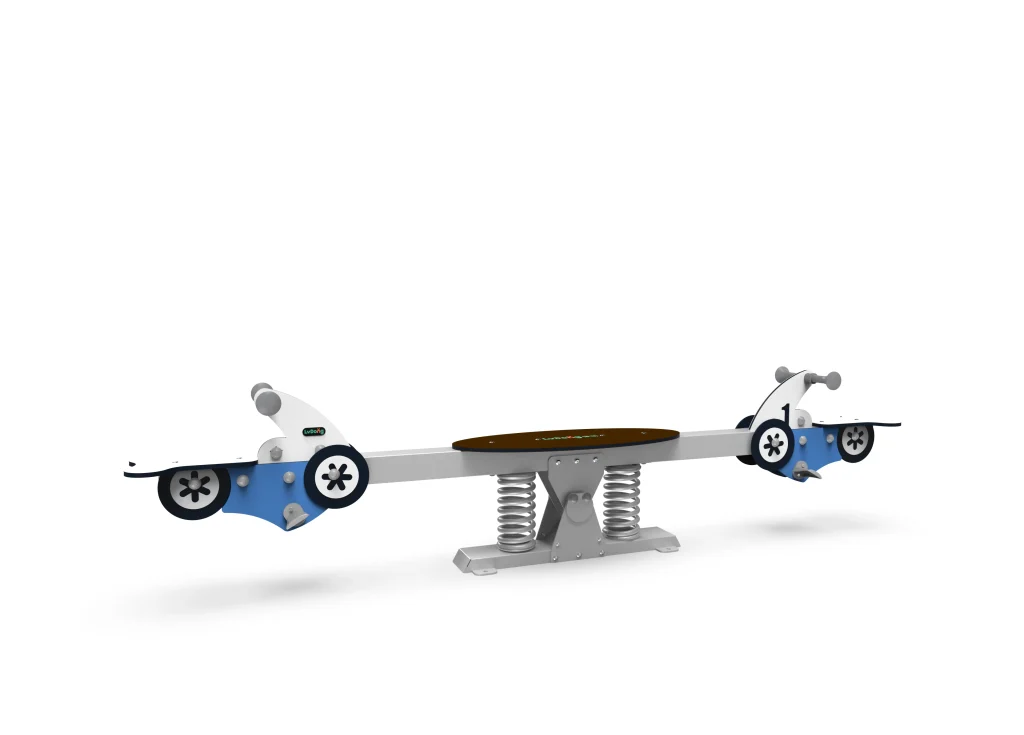
Seesaw pivots, spring anchoring, and moving joints deserve close attention because they concentrate repetitive load in small areas. Fixed-price servicing should include those components in the annual scope rather than treating them as separate repair work.
What a Fixed-Price Annual Maintenance Contract Should Cover
Scope by Equipment Category
A municipal playground may include slides, swings, spinners, spring riders, seesaws, play panels, and surfacing. Each category has different failure modes.
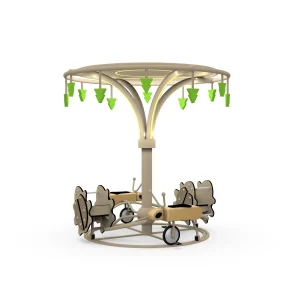
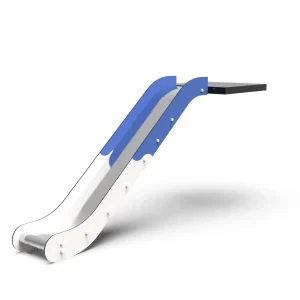
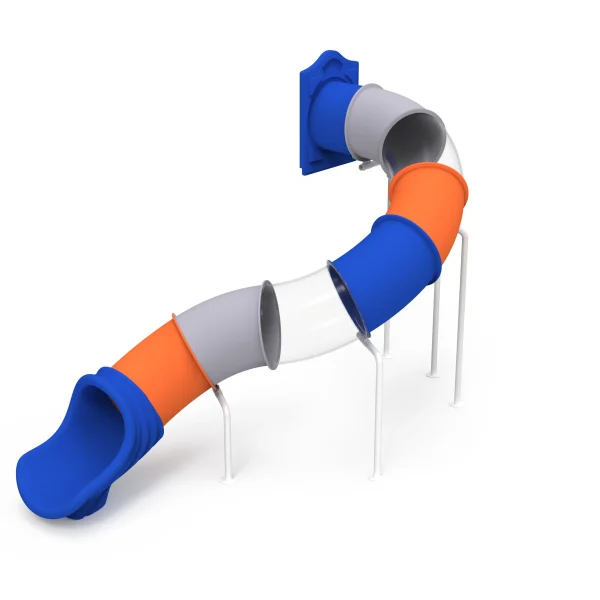
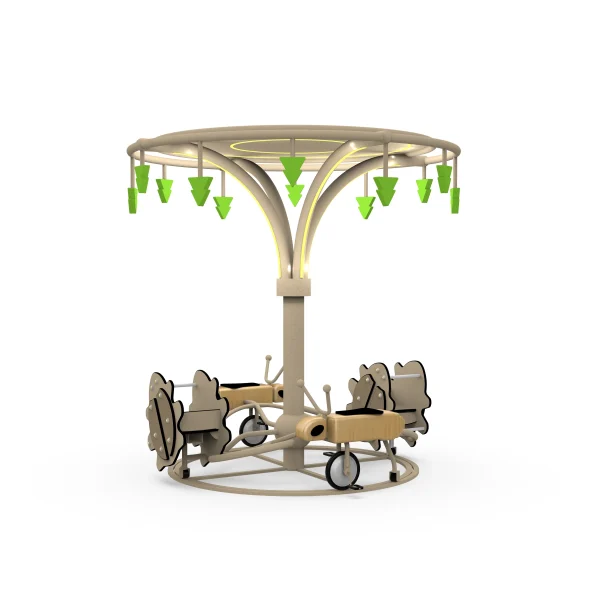
Commercial playground slides require checks for platform connections, bolt tightness, slide bed wear, and tunnel ventilation. Commercial playground slide systems with elevated platforms also need guardrail and fall-height verification. Playground spinners and spring riders need bearing, spring, and anchor inspections. Playground spinner and playground spring rider components are often overlooked in generic landscaping contracts, so municipal buyers should verify that the provider understands play equipment mechanics.
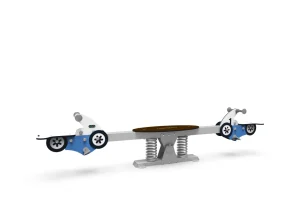
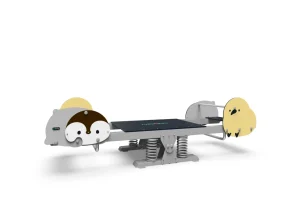
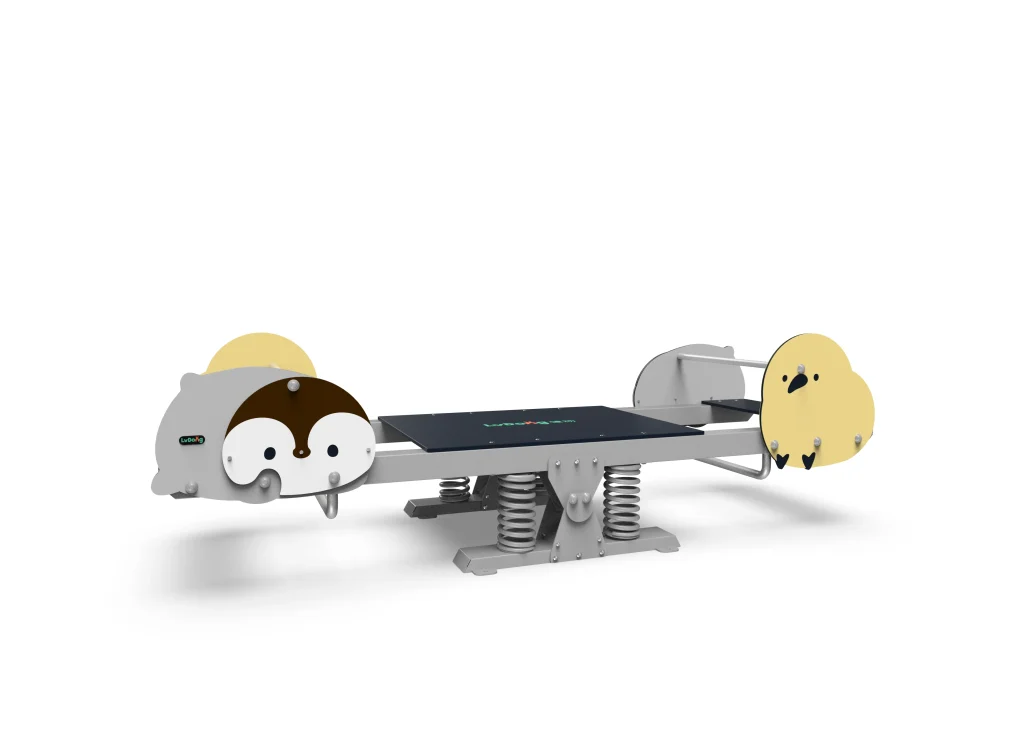
Seesaws and multi-user rocking equipment require pivot, damping, and seat fastener checks. Playground seesaw assemblies also need buffer zone and surfacing review at each end.
Parts, Labor, and Response Times
Fixed price should define which parts are included. Common wear items such as swing seats, bearing kits, spring covers, protective caps, and minor fasteners may be included up to an agreed quantity or threshold. Major components such as steel frames, slides, and large replacement panels are usually handled through a change order process.
Response time is a critical clause. A municipal client should require emergency response for entrapment, collapse, or severe structural damage, plus a longer response window for non-critical preventive work. The contract should state both, with working-day definitions.
Documentation and Compliance Records
The provider should deliver an annual file for each site: inspection dates, photographic baseline, findings by risk level, corrective actions completed, and a compliance statement referencing the applicable standard [1][3]. Municipal insurance and risk management teams can use this file to demonstrate reasonable care.
Annual service schedules work best when they follow a seasonal rhythm rather than a reactive repair list. <Annual Maintenance Calendar for Outdoor Play Equipment A Guide> covers monthly, quarterly, and annual task sequencing for outdoor equipment.
Fixed-Price vs. Time-and-Materials: What Municipal Buyers Should Compare
| Contract type | Cost predictability | Provider risk | Best fit |
|---|---|---|---|
| Fixed-price annual | High; budget set in advance | Ordinary labor and wear-part consumption | Multi-site municipal portfolios with annual budgets |
| Time-and-materials | Low; invoices vary with hours and parts | Municipality carries most cost risk | Unstable scope or uncertain site conditions |
| Fixed-price plus defined change orders | High for base scope; controlled for extras | Shared, with clear approval rules | Public procurement requiring both predictability and flexibility |
A fixed-price contract does not mean the municipality loses control. It means the base scope is explicit. Change orders should follow a predefined rate card for parts and labor so unplanned work remains fair and auditable.
Contract Clauses That Protect Municipal Clients
Performance Indicators and Service Levels
Examples include: maximum days from inspection report to completion of high-risk repairs, percentage of scheduled preventive tasks completed each quarter, and response time benchmarks for critical safety findings. These should be measurable and reported, not vague.
Exclusions and Change Order Rules
Storm damage, fire, theft, vandalism beyond a defined allowance, and capital upgrades are typically excluded. If vandalism is included, the contract should distinguish between small repair work and large-scale replacement.
Warranty and Manufacturer Support
Secure access to original manufacturer technical guidance and spare parts. A maintenance provider with a direct manufacturing relationship can shorten parts lead time and ensure compatibility. Suppliers operating under documented quality management systems, such as ISO 9001, provide stronger traceability for replacement components [4].
Spring riders carry concentrated wear at springs and anchor points, which makes them a good early indicator for maintenance budgets. <Playground Spring Rider Materials Steel vs Anti Rust> covers material choices that change corrosion and service intervals.
Selecting a Qualified Maintenance Provider
Look for three things: standards knowledge, documented inspection competency, and spare parts reliability. The provider should understand EN 1176-7 inspection levels and be able to demonstrate inspector qualification, such as recognized playground inspection certification or equivalent training [1][6]. Municipal references should show performance across multiple sites, not just a single install.
The provider should also have an auditable workflow: pre-season baseline, scheduled visits, photo documentation, corrective action logs, and annual reporting. Ask for a sample annual report before awarding the contract.
Municipal teams comparing fixed-price proposals can request a line-item scope review before tendering. Contact Suzhou LvDong Amusement Equipment Co., Ltd. at [email protected] or WhatsApp +8613915684545 for a maintenance-plan review tied to the equipment catalogue and EN 1176-7 inspection levels.
Procurement-Ready Checklist for Fixed-Price Contracts
Use this list when drafting the scope of work:
- [ ] Site inventory with asset IDs, installation dates, and equipment types.
- [ ] Minimum inspection frequency per inspection level.
- [ ] Included wear parts and replacement threshold.
- [ ] Emergency and non-emergency response times.
- [ ] Required documentation and annual compliance report.
- [ ] Change order rate card for excluded work.
- [ ] Termination, performance, and insurance clauses.
- [ ] Manufacturer spare parts access or OEM support.
If you need a specification-ready checklist adapted to your equipment roster, request a fixed-price maintenance proposal from Suzhou LvDong Amusement Equipment Co., Ltd. at [email protected].
Common Pitfalls in Municipal Maintenance Agreements
The most common failure is underdefined scope. If “all necessary repairs” is the only wording, the municipality and provider will disagree later. Separate preventive maintenance from corrective repairs and define both.
A second pitfall is missing photographic baseline. Without dated photos before the contract starts, it is hard to prove whether damage is pre-existing or new. The provider should create a baseline during the first service visit.
A third pitfall is treating surfacing as an afterthought. Impact attenuation is safety-critical [3][5]. The contract should include surfacing depth checks, debris removal, raking of loose-fill materials where applicable, and repair or replenishment triggers.
Municipal teams often face a choice between renewing aging components or replacing entire units. <Old Playground Renovation Keep or Replace Decisions> covers the decision criteria for capital renewal programs.
Start With a Scoped Fixed-Price Maintenance Proposal
An effective annual maintenance contract is specific enough to budget, flexible enough for real park conditions, and documented enough to support public accountability. Municipal clients should expect a provider that can inspect, repair, document, and source original parts without shifting ordinary maintenance risk back to the city.
Ready to turn annual maintenance into a budgeted, documented program? Ask for a fixed-price proposal covering inspection levels, standard parts, response times, and annual reporting. Email [email protected], call or WhatsApp +8613915684545, or share your site inventory for a scoped contract review with Suzhou LvDong Amusement Equipment Co., Ltd.
FAQ
What is usually included in a fixed-price annual maintenance contract?
A complete contract typically includes scheduled routine visual, operational, and annual main inspections, standard wear parts up to an agreed limit, minor corrective work, documentation, and an annual compliance report. Major structural upgrades and natural disaster repairs are usually handled as change orders.
How often should municipal playground equipment be inspected?
EN 1176-7 does not set one universal frequency because usage and environment vary [1]. Many municipal contracts specify frequent routine visual checks during high season, operational checks monthly or quarterly, and at least one annual main inspection. The exact schedule should be written into the fixed-price scope.
Does fixed-price cover replacement parts or only labor?
It depends on the contract. Strong agreements include a defined list of standard wear parts such as fasteners, swing seats, bearing kits, and protective caps. Large components and non-standard replacements usually follow a separate change order process.
Can a fixed-price contract include multiple sites or only one park?
Yes. In fact, fixed-price contracts are often most valuable across a municipal portfolio because they standardize inspection levels, documentation, and pricing. The scope should include a site inventory and minimum service frequency per location.
What documentation should a municipal buyer receive?
The provider should deliver a site-specific file with inspection dates, findings by risk level, corrective actions completed, photographic evidence, and an annual compliance summary referencing the applicable standard [1][3].
References
[1] European Committee for Standardization, EN 1176-7: Playground equipment and surfacing — Part 7: Guidance on installation, inspection, maintenance and operation. Brussels: CEN.
[2] European Committee for Standardization, EN 1176-1: Playground equipment and surfacing — Part 1: General safety requirements and test methods. Brussels: CEN.
[3] ASTM International, ASTM F1487-21: Standard Consumer Safety Performance Specification for Playground Equipment for Public Use. West Conshohocken, PA: ASTM International, 2021.
[4] International Organization for Standardization, ISO 9001:2015: Quality management systems — Requirements. Geneva: ISO, 2015.
[5] U.S. Consumer Product Safety Commission, Public Playground Safety Handbook. Bethesda, MD: CPSC, Publication No. 325.
[6] Deutsches Institut für Normung, DIN 79161: Playground inspection — Qualification of playground inspectors. Berlin: DIN.
If you’re interested, check out these related articles:
Buyers Guide to Spinning Playground Equipment in 2025
Hurricane Spinner Load Testing Unpacking Playground Safety Standards
Age Appropriate Playground Sets for Child Development
Outdoor Playground Set Layout Strategic Design for Optimal Play