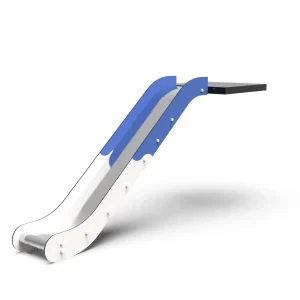
Aging playground slides often force operators into an uncomfortable choice: continue paying for patch repairs, or budget for a full structure replacement. Equipment refresh programs create a middle path. In a refresh arrangement, an owner returns an old slide or slide component, receives an agreed trade-in credit, and applies that value to a new order. The result can be a safer play environment without the waste and removal cost of abandoning the old asset.
This guide explains how the programs work, how slides are graded, and how to compare refresh offers from manufacturers.
What an Equipment Refresh Program Actually Covers
An equipment refresh program is not the same as purchasing used playground equipment. It is a procurement mechanism. The manufacturer or supplier evaluates the returned slide, assigns a credit based on condition, salvage value, and removal cost, and itemizes that credit against a new slide order.
The credit may cover more than raw material. It can reflect the labor avoided in disposal, the value of reusable modular parts, and the convenience of having one team remove the old unit and install the replacement. Working with a playground slide manufacturer that already understands your site can reduce the number of inspection visits and quote revisions.
New replacement slides must still meet the safety and dimensional requirements of the installation site. Under EN 1176-1, the replacement unit is treated as part of the play structure, so structural integrity, entrapment, impact attenuation, and free-space requirements apply [1].
When Trade-In Makes More Sense Than Repair
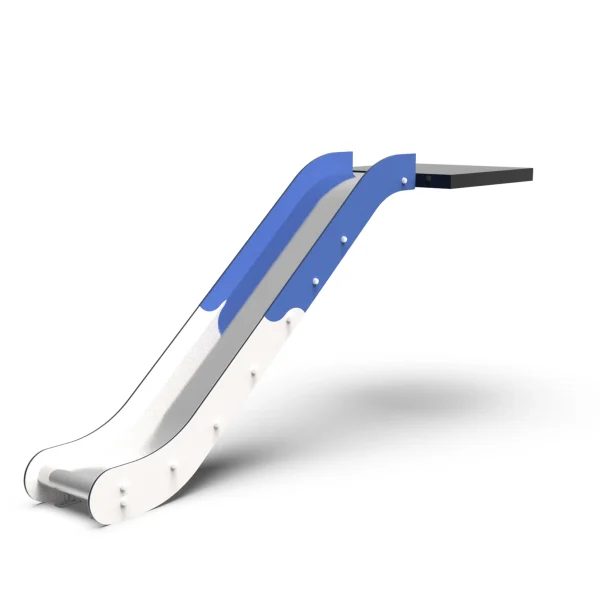
Some slides can be economically repaired, while others have reached a maintenance plateau. A refresh program is most useful when the old slide shows structural fatigue, obsolete anchoring, repeated weld failures, or worn surfaces that no longer meet safety expectations.
The table below outlines a simple condition-based replacement approach.
| Condition Grade | Typical Slide Condition | Most Suitable Path |
|---|---|---|
| A | Sound structure, isolated cosmetic wear | Repair and continue service |
| B | Durable components, outdated surfacing or handrail | Partial refresh or replacement |
| C | Multiple failing joints, heavy rust, cracked shells | Trade-in and replace |
| D | Unsalvageable or undocumented custom slide | Scrap offset, replace |
ASTM F1487-21 establishes performance criteria for public playground equipment used in the United States [2]. If a repair cannot restore the slide to a condition that can be documented against those criteria, replacement is usually the more responsible option.
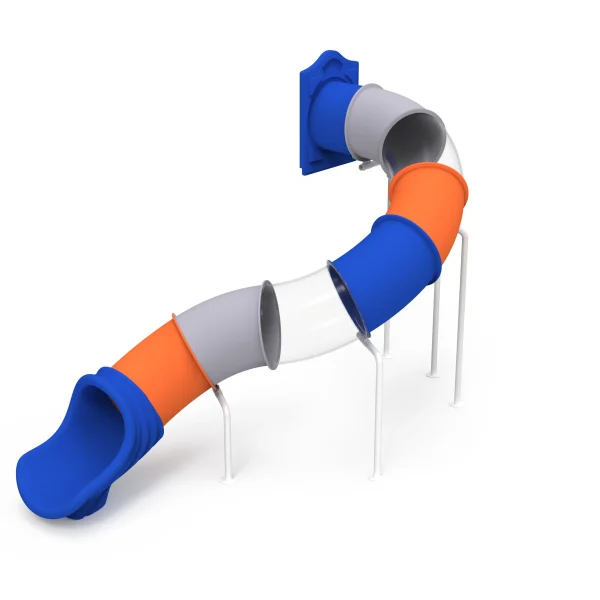
How Old Slides Are Graded for Credit
Manufacturers typically grade trade-in slides during an inspection. The inspector will look at the slide bed, support posts, connection hardware, welds, and any tunnel or tube sections. They will also check whether the old slide can be removed without damaging adjacent decks or surfacing.
To keep the assessment consistent, prepare the following:
- Product name, model, and year of purchase if available.
- Clear photographs of the full slide, entry platform, and exit zone from multiple angles.
- A short repair history: welds, cracks, rust treatment, surfacing repairs, and part replacements.
- Site access information, including vehicle entry points and clearance for removal.
- Any compliance reports or inspection records already held by the owner.
The Consumer Product Safety Commission’s Public Playground Safety Handbook recommends documented inspection and maintenance records as the foundation for replacement decisions [3]. A slide with well-kept records is easier to grade accurately, and poor documentation can lower the credit offer because the manufacturer has less certainty about structural history.
Once the old slide is removed and the replacement arrives, the site itself must be ready. Base leveling, drainage, and anchor placement all affect whether the new slide will perform safely over time.
Structuring the Trade-In Request for Procurement
A reliable refresh quote should separate the credit from the purchase price. It should show the new slide cost, the trade-in credit, removal charges, freight, and installation as distinct line items. Without that separation, it is difficult to compare offers or explain the transaction to a board, procurement office, or insurance reviewer.
| Quote Element | Why It Should Be Separate |
|---|---|
| New slide price | Allows comparison across models |
| Trade-in credit | Clarifies what the old asset is actually worth |
| Removal and disposal | Avoids hidden site costs |
| Freight and installation | Makes project budgeting transparent |
| Compliance documentation | Confirms the new unit is fit for public use |
Bulk pricing and credit allowances often remain negotiable, especially when a refresh program is combined with several replacement components. Buying a full replacement set rather than a single slide can change the unit economics.
A refresh order is still a procurement negotiation, not just a trade-in conversation. <Negotiating Bulk Playground Equipment Orders Expert Strategies> covers how to balance credit terms, payment timing, and order scope without giving up margin.
Site Preparation and Installation Checkpoints
A replacement slide rarely occupies exactly the same anchor pattern as the unit it replaces. Even when the footprint looks similar, older slides often used embedded posts, while newer models may require surface plates or deeper concrete foundations. Drainage and compaction are equally important because standing water under an exit zone can create slipping hazards and accelerate corrosion.
Before installation, confirm the following:
- The fall zone and safety surfacing are still appropriate for the new slide height.
- The ground beneath the old slide is stable and not holding water.
- The new anchor pattern will not interfere with underground utilities.
- The exit runout provides enough space for children to decelerate without crowding.
Site conditions can invalidate an otherwise compliant slide if the base settles or water pools beneath the runout. <Playset Ground Leveling and Drainage Solutions for Outdoor Slides> covers the drainage and leveling checks that should happen before the new slide is anchored.
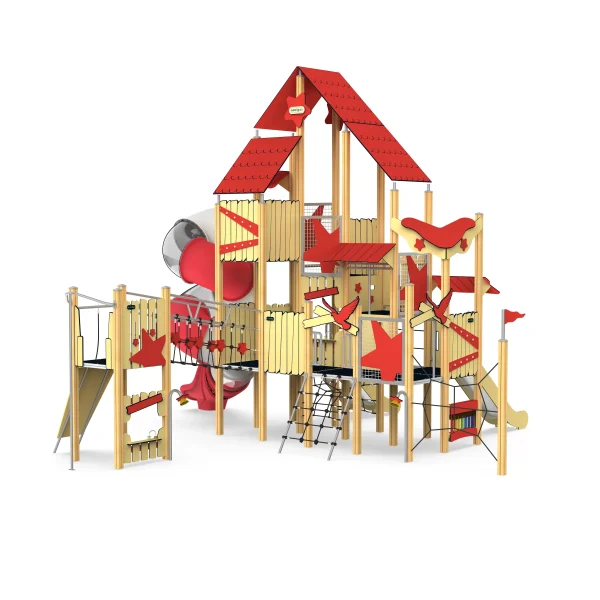
For projects that want to add value beyond a like-for-like swap, an interactive or themed replacement may improve visitor engagement without expanding the play area footprint. A curved tunnel slide with polycarbonate viewing sections, for example, can make the same footprint feel brighter and easier to supervise.
If you would like a technical credit estimate, send your current slide model, photos, and site constraints to [email protected]. A review can clarify whether the old unit qualifies for credit and which compliant replacement fits the existing pad.
Choosing the Right Manufacturer for a Refresh Program
The best refresh partner is rarely the vendor with the highest scrap quote. It is the manufacturer that understands structural loads, safety documentation, site access, and long-term spare parts. A credible supplier should provide evidence that the replacement slide complies with applicable standards and can be maintained over a realistic lifecycle.
When shortlisting suppliers, request the following:
- Product certification and test documentation for the replacement slide.
- A written credit offer that itemizes removal, freight, and installation.
- Confirmation of spare parts availability after installation.
- Reference contact details for previous refresh or replacement projects.
For teams comparing vendors on the credit offer as well as the equipment itself, <Evaluate Commercial Playground Manufacturers 8 Critical Selection Factors> covers the non-price signals that separate reliable partners from transactional suppliers.
Plan Your Equipment Refresh With Suzhou LvDong
Suzhou LvDong Amusement Equipment Co., Ltd. operates a modern production base of over 10,000 square meters and has delivered more than 1,500 projects across municipal parks, high-end communities, cultural tourism sites, and educational institutions. The team supports the full chain from research, design, and production through installation and after-sales support.
To begin an equipment refresh assessment, contact our team:
- Email: [email protected]
- WhatsApp: +8613915684545
FAQ
What does “trade-in credit” mean in an equipment refresh program?
It is an agreed value assigned to an old slide or slide component after inspection. That value is applied as a credit toward a new slide order rather than paid out as cash.
Can we trade in a slide without replacing the entire play structure?
Yes. Many refresh programs accept the slide and its immediate support components while leaving the rest of the play structure in place. The key consideration is whether the remaining structure can support and connect safely to the replacement slide.
How should we prepare an old slide for credit assessment?
Take photographs, locate purchase records and repair history, and clear access around the slide for inspection. Do not dismantle the slide before the inspector arrives unless the supplier has specifically asked you to do so.
Will removal and site preparation be included in the quote?
It depends on the supplier. A clear quote should show removal, freight, installation, and any base preparation as separate items, even if the supplier offers a bundled total.
How long does a refresh order take?
Timelines depend on whether you select a standard model or a custom replacement, as well as production and shipping schedules. Confirming a written lead time before signing is important.
Can old slide credit be applied to swings, spinners, or other equipment?
Some manufacturers allow the credit to apply to unrelated equipment, while others restrict it to slide or play structure orders. Ask whether the credit is unit-specific or can be used across the catalog.
References
[1] EN 1176-1:2017. Playground equipment and surfacing — Part 1: General safety requirements and test methods. European Committee for Standardization.
[2] ASTM F1487-21. Standard Consumer Safety Performance Specification for Playground Equipment for Public Use. ASTM International.
[3] U.S. Consumer Product Safety Commission. Public Playground Safety Handbook, Publication No. 325. Washington, DC: CPSC.
If you’re interested, check out these related articles:
Slide Platform Height and Exit Safety Guidelines for Playgrounds
International Playground Equipment Procurement A Step by Step Guide