Planning a community park playground means juggling a lot of moving parts. You need equipment that kids actually want to use, safety margins that hold up to scrutiny, and a budget that won’t collapse halfway through construction. For years, the visualization step was where projects stalled. Sketches on paper only go so far when you’re trying to explain fall zones to a city council or show parents how sight lines work across the space. Free 3D design services have changed that equation. They give planners a way to see the full picture before breaking ground, catching problems early and keeping costs from spiraling.
How Free 3D Tools Changed the Game for Park Planners
Playground design used to live in flat drawings. You’d get a top-down view, maybe some elevation sketches, and everyone would nod along hoping they understood the same thing. The gap between what was on paper and what got built caused headaches, change orders, and occasionally some awkward conversations about why the swing set blocked the only shaded bench.
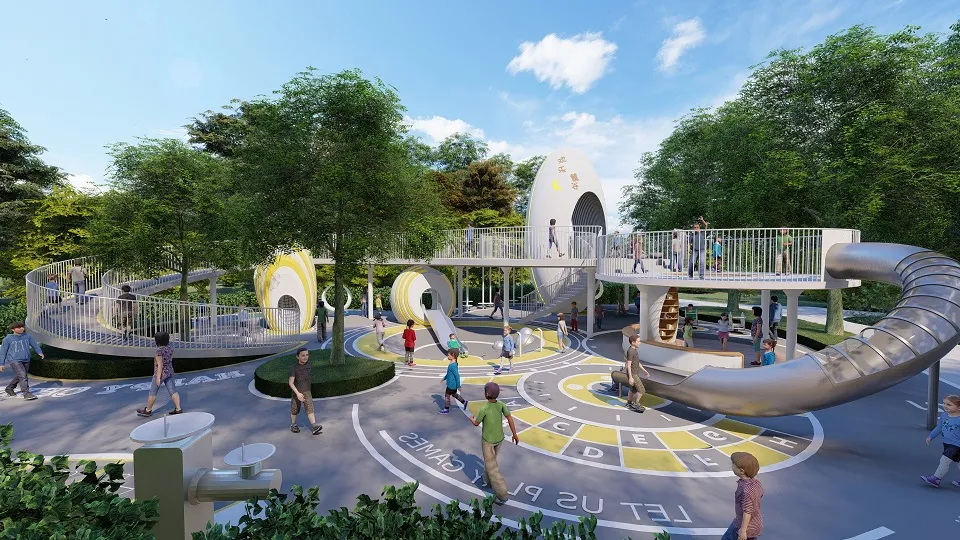
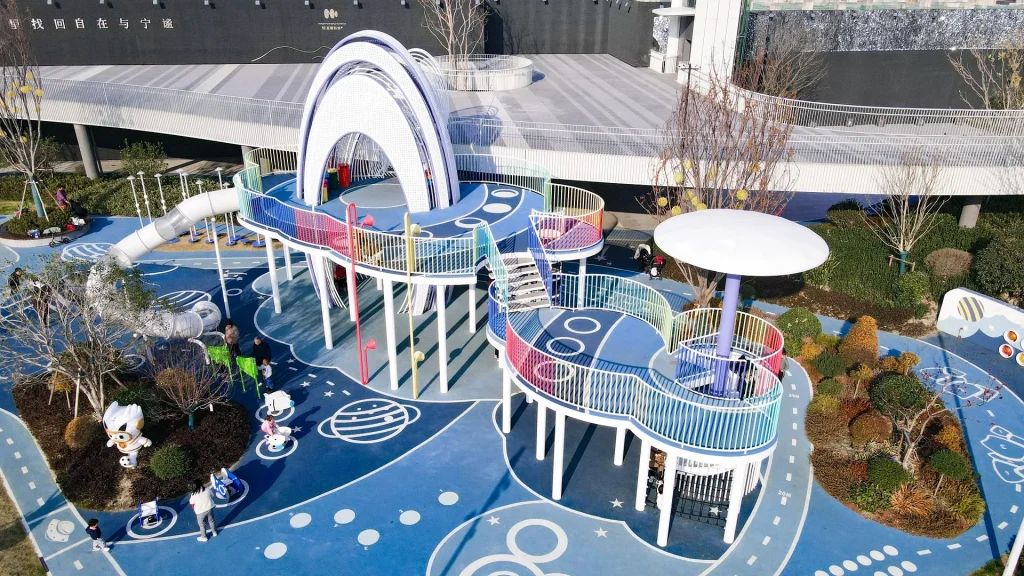
Three-dimensional visualization closed that gap. Now planners can walk stakeholders through a virtual version of the space, rotate the view, zoom into equipment details, and spot conflicts before they become expensive fixes. A climbing structure that looked fine in 2D might crowd the accessible pathway when you see it from ground level. That kind of insight saves real money.
The “free” part matters too. Smaller communities and tight municipal budgets often couldn’t justify expensive design software licenses. When the visualization step costs nothing upfront, more projects get past the planning stage. Planners experiment with layouts they might have dismissed as too risky to prototype. The result is more creative, better-tested designs reaching construction.
Why 3D Design Pays Off During Equipment Selection
Picking playground equipment involves more stakeholders than most people realize. Parks departments, safety officers, accessibility advocates, neighborhood groups, and sometimes the kids themselves all have opinions. Getting everyone aligned on a proposal is half the battle.
3D models give those conversations a common reference point. Instead of describing how a spinning wheel relates to the nearby slide, you show it. People react to what they see, not what they imagine from a description. Disagreements surface earlier, when they’re cheap to resolve.
Safety planning benefits the most. Virtual walkthroughs let reviewers check fall zones, sight lines for supervising adults, and clearances between equipment. Compliance with standards like EN 1176 or GB/T 34272-2017 becomes something you verify visually, not just on a checklist. Catching a pinch point hazard in the model costs nothing. Catching it after installation costs a lot.
Space optimization is another win. Outdoor play areas rarely have unlimited room. 3D tools let planners test configurations, shift equipment a meter here or there, and see how traffic flow changes. Every square meter gets used with intention rather than guesswork.
How can 3D design improve community park playground projects?
The short answer is visibility. When everyone involved can see the same detailed model, misunderstandings drop and decisions happen faster. Iterative adjustments that would take weeks with physical mockups happen in hours. Errors that would surface during construction get caught during planning. Communities end up with playgrounds that match what they approved, not approximations.
If you’re interested, check 《Why Choose Us》.
Building Play Spaces That Actually Engage Kids
A playground can meet every safety standard and still bore children within a week. The equipment matters, but so does how it’s arranged, themed, and scaled for different ages. 3D modeling lets designers think through those experiential details before committing to materials.
Age-appropriate design is easier to verify in three dimensions. A climbing structure that works for eight-year-olds might intimidate four-year-olds or underwhelm twelve-year-olds. Seeing the scale relationships helps designers create zones that serve different developmental stages without feeling fragmented.
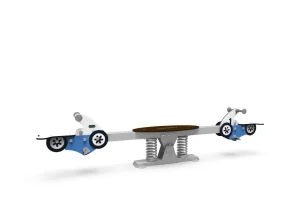
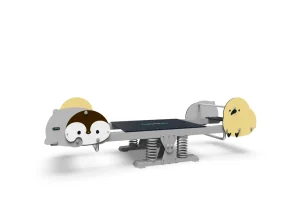
Thematic elements come alive in 3D too. Adventure landscapes, nature-inspired structures, or educational zones can be visualized with textures and colors before production. A Multi Player Playground Spinning Wheel can be designed with specific themes and safety features visible in the model. A Spring Playground Equipment can be customized for toddlers with forms that make sense when you see them at child height.
Material choices get tested virtually as well. Durability, maintenance requirements, and sustainability all factor into equipment selection. Seeing how different materials render in the design helps planners make informed tradeoffs between cost, longevity, and environmental impact.
Finding the Right Manufacturing Partner
Free 3D design gets you a vision. Turning that vision into physical equipment requires a manufacturer who can deliver. The gap between a beautiful rendering and a well-built playground is where projects succeed or struggle.
Look for integrated capabilities. A manufacturer handling R&D, design, production, installation, and after-sales support keeps the project under one roof. Handoffs between separate companies create friction and finger-pointing when problems arise.
Experience matters more than marketing claims. Ask for project references. Talk to parks departments who’ve worked with them. A manufacturer with a decade of installations has seen the edge cases and knows how to handle them.
Certifications aren’t optional. EN 1176, GB/T 34272-2017, and similar standards exist because playground injuries are serious. Verified compliance protects communities and demonstrates that the manufacturer takes safety as seriously as you do.
Suzhou LvDong Amusement Equipment Co.,Ltd. offers the full service path from free 3D design concepts through installation. Their approach keeps the project coherent from first sketch to final inspection.
How do I choose the right playground equipment manufacturer for my park?
Start with their design capabilities, particularly 3D visualization. Then verify certifications and safety compliance. Review their portfolio for projects similar to yours in scale and complexity. Ask about after-sales support because equipment needs maintenance and occasional repairs. The best manufacturers treat the relationship as ongoing, not transactional.
Making Free 3D Design Work for Long-Term Value
Sustainability in playground design isn’t just about materials. It’s about creating spaces that serve communities for decades without constant replacement or renovation. 3D tools contribute to that longevity in ways that aren’t immediately obvious.
Optimized material usage reduces waste during manufacturing. When the design is precise, fabricators cut fewer wrong pieces and order fewer excess materials. That efficiency translates to lower costs and smaller environmental footprints.
Durable design comes from testing configurations virtually. Equipment that’s properly spaced, correctly anchored, and appropriately scaled for its intended users lasts longer. The precision of 3D modeling catches the small errors that lead to premature wear.
Community involvement in the design process builds ownership. When residents see and comment on 3D models, they feel invested in the outcome. That investment translates to better care, faster reporting of maintenance needs, and stronger advocacy for park funding.
| Equipment Type | User Capacity | Max Fall Height | Installation Time |
|---|---|---|---|
| Multi Player Playground Spinning Wheel | 6-10 children | 55-77 cm | 2 person-hours |
| Single Player Playground Spinner | 1 child | 34 cm | 2 person-hours |
| Spring Playground Equipment | 1 child | 50 cm | 0.5 person-hours |
| Multi Person Playground Seesaw | 2-10 children | 60 cm | Not specified |
Transform Your Community Park Project
Unlock the full potential of your community park project with Suzhou LvDong Amusement Equipment Co.,Ltd. With over a decade of expertise in premium unpowered amusement equipment, our integrated R&D, design, production, and installation services ensure your vision comes to life. Contact us today for a personalized consultation and discover how our innovative solutions, including advanced 3D design, can transform your space. WHATSAPP:+8613915684545 | [email protected]
What are the benefits of using free 3D design services for playground equipment?
You get better visualization without upfront cost, which removes a barrier that stops many projects before they start. Stakeholder communication improves because everyone sees the same thing. Design flaws surface early when fixing them is cheap. Space gets used more efficiently. The final result matches expectations more closely than traditional planning methods allow.
Can free 3D design tools accommodate custom playground solutions?
They can. Modern tools handle site-specific dimensions, thematic requirements, and unique equipment configurations. Designers tailor custom playground solutions to particular communities rather than forcing standard layouts onto every site. The customization happens in the model first, so everyone agrees on the details before production begins.
How does 3D design ensure safety standards for playgrounds?
Spatial planning becomes visual rather than abstract. Fall zones, clearances, and accessibility paths show up in the model where reviewers can check them against regulations. Potential hazards like pinch points or inadequate surfacing areas get flagged during design review. The proactive approach catches problems that would otherwise surface during installation or, worse, after children start using the equipment.
What is the typical process for a community park playground design project?
Projects start with site assessment and initial concepts, often using free 3D design for early visualization. Detailed design follows, covering equipment selection, material choices, and engineering for safety compliance. Manufacturing happens once designs are approved. Installation includes anchoring, surfacing, and assembly. Final safety inspections verify everything meets standards. Experienced manufacturers like Suzhou LvDong manage the full sequence, keeping handoffs smooth and accountability clear.