Australian Standards AS 4685 documentation is often the difference between a playground that reaches sign-off quickly and a procurement file that stalls in review. Many Australian buyers know they should ask for compliance evidence, but the gap between a generic export certificate and a project-ready AS 4685 document pack still causes delays on council, school, and landscape-architecture projects. This guide sets out the extra documentation that turns imported playground equipment into an Australian-compliant installation.
Why AS 4685-Specific Documents Matter
AS 4685 is Australia’s adoption of the EN 1176 family of playground safety standards, but it is not a simple copy. The series adds or modifies installation, inspection, maintenance, and operational requirements for the Australian market [1][2]. In practice, a test report that only references EN 1176 may be treated as incomplete when a council, education department, or independent playground certifier asks for AS 4685-specific evidence.
The most important requirement sits in AS 4685.0, which addresses development, installation, inspection, maintenance, and operation [1]. That means documentation is not only about the equipment itself. A compliant project file should also show how the equipment will be installed, inspected, and maintained once it is in Australian soil.
At the same time, Australian authorities and industry bodies commonly recommend that public playgrounds be planned, installed, and inspected under the AS 4685 framework [3]. Buyers should therefore treat AS 4685 documentation as a procurement requirement for high-risk or publicly accessible sites, even when it is not the only regulatory pathway.
The Document Set to Request Before Production or Shipment
Requesting paperwork after the equipment arrives is usually too late. The stronger approach is to make the documentation package a pre-shipment condition in the purchase order or supply agreement. The table below summarises the core file set that Australian buyers should ask for before accepting a container.
| Document | What It Proves | Red Flags When Missing |
|---|---|---|
| Supplier Declaration of Conformity | The supplier formally declares compliance with the relevant AS 4685 part and edition | A declaration that only names EN 1176 or uses vague wording such as “international standards” |
| Accredited test reports | Product testing was performed by an ISO/IEC 17025 laboratory, ideally NATA or ILAC MRA linked | Reports without laboratory accreditation, test date, equipment model, or production batch |
| Product technical file | General arrangement drawings, material specifications, component schedule, and critical dimensions | Drawings that do not match the delivered product or omit fall-height data |
| Material and coating certificates | Steel grades, galvanising, powder coating, plastic materials, fasteners, and UV performance | No traceability from certificate to production lot |
| Structural calculations | Foundation loads, stability, dynamic load assumptions, and wind or overturning analysis | No engineer sign-off for custom or large structures |
| Installation manual | Step-by-step installation aligned with AS 4685.0 and the site-specific equipment layout | Generic export manual with no Australian standards references |
| Post-installation inspection checklist | The site team can verify clearances, fall zones, surfacing, entrapment points, and structural connections | No checklist linked to AS 4685 inspection requirements |
| Maintenance and inspection schedule | Routine and annual inspection intervals are defined before handover | No service intervals for bearings, fasteners, chains, springs, or surfacing |
| Spare parts list and lead times | Critical replacement parts can be ordered without reverse-engineering the structure | No part numbers or no commitment on spare-part availability |
Test reports are only useful when the buyer knows what to look for. <Essential Checklist for Playground Equipment Safety Test Reports> covers certificate details procurement teams should check before accepting a shipment.
A frequent mistake is accepting a single certificate for an entire mixed playground. Australian certifiers often expect product-specific evidence for each equipment type: slide, swing, seesaw, spring rider, spinner, and play panel. If the supplier cannot separate the file by product family, the documentation package is not yet procurement-ready.
Site-Specific Engineering and Installation Records
Once the equipment is ordered, the documentation should shift from product compliance to site compliance. AS 4685.0 places significant weight on installation because even compliant equipment can fail if it is anchored incorrectly, placed too close to another structure, or installed over unsuitable surfacing [1].
Australian buyers should ask the supplier for the following before installation begins:
- Foundation drawings and reinforcement requirements matched to the actual geotechnical conditions.
- Equipment layout showing fall zones, recommended safety surfacing, and minimum separation distances.
- Surface-interface details for rubber, sand, grass, or engineered wood fibre.
- A post-installation checklist that allows a competent person to record compliance before the playground opens.
- A clear statement of which parts require third-party inspection or certification.
A factory visit can reveal whether documentation is generated from real quality control or assembled only for export. <Factory Visit Checklist Outdoor Playground Equipment Quality> covers inspection points buyers can verify when auditing a supplier.
The handover file should also define the maintenance regime. A playground installed without a maintenance schedule linked to AS 4685.0 may pass the initial inspection but create liability and operational confusion later. This is especially relevant for municipal projects that require annual safety audits.
Part-Specific Test Evidence for Swings, Slides, Spinners, and Seesaws
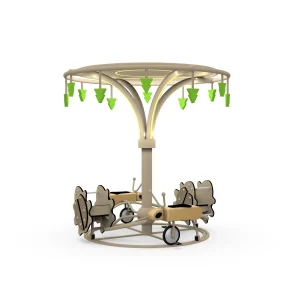
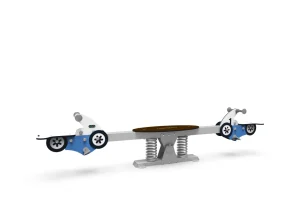
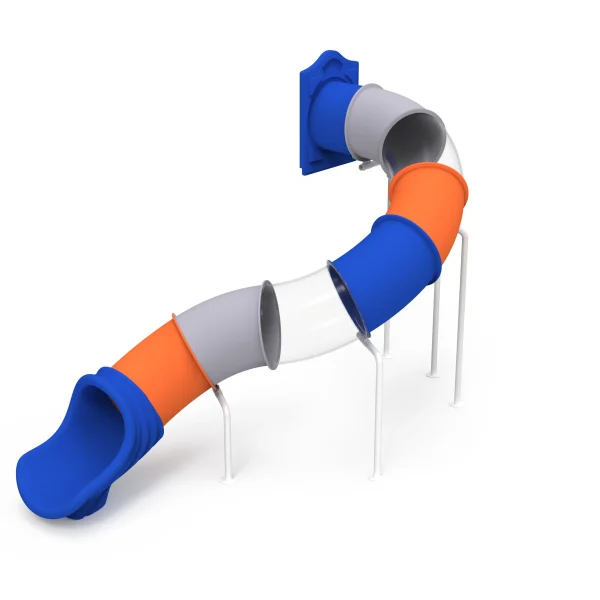
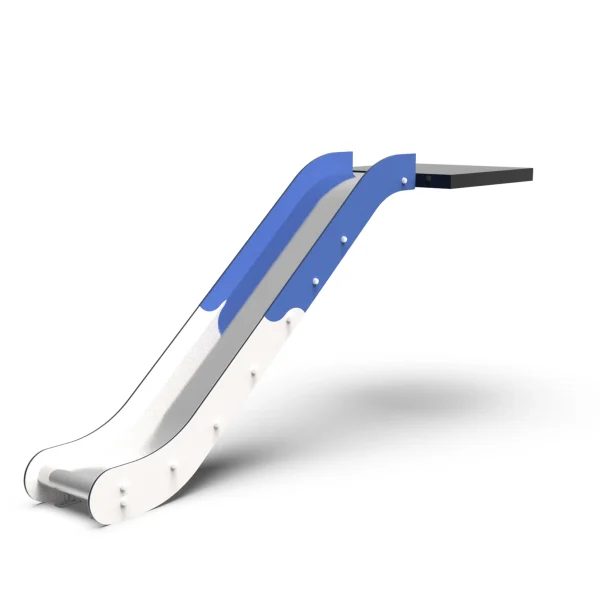
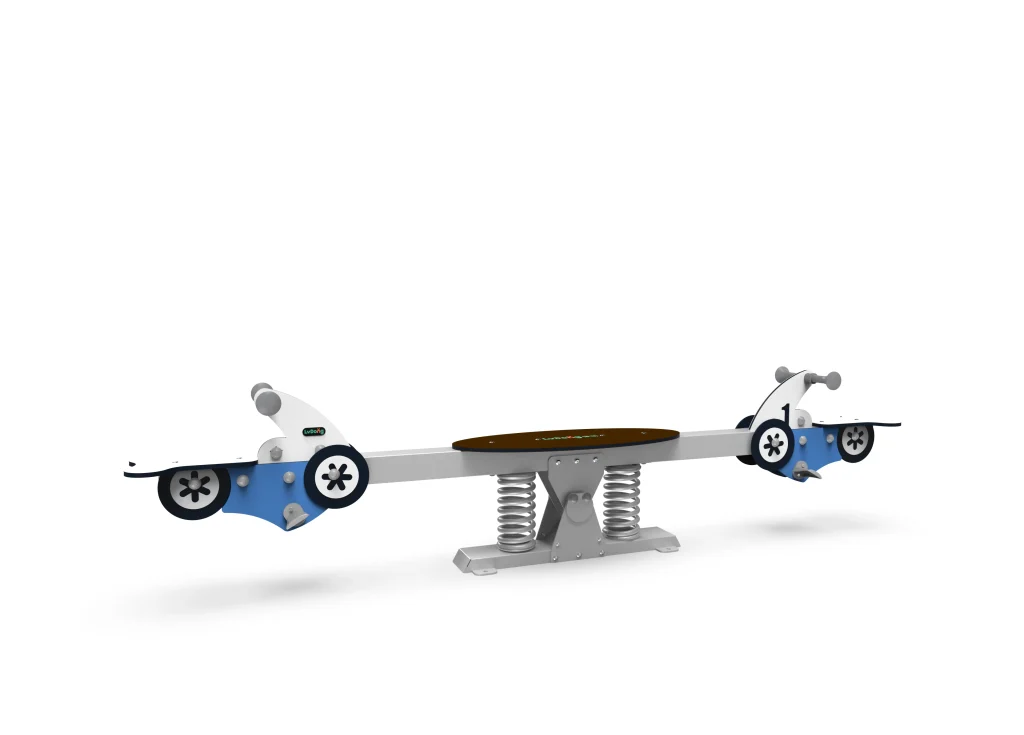
Not all AS 4685 evidence is equal across product types. Swings require dynamic load and impact evidence; slides require fall-height, entrapment, and runout data; spinners and seesaws require stability, pinch-point, and moving-part analysis. Buyers should request part-specific proof rather than accepting a broad test summary.
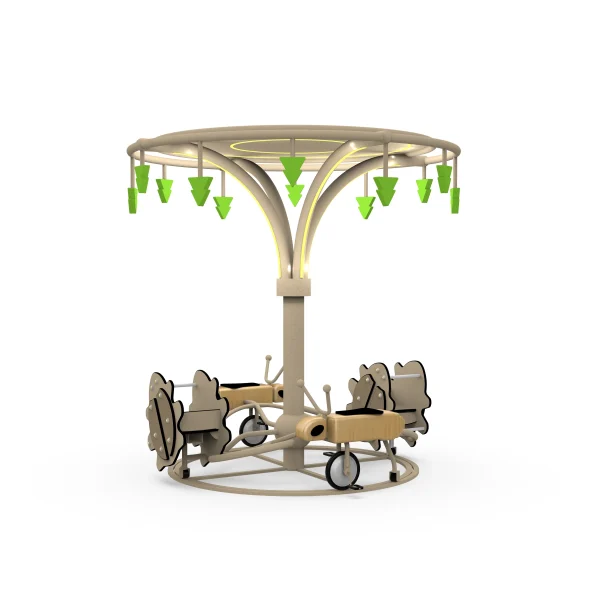
For spinners in particular, credible documentation should include continuous rotation or load testing that demonstrates structural integrity under repeated use. The report should identify the test standard, laboratory, sample model, and result.
Dynamic load evidence is not a generic certificate. <Hurricane Spinner Load Testing Unpacking Playground Safety Standards> covers the type of testing behind credible spinner documentation.
Documentation should also reflect the actual configuration being purchased. A modified deck height, extra seat, custom panel, or non-standard finish can change the compliance profile. If the supplier changes the design after testing, the buyer should ask whether the original report still applies.
Import, Insurance, and Procurement Paperwork
Beyond safety standards, Australian buyers should build a separate record for import and commercial risk. This record may include:
- Commercial invoice, packing list, and certificate of origin.
- Correct HS classification for playground equipment or parts.
- Product liability insurance certificate showing coverage applicable to the Australian market.
- Quality management certificate such as ISO 9001.
- Supplier after-sales response policy and warranty terms.
- Documentation for any treatment or material compliance relevant to Australian customs or environmental requirements.
These documents do not replace AS 4685 technical evidence, but they protect the buyer if a shipment is delayed, a product is incorrectly classified, or a warranty question arises after installation.
How to Use This in an RFQ or Supplier Questionnaire
Buyers can reduce risk by converting the document requirement into explicit RFQ language. Instead of asking a supplier whether they are “certified”, ask them to submit the following as a named attachment list:
- AS 4685 Declaration of Conformity by product family.
- Accredited laboratory test reports by product family.
- Material certificates and structural calculations for the specified equipment.
- Installation manual and post-installation checklist.
- Maintenance schedule and spare-parts catalogue.
- Product liability insurance certificate.
The supplier’s ability to produce the package quickly is often a useful signal. A manufacturer that understands Australian project requirements will already have a structured document repository rather than needing weeks to translate and locate files.
Send the Right Document Request Before You Order
If you are preparing an Australian playground tender or import order, share your equipment list and site location with the technical team first. The request should include the product types, age group, required surfacing, and the authority that will inspect the playground. Send the project details to [email protected] or WhatsApp +8613915684545. The team can map each item to the relevant AS 4685 part and confirm which documentation is available before shipment.
Frequently Asked Questions
Is AS 4685 mandatory for playground equipment in Australia?
AS 4685 is the recognised benchmark for many Australian public playground projects. Whether it is strictly mandatory depends on the site, owner, state or local government requirements, and project contract. Councils and school systems often make AS 4685 compliance a tender condition even where broader regulatory pathways exist [3][6].
Can I use an EN 1176 test report instead of AS 4685?
An EN 1176 report may be useful as background, but it is not automatically a substitute for AS 4685 documentation. Australian reviewers often want the report or declaration to reference the relevant AS 4685 part, including the Australian adoption details [1][2]. Buyers should confirm with the project certifier before relying on EN 1176 alone.
Which documents should be requested before shipment?
At minimum, request a Declaration of Conformity, accredited test reports, product technical drawings, material certificates, structural calculations, installation manual, post-installation checklist, maintenance schedule, and spare-parts list. Each should reference the equipment model and production batch being supplied.
Who can issue a post-installation inspection report?
A post-installation inspection should be carried out by a competent person with knowledge of AS 4685 and playground equipment. Depending on the site, the buyer may use an independent playground safety inspector, a qualified contractor, or an engineer [1][3]. The supplier should supply a checklist and installation information to support that inspection.
How can a buyer verify a test report is genuine?
Check the laboratory’s accreditation status, the equipment model named on the report, the test date, the standard and edition, and whether the report covers the actual configuration ordered. Accredited ISO/IEC 17025 laboratories operating under NATA or ILAC MRA arrangements provide a stronger level of confidence [4][5].
What documentation should be kept after the playground opens?
The operating file should retain the original compliance documents, installation records, post-installation inspection report, maintenance log, spare-parts list, and any later inspection reports. AS 4685.0 style record keeping supports safer operation and makes future audits easier [1].
References
[1] Standards Australia, “AS 4685.0:2017 Playground equipment and surfacing — Development, installation, inspection, maintenance and operation,” Standards Australia, 2017. [Online]. Available: https://store.standards.org.au/product/as-4685-0-2017
[2] Standards Australia, “AS 4685 series: Playground equipment and surfacing,” Standards Australia. [Online]. Available: https://www.standards.org.au/standards-catalogue/sa-snz/consumer/playground-equipment
[3] Kidsafe Australia, “Playground safety,” Kidsafe. [Online]. Available: https://kidsafe.com.au/playground-safety/
[4] National Association of Testing Authorities, “Accreditation,” NATA. [Online]. Available: https://nata.com.au/accreditation/
[5] International Organization for Standardization, “ISO/IEC 17025:2017 General requirements for the competence of testing and calibration laboratories,” ISO, 2017. [Online]. Available: https://www.iso.org/standard/66912.html
[6] Australian Competition and Consumer Commission, “Product safety for children’s products,” ACCC. [Online]. Available: https://www.productsafety.gov.au/product-safety-laws/safety-standards-bans/childrens-products
If you’re interested, check out these related articles:
Playground Slide Materials LLDPE vs 304 Steel Performance
Sensory Play Panels Inclusive Design for Special Needs
Optimizing Playground Equipment Spare Parts Lead Time and Stock
Playground Equipment Warranty Comparison 1 3 or 5 Years
12 Critical Post Installation Acceptance Tests for Playgrounds