Importing playground equipment into Brazil feels different from other South American markets because INMETRO is not simply a paperwork check. It is a conformity-assessment system tied to product scope, national standards, customs clearance, and often local public tender rules. For buyers and specifiers, the practical goal is to know early whether the equipment needs certification, which technical file elements will be reviewed, and who must appear as the registered importer.
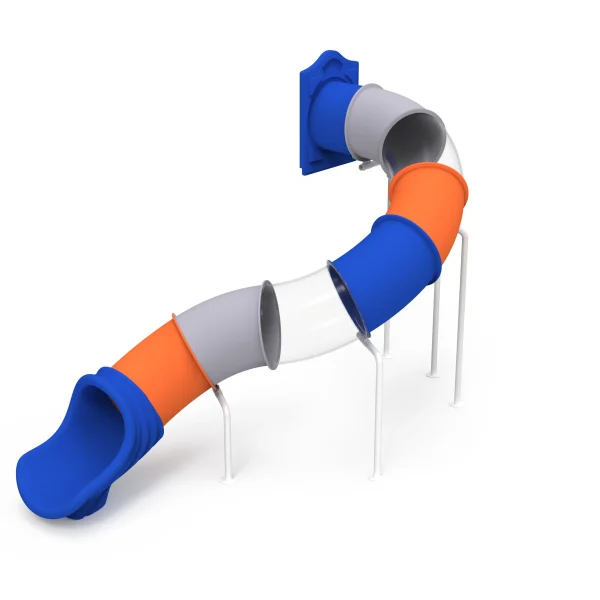
What INMETRO Certification Means for Playground Equipment
INMETRO — Brazil’s National Institute of Metrology, Quality and Technology — manages conformity assessment programs for regulated products [1]. For playground equipment, whether certification is compulsory depends on product classification, intended use, and whether the buyer or public authority writes INMETRO or ABNT NBR compliance into the tender.
In practice, many Brazilian importers request an INMETRO-facing technical file even when the product is outside the strict compulsory list. Municipal parks, schools, and private operators frequently treat certification or recognized laboratory evidence as a qualifying condition because local safety expectations are grounded in ABNT NBR 16071 [2].
The key distinction is this: the overseas manufacturer rarely becomes the certificate holder on its own. The Brazilian importer or legal representative normally holds the registration, while the supplier must support the process with drawings, bill of materials, test reports, factory audit access, and labeling-ready data.
ABNT NBR 16071 and the EN 1176 Starting Point
Brazil’s primary standard for playground equipment safety is the ABNT NBR 16071 series [2]. It follows principles similar to the EN 1176 family, covering entrapment, structural integrity, falling height, impact attenuation, and component-specific requirements. That alignment helps manufacturers who already test to EN 1176, but it does not make certification automatic.
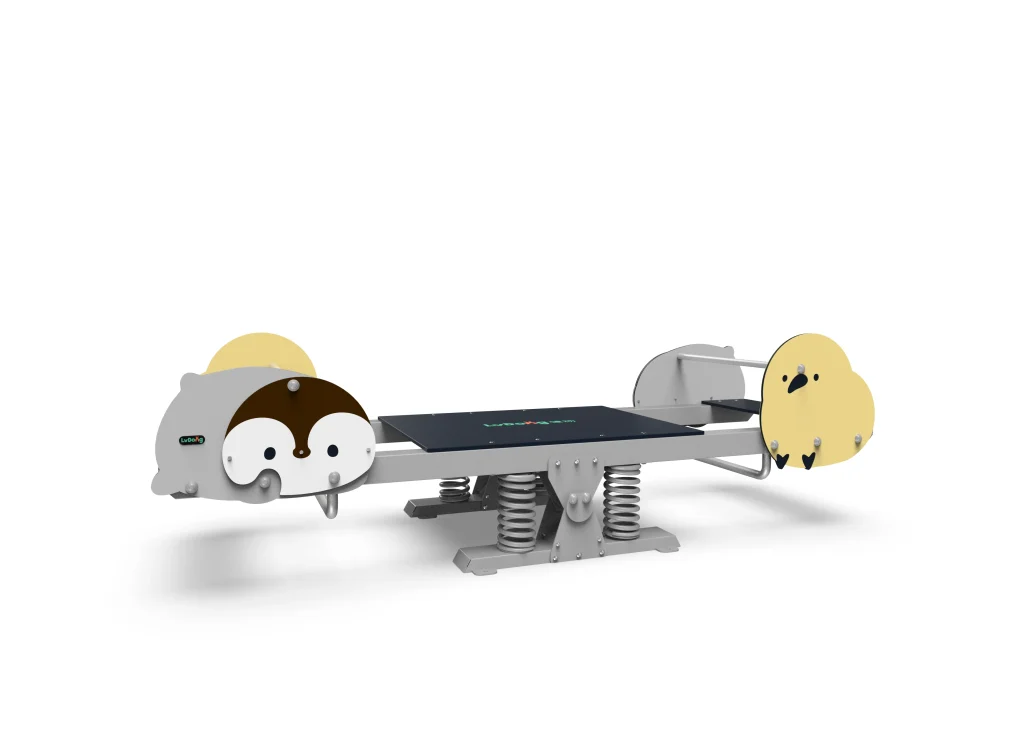
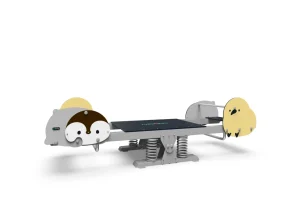
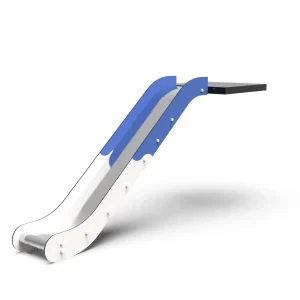
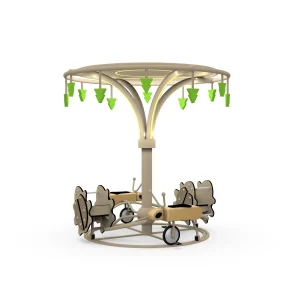
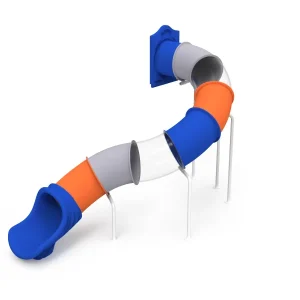
The most productive first step is a gap analysis against the relevant NBR 16071 part. A slide, spinner, seesaw, or spring rider may carry an EN 1176 test report that is technically valid, but the Brazilian file still needs national-standard mapping, Portuguese documentation, and traceable model identification. Buyers should ask the supplier for a clause-by-clause standards digest rather than accepting “EN-compliant” as the final answer.
Brazil Import Gatekeeping: Siscomex, NCM, and Local Representation
The import process runs through Siscomex, Brazil’s integrated foreign trade portal [3]. NCM classification determines tariff treatment, possible import licensing, and whether customs will hold the shipment for conformity documentation. If the product is captured by an INMETRO compulsory program, customs may require the certification to be active before release.
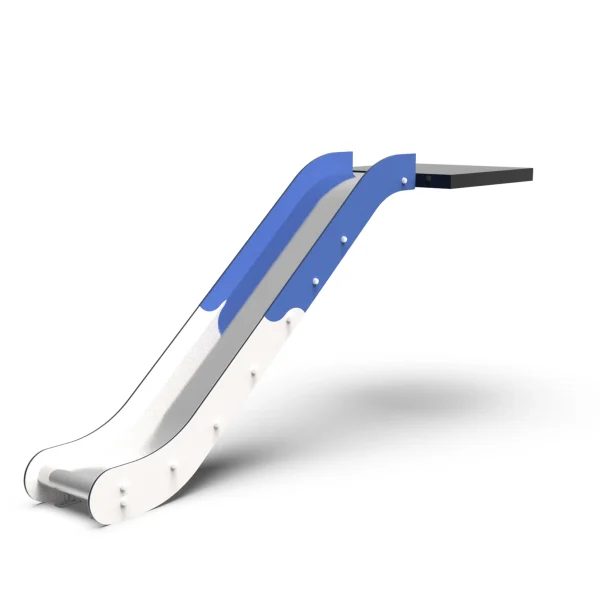
A common failure point is weak local representation. The importer needs a valid CNPJ, sound NCM classification, and a clear compliance channel with the certification body. The supplier should provide defined descriptions, technical drawings, and component lists that match the NCM declaration. Mismatches between commercial invoice descriptions and technical file descriptions are one of the fastest ways to create clearance delays.
The Technical File and the Most Common Compliance Gaps
Brazilian evaluators review consistency more than volume. A well-organized file answers one question: does the exact model entering Brazil match the model that was tested and certified?
| Technical File Item | What the Evaluator Usually Checks | Common Gap |
|---|---|---|
| Product drawings and bill of materials | Model identity, dimensions, materials | Drawing set excludes a production variant |
| Laboratory test reports | Scope, accredited status, current validity | Report does not match final product name |
| Factory audit evidence | Production line capability, traceability | Audit covers a different site or scope |
| Portuguese installation manual | Local use guidance, safety information | Manual remains EN/English-only |
| Product marking artwork | Portuguese labels, importer CNPJ, traceability | Missing batch or importer identification |
Test reports should come from an INMETRO-accredited or recognized laboratory operating to ISO/IEC 17025 [4]. The accreditation confirms that the test method, equipment, and reporting follow an internationally accepted competence framework.
The recommendation link below is placed here because the same discipline that keeps a Brazilian technical file audit-ready also reduces costly import surprises.
Brazil’s technical file review rewards teams that treat safety documentation as a continuous compliance record rather than a one-time folder. <Playground Equipment Safety Your Essential Self Inspection Checklist> covers practical pre-shipment inspection points, and <Key Contract Clauses When Purchasing Commercial Outdoor Playground Equipment> explains how to bind certification obligations into the purchase agreement.
Practical Brazil Compliance Sequence and Production Readiness
A workable sequence for a playground equipment buyer is:
- Define the project’s compliance baseline: public tender, private park, school, or hospitality use.
- Confirm the preliminary NCM with the local importer or customs broker.
- Request a NBR 16071 gap analysis from the equipment supplier [2].
- Verify the laboratory reports against the exact model, name, and production version [4].
- Require Portuguese labeling and installation documentation before shipment.
- Make factory audit support a written obligation in the purchase contract.
- Register the importer as the responsible party and keep the technical file current for surveillance.
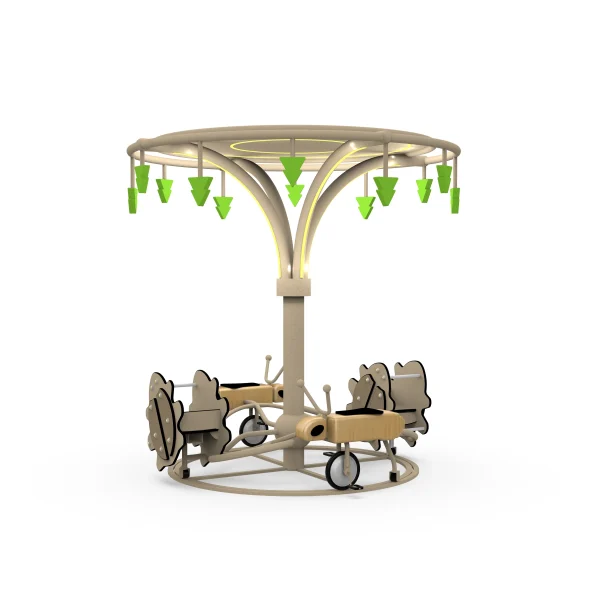
Production readiness matters as much as the paper file. For equipment such as spinners, seesaws, spring riders, and slides, the factory must demonstrate repeatable welding, material traceability, correct fall-height dimensions, and stable component sourcing. INMETRO-facing audits often focus on whether the production line can consistently reproduce the tested sample, not merely whether one prototype passed.
If you are already compiling a Brazilian technical file, send the product list and drawings to [email protected] and request the NBR 16071 gap-analysis package. Direct inquiries can also be handled through WhatsApp at +8613915684545.
Plan Your Brazil-Compliant Playground Order
For importers preparing a Brazil project, the fastest path to a clean quotation is to share the project context from the start: target city, intended site, preferred equipment types, tender documents if applicable, and preliminary NCM guidance if already available.
Suzhou LvDong Amusement Equipment supports the process with product drawings, EN 1176 and GB/T 34272 test documentation, label artwork, and installation manual files that can be adapted to the importer’s Brazil-facing technical file.
For a Brazil-specific quote or INMETRO documentation set, contact [email protected] or WhatsApp +8613915684545.
Frequently Asked Questions
Is INMETRO certification required for all imported playground equipment?
INMETRO certification is required for regulated product categories and is frequently written into public tenders. The obligation depends on the product classification and how the Brazilian buyer specifies conformity.
Is ABNT NBR 16071 identical to EN 1176?
ABNT NBR 16071 follows EN 1176 principles but is a Brazilian national standard. Importers should treat it as the local conformity benchmark and require a specific gap analysis rather than assuming automatic equivalence.
Who holds the INMETRO certificate for imported equipment?
The Brazilian importer or local legal representative generally holds the certification registration. The overseas manufacturer supplies the technical file, testing evidence, and factory audit support.
How long does Brazilian certification take?
Timing depends on product scope, laboratory schedule, and audit availability. Planning documentation early is more reliable than assuming a fixed calendar, because technical review, testing, and corrective actions can extend across weeks or months.
Can Lvdong provide NBR-ready documentation?
Lvdong can provide product drawings, bills of materials, EN 1176 and GB/T 34272 test reports, labeling data, and Portuguese-ready manual files to support the importer’s NBR 16071 gap analysis and technical file preparation.
References
[1] Instituto Nacional de Metrologia, Qualidade e Tecnologia (INMETRO), “Avaliação da conformidade,” Gov.br, Brasília, Brazil. [Online]. Available: https://www.gov.br/inmetro/pt-br/assuntos/avaliacao-da-conformidade. [Accessed: Feb. 2026].
[2] Associação Brasileira de Normas Técnicas, ABNT NBR 16071-1, Playground equipment — Part 1: General safety requirements and test methods, Rio de Janeiro, Brazil, 2020.
[3] Receita Federal do Brasil, “Siscomex Import — Portal Único,” Gov.br, Brasília, Brazil. [Online]. Available: https://www.gov.br/receitafederal/pt-br/assuntos/aduana-e-comercio-exterior. [Accessed: Feb. 2026].
[4] International Organization for Standardization, ISO/IEC 17025:2017, General requirements for the competence of testing and calibration laboratories, Geneva, Switzerland, 2017.
If you’re interested, check out these related articles:
Old Playground Renovation Keep or Replace Decisions
Tornado Playground Spinner Strategic Installation Site Planning
Safe Quiet Cleanable Playground Equipment for Hospitals