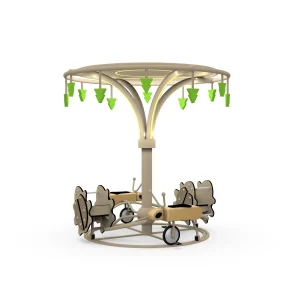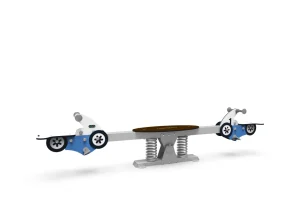
A co-development agreement is not a standard purchase order with extra pages. It determines who owns the design history, who controls tooling modifications, and who may reuse the final product family after the first shipment. For proprietary playground equipment—such as a themed multi-person spinner, a custom spring rider family, or a sensory play panel line—the written structure matters more than the initial concept sketch. Without clear foreground and background IP language, both parties can leave the project believing they own more than they actually do.
That is why procurement teams, design consultants, and manufacturers should treat the agreement as a technical document rather than a legal formality. The strongest agreements connect legal ownership clauses to engineering deliverables: design freeze records, CAD file sets, material specifications, test reports, and tooling inspection rights. This guide explains the ownership models and contract provisions that keep a co-developed product line commercially usable for both sides.
Why Joint Design Ownership Needs More Than a Handshake
The central problem in joint design work is that each party arrives with different assets. A resort operator may bring a brand narrative, a colour palette, or a site constraint; the playground equipment manufacturer brings structural engineering, tube-slide forming capability, bearing selection records, and compliance documentation. If those contributions are not separated in the contract, the line between “buyer’s brand” and “supplier’s platform” blurs.
The agreement should first identify background IP. This includes pre-existing drawings, trademarks, patents, software files, and production know-how owned by each party before the project. It should then define foreground IP: the new drawings, tooling paths, safety calculations, and product variants created during the project. Clear definitions prevent a supplier from later claiming exclusive rights to a buyer-funded design kernel, and they prevent a buyer from claiming the supplier’s entire production system as part of the deal.
Joint design ownership becomes especially important when the buyer wants to block the supplier from selling the same product to a nearby competitor, or when the supplier wants to reuse a successful mechanism in other markets. The contract can satisfy both intentions only if ownership, use rights, and modification rights are separated rather than bundled into a single vague phrase.
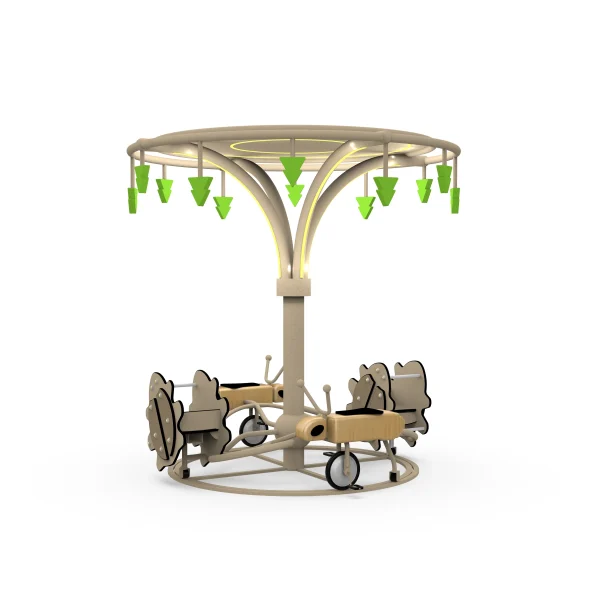
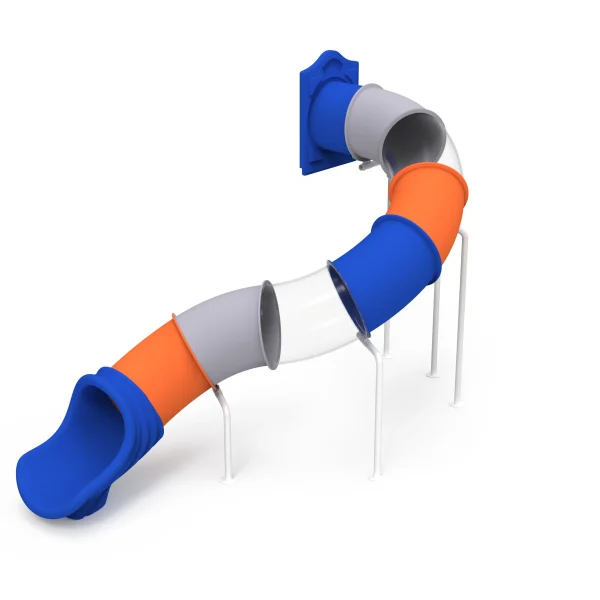
The Three Ownership Structures That Determine Control
Most co-development agreements fit one of three models. The right choice depends on who paid for the tooling, who will hold the certifications, and how broadly the product will be sold.
| Ownership model | Design rights | Tooling control | Typical use |
|---|---|---|---|
| Joint ownership | Shared between parties with defined use rights | Shared or buyer-held with supplier access | Buyer wants exclusivity but supplier retains platform know-how |
| Assignment to buyer | Buyer owns the new design; supplier may retain a licence | Buyer usually owns custom tooling | Buyer funds a fully proprietary product line |
| Supplier-owned with exclusive licence | Supplier owns design and tooling; buyer receives territorial or field-of-use exclusivity | Supplier controlled with audit rights | Buyer wants lower tooling cost and ongoing supplier support |
Joint ownership under many legal systems gives each owner a right to use the design, but it can also create complications for enforcement, licensing, and assignment. Buyers should not assume that “50/50 ownership” means “either party can do anything without the other.” In practice, the agreement needs to state how licensing income is shared, who may register design rights, and which party defends infringement claims [4].
For a proprietary line, assignment with a licence back often provides the clearest buyer control, but that requires the buyer to fund more of the tooling and design work upfront. A supplier-owned model with an exclusive licence may be faster to launch, but it limits the buyer’s downstream exit options.
Technical Annexes That Make the Design Patent-Ready and Production-Safe
A co-development agreement should include a technical annex that is at least as detailed as the purchase specification. Without it, “joint design” can drift into open-ended development cycles, and termination becomes difficult because no one can agree on what was actually delivered.
The annex should cover:
- Design freeze: the approved engineering drawings, component numbers, surface finishes, and colour references.
- Safety standard scope: the exact clauses and editions that apply, such as EN 1176-1, ASTM F1487, and GB/T 34272-2017 [1][2][3].
- Material data: steel grades, spring wire specifications, coating systems, fastener classes, and plastic resin types.
- File deliverables: native CAD models, neutral-format files, bill of materials, and assembly instructions.
- Testing commitments: prototype test plans, third-party inspection scope, and acceptance criteria.
A useful compromise is to attach a product data pack and a design-history file as numbered annexes. For example, a co-developed spring rider with a back-support seat might freeze the spring steel grade, seat shell profile, handrail welding position, and fall-height calculation in the same annex. If any party later changes one of those values, the change triggers a written variation rather than an informal workshop note.
If you are preparing a co-development agreement for a themed line or custom spring rider series, email [email protected] with your drafting team and request a product data pack and design-history file template. This is not a purchase commitment; it gives your legal team the technical annex structure that most agreements are missing.
Inspection, Tooling, and Acceptance Tests
Ownership language alone will not protect a proprietary product line if the manufacturer cannot control production consistency. The agreement should give the buyer the right to inspect tooling, review first-off samples, and witness or receive third-party test reports before balance payment.
Tooling provisions should address who owns the mould, die, or welding jig, where it is stored, and what happens if the supplier goes out of business. Even when the supplier retains tooling ownership, the buyer should receive a written right to retrieve the tooling after termination if outstanding production or spare-parts obligations remain.
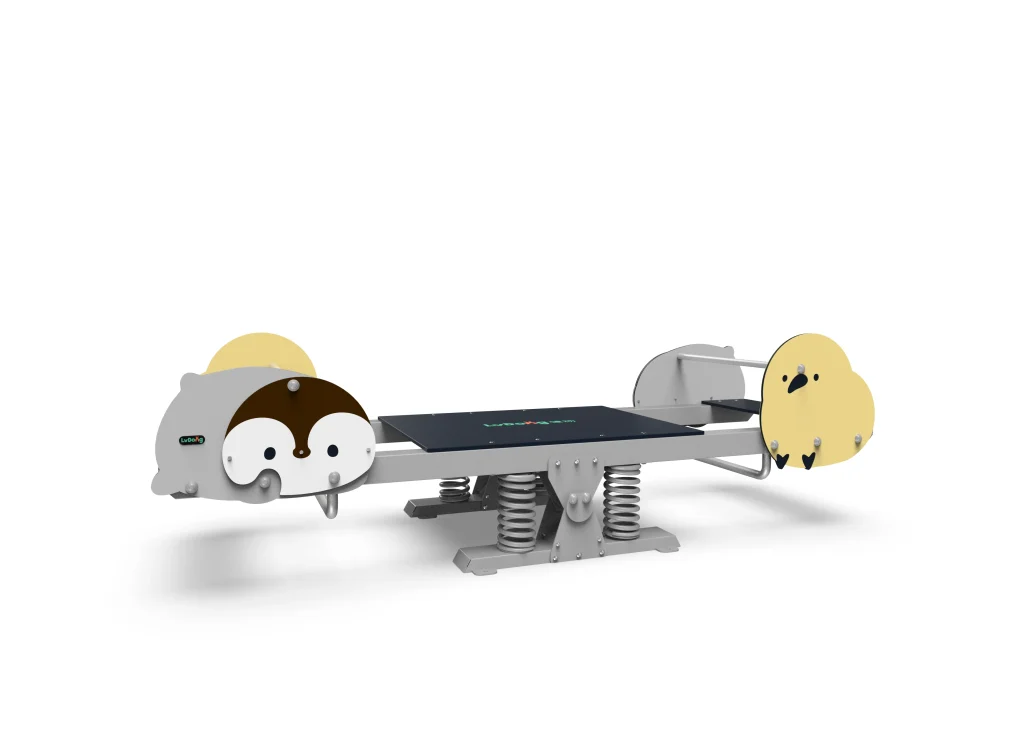
Acceptance tests should be tied to the standards listed in the technical annex. A co-developed multi-seat seesaw or spinner should pass the same impact, entrapment, protrusion, and stability checks as any standard production unit, and the buyer should keep the reports as part of the design record.
Inspection rights work best when the contract names the exact controls the buyer may observe.
covers the audit trail that confirms a co-development partner can actually protect your proprietary drawings. Before signing the acceptance certificate, the buyer should have a closed file of safety documents.
covers the document set to request before accepting a custom line.
Commercial Terms: Exclusivity, Territory, and Non-Compete Scope
An ownership clause without commercial boundaries is difficult to enforce. The agreement should define the territory, customer segment, product family, and time period in which the supplier will not sell identical or confusingly similar products to third parties.
Exclusivity can be structured by:
- Geographic territory, such as a country, region, or resort portfolio.
- Channel, such as hotel kids clubs, municipal tenders, or franchise networks.
- Product family, such as a named themed spinner series or a custom panel range.
- Time period, often tied to purchase volumes or design royalty recovery.
For smaller buyers, a broad non-compete is rarely enforceable or commercially realistic. A stronger approach is to buy exclusivity through annual purchase commitments, tooling contributions, or higher unit pricing that compensates the supplier for lost distribution. The agreement should specify what happens when the buyer misses those commitments: exclusivity may narrow, convert to a licence, or lapse.
Commercial levers sit alongside IP clauses, not underneath them.
covers the volume terms that make exclusive co-development commitments bankable for both parties.
Certification ownership also belongs in this section. The party named on the technical file should remain responsible for production consistency. If the buyer later sources equivalent components from a different supplier without updating the technical file, the certification is no longer valid for the modified product, and the original manufacturer should have a written right to refuse responsibility for unapproved substitutions [1][2][3].
From Draft Agreement to Production-Ready Technical Annex
A co-development agreement becomes strong only when legal clauses are paired with engineering records. Before signing, compare the contract’s definitions against the documents you can actually hold: design freeze records, CAD exports, tooling inspection reports, and safety test certificates. If a clause cannot be traced to a document, clarify it before the first tooling payment.
For a co-development inquiry for proprietary playground equipment, contact Suzhou LvDong Amusement Equipment Co., Ltd. at [email protected] or WhatsApp +8613915684545. Our team can provide a product data pack, technical annex examples, and production feasibility input for spring riders, spinners, seesaws, slides, and play panels before you finalise the agreement.
Frequently Asked Questions About Co-Development Agreements
Who owns the tooling if the buyer pays for it?
Tooling ownership should be stated separately from design ownership. A buyer who funds a custom mould or welding jig can own the physical tooling even when the supplier owns the underlying manufacturing process. The agreement should record the tooling’s location, maintenance responsibility, and retrieval right after termination.
Can a buyer register a jointly developed playground design as a design patent or trademark?
It depends on the contract and the applicable jurisdiction. If the design is jointly owned, registration and enforcement normally require agreement between the parties. If the design is assigned to the buyer, the buyer may register in its own name. The contract should state who files, who pays, and how infringement recoveries are shared.
What happens to unfilled orders if either party terminates the agreement?
The termination clause should cover work-in-progress, raw material, finished goods, and spare parts. Buyers usually need the right to receive completed units and to buy remaining stock at the agreed transfer price. Suppliers usually need protection from being forced to hold buyer-specific inventory indefinitely after termination.
Do EN 1176 or GB/T compliance obligations transfer automatically under a co-development agreement?
Usually, certification is attached to a specific design, manufacturing process, and technical file holder. Any material change, supplier change, or drawing revision can invalidate the original certification unless the responsible party updates the technical file and confirms continued compliance [1][3].
What documents should be attached to the agreement to avoid scope creep?
Attach a design freeze record, product data pack, bill of materials, safety test plan, tooling schedule, and variation order form. The design freeze is the most important document because it defines what “finished design” means at the point of production approval.
References
[1] European Committee for Standardization. EN 1176-1:2017, Playground equipment and surfacing — Part 1: General safety requirements and test methods. Brussels: CEN, 2017.
[2] ASTM International. ASTM F1487-21, Standard Consumer Safety Performance Specification for Playground Equipment for Public Use. West Conshohocken, PA: ASTM International, 2021.
[3] Standardization Administration of China. GB/T 34272-2017, General technical requirements for amusement devices. Beijing: SAC, 2017.
[4] World Intellectual Property Organization. IP and Business: Managing Intellectual Property in the Business Context. Geneva: WIPO, n.d.
If you’re interested, check out these related articles:
Playground Play Panels Material Selection and Secure Installation
Multi Function Playhouse with Slide and Swing Commercial Solutions
Age Appropriate Playground Sets for Child Development
Space Saving Cantilever Swing Set Design for Urban Play Environments
Mastering Metal Slide Heat Prevention Strategies for Playgrounds