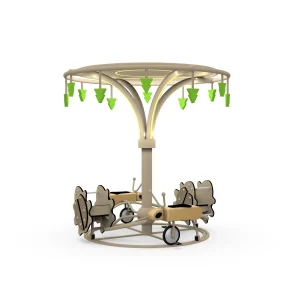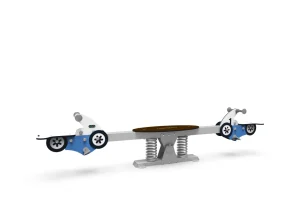
White-label playground manufacturing gives distributors, park operators, and equipment brands a practical way to sell proven play structures without running their own factory, prototype program, or safety-testing cycle. The process goes further than attaching a logo. It affects product identity, documentation, packaging, spare parts, warranty language, and the way the equipment enters your market.
This guide explains how white-label rebranding works when a manufacturer supplies playground equipment under your company name, which decisions must be documented early, and how to keep safety compliance intact while changing the commercial face of the product.
What White-Label Playground Equipment Manufacturing Really Includes
White-label manufacturing, sometimes called OEM rebranding, means the factory produces equipment that is structurally identical or nearly identical to an existing catalog model, while the buyer presents it under a different brand name. Unlike private-label retail goods, playground white-label work usually involves long-life steel structures, safety-rated moving parts, concrete anchoring, and age-graded play functions. That makes documentation more important than cosmetic changes.
The manufacturer remains responsible for the core engineering: frame geometry, welding, load paths, fall heights, bearing selection, and compliance testing. The buyer controls the outward brand layer: company name, logo plates, colour scheme, SKU numbering, instruction manual cover, crate markings, and after-sales messaging.
OEM and ODM are not the same thing in this context. A standard white-label program starts with an existing product family, such as spring riders, spinners, seesaws, swings, or slides, and changes the brand presentation. A deeper ODM engagement may involve new themed panels, modified platform heights, custom colours, or a completely new configuration.
White-label projects often begin with framework changes rather than a full redesign. <How Indoor Playground Equipment Manufacturers Customize Solutions> covers the customization options buyers should clarify before production begins.
Why Distributors and Park Brands Use White-Label Programs
A white-label program reduces three common costs for a growing playground equipment business: research and development, certification testing, and production capacity. A distributor can offer a complete product range without maintaining tooling, welding lines, coating facilities, and an in-house design team.
The model also supports consistent service. Spare parts, replacement springs, bearing kits, and slide sections remain available through the original factory because the underlying part numbers stay linked even when the visible brand changes. That continuity matters for municipal buyers who expect maintenance records and replacement parts years after installation.
White-label branding is also used for tender requirements. Some procurement frameworks ask suppliers to present equipment under a local distributor identity, or to match a park operator’s existing brand system. In those cases, the product identity must match the tender documents exactly, including serial plate wording and manual templates.
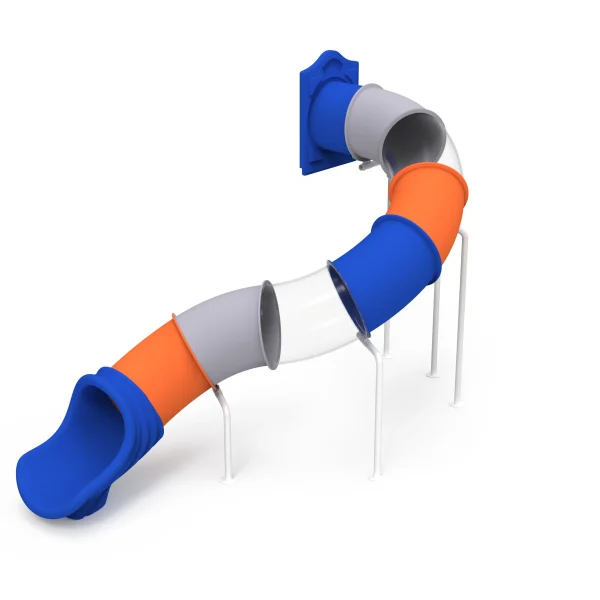
The Rebranding Process From First Inquiry to Final Delivery
A structured white-label project follows about eight stages. Each stage should be confirmed in writing so that tooling, documentation, and inspection expectations do not shift after production starts.
- Product selection — The buyer chooses standard product families or requests a limited modification to platform height, theme, or colour.
- Brand briefing — Logo files, brand colours, serial plate text, and manual formatting are collected.
- Engineering review — The technical team reviews whether modifications affect fall height, entrapment gaps, stability, or age grading.
- Sample or visual mock-up — For large programs, a first-piece sample or detailed rendering is approved before bulk production.
- Pre-production inspection — Component tolerances, welding parameters, and coating samples are checked.
- Batch production — Frames, moving parts, panels, and packaging are produced under the agreed brand identity.
- Third-party verification — Optional SGS or TÜV Rheinland inspection can be arranged before shipment.
- Packing and release — Crates are labelled with the agreed SKU, importer name, and handling instructions.
A strong rebranding package should include more than logos. The table below shows the typical deliverables that separate a complete white-label program from a simple sticker change.
| Deliverable | What it includes | Why it matters |
|---|---|---|
| Brand identity pack | Logo plates, rivet or bracket positions, approved typography | Keeps park signage consistent |
| Colour specification | Pantone references for powder coating and plastic parts | Prevents batch-level colour drift |
| Documentation set | Branded installation manual, maintenance log, spare parts list | Supports operator handover |
| Serial plate design | Product code, date of manufacture, importer details | Needed for warranty and recalls |
| Packaging marks | Shipping marks, crate labels, handling icons | Reduces freight handling errors |
| Compliance file | Declarations of conformity, test reports where applicable | Required for tenders and audits |
Branding Scope: Where the Factory Name Can and Cannot Be Removed
White-label rebranding normally covers the visible marketing surface. The buyer’s name can appear on signs, instruction manuals, sales collateral, and packaging. The technical product identity, however, must remain traceable. Safety standards require the manufacturer or authorized representative to maintain production records, and some certification schemes require a durable identification of the production source.
Buyers commonly specify these branding elements:
- Anodized or laser-engraved aluminium nameplate
- Weather-resistant printed logo panels
- Branded play panel graphics
- Pantone-matched powder coating
- Custom SKU coding for catalog integration
- White-label wrapping or logo-free crates for direct-to-site delivery
- Branded maintenance checklists and inspection tags
The best time to confirm each element is before the first-piece sample. Changes made after batch production begins can delay container loading and add repacking costs, especially when ocean freight and import documentation are already prepared.
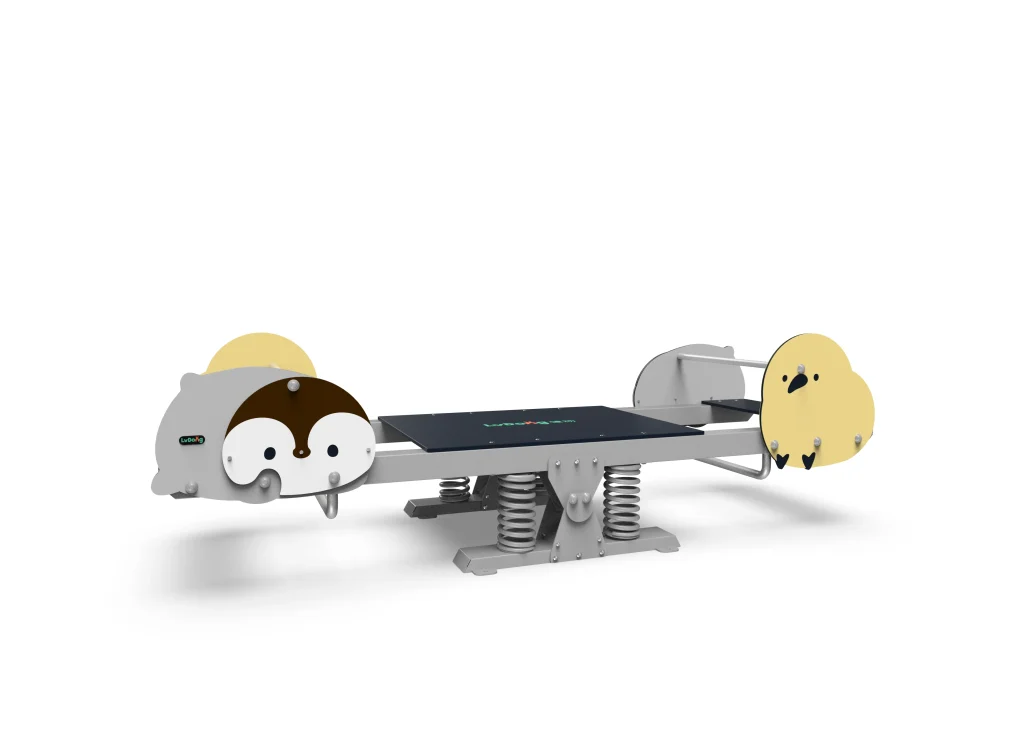
Technical Safety Documentation You Need for White-Label Products
Rebranding a product does not remove the obligation to meet the destination market’s playground standard. The most common frameworks referenced by buyers are the European EN 1176 series [2], the U.S. ASTM F1487 standard [3], and the CPSC Public Playground Safety Handbook [4]. The applicable standard depends on the project site: a municipal park in the EU, a school district in North America, or a private resort in the Middle East may each expect a different compliance file.
From a quality-system perspective, factory operations are typically governed by ISO 9001:2015 [1], which covers design, production, and after-sales traceability. When third-party inspection is required, the inspection body should operate under a recognized conformity-assessment framework such as ISO/IEC 17020 [5].
A complete white-label compliance file should include:
- Product conformity statement referencing the appropriate standard
- Raw material certificates for steel, plastic, and coatings
- Welding procedure records where structurally applicable
- Fall height and impact attenuation data
- Age grading and user-capacity information
- Installation manual with anchoring requirements
- Maintenance schedule and inspection criteria
- Spare parts identification table
The brand on the manual may change, but the safety data behind it should remain comparable to the original certified model. Buyers should reject documentation packages that simply replace the logo while removing technical annexes.
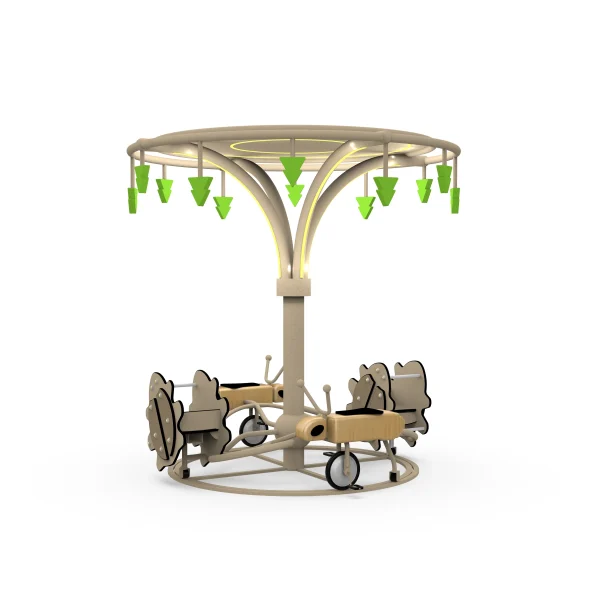
Before approving a rebranded sample, compare it against your supplier acceptance criteria rather than only the marketing image. <Evaluate Playground Equipment Samples Before Buying: A Guide> covers the practical checks buyers should complete at the warehouse.
Quality Verification and Third-Party Inspection
White-label production should follow the same inspection logic as branded production. Key checks include weld appearance and penetration, powder-coating thickness, moving-part clearances, bearing rotation, spring rebound, and sanding or edge finishing on metal and plastic edges.
For large orders, a pre-shipment inspection can be arranged with an independent body. The inspection scope may cover quantity, branding accuracy, colour matching, packaging, and random component measurement. Documentation is then issued before the container leaves the factory, giving the buyer an objective record if later damage or missing parts occur.
Suzhou LvDong operates a modern production base covering more than 10,000 square metres and has delivered over 1,500 projects across municipal parks, residential communities, cultural tourism sites, and educational institutions. The production system includes standardized quality management across R&D, design, production, installation, and after-sales support. For white-label clients, this means the underlying production traceability remains available even when the trade dress changes.
Pricing, MOQ, and Payment Structures for Rebranding Programs
White-label pricing depends on product complexity, branding depth, order quantity, and whether new tooling or artwork is required. Standard spring riders and panel-based products usually allow lower minimum orders than large multi-deck slide structures or fully custom theme systems. The factory confirms the exact minimum order quantity in the quotation because it changes by product family and branding package.
Payment terms are contract-specific rather than universal. Many international equipment transactions use a deposit against proforma invoice before production, followed by balance payment before shipment. Buyers should confirm whether the deposit covers tooling, artwork plates, or sample production, because these items are often non-refundable once approved.
The most successful white-label buyers ask these pricing questions early:
- Is the sample cost credited against a later bulk order?
- Does the unit price include branded manuals and serial plates?
- Are moulding or tooling fees one-time or recurring?
- Who pays for third-party inspection if a deviation is found?
- Are spare parts priced at the same margin for repeat orders?
- How are currency and shipping terms stated in the proforma invoice?
Contract and Intellectual Property Essentials
White-label agreements should clearly state who owns the product documentation, artwork files, custom moulds, and any modified design after production ends. In most standard programs, the factory retains the underlying manufacturing files while the buyer retains the brand marks and customer-facing marketing materials. Custom co-developed modifications should be listed in the contract to avoid later ambiguity.
The International Chamber of Commerce publishes model international sale contracts that can serve as a useful reference for cross-border equipment transactions [6]. A practical playground white-label contract should additionally cover:
- Product specification list and revision date
- Approved packaging and palletizing standard
- Inspection rights and corrective action timelines
- Warranty trigger points and excluded wear items
- Spare parts availability period
- Territory exclusivity, if negotiated
- Confidentiality of branding and pricing information
Choosing a factory for white-label work is also a selection exercise, not only a branding exercise. <Selecting Commercial Playground Manufacturers: A Step-by-Step Guide> covers the supplier evaluation factors buyers should review before signing.
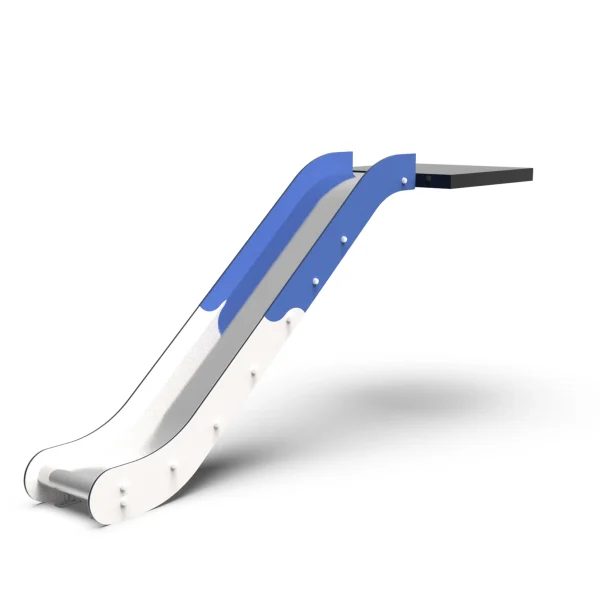
Common Pitfalls in White-Label Playground Projects
One recurring problem is approving artwork without checking how it behaves outdoors. A digitally printed logo can fade or delaminate if the UV stabilizer and substrate are not specified. Metal nameplates generally last longer, but the fixing method must not create sharp edges or entrapment points on the play surface.
Another issue is manual localization. A branded manual with incorrect anchoring details, wrong torque values, or missing age grading creates site risk. The front cover may carry the buyer’s name, but the technical content must match the actual product configuration.
The third common problem is colour expectation. Screen colours and powder-coating colours are not identical. Buyers should approve a physical colour chip or coated sample before production rather than relying on a PDF rendering.
Finally, timeline assumptions cause the most disputes. White-label work adds artwork approval, plate production, manual formatting, and packaging changes to the normal production schedule. A clear milestone table with approval deadlines protects seasonal projects and installation windows.
Get Your White-Label Rebranding Plan and Quote
A reliable white-label program begins with a clear product list, a defined destination market, and a documented branding package. If you are preparing a white-label quotation request for spring riders, spinners, seesaws, swings, slides, or interactive playground equipment, send the planned SKU list and destination standard to the Lvdong technical team.
For project inquiries, sample coordination, and white-label documentation review:
- Email: [email protected]
- WhatsApp: +8613915684545
The team can assist with product selection, branding advice, compliance documentation, and direct factory quotation.
Frequently Asked Questions About White-Label Playground Manufacturing
Do I need my own certifications if I rebrand white-label equipment?
You usually do not need to re-test unchanged standard products. You need the appropriate conformity documentation for your market, such as EN 1176 [2] or ASTM F1487 [3] records, and you should keep the factory’s technical file available for audits. If you modify load-bearing structure, fall height, or safety-critical dimensions, a new engineering review is required.
Can I change colours, logos, and manuals without affecting safety compliance?
Yes, for most non-structural changes. Logos, colour systems, packaging, and manual covers can be changed without altering safety performance if the hardware is unchanged and the fixings do not create new protrusions or entrapment hazards. Any change that affects fall height, guardrails, access, moving parts, or user capacity must be reviewed.
What is the minimum order quantity for white-label playground equipment?
The minimum order depends on the product family and branding depth. Standard spring riders and small panel products generally allow more flexible quantities than large multi-deck slide structures or fully custom theme systems. The exact MOQ is confirmed in the quotation based on your selected items and destination market.
Who owns the CAD files and branding tooling after production?
In most standard white-label programs, the buyer owns its logo artwork and customer-facing marketing materials, while the factory retains the underlying manufacturing and engineering files. Any custom co-development should be listed in the contract so file ownership, modification rights, and spare parts production are clearly defined.
Can Lvdong ship directly to my end client without showing factory branding on the crate?
Yes. White-label deliveries can use neutral packaging and shipment documents configured to your importer details. The commercial invoice, packing list, and delivery address can be based on your agreed forwarding arrangement. Direct-to-site delivery requires confirmed access, unloading equipment, and site contact details before dispatch.
How long does white-label customization take?
The added time depends on artwork approval, plate production, manual formatting, and package design. A standard product with an approved brand pack typically adds several working days to the production schedule, while custom theme panels or new colour trials add more. The factory confirms the milestone plan after receiving the complete branding brief.
References
[1] ISO 9001:2015. Quality management systems — Requirements. International Organization for Standardization.
[2] EN 1176-1:2017. Playground equipment and surfacing — Part 1: General safety requirements and test methods. European Committee for Standardization.
[3] ASTM F1487-21. Standard Consumer Safety Performance Specification for Playground Equipment for Public Use. ASTM International.
[4] U.S. Consumer Product Safety Commission. Public Playground Safety Handbook. Publication No. 325.
[5] ISO/IEC 17020:2012. Conformity assessment — Requirements for the operation of various types of bodies performing inspection. International Organization for Standardization / International Electrotechnical Commission.
[6] International Chamber of Commerce. ICC Model International Sale Contract.
If you’re interested, check out these related articles:
Hotel Kids Club Playground Equipment Configuration Guide
Negotiating Bulk Playground Equipment Orders Expert Strategies