Indoor play spaces keep getting more specific. A community center wants equipment that fits a narrow footprint and serves toddlers through early teens. A resort needs structures that echo local architecture. A therapy clinic requires sensory-focused elements with particular textures and movement patterns. These aren’t edge cases anymore—they’re the norm. Custom indoor playground equipment has become the practical answer when off-the-shelf options fall short of what a space actually needs.
Suzhou LvDong Amusement Equipment Co.,Ltd. has spent over a decade working through these kinds of requests. The company operates across the full production chain—research, design, manufacturing, installation, and ongoing support—which means fewer handoffs and tighter control over how a project develops. What follows is a look at how that process works, from the first conversation about what a client wants to the moment kids start climbing.
How Customization Actually Unfolds
Building custom indoor playground equipment isn’t a single creative leap. It’s a sequence of decisions, each one narrowing possibilities until a specific design emerges. The process moves through distinct phases, and skipping any of them tends to create problems downstream.
Starting With What the Space Needs
The first conversations focus on constraints and goals. Who will use this equipment? A preschool has different requirements than a family entertainment center. What’s the available footprint, and what are the ceiling heights? Budget matters, obviously, but so do less obvious factors—local building codes, traffic flow through the facility, even the acoustics of the room.
Site assessment catches details that photos miss. A floor might slope slightly. Natural light might create glare in certain areas. The path from the entrance might suggest where the most visually striking elements should go. These observations shape what’s possible before any design work begins.
Thematic preferences come up here too. Some clients arrive with detailed mood boards. Others have a vague sense that they want something “nature-inspired” or “futuristic.” Both starting points work, but they lead to different conversations.
Turning Ideas Into Buildable Designs
Once the parameters are clear, design development begins. This phase involves sketches, then detailed 3D modeling that lets clients see how structures will occupy the space. The models aren’t just for visualization—they’re working documents that engineers use to verify structural integrity.
Interactive elements get integrated at this stage. A climbing wall might incorporate spinning panels. A slide might emerge from a tunnel system. The goal is maximizing play value within the available space, which often means rethinking initial assumptions about what goes where.
Client feedback loops through multiple rounds. A design that looked perfect in the model might feel cramped when the client sees it at scale. Colors that seemed vibrant might clash with the facility’s existing decor. These iterations take time, but they prevent expensive changes during manufacturing.
Project management tracks timelines and specifications throughout. Custom indoor playground equipment projects involve enough moving parts that coordination becomes its own discipline.
Safety and Durability Aren’t Negotiable
Play equipment fails in predictable ways when safety gets treated as an afterthought. Impact surfaces that don’t absorb enough force. Gaps that trap small fingers or heads. Fasteners that loosen over time. Avoiding these failures requires systematic attention from material selection through final installation.
LvDong’s quality management system addresses safety at every stage. The company builds to international standards—ASTM F1918 for indoor playgrounds, EN 1176 for general playground equipment, and China’s GB/T 34272-2017 for unpowered amusement equipment. These standards specify requirements for impact absorption, entrapment prevention, structural integrity, and material safety.
| Standard | Application | Primary Concerns | Relevant Equipment Examples |
|---|---|---|---|
| ASTM F1918 | Indoor Playgrounds | Impact absorption, entrapment hazards, structural stability | Multi-player spinning wheels, single-player spinning equipment |
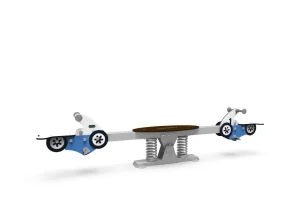
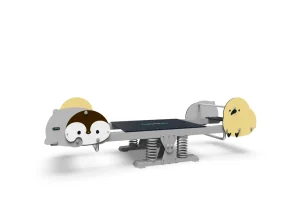
| EN 1176 | Playground Equipment | Material quality, construction methods, installation practices | Spring equipment, multi-person seesaws |
| GB/T 34272-2017 | Unpowered Amusement Equipment | General safety requirements, testing protocols | All unpowered equipment categories |
Material selection follows from these standards. Non-toxic components are baseline requirements, not premium options. Durability testing simulates years of use in compressed timeframes. Quality control continues through manufacturing, with inspections at multiple checkpoints rather than just at the end.
What Goes Into the Equipment
The materials and manufacturing techniques determine how equipment performs over years of daily use. Cheap plastics fade and crack. Poorly welded steel develops stress fractures. These failures aren’t just maintenance headaches—they’re safety risks.
Materials That Last
Plastics used in custom indoor playground equipment need UV resistance even for indoor applications, since many facilities have skylights or large windows. Without UV stabilizers, colors fade and the material becomes brittle. The plastics also need to resist the cleaning chemicals that facilities use daily.
Steel components require appropriate coatings to prevent corrosion, especially in humid environments or facilities with water features nearby. Foam padding needs to maintain its cushioning properties after thousands of compressions. Rope elements need to resist fraying while remaining comfortable to grip.
Eco-friendly materials have become more common as facilities seek sustainability certifications or simply want to reduce environmental impact. These materials need to meet the same performance standards as conventional options—environmental responsibility doesn’t justify compromising safety.
Manufacturing Precision
LvDong operates a production facility designed for precision manufacturing. CNC equipment cuts components to exact specifications. Welding follows documented procedures. Assembly sequences are standardized to ensure consistency across production runs.
Factory acceptance testing happens before equipment ships. This testing verifies that everything fits together correctly, that moving parts operate smoothly, and that the finished product matches the approved design. Catching problems at the factory costs far less than discovering them during installation.
Getting Equipment Installed and Keeping It Running
Manufacturing excellent equipment matters less if installation goes wrong. Incorrect assembly can create safety hazards that weren’t present in the factory. Anchor points need to match the substrate—concrete, wood, and steel each require different fastening approaches.
LvDong provides installation services that ensure equipment gets assembled correctly. The installation team works from detailed documentation and follows manufacturer specifications. Post-installation inspections verify that everything meets safety standards before the facility opens to users.
Maintenance requirements vary by equipment type. Moving parts need periodic lubrication. Fasteners need torque checks. Soft surfaces need inspection for wear. The company provides maintenance guidance specific to each installation, along with access to replacement parts when components eventually wear out.
This full-service approach—design through ongoing support—simplifies operations for facility owners. A single point of contact handles questions that might otherwise require coordinating between multiple vendors.
For facilities managing equipment over the long term, spare parts availability becomes important. Understanding lead times and stocking strategies helps prevent extended downtime when components need replacement. More detail on this topic appears in 《Optimizing Playground Equipment Spare Parts Lead Time and Stock》.
Projects That Show What’s Possible
Over 1,500 completed installations demonstrate how custom indoor playground equipment adapts to different contexts. The specific requirements vary dramatically, but the underlying process remains consistent.
Municipal parks often need equipment that serves broad age ranges and withstands heavy use. Durability and multi-generational appeal drive design decisions. Large-scale spinning equipment and robust seesaws appear frequently in these projects.
High-end residential communities prioritize aesthetics alongside function. Equipment needs to complement architectural styles and landscaping. Premium materials and unique design elements justify higher investment when the community values distinctive amenities.
Cultural tourism sites present different challenges. Equipment might need to reinforce storytelling themes or create photo opportunities. Immersive experiences require careful attention to how structures frame views and guide movement through spaces.
Educational institutions focus on developmental appropriateness. Equipment for younger children emphasizes sensory exploration and basic motor skills. Older children benefit from more complex challenges that build coordination and problem-solving abilities.
| Setting | Design Priorities | Common Solutions |
|---|---|---|
| Municipal Parks | Durability, broad age appeal, high capacity | Large spinning wheels, heavy-duty seesaws |
| Residential Communities | Aesthetic integration, premium finish, distinctive features | Custom interactive equipment, unique slide configurations |
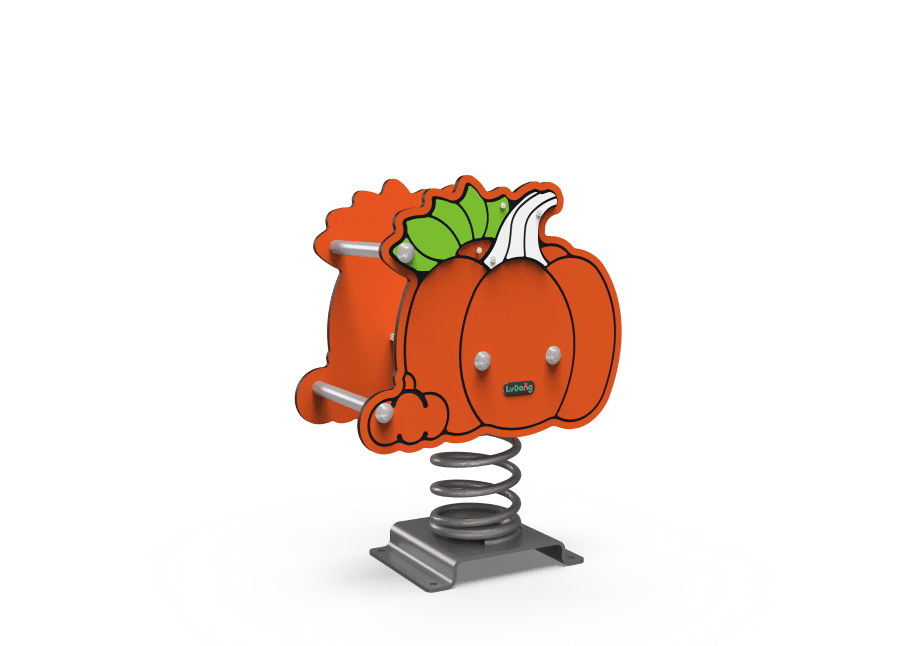
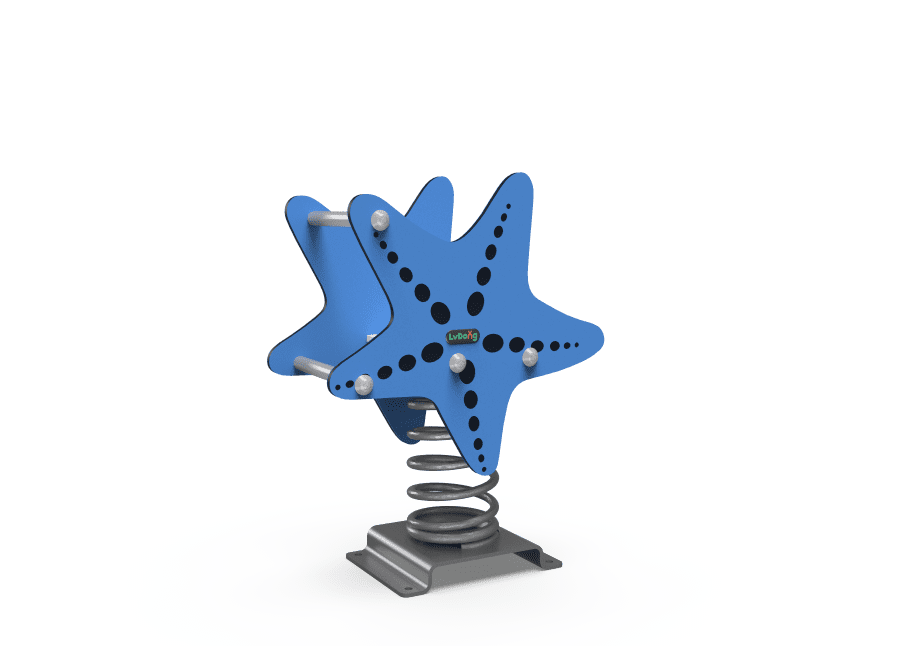
| Tourism Destinations | Thematic consistency, memorable experiences, photo opportunities | Themed spring riders, custom tunnel systems |
| Schools | Developmental focus, safety emphasis, learning integration | Age-appropriate spinning equipment, collaborative play panels |
What This Means for Your Project
Custom indoor playground equipment exists because standard options don’t fit every situation. The customization process—consultation, design, engineering, manufacturing, installation, support—transforms specific requirements into functional play environments.
Manufacturers with integrated capabilities handle this process more smoothly than those who outsource major functions. LvDong’s decade of experience across the full production chain means fewer coordination problems and more consistent results.
The investment in customization pays off when equipment precisely serves its intended users and fits its intended space. Generic solutions might cost less initially, but they often require compromises that affect how well the space actually works.
Frequently Asked Questions About Custom Indoor Playgrounds
What are the key steps in customizing indoor playground equipment?
The process starts with consultation to understand requirements—who uses the space, what physical constraints exist, what budget is available. Design development follows, with 3D modeling that lets clients visualize the result before manufacturing begins. Engineering verification ensures structural integrity. Manufacturing produces components to specification, with quality checks throughout. Installation brings everything together on site, with post-installation inspection confirming the equipment is ready for use.
How do manufacturers ensure the safety and compliance of bespoke play structures?
Compliance with international standards provides the foundation. ASTM F1918 and EN 1176 specify requirements for materials, construction, and installation. Manufacturers implement these requirements through documented procedures—material testing, manufacturing quality control, and factory acceptance testing before shipment. The standards address specific hazards like entrapment, impact forces, and structural failure, so following them systematically addresses the most common safety concerns.
What factors influence the cost of custom indoor playground equipment?
Design complexity drives cost more than most other factors. Simple structures with standard components cost less than elaborate themed environments with custom-fabricated elements. Material choices matter—premium finishes and specialized components add expense. Size obviously affects cost, but so does the density of features within that size. Installation complexity varies with site conditions. Interactive elements like spinning or bouncing components typically cost more than static climbing structures.
Can indoor playground equipment be customized for specific age groups or themes?
This is precisely what customization enables. Age-appropriate design considers physical capabilities, cognitive development, and safety requirements that differ between toddlers, preschoolers, and older children. Themed environments can incorporate specific colors, shapes, characters, or architectural styles. The design process accommodates these requirements from the beginning rather than trying to modify standard equipment after the fact.
Ready to Create Your Bespoke Indoor Playground?
Transform your vision into a vibrant reality with Suzhou LvDong Amusement Equipment Co.,Ltd. Our team is ready to discuss your unique project needs and provide expert guidance. Contact us today for a consultation.
WHATSAPP: +8613915684545
Email: [email protected]