Direct-to-site drop shipping is changing how schools, park operators, and resort developers schedule playground projects. Instead of moving equipment from the factory to a buyer’s warehouse and then to the site, the shipment is consigned to the project location. The unloading team becomes the receiving team, and the installation crew can work from one delivery event rather than two.
This approach does not simply save storage space. It removes a handoff that often adds handling damage risk, extra trucking, and days of delay between customs clearance and installation. When planned correctly, direct-to-site delivery allows foundation work and equipment staging to happen in parallel.
What Direct-to-Site Drop Shipping Actually Means for Playground Projects
In playground procurement, direct-to-site drop shipping does not mean parcel-level e-commerce fulfillment. It refers to containerized or full-truckload delivery from the manufacturer to the project address under an agreed Incoterms rule [1]. The shipment may include slides, decks, posts, fasteners, springs, spinners, activity panels, safety surfacing, and installation documentation.
For this method to work, the site must be treated as the receiving point of record. That means someone on site accepts the delivery, checks the seal and package count, and is responsible for noting visible damage before the carrier leaves.
When Bypassing Your Warehouse Makes Sense
Direct-to-site delivery is most practical when the site already has construction access, a flat staging area, and a designated project manager. It also works well for renovations that already have fencing and a controlled work zone, or for phased installations where equipment arrives in a planned sequence.
It is less suitable when there is no secure storage on site, when the schedule is uncertain, or when the buyer needs to hold inventory for multiple future sites. In those cases, a warehouse may still add value as a buffer.
How Direct Site Delivery Shortens Installation Timelines
The timeline benefit comes from eliminating one full handling cycle. A traditional route often follows a sequence of manufacturer loading, port handling, customs release, warehouse unloading, repacking, and only then site delivery. Direct-to-site delivery bypasses the warehouse dwell and the second trucking step.
In a typical project, the longest gaps often happen during handoffs rather than during ocean transit. The installation crew can prepare foundations, bolt patterns, and safety surfacing while the shipment is moving. When the container arrives, the crew unloads only the modules needed for the first installation zone, using a reverse-load plan that places anchors, posts, and base components at the front.
A Practical Next Step
Direct-to-site delivery works best when the shipping terms and the installation sequence are designed together before production. If you are comparing FOB, CIF, or DAP options for a school, municipal park, or resort project, share your site address, access constraints, and equipment list. Our project team can help clarify unloading requirements, container density, and installation sequencing. Contact [email protected] or WhatsApp +8613915684545 for a site-delivery review.
Container Planning and Site-Ready Packaging Requirements
Direct-to-site orders require more packaging discipline than warehouse-bound orders. Every crate should be tagged by installation zone, and the packing list should follow the unloading sequence. For a coastal resort project, for example, stainless fasteners can be crated separately and marked for the first deck assembly, so installers are not searching through mixed hardware.
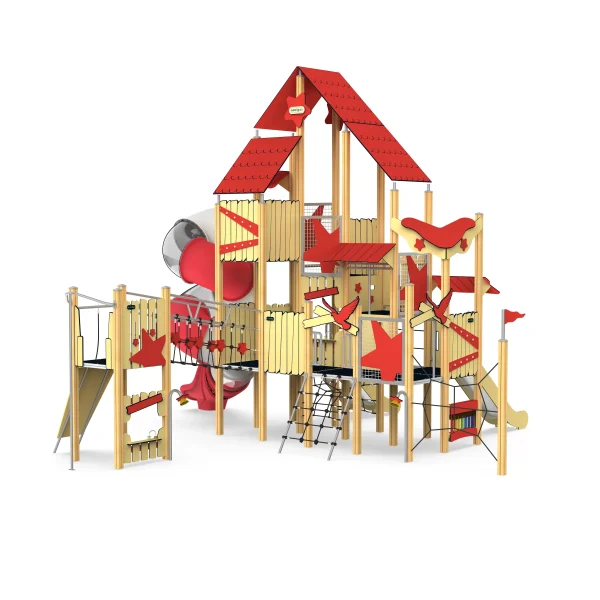
Large slide towers and multi-level structures may need spreader bars, lifting eyes, or mobile crane access. If the site has a narrow gate or low overhead clearance, the shipment may need to be split into multiple deliveries or scheduled with a tailgate vehicle.
Direct delivery also changes spare parts thinking because the site has no central stock buffer. <Optimizing Playground Equipment Spare Parts Lead Time and Stock> covers how to balance fast-install parts with long-lead replacements.
Managing Customs, Documentation, and Site Acceptance Without a Warehouse
When the buyer is in another country, direct-to-site delivery still requires customs clearance before inland transport can proceed. The chosen Incoterms rule determines where risk transfers from seller to buyer and who arranges the main carriage [1]. Under DAP, for example, the seller delivers to a named place ready for unloading, while import clearance is normally the buyer’s responsibility.
Manufacturing records and test documents should travel with the shipment or arrive electronically before clearance. The file should include the commercial invoice, packing list, bill of lading, certificate of origin where required, equipment drawings, and safety standard documentation [2].
If the shipment moves across borders, country-specific import rules can affect how quickly the container reaches the site. <Global Import Regulations for Playground Equipment by Country> covers the documentary requirements most likely to cause clearance delays.
Protecting Safety and Compliance Without Warehouse Inspection
Without a warehouse quarantine step, the site receiving team becomes the first inspection gate. Verify carton counts against the packing list before the carrier leaves, and photograph any carton that is wet, crushed, or punctured. For public playground equipment, compliance depends on correct assembly, foundation curing, and safety surfacing depth [2], [4]. Equipment built for international projects should also carry the manufacturer’s declaration and test reports for EN 1176 and GB/T 34272-2017 [2], [3].
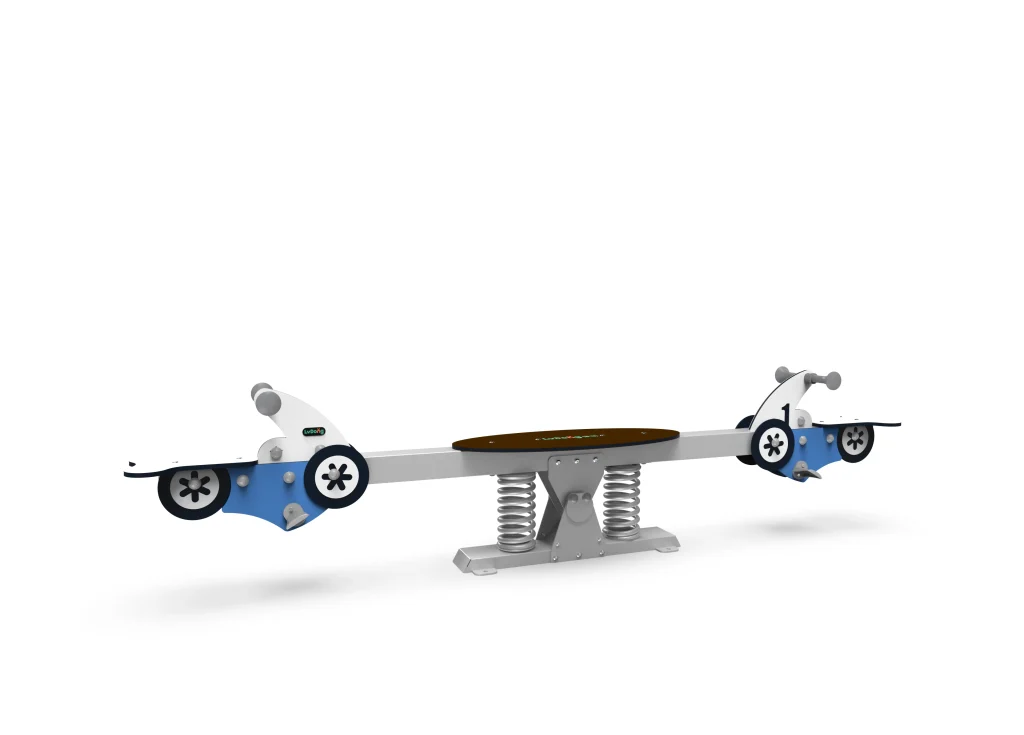
Keep the product data sheets on site. They should show maximum falling height, user capacity, assembly time estimates, and foundation requirements. These documents help the installer phase the work and give the future maintenance team a reference point.
Receiving directly at the site turns your delivery checklist into the first safety checkpoint. <Playground Equipment Safety Your Essential Self Inspection Checklist> covers what to verify before children use the equipment.
Direct-to-Site Drop Shipping Checklist
Before the container leaves the factory, confirm the following:
- Site address, gate width, turning radius, and lifting equipment availability.
- Incoterms rule, importer of record, and destination charges.
- Zone-tagged packing list and reverse-load container plan.
- Authorized site receiver and damage-reporting procedure.
- Foundation excavation, anchor templates, and curing time.
- Assembly drawings, test reports, and safety standards on site.
- Post-installation inspection date before public opening.

FAQ
Does direct-to-site drop shipping work for all playground equipment?
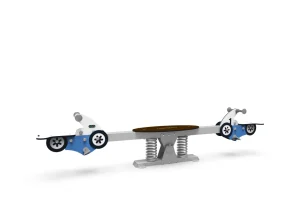
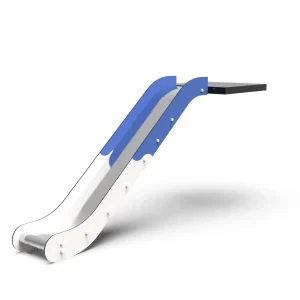
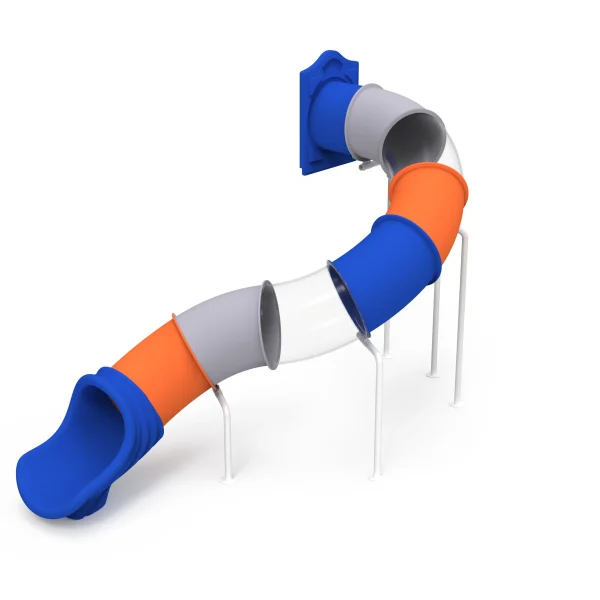
Most equipment works with the right planning, but very large towers and custom multi-level structures may require crane access and a split delivery. Compact items such as spring riders, spinners, panels, and modular slide components are usually the easiest to deliver directly to site.
Who unloads the container at the site?
That depends on the delivery terms and local services. In many cases the buyer arranges a forklift or crane. Some freight forwarders offer tailgate or site-crane services, and the installation team can also coordinate unloading when it is included at order stage.
How do we inspect equipment if there is no warehouse?
Use a site receiving checklist and open cartons in the presence of the carrier where possible. Record damage or shortages on the delivery note immediately and photograph packaging before accepting.
What if components arrive damaged on site?
Keep the damaged item and packaging, notify the manufacturer and insurer promptly, and separate affected parts. Pre-shipping inspection reports and clear photos help resolve claims faster.
Does direct-to-site shipping actually shorten installation?
It usually removes double handling and warehouse dwell. The benefit appears when the site is ready before the container arrives and the installation crew can work from a single delivery event.
What documents should arrive with the shipment?
Commercial invoice, packing list, bill of lading, certificate of origin where required, test reports, assembly drawings, and foundation or surfacing requirements.
Plan Your Direct-to-Site Playground Delivery
Direct-to-site shipping works when the equipment is planned for the site, not just shipped to it. Suzhou LvDong Amusement Equipment Co., Ltd. supports buyers with reverse-load container plans, zone-tagged packaging, installation documentation, and coordinated after-sales parts support. Share your project location and equipment list to discuss delivery terms, site access, and installation scheduling.
Contact WhatsApp: +8613915684545
Email: [email protected]
References
[1] International Chamber of Commerce, Incoterms 2020: ICC Rules for the Use of Domestic and International Trade Terms, ICC Publication No. 723E, Paris, France, 2019.
[2] European Committee for Standardization, EN 1176-1:2017 Playground equipment and surfacing — Part 1: General safety requirements and test methods, CEN, Brussels, Belgium, 2017.
[3] Standardization Administration of China, GB/T 34272-2017 Safety requirements for amusement equipment, Beijing, China, 2017.
[4] U.S. Consumer Product Safety Commission, Public Playground Safety Handbook, CPSC Publication No. 325, Bethesda, MD, USA, 2010.
If you’re interested, check out these related articles:
Effectively Compare Playground Equipment Suppliers Services
Wholesale Pricing MOQ for Spring Riders A Strategic Guide
To discuss direct-to-site delivery planning, contact the LvDong team with your project requirements.