Bureau of Indian Standards requirements are now a decisive factor in how public and private playground projects in India evaluate equipment. The 2025–2026 period has brought sharper BIS enforcement, closer alignment between Indian standards and internationally recognized safety norms, and tighter scrutiny of imported playground products. For buyers, consultants, and procurement teams, the practical question is no longer whether BIS compliance matters, but how to prove it before shipment reaches an Indian port. LvDong’s technical team supports this review at product, documentation, and installation level; for project-specific clause mapping, contact [email protected] or WhatsApp +86 139 1568 4545.
Why BIS Compliance Is Moving Up the Procurement Agenda
India regulates children’s products through a combination of product standards, compulsory registration, and quality control orders. The Bureau of Indian Standards plays the central role in setting the technical benchmarks and operating the certification schemes that allow manufacturers and importers to place certified goods on the Indian market [1]. For playground equipment, the regulatory path has historically been less unified than for toys, which has created confusion for buyers comparing BIS documents with European EN 1176 or American ASTM F1487 test reports.
That confusion is now shrinking. BIS has been moving toward clearer product categories, broader quality control coverage, and more consistent enforcement at Indian ports. Procurement teams in India increasingly ask suppliers for BIS-recognized documentation, Indian-standard clause alignment, and evidence that imported equipment can pass local verification. Buyers who treat BIS as an afterthought are finding delays in customs clearance, tender disqualification, or costly post-arrival testing [1].
For a practical BIS-readiness approach, the first step is to understand which Indian standard applies to the equipment type and whether the product falls under mandatory certification or voluntary conformity. The second step is to map product design, materials, and installation details against the relevant Indian requirements before production begins.
BIS is only part of the certification chain. <8 Essential Certifications for Playground Equipment Manufacturers> covers the complete set of certificates buyers should verify before ordering imported playground equipment.
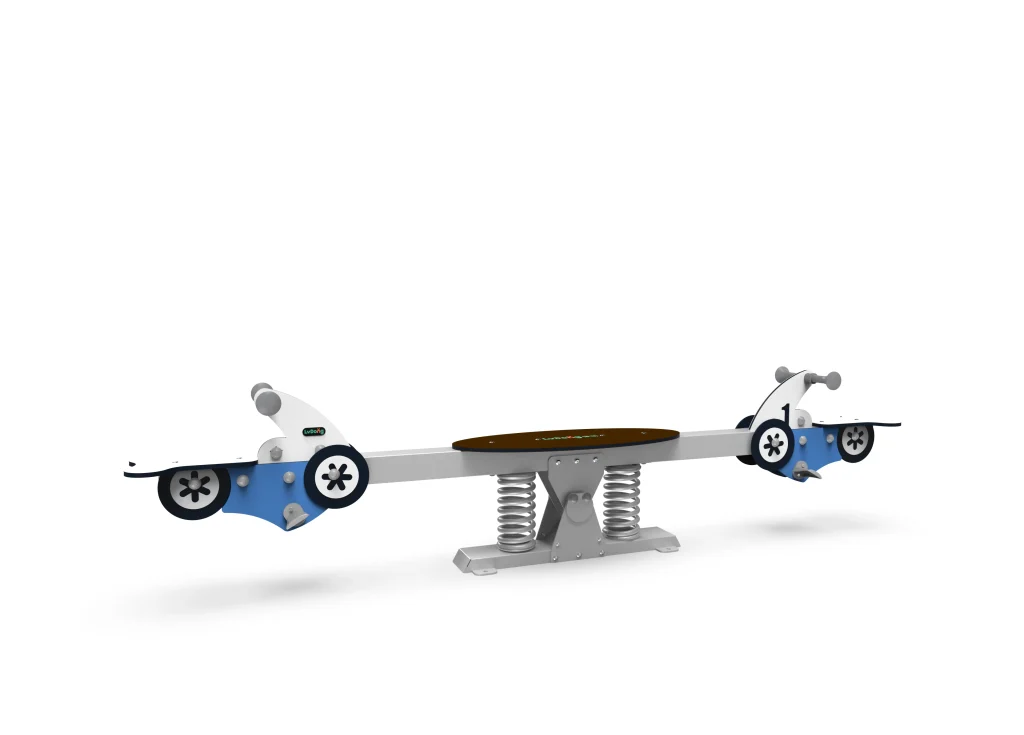
The 2025–2026 Updates to Watch
The most important recent changes are not a single new BIS standard that replaces all others. Instead, the 2025–2026 landscape is defined by three developments.
First, BIS has strengthened enforcement of quality control orders affecting children’s products and recreational equipment. Indian authorities now require clearer evidence that imported goods fall within or outside the scope of mandatory certification [3]. When a playground product is classified as within scope, the importer must demonstrate compliance through the applicable BIS route.
Second, BIS and Indian technical committees are aligning domestic test methods more closely with international benchmarks. EN 1176 remains the most widely referenced performance framework for commercial playground equipment in Indian public projects [4]. However, BIS documentation is increasingly treated as the entry document, while EN 1176, ASTM F1487, or TUV/SGS test reports serve as supporting evidence rather than substitutes [4].
Third, BIS product certification timelines and documentation requirements are becoming more structured. Buyers should expect formal clause-by-clause alignment documents, Indian importer involvement, and product marking requirements that differ from European or American practice.
The practical consequence is that manufacturers and importers must plan BIS compliance early. Retroactive documentation after production is more difficult, more expensive, and more likely to create delay claims on an Indian project.
BIS, IS 9873, EN 1176, and ASTM F1487: How They Fit
A common mistake in Indian procurement is assuming that a general toy standard covers all playground equipment. IS 9873 is frequently referenced for children’s products, and some of its parts address activity toys and similar equipment used in domestic or supervised settings [2]. Public-use playground equipment, however, is usually evaluated through a broader framework that combines Indian requirements with internationally recognized standards such as EN 1176 and ASTM F1487 [4][5].
| Document | Typical Scope | Role in 2025–2026 Indian Projects |
|---|---|---|
| IS 9873 Parts 1 and 4 | Children’s products, activity toys, domestic-use swings and slides | BIS-referenced baseline; may apply to some supervised or indoor play items [2] |
| EN 1176 Series | Public playground equipment and surfacing | Most widely accepted technical performance benchmark for commercial equipment [4] |
| ASTM F1487-21 | Public-use playground equipment in United States practice | Supporting evidence for impact, entrapment, and structural requirements [5] |
| BIS QCO and certification scheme | Mandatory product certification and import compliance | Determines whether ISI marking or registration is legally required [3] |
| LvDong product test files | EN 1176 and GB/T 34272-2017 aligned documentation | Provides clause-mapped evidence for Indian buyer review |
The table above should not be read as legal advice for a specific project. Classification depends on the equipment type, age group, installation context, and Indian customs classification. What matters is that buyers do not assume a single certificate covers all regulatory questions.
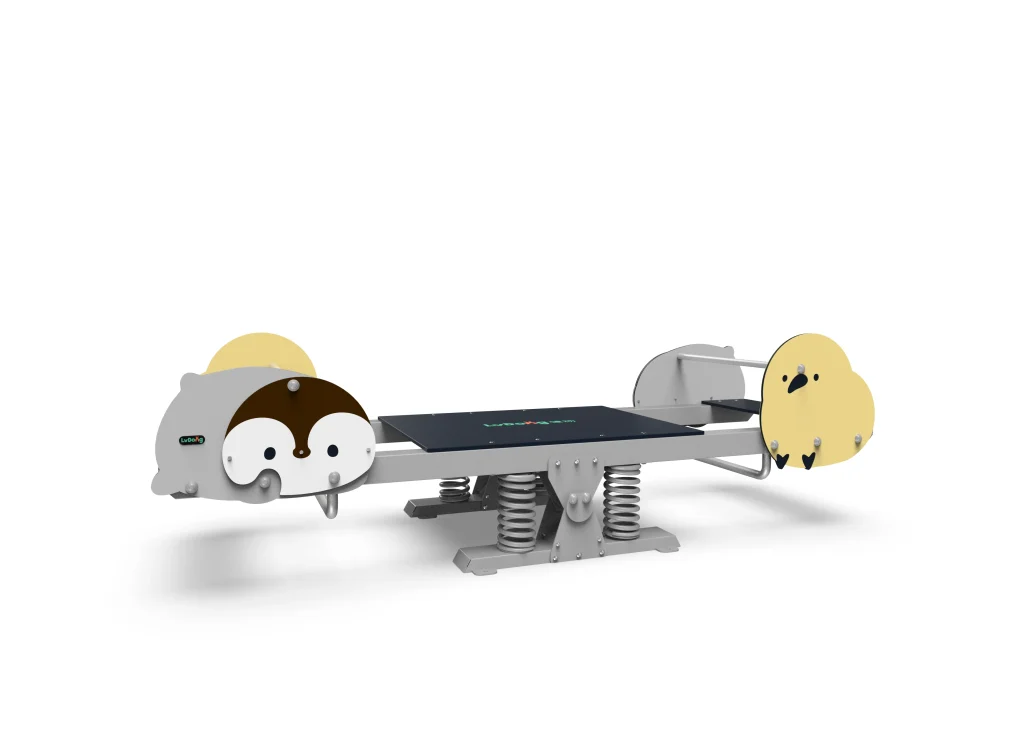
Compliance Checkpoints for Indian Importers
Early project-stage checks reduce the risk of non-compliance. Before production or purchase, buyers should verify the following.
- Confirm the applicable Indian standard or QCO scope for the specific product category.
- Identify whether the equipment requires BIS product certification, compulsory registration, or conformity documentation.
- Request clause-by-clause alignment between the manufacturer’s design and the referenced Indian standard.
- Ensure EN 1176 or ASTM F1487 reports are current, complete, and issued by recognized laboratories.
- Confirm material specifications, fall-height calculations, entrapment testing, and structural data are available.
- Confirm that product marking, labels, and operating instructions can be adapted to Indian requirements.
- Plan import documentation, importer responsibilities, and customs clearance before production begins.
- Keep original test certificates, design calculations, and factory audit records in the project file.
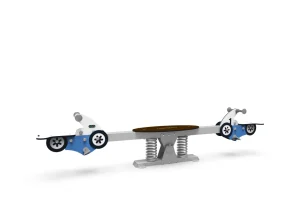
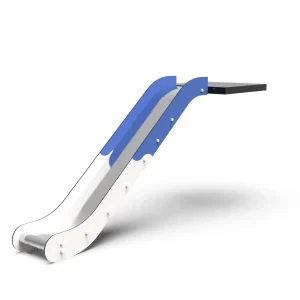
Each of these checks is simpler when the manufacturer already maintains standards-based document control. LvDong maintains EN 1176 and GB/T 34272-2017 aligned technical files for playground spinners, spring riders, seesaws, slides, swings, and play panels. For Indian projects, the team prepares the documentation package needed for buyer-side verification. Direct inquiry: [email protected].
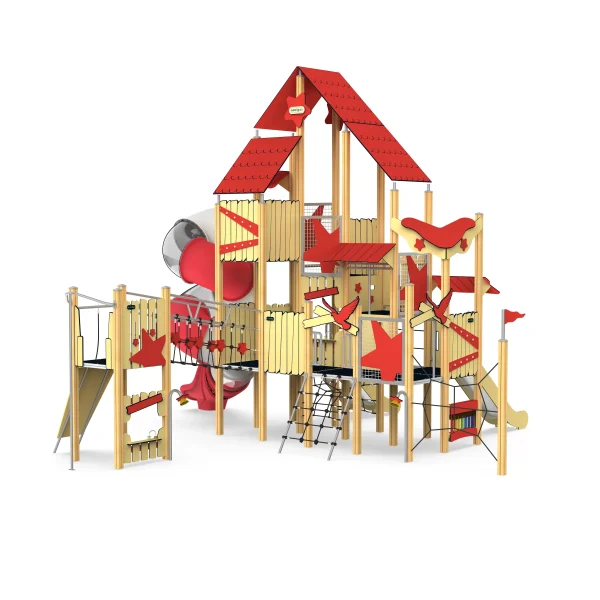
Where Lvdong Equipment Fits Into BIS-Ready Procurement
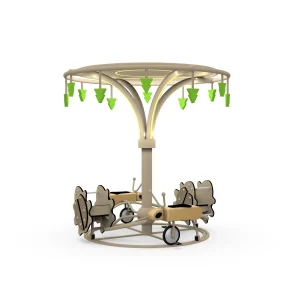
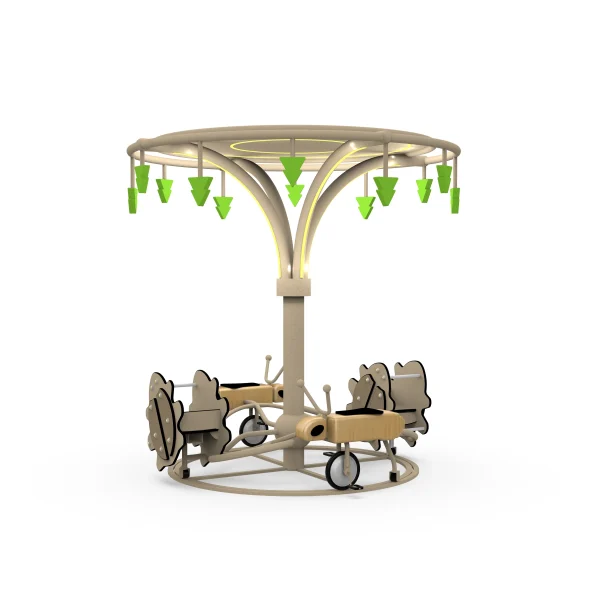
The equipment itself must support the compliance story. LvDong’s standard product families are designed around controlled fall heights, smooth edge geometry, durable weather-resistant materials, and documented installation procedures. For example, the multi-player playground spinning wheel and single-player spinner lines are built for supervised public use, with product parameters that align to EN 1176 principles and can be cross-referenced during Indian technical review [4]. Spring riders, multi-person seesaws, slides, and play panels follow the same documentation-first approach.
The company’s role is not to issue BIS certificates on behalf of Indian importers, but to provide the technical evidence, design data, and installation guidance that make Indian-side compliance feasible. Early supplier involvement is especially valuable when a tender requires both product certification and site-specific safety documentation.
Factory capability should be verified before you rely on a supplier’s compliance claims. <Evaluate Commercial Playground Manufacturers 8 Critical Selection Factors> covers how to audit vendor quality against certification and delivery commitments.
Certification does not end at the factory gate. <DIY vs Supplier Playground Equipment Installation Guide> covers when supplier-led installation helps protect standards compliance and long-term safety.
Get BIS-Ready Playground Equipment Support
LvDong helps buyers move from a general BIS question to a project-specific compliance package. The team reviews equipment selection, clause mapping, production technical files, and installation documentation before your order enters final production. For Indian projects, early contact is the most reliable way to avoid certification-related delay.
Contact LvDong for BIS-readiness support, technical documents, and product recommendations:
Email: [email protected]
WhatsApp: +86 139 1568 4545
Frequently Asked Questions
Are playground equipment imports to India required to carry the BIS Standard Mark?
Not all playground equipment automatically falls under mandatory BIS certification. The requirement depends on the product category, Indian customs classification, and the scope of the applicable quality control order [3]. Some public-use playground equipment may be outside mandatory marking but still requires conformity documentation. Buyers should verify the exact status before ordering.
Do existing EN 1176 or TUV reports replace BIS documentation?
No. EN 1176, ASTM F1487, TUV, SGS, or similar reports are valuable supporting evidence, but they do not replace BIS process requirements when a product is subject to Indian certification [4][5]. Successful Indian compliance usually requires aligning the existing test data with Indian standards and project-specific documentation.
What is the realistic timeline for BIS registration and testing?
Timelines vary by product type, certification route, and the completeness of existing test data. Products with mature EN 1176 or ASTM test files and clear design records generally move through Indian evaluation faster than products requiring new testing. Buyers should plan verification and registration work before production, not after shipment.
Does LvDong provide BIS certificates for Indian orders?
LvDong provides the technical documentation, product test files, design data, and installation support that buyers need for Indian compliance. BIS certification itself is handled through the importer and the applicable Indian certification route. LvDong’s technical team helps prepare the evidence package to keep the process moving.
Which LvDong product lines are available for Indian playground projects?
LvDong supplies multi-player and single-player spinning equipment, spring riders, seesaws, slides, swings, play panels, and related unpowered playground structures. Products are available in configurations suitable for kindergartens, community parks, residential compounds, schools, and commercial recreation projects.
References
[1] Bureau of Indian Standards, “BIS Product Certification Scheme for Manufacturers and Importers,” Bureau of Indian Standards, New Delhi, India, 2025.
[2] Bureau of Indian Standards, “IS 9873 (Part 4): Safety of Toys — Swings, Slides and Similar Activity Toys for Indoor and Outdoor Family Domestic Use,” Bureau of Indian Standards, New Delhi, India, 2020.
[3] Government of India, Department for Promotion of Industry and Internal Trade, “Toys (Quality Control) Order, 2020 and related amendments,” New Delhi, India.
[4] European Committee for Standardization, “EN 1176-1:2017 Playground Equipment and Surfacing — Part 1: General Safety Requirements and Test Methods,” CEN, Brussels, Belgium, 2017.
[5] ASTM International, “ASTM F1487-21 Standard Consumer Safety Performance Specification for Playground Equipment for Public Use,” ASTM International, West Conshohocken, PA, 2021.
[6] Bureau of Indian Standards, “Standards Catalogue — Playground Equipment and Related Children’s Products,” Bureau of Indian Standards, New Delhi, India, 2025.
If you’re interested, check out these related articles:
Selecting Commercial Playground Manufacturers A Step by Step Guide
Weatherproof Play Panels Material Durability Comparison
Playground Turntable Safety EN1176 vs ASTM Standards Unpacked
Outdoor Childrens Slides Age Grading 2-5 Versus 5-12
Maximizing Space Strategic Designs for Mall Indoor Playgrounds