At desert oasis resorts, the playground is often the first place families gather after breakfast and the last place children want to leave before dinner. But the same sun that makes the destination attractive also pushes unshaded equipment toward punishing surface temperatures. When ambient air reaches 50°C, exposed metal and dark plastic can become painful to touch, and the decisions made months earlier determine whether the play area stays open or becomes a liability. This guide explains how to specify playground equipment that remains usable — and safer — in extreme heat without sacrificing movement, color, or guest appeal.
Why 50°C Changes the Safety Calculation
In a mild climate, a warm surface is usually a comfort complaint. At 50°C air temperature, the issue becomes an injury risk and an operational decision. Playground equipment in public use must meet structural and user safety requirements such as EN 1176-1 [1], but thermal contact risk is more directly evaluated through ISO 13732-1 [2]. That standard links surface temperature, material properties, and contact duration: bare metal transfers heat into skin much faster than plastic or rubber. A child who touches a heated handrail for only a moment may recoil, but a toddler who loses balance and holds the same rail can sustain a burn quickly.
The CPSC Public Playground Safety Handbook similarly advises owners to consider shade and to be alert to bare metal platforms, steps, and railings that become hot in direct sun [3]. In desert resorts, this is not a seasonal concern. It is a year-round specification requirement, and it changes what counts as minor: color choice, coating, orientation, ventilation, and even the type of plastic used in a spring rider seat.
Materials and Finishes That Keep Surfaces Cooler
Three variables largely decide whether a playground part becomes dangerously hot: solar absorption, thermal conductivity, and the ability to shed heat. Dark colors and bare steel are the two biggest avoidable risks in desert installations [3]. Steel handrails, slide beds, and plate platforms can heat quickly because bare metal absorbs solar energy and conducts it into the skin on contact. Plastic is not automatically safe — dark LLDPE in full sun can also become very warm — but linear low-density polyethylene generally transfers heat away more slowly than steel and is commonly specified for slides and panels in high-sun locations.
Lighter neutral and pearl finishes tend to show lower surface temperatures than black or deep blue. That does not mean a resort must lose brand color; it means high-contact surfaces such as handrails, seats, and deck plates should be lighter, while deep colors can be applied to lower-contact decorative elements. Powder-coated steel with a textured grip surface reduces both heat absorption and slip risk. Where metal is required, tubular shapes with ventilation holes and slip-resistant paint or synthetic cladding are better than solid plate.
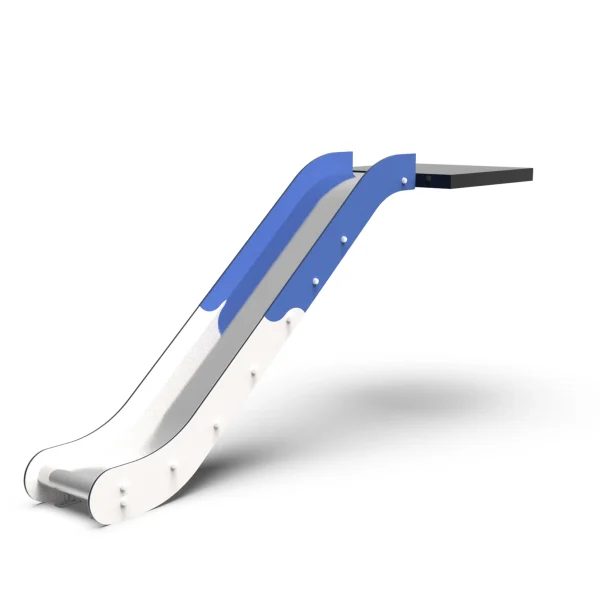
Slide chutes deserve special attention because they combine full sun exposure, continuous contact, and speed. In desert oasis locations, the material and the slide route should be decided together: a shaded curved LLDPE chute with a sheltered exit is usually a better choice than a straight steel chute exposed from noon to late afternoon.
Slide material and route for desert sites should be locked before the 3D design stage. <Custom Playground Slide Design From Vision to 3D Reality> covers how design input moves from concept to 3D model without losing safety detail.
The following checks separate desert-ready materials from general-purpose equipment.
| Component | Desert heat risk | Design check |
|---|---|---|
| Bare steel handrails | Rapid contact heating | Specify coated, lighter-color, slip-resistant surfaces |
| Slide chute | Full sun exposure and direct skin contact | Use LLDPE, shade orientation, and sheltered exit |
| Dark plastic panels | High surface temperatures | Use lighter colors and UV-stabilized material |
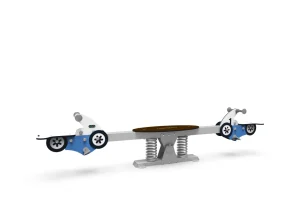
| Seesaw seats | Heat absorption at rest | Require textured, coated, or lighter-color seating |
| Bearings and pivots | Heat plus sand ingress | Confirm sealed or shielded bearings |
| Fasteners | Thermal expansion and loosening | Define torque-check intervals |
| Interactive screens | Solar gain and glare | Place under shade and specify dust/water IP rating |
| Rubber surfacing | Heat retention | Use lighter colors, drainage, and shade planning |
Shade, Ventilation, and Layout for 50°C Peaks
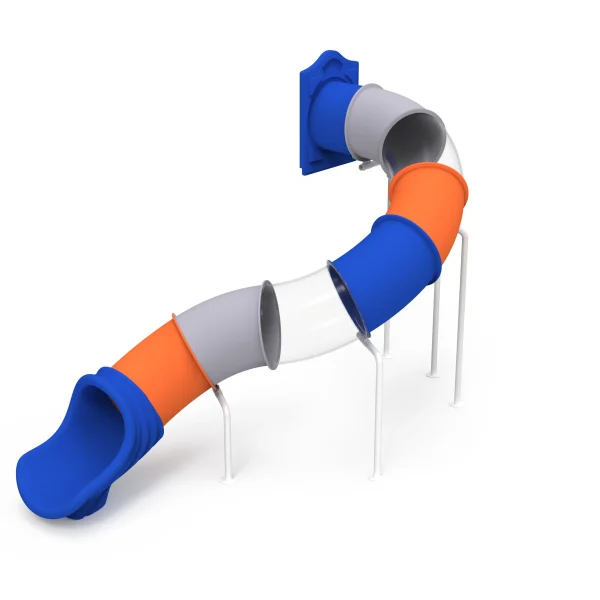
Placement matters as much as material. A playground that faces the afternoon sun without overhead cover will test every finish. Use natural or structural shade for high-contact zones, especially slide exits, swing seats, spinners, and spring riders. Shade sails and open-roof structures allow hot air to escape; fully enclosed roofs can trap heat if they lack cross-ventilation. Tunnel slides offer partial shade along the sliding path, and a ventilated tube with a shaded entrance and exit helps reduce the oven effect inside.
Ground-level surfaces also affect comfort. Rubber tiles and synthetic turf can hold heat, particularly in dark colors. Select light-colored, impact-attenuating surfacing with drainage below so standing water does not heat and create steam after irrigation. Loose fill such as engineered wood fiber may run cooler than solid rubber in some conditions, but it must be maintained for fall protection and cleanliness.
Cluster toddler and school-age zones separately so younger children are not forced to wait in the sun while older children cycle through a tall structure. Add seating and drinking water stations in shaded perimeter areas, not beside unshaded equipment.
Oasis resorts cater to mixed age groups, and heat also changes supervision patterns: toddlers need more help while older children move faster. <Mastering Age Inclusive Outdoor Play Equipment Solutions> covers how to choose fall heights, reach points, and motion equipment for mixed age ranges.
Moving Parts, Bearings, and Interactive Features
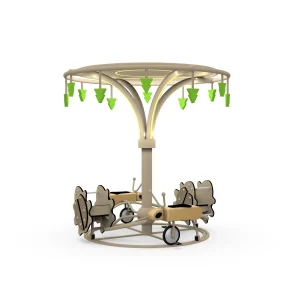
Seesaws, spinners, and spring riders are motion equipment, but they are also contact equipment. Seats, handlebars, and platforms should be coated, textured, and specified with UV-stabilized plastics or powder coating. Bearings and pivot points in sandy desert environments need sealing against dust ingress as much as against moisture. Where interactive play panels or sound modules are used, specify an IP rating appropriate to dust and water exposure. IP65 or better is a common reference point for outdoor electronics in hot, dusty environments, while enclosures should be shaded or ventilated rather than sealed in black boxes.
The same UV exposure that fades paint also degrades plastic clips, rubber bumpers, and seat covers. Ask for UV-stabilized materials and compare accelerated aging information when evaluating two spring riders or play panels. Metal parts should be inspected for thermal expansion at joints and for loosened fasteners after seasonal temperature swings, since desert nights can be much cooler than midday peaks [3].
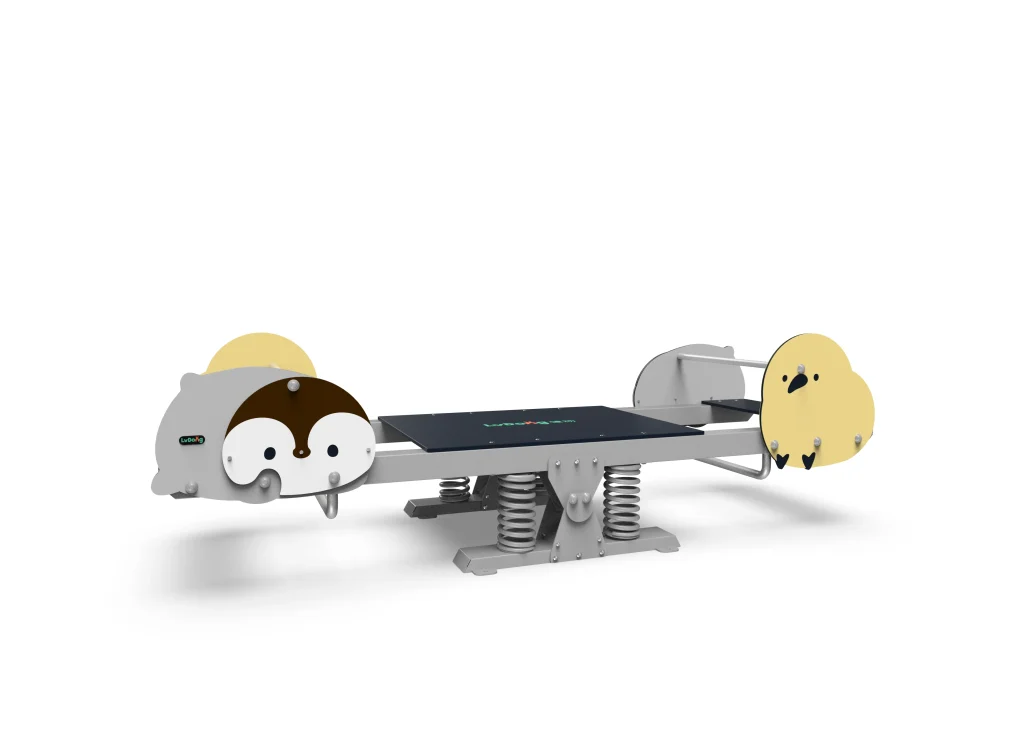
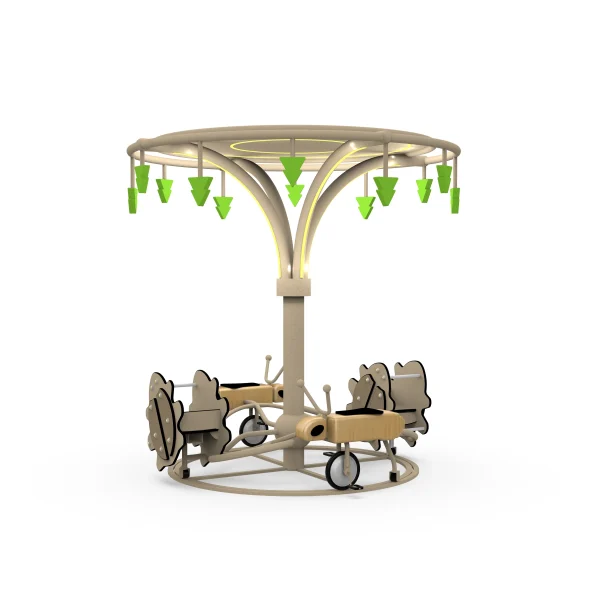
If electronics are included, the energy load should be justified by visitor use. A shaded tunnel slide, a themed spinner, and a few passive ground-level panels often deliver more play value in extreme heat than a wall of sun-stressed screens. Where interactive equipment is desired, place it under shade and orient screens away from direct afternoon sun.
Desert-Ready Procurement Checks
Buyers should make heat performance part of the quote and factory review process. Use the checklist below to keep the discussion specific.
- Request material and coating data for high-contact surfaces.
- Confirm slide orientation and shade integration in the layout drawings.
- Ask for IP rating on bearings and electronic enclosures.
- Require UV stabilization documentation for plastic components.
- Verify third-party certification to EN 1176 or ASTM F1487 as applicable [1][4].
- Define torque-check and thermal-expansion inspection intervals.
- Review warranty language for fading, cracking, and heat-related failure.
Many desert equipment problems are visible at the quotation stage if the buyer knows what to ask. <7 Mistakes to Avoid Buying Commercial Playground Equipment> covers procurement errors that later show up as heat, surfacing, or documentation failures.
If the oasis resort is already seeing 50°C peaks, send site dimensions, shade coordinates, and the planned age mix to [email protected]. The inquiry will be routed to the design team for a heat-load review, material recommendation, and layout check before final production.
Desert-Ready Playground Planning Starts With Heat Load
At Suzhou LvDong Amusement Equipment Co., Ltd., desert-readiness is reviewed as part of design and manufacturing rather than treated as an add-on. Provide the WhatsApp team at +8613915684545 or email [email protected] with your site location, peak temperature, shade availability, and user age range. The design team can propose materials, fall heights, and placement that keep the play area open when the sun is at its strongest.
Frequently Asked Questions
What surface temperature is actually dangerous for playground equipment?
At 50°C, not every material causes immediate burns. The safety issue depends on material thermal conductivity, contact time, and skin sensitivity. ISO 13732-1 [2] links contact time and surface temperature. Bare metal can become hazardous more quickly than coated or plastic surfaces, and young children need shorter exposure times before injury.
Does a 50°C ambient temperature close a playground?
Not automatically. It triggers extra inspections, shade use, and surface checks. If high-contact surfaces exceed safe touch thresholds, close or cover those parts until shade, coatings, or alternative materials reduce the risk [3].
Are darker colors always unsafe in desert playgrounds?
No. But high-contact areas should avoid black or deep colors. Dark colors can be used on decorative non-touch zones, while seats, rails, decks, and slide exits should use lighter colors and textured coatings [3].
What should a desert oasis resort ask for in an equipment quote?
Request material and coating data, shade integration, UV stabilization, bearing IP rating, certification such as EN 1176 or ASTM F1487, and maintenance intervals. Ask for documentation rather than general “weatherproof” language [1][4].
References
[1] EN 1176-1:2017. Playground equipment and surfacing — Part 1: General safety requirements and test methods. European Committee for Standardization, Brussels.
[2] ISO 13732-1:2006. Ergonomics of the thermal environment — Methods for the assessment of human responses to contact with surfaces — Part 1: Hot surfaces. International Organization for Standardization, Geneva.
[3] U.S. Consumer Product Safety Commission. Public Playground Safety Handbook, Pub. No. 325. Bethesda, MD: CPSC.
[4] ASTM F1487-21. Standard Consumer Safety Performance Specification for Playground Equipment for Public Use. ASTM International, West Conshohocken, PA.
If you’re interested, check out these related articles:
How Indoor Playground Equipment Manufacturers Customize Solutions
Indoor Playground Design Consultation Your Project Blueprint
Bike Spring Riders Realistic Design Safety Engineering
Key Contract Clauses for Commercial Playground Equipment Purchase