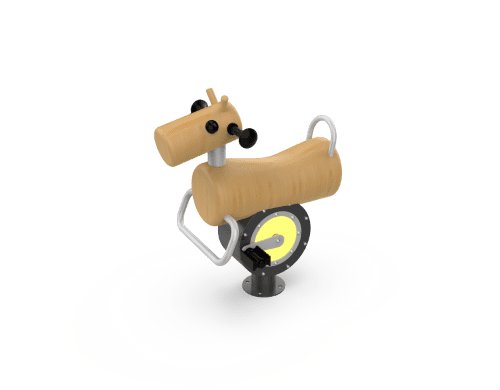
Children gravitate toward spring riders that look like something real. A bike-shaped spring rider does more than bounce—it invites a child to imagine pedaling down a street, racing a friend, or exploring somewhere new. That blend of physical motion and mental play is what makes these pieces of equipment worth getting right. At Suzhou LvDong Amusement Equipment Co.,Ltd., we design bike spring riders that balance realistic detailing with the kind of safety engineering that lets parents relax while their kids play.
Why Safety Standards Matter More Than Most Buyers Realize
When sourcing from a playground spring rider manufacturer OEM, safety compliance is not a checkbox—it is the foundation that determines whether equipment can be installed in public spaces at all. We approach safety as an engineering discipline, not an afterthought. Every spring rider we produce goes through design reviews that address impact attenuation, fall zone geometry, and entrapment prevention before a single prototype is built.
ASTM F1487 governs playground equipment in North America. EN 1176 does the same across Europe. Both standards set specific requirements for material strength, structural load capacity, and the elimination of finger or head entrapment hazards. The maximum fall height for spring riders under both standards is 50 cm, which influences how we engineer the spring mechanism and seating position. In China, GB/T 34272-2017 applies similar rigor to material durability and design safety.
We integrate impact-absorbing geometry into the base and seating areas. Fall zones are calculated for each installation, ensuring adequate clearance around the equipment. These details matter because a spring rider installed without proper fall zone planning can create liability issues even if the equipment itself is well-made.
| Standard | Region | Focus Areas | Max Fall Height (Spring Rider) |
|---|---|---|---|
| ASTM F1487 | North America | Material, Structural Integrity, Entrapment | 50 cm |
| EN 1176 | Europe | Impact Attenuation, Fall Zones, Material | 50 cm |
| GB/T 34272-2017 | China | Material Durability, Design Safety | 50 cm |
For more insights into ensuring playground safety, consider reading 《Essential Checklist for Playground Equipment Safety Test Reports》.
Materials That Survive Years of Daily Use
Spring playground equipment faces a relentless combination of UV exposure, moisture, temperature swings, and the constant stress of children bouncing. We select materials specifically to handle this environment without degrading.
The plastic components are UV-stabilized engineering polymers. This prevents the fading and brittleness that cheap plastics develop after a few seasons in direct sunlight. Metal parts receive anti-corrosion coatings that protect against rust in humid or coastal climates. The spring mechanism itself is high-strength steel, heat-treated to resist fatigue from repeated compression cycles.
These choices extend equipment lifespan significantly. A well-made spring rider can serve a playground for 15 years or more with minimal maintenance. That longevity reduces total cost of ownership and avoids the disruption of frequent replacements.
We also prioritize weatherproof construction across all components. Rain, snow, and temperature extremes should not compromise structural integrity or surface finish. The result is spring playground equipment that maintains both safety and appearance through years of outdoor exposure.
How Realistic Design Supports Child Development
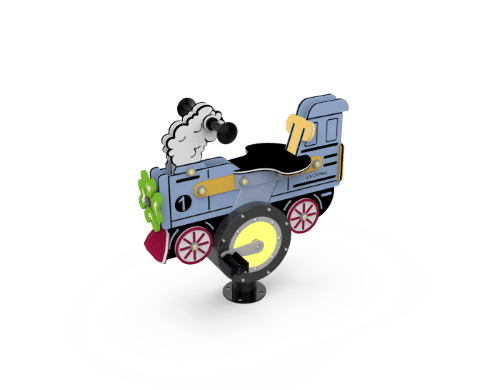
A bike spring rider shaped like an actual bicycle does something that abstract playground equipment cannot—it connects play to the real world. Children recognize the handlebars, the seat, the pedal-like footrests. That recognition triggers imaginative scenarios: riding to school, delivering packages, racing in a competition.
This imaginative engagement supports cognitive development. Children process cause and effect as they rock forward and back. They develop spatial awareness by sensing how their body position affects the rider’s motion. The physical act of balancing and gripping builds gross motor skills and coordination.
Ergonomic design ensures children sit comfortably and securely. Proper seat height and handlebar positioning promote good posture and reduce strain. These details matter for extended play sessions and for children across different age ranges.
We offer customizable themes for clients who want spring riders that match a specific playground aesthetic or community identity. A fire truck, a motorcycle, a horse—each design provides the same developmental benefits while fitting different visual contexts.
Inclusive design is part of our approach. Spring riders can accommodate children with varying abilities when seat depth, back support, and handlebar placement are thoughtfully engineered. Sensory feedback from the rocking motion and tactile grip surfaces adds another layer of developmental benefit.
Installation Requirements and Ongoing Maintenance
Proper installation determines whether a spring rider performs safely over its full lifespan. We provide detailed installation guidelines that specify anchor depth, concrete requirements, and torque specifications for fasteners. A typical spring playground equipment installation requires one person and approximately 0.5 person-hours, assuming the ground preparation is already complete.
Routine inspections catch problems before they become safety hazards. Check the spring mechanism for signs of fatigue or corrosion. Verify that all fasteners remain tight. Examine the seat and handgrips for cracks or wear. Inspect the ground anchor for any movement or loosening.
A structured preventative maintenance schedule keeps equipment in safe operating condition. Monthly visual inspections, quarterly detailed inspections, and annual professional assessments represent a reasonable maintenance rhythm for high-traffic playgrounds.
The UV-resistant plastics and anti-corrosion coatings we use reduce maintenance frequency compared to lower-quality alternatives. Surfaces stay cleaner and resist staining. Metal components do not develop rust that requires treatment. This translates into lower labor costs and fewer service interruptions.
The Long-Term Value of Quality Equipment
The purchase price of a spring rider is only one component of its true cost. Lifecycle cost analysis reveals that higher-quality equipment often costs less over a 10 to 15 year period than cheaper alternatives that require frequent repairs or early replacement.
Durable construction means fewer maintenance calls. Robust materials mean longer intervals between replacements. Compliant safety engineering means lower liability exposure. These factors combine to produce a favorable return on investment for playground operators.
Quality playgrounds also generate community value that is harder to quantify but no less real. A well-designed play area becomes a gathering point for families. It enhances the reputation of parks, schools, and residential developments. Property values in surrounding areas often reflect the presence of well-maintained recreational amenities.
For those planning new playground installations, understanding the nuances of the process is key. We recommend reviewing 《DIY vs Supplier Playground Equipment Installation Guide》 for a comprehensive perspective.
Partner with Suzhou LvDong Amusement Equipment Co.,Ltd.
Since 2015, Suzhou LvDong Amusement Equipment Co.,Ltd. has built a reputation for unpowered amusement equipment that combines craftsmanship with intelligent production methods. Our integrated approach covers R&D, design, manufacturing, installation support, and after-sales service. Whether you are developing a municipal park, a school playground, or a high-end residential community, we deliver solutions that meet the highest safety standards while engaging children through realistic, thoughtful design.
Contact us today for a consultation: WHATSAPP:+8613915684545 | [email protected]
Frequently Asked Questions About Bike Spring Riders
What safety certifications should I look for when selecting a commercial bike spring rider?
Commercial bike spring riders should comply with ASTM F1487 for North American installations and EN 1176 for European markets. These standards address material strength, fall height limits, entrapment hazards, and impact attenuation. In China, GB/T 34272-2017 provides equivalent coverage. When working with a playground spring rider manufacturer OEM, request documentation confirming compliance with the standards applicable to your installation location.
How does a bike-shaped spring rider support child development differently than abstract designs?
A bike-shaped spring rider connects play to familiar real-world objects, which activates imaginative scenarios and role-playing. Children develop gross motor skills and balance through the rocking motion while simultaneously engaging cognitive processes as they imagine riding, racing, or exploring. Abstract shapes provide physical benefits but lack the narrative hooks that deepen engagement and extend play duration.
What maintenance schedule keeps outdoor spring rider equipment safe and functional?
Monthly visual inspections should check for obvious damage, loose components, or debris accumulation. Quarterly detailed inspections should examine the spring mechanism for fatigue, verify fastener torque, and assess surface condition. Annual professional assessments provide a comprehensive safety review. UV-resistant plastics and anti-corrosion coatings reduce maintenance frequency, but consistent inspection remains essential for safety and equipment longevity.