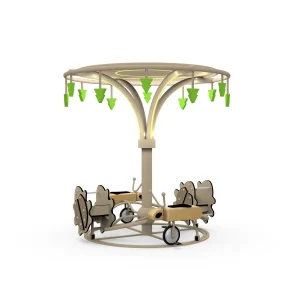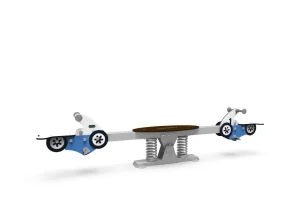
Forest school outdoor classrooms demand a different equipment selection process than fenced playgrounds on flat rubber surfacing. Play panels and balance equipment for these spaces must handle tree shade, leaf litter, moisture, uneven ground, and mixed-age groups working without fixed adult stations. I have seen standard park units fail within two seasons on woodland sites because the footings could not hold on sloped soil or the panel faces weathered unevenly in constant damp. The equipment that lasts is chosen from the start with drainage, rot resistance, and fall surfacing in mind. This guide works through those decisions in the order they should be made.
Selection Criteria That Forest School Classrooms Actually Require
Forest school programs treat the outdoor space as the primary classroom. Children move through activity zones, use natural materials, and engage with equipment that serves both play and learning goals. That operating model changes how durability and safety should be evaluated.
The first difference is weather exposure. A fenced playground on a graded site dries quickly and stays relatively uniform. A forest school site under partial canopy holds moisture in shaded pockets, collects organic matter around every base, and exposes equipment surfaces to slow but constant biological growth. Panels and moving parts that tolerate full sun may not tolerate permanent damp. The purchaser has to think about drainage before appearance.
The second difference is ground condition. Forest school sites rarely have engineered sub-bases. The area under a spring rider may be compacted soil at one corner and soft leaf litter at another. Equipment with a wide, rigid footprint transfers uneven pressure to the frame, which leads to early fastener loosening and component stress. Low-height, small-footprint units with independent footings perform better in these conditions than large fixed structures.
The third difference is supervision and age mixing. Forest school groups are often mixed age, with a wider span than a standard class. Equipment selected for a five-year age band will see loading outside that band every day. Choosing pieces with low maximum falling heights and controlled movement reduces the consequence of that variance without restricting capable children.
Nature-Integrated Play Panel Construction for Year-Round Outdoor Exposure
Nature-integrated play panels in a forest school classroom work best when they extend the setting instead of competing with it. Panels that identify local plants, insects, and textures, or offer passive sensory activities, fit the teaching environment. Bright electronic panels create a maintenance obligation that a woodland site does not easily absorb.
The panel surface is only half the system. The mounting post is the other half, and in a forest school it is the half that fails first. Galvanized steel posts with concrete footings resist the moisture that rises from wet organic soil. Posts set directly into the ground, even treated timber posts, wick water upward and create conditions where the panel edge separates from the frame within a few seasons.
Panel longevity in an outdoor classroom is decided at the mounting detail as much as the panel surface. <Playground Play Panels Material Selection and Secure Installation> covers how sealed edge treatments and post spacing prevent the water damage that shortens panel life in shaded sites, and why a small drainage gap at the base matters more than many buyers expect.
Sealed panel edges matter more in this environment than in a covered playroom. HPL panels with sealed edges tolerate damp shade, while panels with open edges absorb moisture and delaminate. Outdoor classroom equipment gets cleaned more often than park equipment, so the surface finish also has to withstand mild disinfectants without haze.
Panel theme selection should match the curriculum. Tactile boards for leaf pressing or texture matching fit the forest school emphasis on sensory learning, while static identification panels give adults a teaching surface without needing power. A set of three to five panels can define an outdoor classroom zone without turning the space into an indoor playroom moved outside.
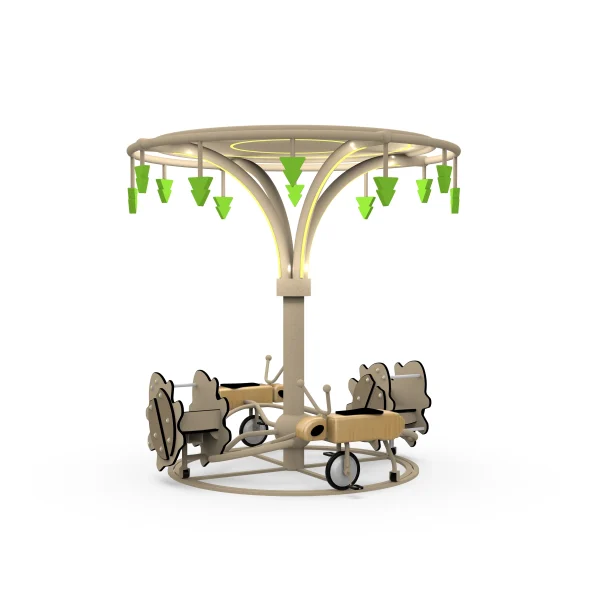
Balance Equipment Designed for Uneven Woodland Ground
Balance development is central to forest school physical learning, but balance equipment on natural ground starts with the base, not the activity. A beam or stepping element installed on uneven soil concentrates load at the high end, tips, and becomes a hazard instead of a lesson. The practical first decision is fall height.
Low fall height equipment carries lower surfacing requirements and fits woodland floor cover with less engineered preparation. The balance equipment we recommend for these sites is listed below, with the compliance and fall height data that matter first.
| Product | User Capacity | Maximum Falling Height | Suitable Age |
|---|---|---|---|
| Spring Playground Equipment | 1 child | 50 cm | 2+ or 3+ years |
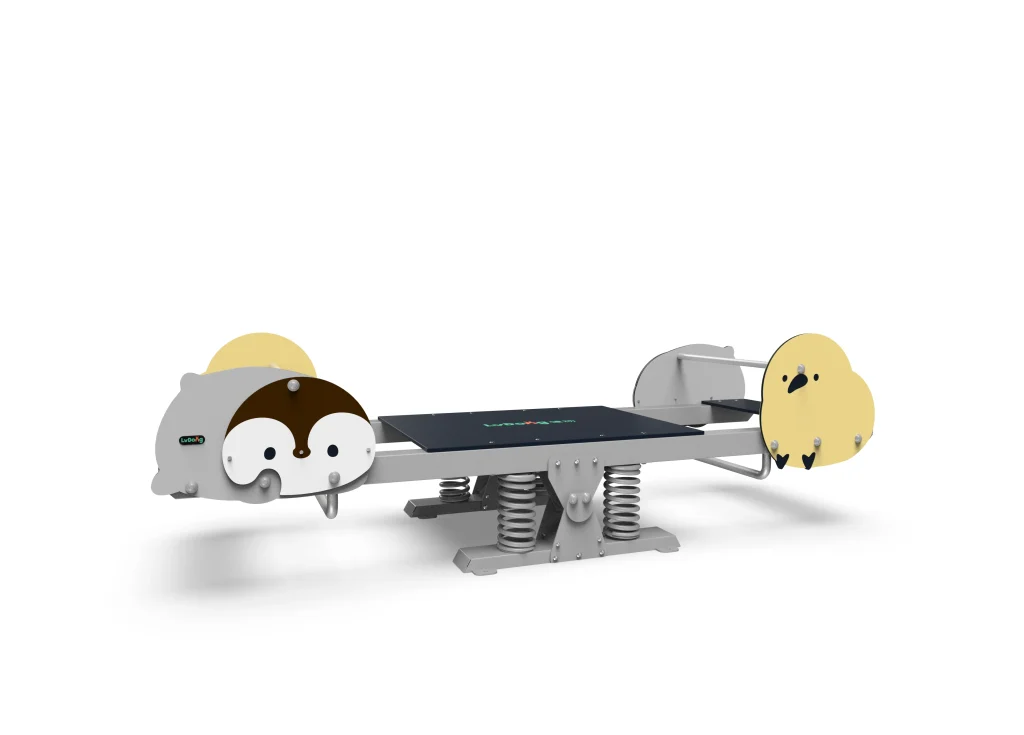
| Multi-Person Outdoor Playground Seesaw | 2 to 10 children | 60 cm | 3+ years |
| Single-Player Playground Spinning Equipment | 1 child | 34 cm | 2+ years |
Single-user spring riders work particularly well on woodland sites because the movement is controlled, the footprint is compact, and each leg can be leveled during anchoring. Multi-person seesaws with spring-assisted bases deliver the cooperative balance experience that forest school educators want, with smoother descents than traditional pivot models. Both product groups comply with EN 1176 and GB/T 34272-2017 safety standards.
Foundations are the hidden half of balance equipment on natural ground. <Playground Spring Rider Foundations Expert Installation Guide> explains how concrete anchoring depth and base plate leveling determine whether a spring rider stays within its designed movement range on soft or sloped woodland soil, and what to check before the first winter.
For mixed-age groups, balance equipment selection should follow expected user weight and movement pattern rather than age label alone. A spring rider rated for a 50 cm fall height works if the ground underneath is stable woodland floor cover. If the site has exposed roots or sharp grade changes, adding a compacted base around each unit is the lower-cost fix compared with resurfacing the whole zone.
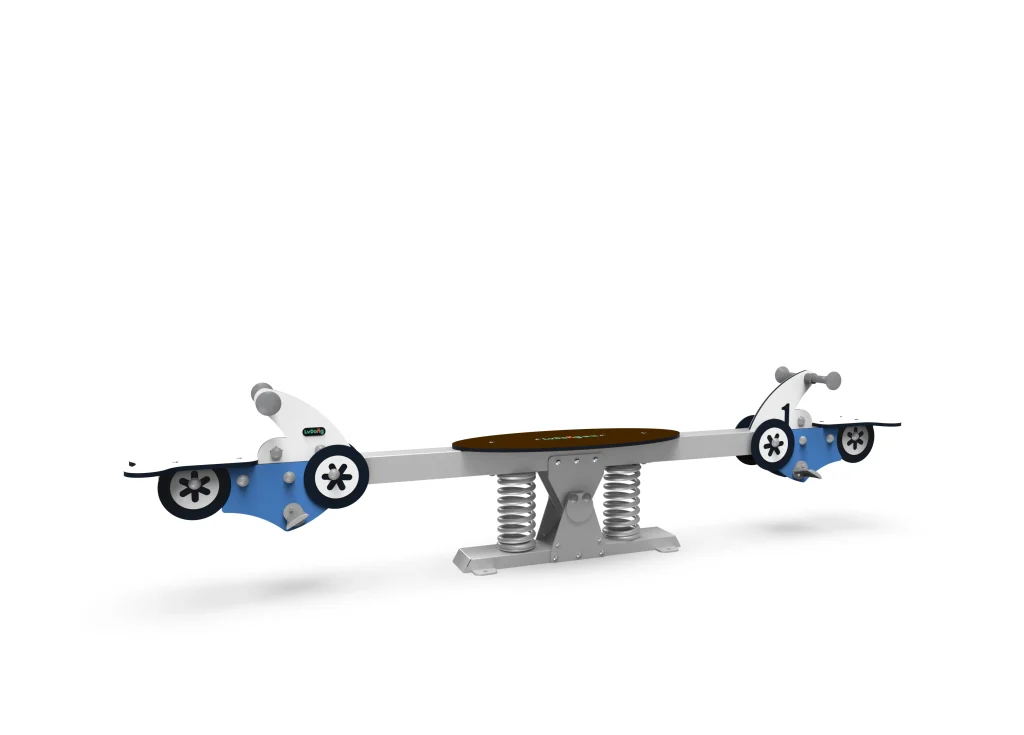
If your forest school program plans to set balance equipment on a slope, confirm the footing type and surfacing depth before ordering. Send a photo of the proposed location and the fall height you are working toward to [email protected] and we will check the anchoring detail for your ground condition.
Material, Installation, and Long-Term Care in Natural Settings
In a forest school, material selection should be driven by how the surface behaves in moist, organic soil over several seasons, not by how it looks at delivery. Galvanized steel offers the best balance of cost and corrosion resistance for frames in damp woodland air. Scratched powder-coated steel shows rust streaks quickly in the same environment. Stainless steel fasteners avoid the brown staining that carbon steel fasteners leave on timber after the first wet season.
Coastal and forest sites share a similar corrosion problem: trapped moisture and organic matter on steel surfaces. <Playground Spring Rider Materials Steel vs Anti Rust> breaks down how anti-rust treatments compare to galvanizing for spring riders in damp environments and why the spring itself is the first component to show weakness when the wrong treatment is specified.
Installation sequencing matters as much as product choice. Every footing should be checked for level before concrete placement, and the finished grade around each base should direct water away. Where the natural ground consists of deep leaf litter, scrape back to mineral soil before placing pads. Otherwise the unit settles unevenly within the first full year.
Long-term care in a woodland site is mostly obstruction control. Leaf litter packed against moving parts accelerates wear. Sap and bird droppings harden into films on panel faces. A monthly walk-through that clears organic buildup, checks fastener torque, and removes debris from drains does the same protective work as a more expensive indoor preventive maintenance contract.
Documentation is the cheapest resilience measure. Photograph each footing before backfill and store the image with the equipment file. When a base shows movement years later, the original condition photo distinguishes new settlement from an old installation defect, which changes the repair decision completely.
Planning a Forest School Equipment Order That Meets Safety and Site Needs
Forest school equipment purchases usually stall at the gap between site conditions and product specifications. A set of panels looks right in the catalog, but the post spacing does not match the timber frame already on site. A spring rider fits the age group, but the ground slope shifts the fall height beyond the listed value. These mismatches surface late, after budget approval, when correction costs are highest.
The easiest way to avoid that loop is to resolve the specification questions before finalizing the order. Suzhou LvDong has delivered more than 1,500 projects across educational institutions, municipal parks, and cultural tourism sites, with R&D, design, production, installation, and after-sales handled under one supply chain. That integration matters most for forest school sites, where installation details change more than the equipment list itself.
Send the details that define your site: the photo of the slope where balance equipment will sit, the post centers where panels will be mounted, and the age range the classroom serves. Email [email protected] or message WhatsApp at +8613915684545, and we will confirm the anchoring option, surfacing depth, and delivery plan for your project. A good outdoor classroom starts with the right equipment choices; the rest is site work we can plan together.
Common Questions About Forest School Outdoor Classroom Equipment
What fall surfacing works best under forest school balance equipment?
A compacted woodchip or bark mulch layer is the most practical option for most woodland sites if the drainage below is adequate. The required depth comes from the equipment’s maximum falling height, which is why the product’s EN 1176 critical fall height must be checked before choosing depth. On sloped or root-heavy ground, a contained edge around each unit prevents the loose fill from drifting away, which matters more than the exact material brand.
Can play panels be mounted to living trees instead of posts?
Mounting panels directly to living trees seems like the obvious natural choice, but it usually shortens panel life and damages the tree. Tree growth shifts the mounting, the attachment points open pathways for disease, and the panel face becomes harder to clean when bark and resin are in direct contact. Raised galvanized posts placed near the tree line create the same natural feel while keeping the panel face sealed and serviceable.
Which balance equipment fits a mixed-age forest school group from 3 to 8?
It depends on how adults are positioned. In programs where staff rotate between zones, low-height units such as spring riders and spring-assisted seesaws keep the wider age span safe with less direct intervention. Where one adult remains at a fixed station, log beams and stepping balances can be added because someone is present to spot transitions and manage turn-taking. The supervision model should drive the equipment list, not the other way around.
How often does forest school equipment need inspection?
In forest school sites we have worked on, a monthly visual walk-through catches nearly every problem before it becomes an actual repair. The check covers fastener torque, leaf buildup at bases, panel edge lifting, and wear at pivot points. A written record takes under an hour and creates the documentation that safety audits and insurance reviews expect. If you are planning a new forest school classroom, share your site plan and age range and we will confirm compliant surfacing and equipment placement.
If you’re interested, check out these related articles:
Replacing Chains Bearings Springs Lifespan Guide Strategies
Playground Pony Spring Rider Dimensions for Ages 2-5
Top 10 Animal Spring Rider Designs for Modern Playgrounds
Pre Configured vs Custom Designed Playground Play Sets A Strategic Guide
To discuss a forest-school panel layout, contact the LvDong team with your project requirements.