Sand ingress is the fastest way to turn a beachfront playground into a maintenance liability. Bearings and joints that run quietly on a protected municipal site can grind, stiffen, and seize within one coastal season when fine sand mixes with salt-laden air and grease breaks down. In our coastal project work, the failures we see most often are not from loads or falls; they are from moving parts that were specified as if the site sat inland. A sand ingress prevention strategy has to be set before the order, in the seal choice, the material grade, and the installation torque, not after the first service call.
Why Does Beachfront Sand Ingress Damage Bearings Faster Than Rain or Salt Air?
Beach sand is not the same as playground sand or rubber crumb. It is angular quartz that packs into small gaps and stays there. A bearing shield or joint boot that excludes ordinary dust will still breathe during movement and leave a fine film around the seal lip. The repeated motion then works that film into the raceway, where it cuts into the polished surface and accelerates clearance growth. Add salt spray and the wear becomes corrosive as well as abrasive.
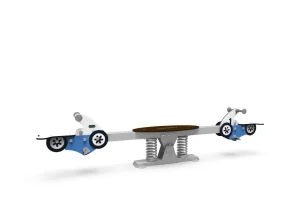
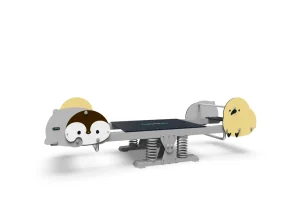
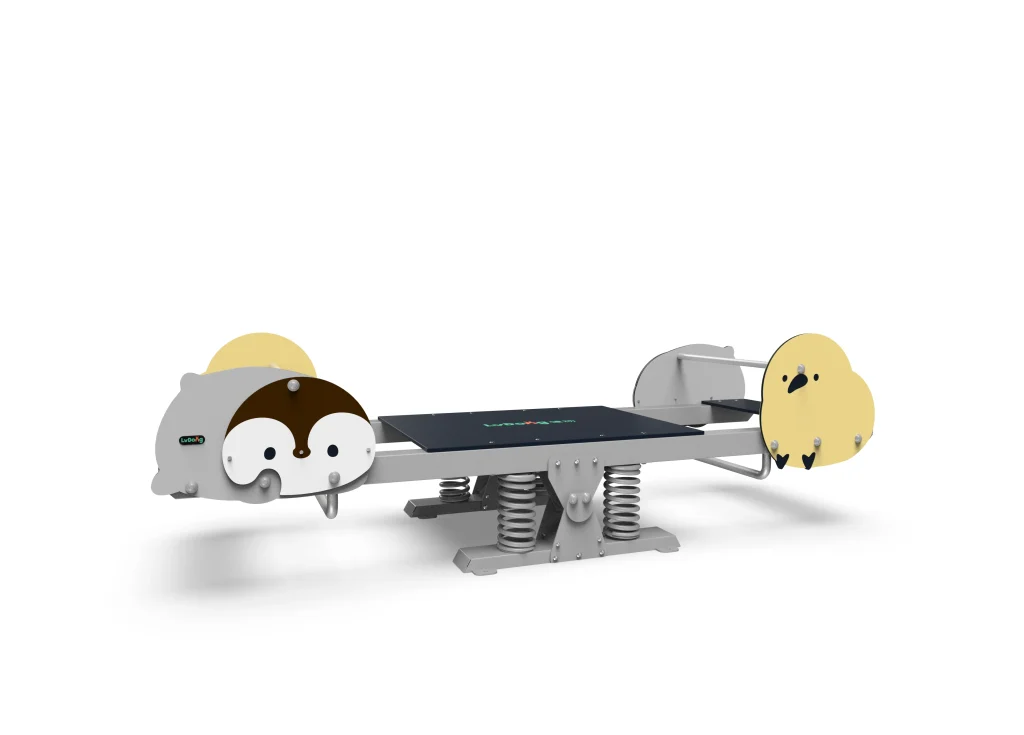
The result is a bearing that starts with a clean spin and ends the season with lateral play, noise, or a stuck joint. On spring riders and seesaws, this shows up as a ride that feels loose or a pivot that no longer returns smoothly. Once the clearance opens, sand does not need to be forced in. Movement pulls it in, and every cycle grinds the damaged surface a little further.
Which Bearing and Joint Designs Reduce Sand Ingress?
The first decision is rolling bearing versus plain bushing. Low speed playground movement rarely needs a high precision rolling bearing. For spinners and seesaws, a stainless pin with a self-lubricating polymer or bronze bushing can tolerate more contamination because there is no rolling element to trap particles. Where a rolling bearing is required, specify marine-grade stainless steel with two contact rubber lip seals, not metal shields. Metal shields keep out coarse debris but leave a narrow gap that fine sand exploits.
| Moving part | Inland default | Beachfront specification |
|---|---|---|
| Spinner hub | Shielded steel bearing | 316 stainless sealed bearing with 2RS rubber contact seal |
| Spring rider pivot | Zinc plated bolt and steel bushing | Stainless shoulder bolt with reinforced polymer bushing and sealed boot |
| Seesaw fulcrum | Exposed pin and simple sleeve | Bronze bushing, stainless pin, sealed end caps |
| Swing hanger | Open steel bushing | Sealed ball joint with silicone or neoprene boot |
The same rule applies to joints: the boot is not a cosmetic cover. A neoprene boot with a positive clamp at both ends keeps sand off the pin. Silicone boots resist UV better, but neoprene is more tear resistant, so beachfront assemblies often pair a silicone boot with an outer shield or choose a reinforced neoprene design. Our design team treats these boots as wear items and specifies field replaceable versions so a ripped boot does not force replacement of the entire pivot.
Coastal bearing upgrades start with the metal boundary, not just the seal. <Playground Spring Rider Materials Steel vs Anti Rust> covers how stainless grades and anti-rust treatments hold up under salt spray, which matters because a bearing housing can fail from corrosion before the bearing itself wears out.
How Do Seals and Grease Slow Sand Ingress in Salt Laden Air?
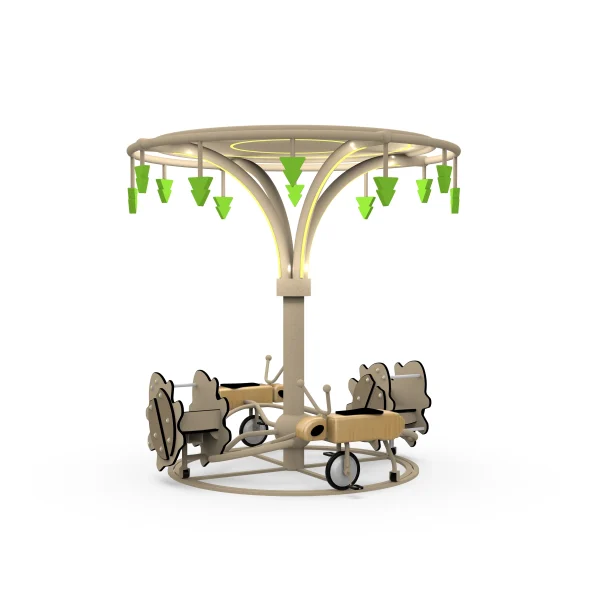
Seal and grease choices work as a system. A contact lip seal only does its job when the grease behind it stays in place and repels moisture. General-purpose lithium grease can soften and wash out in salt water exposure. Marine-grade calcium sulfonate or lithium complex greases hold consistency and resist emulsification better. We specify a small initial fill and rely on sealed housings rather than forcing operators to regrease open joints every month.
Overpacking a hub is a common installation error. Excess grease creates pressure against the seal lip and can push it out of position, which leaves a clean path for sand. The fill should be enough to coat the rolling elements and keep the seal lip wet, but not enough to rotate the seal out of its groove. For low speed playground bearings, less is usually safer.
UV resistance controls how long a rubber boot keeps its shape before sand bypasses it. <UV Resistance Testing Protecting Outdoor Playground Spring Riders> covers accelerated aging tests that show when protective rubber and polymer parts need replacement in high sun coastal sites.
If your beachfront site sits within 200 meters of the waterline, seal type and grease compatibility should be confirmed before the order is finalized. Send your equipment list and site photos to [email protected] and we will check which moving parts need marine-grade seals and bushings.
What Installation Details Prevent Sand Ingress After Handover?
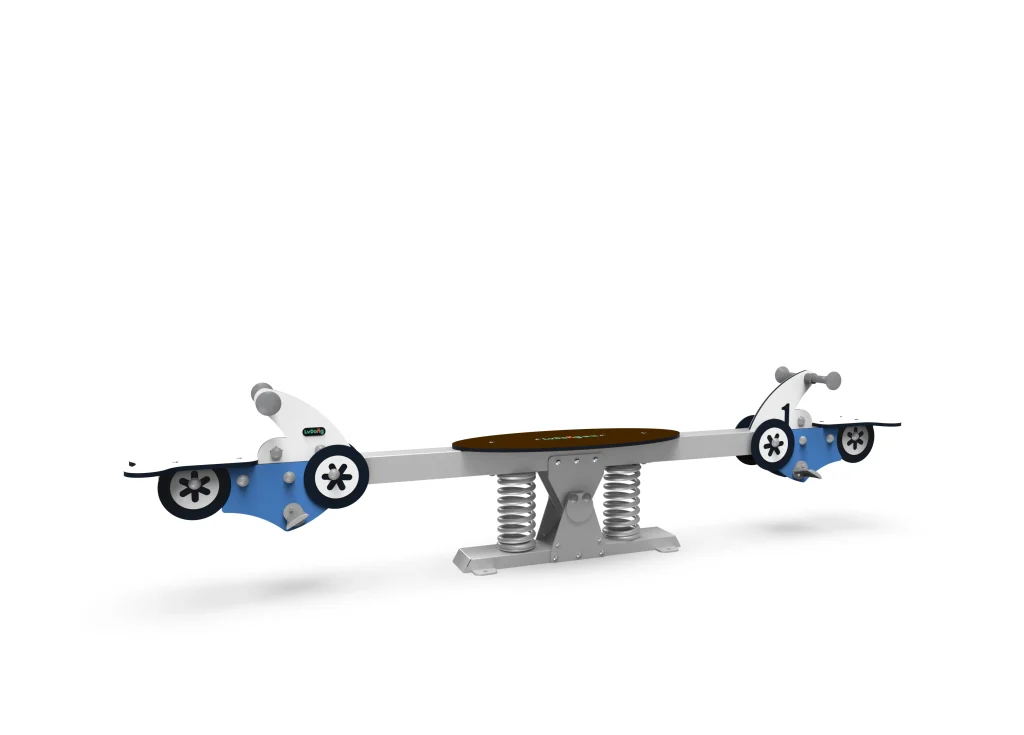
Even the best sealed bearing fails when installation opens the path. Installers should clean the bearing seat and bore before pressing, use the manufacturer’s torque value on the pivot bolt, and confirm the boot is clamped without twist. A twisted boot rubs and walks loose. On spinners, the hub must sit level so the rotating base does not wobble, because wobble flexes the seal lip and pumps in sand.
On spring riders, keep the mounting area free of sand build-up. A buried base traps moist sand against the joint and shortens both the boot and the fastener. Pressure washing near seals should be avoided. A focused jet of water can drive sand past the lip and strip grease from the seal contact face. Use low pressure fresh water and a soft brush around boots, then let the area dry before the next service check.
After installation, movement is not enough to accept the work. <12 Critical Post Installation Acceptance Tests for Playgrounds> covers the checks that catch unseated seals, loose covers, and uneven motion before the playground opens, when fixes are still quick and cheap.
Need a Sand Ingress Resistant Specification for Your Coastal Site?
Coastal playground tenders often copy an inland specification and add stainless steel as a simple catch-all. That misses most of the failure path. The bearings, joint boots, bushings, grease, and installation torque are the parts that decide whether the equipment stays smooth after the first sand season. A visually clean structure can hide a rotating hub that is already wearing from the inside.
For buyers working on beachfront resorts, public coastal parks, or island properties, it is worth confirming these details before procurement rather than discovering them through warranty claims. Send your equipment list, target site, and any existing photos or drawings to [email protected] or WhatsApp +86 139 1568 4545 with the note coastal moving parts review. We will confirm which bearing, seal, and material upgrades fit your layout and what the additional cost looks like before you commit to a final BOM.
What Do Buyers Ask About Sand Ingress in Bearings and Joints?
How often should beachfront bearings be cleaned?
Monthly inspection is the baseline for equipment within 200 meters of breaking surf. You do not need to strip and regrease sealed bearings every month. You do need to remove sand that collects around boots, spray off loose salt with low pressure fresh water, and feel for rough spots or play at each pivot. Once a bearing shows audible grinding or visible rust streaking from the seal, schedule replacement before the housing wears. For sealed bearings, the cleaning is mostly external. For open bushings, the maintenance calendar shifts to quarterly cleaning and lightly reapplying the specified marine grease.
Can I retrofit existing equipment with sealed bearings?
A common mistake is assuming every old hub can simply be swapped to a sealed marine bearing. Some equipment can, but the housing bore, shaft diameter, and retaining method all have to line up. If the existing housing was machined for a shielded bearing, a direct replacement may be possible. If the joint was designed as a simple bolt through a sleeve, you cannot insert a rolling bearing without changing load path and clearances. In those cases, the better retrofit is a stainless shoulder bolt, polymer or bronze bushings, and sealed end caps reviewed by someone who knows the original hub dimensions.
Does stainless steel solve sand ingress by itself?
It depends on whether the moving part uses rolling bearings or plain bushings. Stainless steel reduces corrosion, but a 316 stainless bearing still has rolling elements and a race that sand can cut. The stainless material keeps the part from rusting shut; it does not keep fine particles out of the contact area. On a bushing joint, stainless helps because there is no rolling element to trap particles and the surface hardness is enough for low speed play loads. For rolling bearings, stainless is one requirement alongside lip seals and the right grease.
What documentation should I request from a coastal playground supplier?
In coastal programs we have supported, the most useful documentation is not a single certificate but a package that ties the components to the actual moving parts. Ask for the bearing or bushing make and designation, the seal or boot material, the grease specification, and the mounting torque values. A supplier should also state which parts are field replaceable and what replacement items ship with the original order. If the response is only marine grade and a general EN 1176 certificate, ask again. EN 1176 confirms overall safety, not sand exclusion at a specific bearing interface. Share your site conditions with [email protected] and we will confirm which seal and material package fits your equipment.
If you’re interested, check out these related articles:
Slide Platform Height and Exit Safety Guidelines for Playgrounds
Playground Play Panels Material Selection and Secure Installation
Playground Spring Rider Materials Steel vs Anti Rust
Optimal Seasonal Care for Outdoor Metal Swing Sets
Spinning Playground Equipment Age Suitability and Safety Standards