Historic district playground equipment rarely succeeds on novelty. Approval boards, conservation officers, and residents read bright colors and tall sculptural forms as visual noise, so the project stalls before a single fall height is calculated. The workable path is restraint: standard structural systems with muted powder finishes, lower visual mass, and component choices that read as street furniture rather than carnival pieces. That approach still meets EN 1176 and GB/T 34272-2017 requirements, and it often shortens review cycles because the equipment quietly fits the setting instead of competing with it.
Material Choices That Respect Historic District Context
Material choices in a protected setting are not a design detail. They are the first question a review board asks, and the one that most often stops a project before the structural drawings are opened. The safest first move is to select surface colors already present in the district. Bronze, graphite, deep green, and sandstone are widely accepted because they read as traditional civic finishes. A child does not need bright yellow to find a spinner exciting.
Visible plastic is the main risk. LLDPE components are durable and weather resistant, but saturated plastic colors can read as temporary street furniture in a conservation area. If plastic is permitted, keep it inside tunnel slides or in small accents. For exposed structure, a textured powder coat over steel is closer to historic ironwork. The same substrate can be finished in a muted tone without changing the structural section. On spring riders, for example, the high strength steel spring and weather resistant coating remain unchanged when the frame color shifts from red to deep bronze.
Material selection in a heritage setting often comes down to how the steel reads from ten meters away. <Playground Spring Rider Materials Steel vs Anti Rust> covers why a matte anti-rust treatment ages less visibly than a bright galvanized finish and holds up better when the district is near salt air or heavy rain.
Muted Finishes and Low Visual Mass for Review Boards
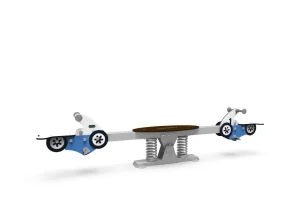
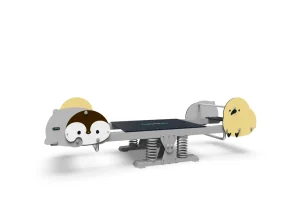
Boards tend to approve equipment that does not interrupt a sightline. The most reliable strategy is to keep the play structure low and horizontally calm. Single spinners, spring riders, and seesaws achieve this without losing play value. A single player spinner carries a maximum falling height of 34 cm, so it also reduces the visual impact of safety surfacing. Multi person seesaws sit close to the ground with a 60 cm maximum fall height and read more like outdoor seating than play equipment.
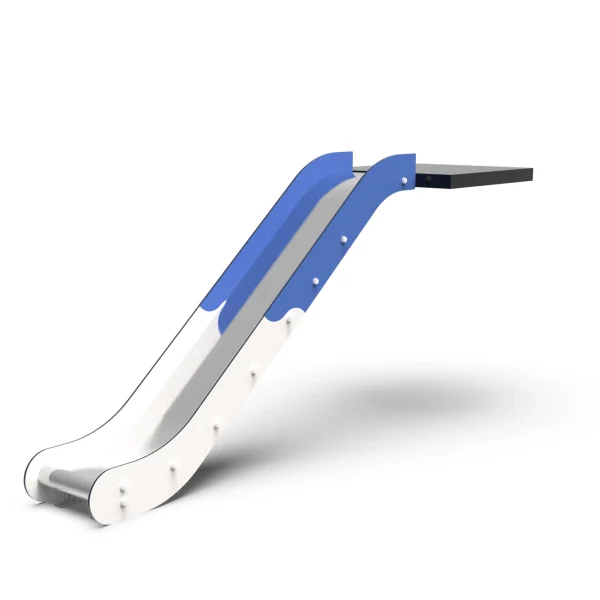
Tall towers and multi deck slides are not impossible in a historic district, but they ask more of the application. If the program requires a slide, choose a curved or tunnel slide with a dark exterior and keep the platform height as low as the space permits. The visual weight comes mostly from the top platform and the canopy. Removing the bright roof or replacing it with a muted panel often changes the review conversation before the board discusses fall zones.
| Equipment type | Visual mass treatment | Max fall height | Heritage review note |
|---|---|---|---|
| Single player spinner | One seat, compact base | 34 cm | Easiest to screen with planting |
| Spring rider | Low rocker, small footprint | 50 cm | Color matched to district railings |
| Multi person seesaw | Horizontal, bench-like profile | 60 cm | Reads as street furniture |
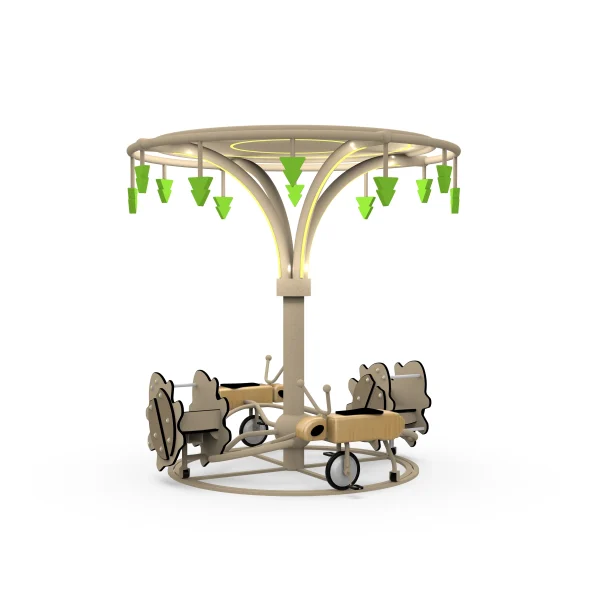
| Multi player spinning wheel | Calm round form, dark pod | 55 to 77 cm | Avoid bright roof pods |
If your site sits inside a conservation zone with a fixed paint schedule, it is worth checking the powder coat range and finish texture before you finalize the bill of materials. Send the commission’s approved palette to [email protected] and we will match the closest RAL or Pantone reference against the standard coating line.
Adapting Standard Equipment Without Losing Safety Compliance
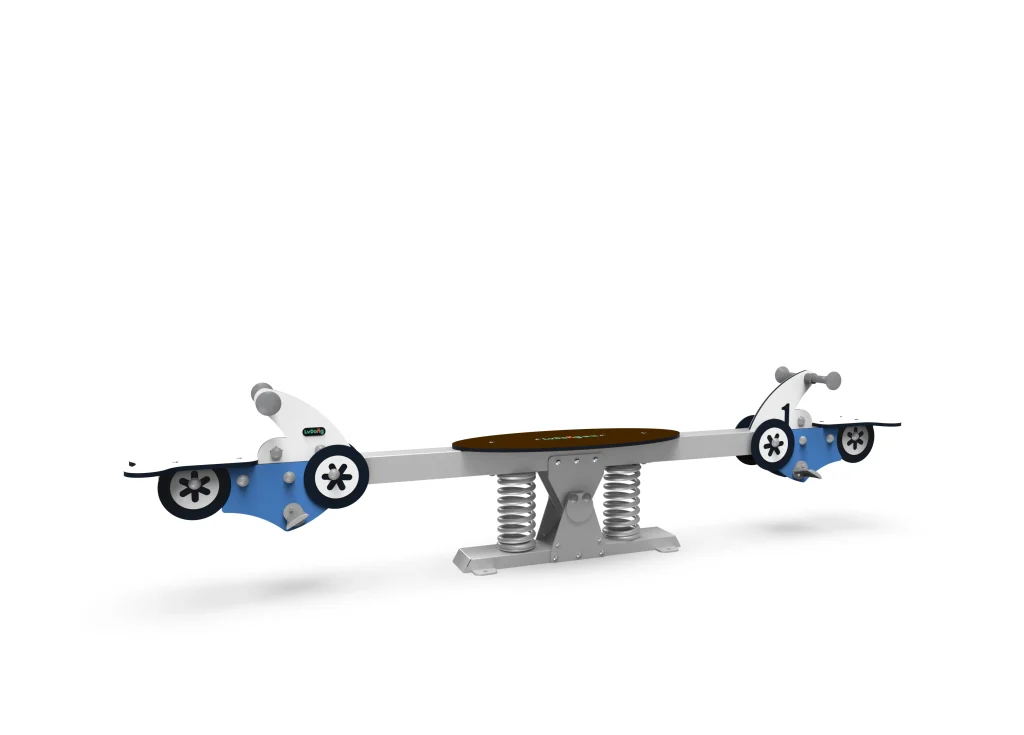
Heritage projects rarely require a fully custom structure. In most cases the right move is to adapt a standard model through finish, panel graphics, and small component changes. This keeps the EN 1176 certificate intact and avoids the cost of new structural testing. Custom tooling is best reserved for reversible elements such as graphics panels, thematic cutouts, or color matched trim.
Can we lower the deck height to fit a protected skyline?
Lowering a deck is a structural change, not a finish change. Cutting posts or reducing guardrail height alters the load path and can invalidate the certification. If the available height is tight, select a smaller stock model that already carries the lower platform height and fall zone. This is faster and cheaper than trying to redesign a tall unit for a low skyline.
Which components can be recolored without a new certificate?
Color changes to steel frames, plastic panels, and trim do not normally require new structural testing because the shape and load path stay the same. The supplier should still issue a revised specification sheet listing the new RAL or Pantone code and the coating system. Keep that sheet with the EN 1176 file. Do not change fasteners, guardrails, or bearing mounts unless the manufacturer confirms the modification in writing against the original load calculations.
Customizing a heritage project usually stops at color, panel graphics, and minor components rather than redesigning the structural frame. <OEM Branding Services Elevating Outdoor Playset Manufacturing> covers where branding and finish changes can be made without affecting the load path or the safety certification.
Procurement Requirements for Heritage Playground Projects
Public reviews for historic districts move faster when the buyer arrives with the right documents. A strong submission includes the finish schedule, a photomontage of the equipment in the proposed corner, the fall height table, and a short statement on how the equipment will be maintained. Missing any of these usually leads to a deferral, not a rejection, but deferrals add months to a public process.
What belongs in a heritage impact submission for play equipment?
Start with three views: a daylight photograph of the site, a rendering of the equipment in place, and a material sample or color card held against the existing surfaces. Add the maximum fall height for each unit and the proposed safety surfacing in its natural tone. The board wants to see what disappears and what stays visible. For equipment near a protected facade, show the line of sight from the main viewing point and mark the highest point of the structure.
Approval-heavy projects reward suppliers who can produce the right documentation before the first site meeting. <Selecting Commercial Playground Manufacturers A Step by Step Guide> covers how to screen manufacturers for compliance files, finish samples, and project references before you invite them into a public review process.
Sending Your Site Constraints for a Workable Design
Heritage commissions move cautiously, and no one wants a design rejected after shipping. The best way to avoid that is to send the constraints before the order is placed, not after the equipment arrives. Share the review board’s approved palette, the site plan, and the maximum visible height with Suzhou LvDong Amusement Equipment Co., Ltd. at [email protected] or WhatsApp +8613915684545, and we will return a layout and finish proposal matched to your local requirements before you commit to tooling.
Common Questions About Historic District Playground Equipment
Does muted equipment cost more than standard bright playground units?
The price difference is usually smaller than buyers expect. The main cost moves come from custom powder colors, smaller production batches, or special anti corrosion treatments, not from the muted color itself. If the district accepts a stock color such as graphite or bronze, the price stays close to standard. If the board demands a bespoke finish matched to an existing railing or gate, expect a modest upcharge and a longer lead time. The larger saving appears later, because a quiet design is less likely to be rejected and returned for expensive modifications after the order is placed.
Will a metal structure automatically pass a heritage review better than plastic?
Many buyers assume anything metal will pass, but polished stainless steel can fail a heritage review just as quickly as bright plastic. The deciding factor is visual weight and reflectance, not material alone. A matte powder coated steel seesaw in dark bronze reads as traditional furniture and is usually accepted. A mirror finished stainless spinner in the same square can draw more attention than a colored panel. Before ordering, ask the review board whether they object to specific finishes or only to saturated colors.
How do we handle safety surfacing without changing the historic ground plane?
It depends on how the district classifies the ground. If the surface is a protected material such as cobblestone or stone paving, the common solution is a contained play zone with a recessed impact surface that can be edged with matching materials. If the district allows wet pour rubber, choose a dark neutral tone and keep the perimeter low. The fall height drives the surfacing thickness, so lower equipment is the better choice. A single player spinner with a 34 cm maximum fall height needs far less intervention than a multi deck tower.
Can certification documents be updated when colors and finishes change?
In projects we have completed through older urban districts, the documentation question comes up early. A routine color or finish change does not normally alter the structural certification, because the load path and geometry stay the same. The supplier should still issue a revised specification sheet listing the new RAL or Pantone reference and the applied coating system. Keep that sheet with the EN 1176 certificate and the installation drawings. For any change to dimensions, guardrails, or connection points, request a new engineering check before production starts. Share your finish schedule and we will confirm which documents need updating before your site inspection.
If you’re interested, check out these related articles:
Mastering Metal Slide Heat Prevention Strategies for Playgrounds
Playground Turntable Safety EN1176 vs ASTM Standards Unpacked
Evaluate Commercial Playground Manufacturers 8 Critical Selection Factors