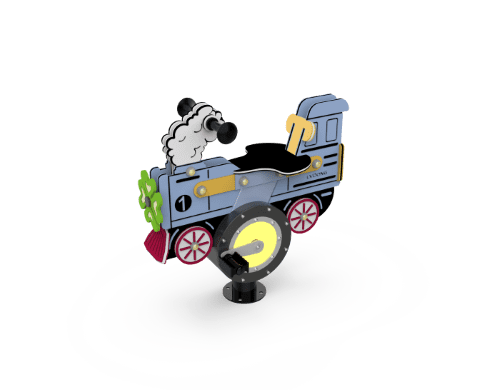
Spring riders sit outside year after year, taking sun, rain, and temperature swings without complaint. But that constant UV exposure does real damage over time—fading colors, weakening plastics, and eventually creating safety concerns that aren’t always visible until something fails. I’ve seen equipment that looked fine from a distance but crumbled when you got close. That’s why UV resistance testing matters so much for playground equipment. It’s not just about keeping things pretty. It’s about making sure the spring rider a child climbs onto today will still be safe three, five, or ten years from now.
How UV Radiation Breaks Down Playground Materials
UV radiation from sunlight works quietly but persistently on outdoor playground equipment. The energy triggers chemical reactions inside materials that accumulate over months and years. For plastics commonly used in spring rider seats and handles, UV exposure breaks polymer chains apart. The material loses flexibility first, then strength. What you see on the surface tells part of the story: colors fade from vibrant to chalky, and fine cracks appear where the surface used to be smooth.
Metals face a different challenge. While UV doesn’t attack metal directly, it degrades the protective coatings that keep corrosion at bay. Powder coatings can chalk, peel, or crack under sustained UV stress, leaving the underlying metal exposed. Once that barrier fails, rust follows quickly.
The embrittlement process makes materials prone to sudden breakage rather than gradual wear. A plastic component that bent under stress last year might snap this year. That unpredictability is what makes UV degradation a genuine safety concern rather than just a cosmetic issue.
!Interactive Playground Equipment
## Safety and Financial Stakes of UV Degradation
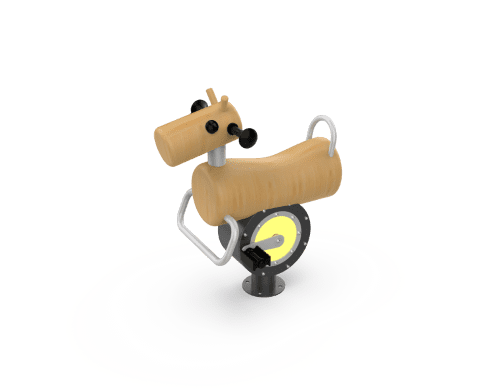
The connection between UV degradation and child safety is direct. A weakened spring on playground spring rider equipment could fail during use. A cracked seat might give way. These aren’t theoretical risks—they’re documented failure modes that UV resistance testing is designed to prevent.
The financial picture reinforces the safety argument. Replacing equipment prematurely costs thousands of dollars per unit. Injury claims can run into six figures. Reputation damage from a playground incident is harder to quantify but often more lasting. Testing costs a fraction of what failure costs.
| Factor | Cost of Premature Failure (Estimate) | Cost of UV Testing (Estimate) |
|---|---|---|
| Equipment Replacement | $5,000 – $20,000 per unit | $500 – $2,000 per material |
| Injury Liability Claims | $10,000 – $100,000+ | Included in compliance |
| Reputation Damage | Immeasurable | Enhanced brand trust |
| Downtime/Lost Revenue | $100 – $500 per day | Minimal |
| Warranty Claims | $1,000 – $5,000 per incident | Reduced |
Equipment with proven UV resistance lasts longer, reducing replacement cycles and protecting the initial investment. The testing process also catches material problems before they reach the playground, which is always preferable to discovering them after installation.
Testing Standards That Define UV Resistance Requirements
International standards establish the framework for UV resistance testing in playground equipment. ASTM G154 and G155 specify accelerated weathering tests using fluorescent UV lamps and xenon arc lamps respectively. These protocols simulate years of outdoor exposure in weeks or months of controlled laboratory conditions.
The EN-71 series addresses material safety from multiple angles. While EN-71 Part 3 focuses on chemical migration, the broader EN 1176 standard for playground equipment includes durability requirements that depend on adequate UV resistance. ISO 4892 provides general methods for laboratory light exposure testing.
These standards prescribe specific conditions: light intensity, temperature cycles, humidity levels, and exposure durations. Following them isn’t optional for manufacturers who want to sell equipment in regulated markets. The protocols exist because decades of field experience showed that untested materials fail in predictable ways.
For a deeper look at compliance documentation, 《Essential Checklist for Playground Equipment Safety Test Reports》 covers the practical aspects of safety verification.
Testing Methods for Spring Rider Components
UV resistance testing subjects material samples to conditions that compress years of weathering into manageable timeframes. For spring playground equipment, different components require different approaches.
Xenon arc testing replicates the full spectrum of natural sunlight—UV, visible, and infrared wavelengths. This method provides the closest approximation to real outdoor conditions. Fluorescent UV lamps concentrate on the most damaging UV wavelengths, accelerating degradation patterns that would take longer under natural light.
Outdoor exposure testing places samples in actual environments for extended periods. The results take longer to obtain but provide valuable correlation data that validates laboratory methods.
For playground spring rider materials specifically, technicians cut specimens from plastic seats, metal springs, and coated surfaces. After exposure cycles, they evaluate color change, surface condition, and mechanical properties. A sample that maintains its tensile strength and flexibility after simulated aging will likely perform well in actual service.
### Specific Testing Protocols for Spring Rider Materials
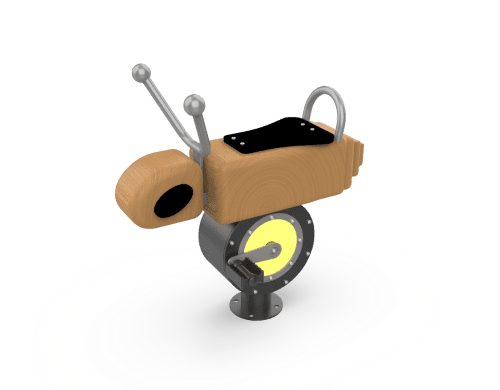
Xenon arc testing under ASTM G155 and ISO 4892-2 remains the primary method for evaluating playground spring rider components. Fluorescent UV testing per ASTM G154 and ISO 4892-3 provides complementary data at lower cost. Sample preparation follows strict protocols to ensure consistent results across different material types.
Evaluation criteria include visual inspection for fading, chalking, and cracking, plus mechanical testing to measure changes in strength and flexibility. Materials that show significant degradation under accelerated testing get rejected or reformulated before they reach production.
Material and Design Choices That Resist UV Damage
UV resistance starts with material selection. UV-stabilized polymers incorporate additives that absorb or reflect UV radiation before it can break polymer chains. The stabilizers sacrifice themselves over time, which is why the formulation matters—cheap stabilizers deplete quickly, while quality additives provide protection for years.
Metal components need durable finishes. Galvanization creates a zinc barrier that corrodes preferentially, protecting the underlying steel. High-quality powder coating provides both UV protection and corrosion resistance when properly applied and cured.
Design decisions affect UV exposure patterns. Components positioned to minimize direct sunlight last longer. Shapes that avoid stress concentrations reduce the likelihood that UV-weakened areas will become failure points. Drainage features prevent water from pooling on surfaces where UV has already compromised the material.
Ongoing research continues to improve UV-resistant materials. New stabilizer chemistries, coating technologies, and polymer formulations extend service life while maintaining the bright colors and smooth surfaces that make playground equipment appealing to children.
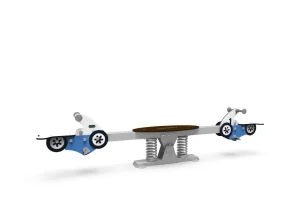
!Commercial teeter totter
## LvDong’s Approach to UV-Resistant Playground Equipment
Suzhou LvDong Amusement Equipment Co.,Ltd. builds UV resistance into spring playground equipment from the design phase forward. Over a decade of manufacturing experience has taught us which materials perform and which ones fail. Our production facility and quality management system ensure consistency across every unit.
All unpowered amusement equipment meets EN 1176 and GB/T 34272-2017 standards. The testing protocols described above are part of our standard quality process, not optional add-ons. We’ve completed over 1,500 projects across China, and the equipment we installed years ago still performs because we didn’t cut corners on UV protection.
Our service covers the full project lifecycle: design consultation, manufacturing, installation, and ongoing support. When you specify UV-resistant materials, we deliver them. When testing identifies a material concern, we address it before production.
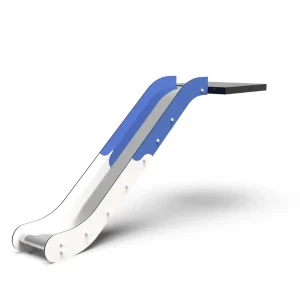
!Curved playground slide
## Build Playgrounds That Last
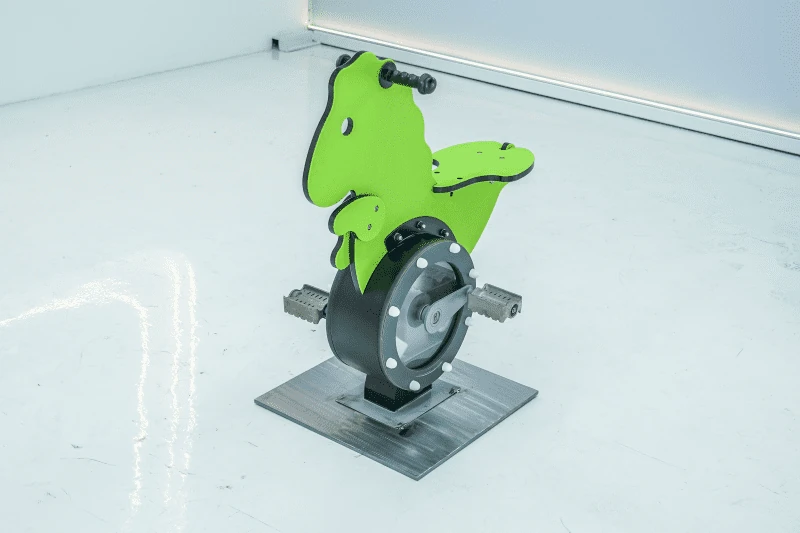
Outdoor play environments deserve equipment engineered to handle real-world conditions. Suzhou LvDong Amusement Equipment Co.,Ltd. combines material science expertise with rigorous UV resistance testing to deliver spring playground equipment that maintains safety and appearance for years. Our integrated approach covers design, production, and installation of compliant playground spring rider solutions built for durability.
Contact our team to discuss your project requirements and learn how proper UV testing protects your investment. WHATSAPP:+8613915684545 | [email protected]
Frequently Asked Questions About UV Resistance in Playground Equipment
What happens to playground spring riders after years of UV exposure?
Extended UV radiation causes measurable degradation in playground spring rider components. Plastic parts fade and become brittle. Surface cracks develop where the material was once smooth. The structural integrity decreases even when the equipment looks acceptable from a distance. These changes affect both appearance and safety, which is why manufacturers conduct accelerated UV resistance testing to predict long-term performance before equipment reaches playgrounds.
How do manufacturers verify UV resistance before selling playground equipment?
The verification process combines material selection with laboratory testing. Manufacturers specify UV-stabilized plastics and apply protective coatings to metal components. They then subject material samples to accelerated weathering tests—xenon arc exposure per ASTM G155 or fluorescent UV testing per ASTM G154—that simulate years of outdoor conditions. Some also conduct outdoor exposure testing for correlation data. Equipment that passes these protocols meets international standards like EN 1176 and demonstrates adequate UV resistance for commercial use.
Which UV testing methods apply specifically to spring rider components?
Playground spring rider materials undergo xenon arc testing (ASTM G155, ISO 4892-2) and fluorescent UV testing (ASTM G154, ISO 4892-3). Technicians prepare samples from plastic seats, metal springs, and coated surfaces, then expose them to controlled light, temperature, and humidity cycles. After exposure, they evaluate color retention, surface condition, and mechanical properties to determine whether materials will maintain adequate performance throughout the expected service life.