Selecting a school playground equipment supplier means evaluating design expertise and safety compliance as deeply as price. After over a decade designing and manufacturing unpowered playground equipment, I have seen too many schools prioritize low bids only to face safety gaps, premature wear, or incomplete installation later. The right supplier does not just fulfill an order; they bring technical capability, certified materials, and after-sales responsibility necessary to protect children and budgets. This article outlines the key criteria for choosing a playground equipment supplier for schools, drawn from real-world project experience rather than generic procurement templates.
Key Safety Certifications to Require from a School Playground Supplier
Safety certification is the first filter, not a final checkbox. For school playgrounds, the baseline should be compliance with EN 1176 (the European standard) or your country’s equivalent, such as GB/T 34272-2017 in China. These are not marketing labels; they mean the equipment has passed structural integrity, entrapment, and impact-attenuation tests performed by an accredited third party. I always recommend requesting the actual test reports, not just the certificate. You want to see the test date, the testing body, and the specific product model numbers covered.
Beyond product certification, verify the supplier’s quality management system. A supplier operating a modern production base with a standardized quality system, like the 10,000-square-meter intelligent facility we run at LvDong, can maintain consistency across batches. Ask for evidence of in-process inspections and material traceability. Raw material certificates for steel, plastic, and fasteners matter, especially for components that endure constant outdoor stress and child load. Insist on full documentation for any coating or surface treatment that claims to be child-safe and weather-resistant.
What safety standards apply to school playground equipment?
The core standards are EN 1176 for structural safety and surfacing, and GB/T 34272-2017 in China. In the United States, ASTM F1487 covers public playground equipment. For schools, I also recommend checking whether the supplier can provide documentation aligned with your local education authority’s additional requirements; some districts require a fall-height analysis and a certified installer sign-off.
How can I verify a supplier’s safety claims?
Request the test reports by specific product line. A credible supplier will share reports from an accredited lab like TÜV or SGS without hesitation. Cross-check the report’s scope: it should cover components such as climbing frames, slides, and swings individually, not just a single assembly. During a factory visit, look for a designated quality control zone and ask how they manage incoming material inspection and final product load testing. A supplier who cannot walk you through these steps may be relying on outdated certificates or batch-level claims that do not match your order.
Evaluating a Supplier’s Design and Manufacturing Quality
Price comparisons are useless without a side-by-side look at how the equipment is designed and built. For school use, design quality directly affects child engagement and injury risk. The supplier should demonstrate age-appropriate zoning in their proposals. A kindergarten needs safe fall heights under 60 cm and equipment scaled for small body dimensions. A higher-grade playground might incorporate more complex climbing structures but requires competent engineering of joint strength and anti-slip surfaces. I examine the supplier’s in-house design capability: do they produce 3D rendered layouts with accurate fall-zone radii and surfacing depth calculations, or do they just offer a catalogue of stand-alone units? At LvDong, our design team works from site surveys to create integrated play environments where the slide platform height, swing clearance, and spring rider zones are all pre-verified to meet the relevant standards.
Manufacturing quality is equally critical. Ask about the material specifications. For rotational molded components, the supplier should use virgin LLDPE with UV stabilizers, not recycled plastic that becomes brittle under sunlight. For metal frames, the pipe diameter and wall thickness must match the structural load calculations. A supplier that is not transparent about these specifications may be substituting materials to meet a price point. In our own factory, every steel part is shot-blasted, zinc-primed, and powder-coated, and we track material certification from our domestic steel mills, because I know the difference between a structure that looks sturdy on delivery and one that still feels solid after five years of daily use.
The Importance of Integrated Installation and After-Sales Support
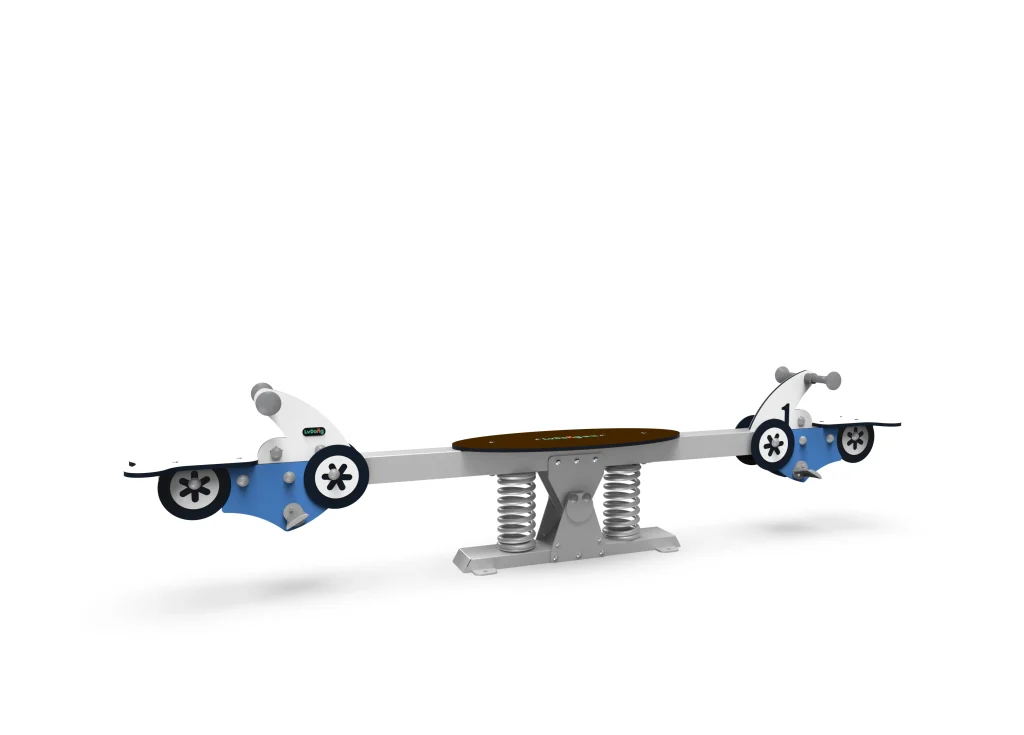
A well-built playground can still fail if the installation is handled by a separate contractor who does not understand the equipment’s anchoring and assembly requirements. The supplier that designs and manufactures the equipment is best positioned to supervise or perform the installation, because they know the torque values for each fastener and the precise footing dimensions for dynamic load. I have seen cases where a third-party installer used undersized concrete pads for a spring rider, creating a rocking base within the first semester. That is a failure of coordination, not equipment quality.
When evaluating a supplier, ask whether they provide an installation supervisor or a full installation team. Schools often have hard summer installation windows, so clarify whether the supplier commits to an on-site schedule with penalty clauses. After installation, after-sales support determines the real cost of ownership. Fast spare parts supply and a clear maintenance calendar are not optional for a school. We keep stock of commonly replaced items like bearing kits, swing hangers, and spring assemblies, and we can ship within 72 hours to most locations. Also confirm the warranty structure: a supplier offering a multi-year structural warranty but only six months on moving parts is signaling where they expect failures. Insist on a warranty that covers both manufacturing defects and material degradation for a reasonable period, with defined response times for service calls.
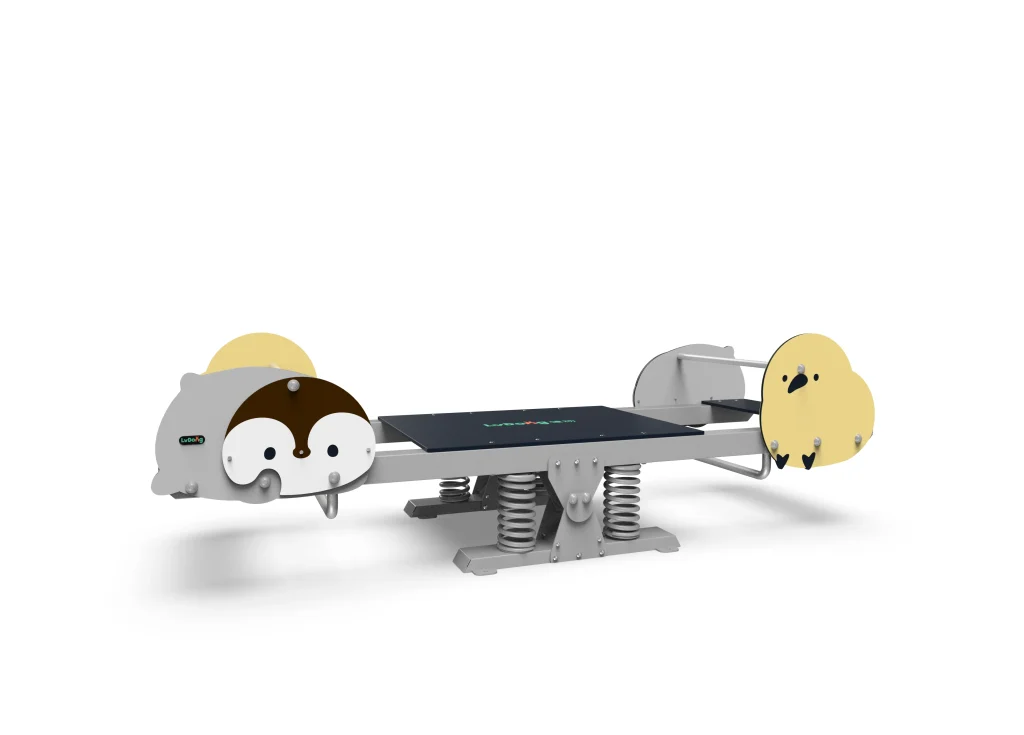
If your school playground project involves multiple activity zones and strict municipal safety inspections, it is worth confirming that your supplier can provide a complete installation compliance report before the first student steps on the equipment. Share your site drawings and timeline with [email protected] or via WhatsApp at +8613915684545, and we can walk through what an installation and maintenance plan looks like for a project of your scale.
Balancing Initial Cost with Long-Term Value in School Playground Projects
Every school has a budget, but the cheapest quote is rarely the least expensive over five years. I encourage procurement teams to ask for a ten-year cost projection that includes expected maintenance, spare parts, and potential repainting or recoating. A supplier using hot-dip galvanized steel for posts may be 15% more expensive upfront than a painted mild-steel alternative, but the galvanized frame will not need rust treatment repainting in year three, when labor and school disruption costs far exceed the initial saving.
Hidden costs also appear in shipping and installation logistics. Large playground slides or complex multi-deck structures may require crane hire and extra site preparation. A supplier who handles design, production, and logistics under one roof can give you a more accurate landed cost. Ask for a detailed quotation that separates equipment price, installation fee, and freight, and that clearly states what is not included, such as safety surfacing or ground excavation. The following comparison table illustrates the kind of cost structure you should expect from a full-service supplier versus a piecemeal approach.
| Cost Element | Full-Service Integrated Supplier | Piecemeal (Separate Suppliers and Contractors) |
|---|---|---|
| Design and layout | Included with site survey and 3D rendering | Often separate design fee |
| Equipment production | Factory-direct pricing, no middle margin | Agent or distributor markup |
| Installation labor | Supplier-supervised or turnkey team | Local contractor with variable playground experience |
| Safety surfacing coordination | Bundled into overall project plan | Must source separately, risk of incompatible depths |
| After-sales spare parts | Guaranteed stock, priority shipping | Unknown lead times, limited accountability |
Conducting Final Due Diligence Before Committing to a Supplier
Before signing, there are three non-negotiable steps. First, visit the supplier’s factory. A production floor that is organized, with clear quality stations and a visible finishing line, tells you more than any brochure. During the visit, ask to see the equipment being tested: a supplier that cannot show you a static load test or a weld inspection in real time is a risk. Second, request and touch samples. You need to feel the thickness of a rotationally molded seat, check the smoothness of a weld on a swing bracket, and tug on a spring to see if it returns firmly. I recommend requesting the specific component sample, not a general product, so you know exactly what material will land on your site. Third, negotiate the contract terms with an emphasis on delivery penalties, warranty language, and acceptance test criteria. A supplier who avoids clear acceptance tests, such as a 12-point post-installation inspection, may be hoping to push off punch-list items indefinitely.
The school playground is a long-term commitment. The supplier you choose should be capable of evolving with your needs, from initial equipment to future expansion. That means they need the design and manufacturing depth to re-engineer components, not just resell a fixed catalogue. For a school district, a supplier with in-house engineering and a track record of over 1,500 completed projects across diverse scenarios is a stronger long-term match than a trading company that can offer a lower price but no continuity.
Choosing a School Playground Equipment Supplier That Delivers Safety and Longevity
A school playground is not a one-time purchase; it is a ten-year commitment to child safety and active play. The right supplier brings certified design, transparent manufacturing, integrated installation, and reliable after-sales support, not just a low bid. If your project requires a supplier who can handle everything from site analysis and 3D design to turnkey installation and spare parts supply, we are equipped to support you. Send your project requirements and target budget range to [email protected] or reach us on WhatsApp at +8613915684545, and we will prepare a specific proposal that addresses your space, age group, and safety documentation needs.
Common Questions About Selecting Playground Suppliers for Schools
Do I need a supplier with both design and manufacturing under one roof?
It is not strictly mandatory, but the advantage is significant. When one company owns the full chain from concept to installation, the design team can immediately adjust if a production constraint surfaces, and the installers will have deep familiarity with every joint and anchor. In our projects, we find that integrated teams reduce revision loops and eliminate the finger-pointing that can occur between separate design studios and factories. For a school project with a fixed summer deadline, that efficiency can mean opening on time.
What is a reasonable MOQ for school playground orders?
For custom commercial playground equipment, many manufacturers set a minimum order quantity, often around one full playground set, but it can vary. Some suppliers require a container load for mixed product types. The key is to ask the supplier upfront about MOQ for each product category: swings and slides may have lower MOQs than a fully custom multi-activity play structure. If you are outfitting a single school playground, most capable manufacturers can accommodate a one-set order while still offering factory-direct pricing.
How can I be sure the equipment will stay safe after several years?
Long-term safety depends on the material quality, the protective coatings, and how well the moving parts are maintained. Request the supplier’s maintenance calendar, and make sure it specifies inspection frequencies for fastener tightness, swing chain wear, and rotating component lubrication. The warranty should explicitly cover structural failure due to material fatigue. If your program involves coastal salt air or extreme UV exposure, share that with the supplier early so they can confirm coating specifications. We regularly advise school clients on annual maintenance tasks and can provide a documented inspection checklist specific to their installed equipment. If you would like a maintenance planning example for a similar school installation, we can share one based on the age range and equipment mix you are considering, just send your general layout and equipment types to [email protected].
If you’re interested, check out these related articles:
Replacing Chains Bearings Springs Lifespan Guide Strategies
Hotel Kids Club Playground Equipment Configuration Guide 2
Optimal Seasonal Care for Outdoor Metal Swing Sets
Playground Slide Materials LLDPE vs 304 Steel Performance
Playground Equipment Warranty Comparison 1 3 or 5 Years