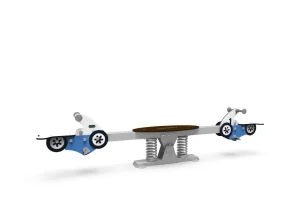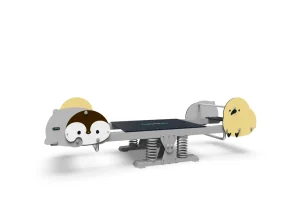
When Olympic Village housing converts to permanent residential use, legacy playground equipment carries a different burden than the original event-time installation. Specifying equipment that can outlast the Games means planning for mixed-age daily play, public scrutiny, and maintenance cycles that continue well beyond the closing ceremony. Most post-Games planning concentrates on apartments, streetscapes, and community centers. The playgrounds are often treated as leftover assets. In our design and manufacturing work, the recurring failure point is not the structure itself but the mismatch between temporary event assumptions and permanent community loads.
Legacy Playground Equipment Specifications for Permanent Use
Most public discussion of Olympic legacy planning stops at housing tenure and venue reuse. The playground specification is usually a line item in a landscape package. That creates a problem when the site becomes a permanent residential district. Event-time equipment is often chosen for short-term visual impact and rapid installation. Permanent legacy equipment has to hold up to daily use by children whose ages range from toddlers to young teenagers, year after year, under the same public maintenance scrutiny as any municipal park.
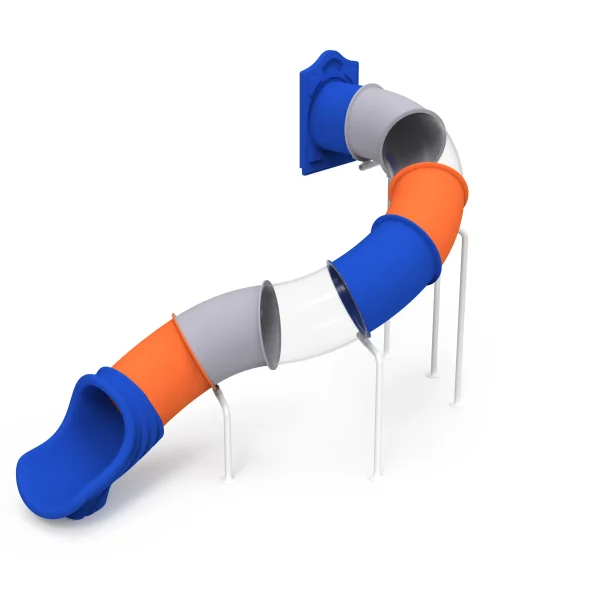
From our design work, the first question for post-Games conversions is not which theme fits the former athlete plaza. It is whether the equipment can serve a 15-year municipal window without wholesale replacement in year four. That shifts the specification toward deeper footing design, larger-diameter structural steel, and components that maintenance teams can inspect and repair without full disassembly. The visual theme matters, but it cannot come at the expense of a serviceable frame.
A permanent-use specification also changes the loading assumptions. In a temporary installation, the operator may accept lighter duty components because the service period is short. In legacy use, moving parts need to be rated for continuous daily cycling. We treat the play area as a permanent public asset and select bearings, spring assemblies, and fasteners accordingly.
Post-Games Traffic Patterns and the Durability Equation
The traffic profile changes after the Games. During the event, playground use may be monitored, limited, or concentrated in athlete family areas. Once the Village becomes housing, the same equipment absorbs playground trips before school, after school, and through weekends, often with no staff supervision. Peak loads are not spread evenly across the day; they arrive in sharp windows. That concentrated cycle is harder on bearings, springs, and surfacing than the same annual user count spread over more hours.
How Much Daily Use Should a Post-Games Playground Be Designed For
Design for a high-use municipal park rather than a residential amenity. In former athlete housing conversions, the play area often becomes the default outdoor space for several hundred households, so a spinner or seesaw may log more cycles in a month than a typical community park unit sees in a season. For procurement, this means checking the moving part rating, not only the static fall height. We prefer sealed bearings on spinners and grease points that can be reached without removing deck panels.
If your legacy site includes a former athlete gathering area or central green that will become a school route, confirm the expected daily child count and peak-hour surge before finalizing your bill of materials. Send those traffic estimates to [email protected] and we can check the frame sizing and surfacing load assumptions against your layout.
Post-Games residential districts rarely split cleanly into one age band. <Age Appropriate Playground Sets for Child Development covers why mixed-age zones need separate movement paths, which matters when former athlete housing fills with both preschool children and school-age residents.
This traffic shift also affects surfacing. A surface that passes a light-use residential test may compact and tear under concentrated post-Games foot traffic. We recommend impact attenuation materials specified for continuous outdoor use, with drainage designed into the base rather than added later.
Material Selection for Olympic Village Equipment Longevity
Material selection determines whether a post-Games playground becomes a recurring maintenance problem. Frames that look identical at installation perform very differently after three summers of sun, rain, and user load. We specify hot-dip galvanized steel for most structural frames because the zinc layer protects cut edges and weld zones when the coating is applied after fabrication. For coastal Olympic legacy sites, 304 stainless steel is often a better choice for visible components and moving parts, but we do not recommend replacing every steel part with stainless. The cost is not the only issue; mixed metals need isolation to avoid galvanic corrosion.
| Material | Best suited for | Watch point |
|---|---|---|
| Hot-dip galvanized steel | Inland and moderate climates | Inspect coating thickness at welds |
| 304 stainless steel | Coastal, high-humidity, or salt-exposed sites | Higher upfront cost; specify brushed or polished finish |
| LLDPE rotomolded plastic | Slides and panels | UV stabilization and replacement of faded parts |
| Powder-coated steel | Themed or branded areas | Requires touch-up kit and scheduled recoating |
| 316 stainless steel | Marine or chloride-heavy environments | Budget carefully; use selectively for hardware |
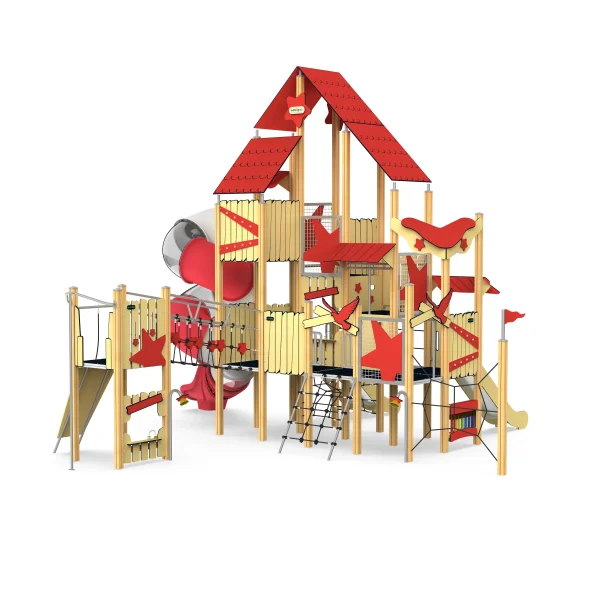
Does 304 Stainless Steel Make Sense for a Humid or Coastal Legacy Site
Yes, when used selectively. For visible posts, handrails, and fasteners in coastal or high-humidity environments, 304 stainless steel reduces corrosion risk without forcing the entire structure into a marine-grade budget. In direct salt spray or chloride-heavy settings, we move specific components to 316 stainless and keep galvanized steel for the main frame with proper isolation. Urban humid zones without direct coastal exposure can usually stay with hot-dip galvanized frames and use 304 for wear points.
For public tenders in Europe and municipalities tracking sustainability, <Eco Friendly Playground Equipment SGS REACH RoHS Standards Explained covers the documentation buyers should request around coatings, plastics, and restricted substances, which becomes more important when equipment remains in public space for ten-plus years.
Plastic components deserve the same scrutiny. Rotomolded LLDPE slides and panels hold up well outdoors, but the UV stabilizer content matters more in a legacy installation than in a short-term event build. Faded panels can often be replaced, but panel attachment points and color consistency across phases are harder to restore later.
Mixed-Age Play Configurations in Former Athlete Housing Districts
Legacy play spaces need to serve the full age range that moves into former athlete units. A single central structure may look impressive in proposal renderings, but it creates supervision problems when toddlers and older children use the same access points. We split play areas with equipment sized for the two main bands: lower-height units for ages two to five, and more physically demanding structures for ages five to twelve. This matches the age grading used in our slide and rider ranges.
What Age Bands Matter Most in Post-Games Residential Zones
The two bands that most often appear are two to five years and five to twelve years. Toddlers need lower fall heights, smaller hand grips, and fewer high platforms. School-age children need more physical challenge. If the same structure is meant to serve both groups, the access points should not overlap. In post-Games housing districts, we usually separate these zones by at least two meters of transition space, so a child leaving a toddler unit does not step directly into a running path for older children.
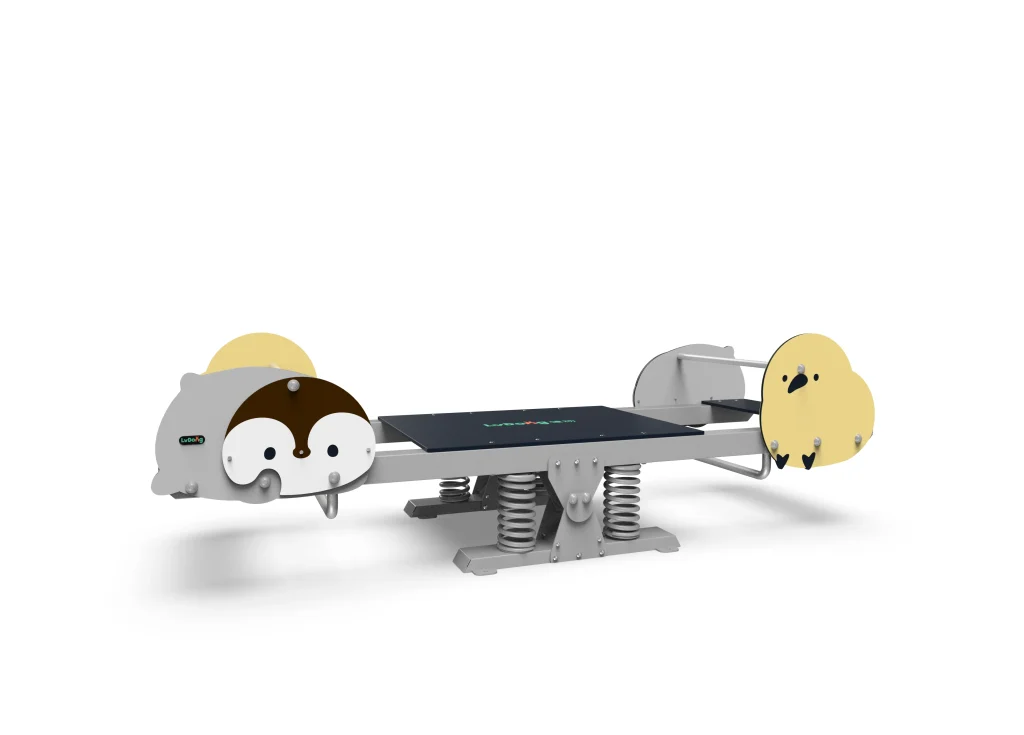
Multi-person equipment serves the residential social pattern well. A multi-person seesaw rated for two to ten children handles mixed-age use without requiring a dedicated supervisor. A multi-player spinner with a maximum fall height of 55 to 77 cm can occupy six to ten children at once, which is useful when a central green opens onto multiple housing blocks.
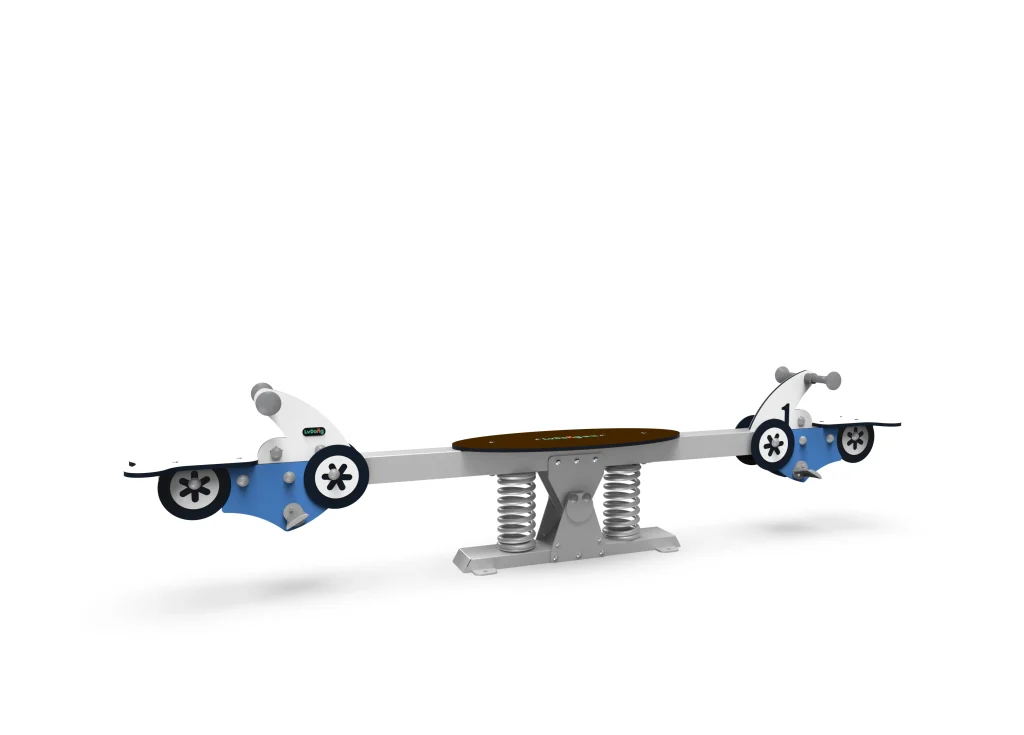
For younger children, a spring rider with a maximum fall height of 50 cm keeps impact risk low while still offering motion play. Rather than spreading all equipment across one large structure, we place lower-height units close to seating and keep taller slide platforms and climbing elements in the school-age zone. That physical separation reduces collision risk and makes the playground easier for parents to supervise from the perimeter.
For post-Games projects with tight acceptance dates, <Evaluate Playground Equipment Samples Before Buying A Guide covers how to inspect a pre-production sample, including weld quality and dimension checks, before the main batch ships.
Specifying Legacy Playground Equipment With Confidence
Post-Games playground projects carry unusual pressure. The equipment will be judged not at the opening ceremony but five or ten years later, when it has become part of daily residential life. If the specification is built around event-time assumptions, the maintenance burden lands on the operator’s budget. We address that by treating legacy playground equipment as a permanent municipal asset from the first drawing review rather than as a temporary installation.
We do not separate design from production responsibility. A single technical team reviews the site conditions, the age profile, and the long-term maintenance access at the same time, so the structure, moving parts, and spare parts package are aligned before production begins.
Share your site boundary, expected daily child count, and climate conditions with [email protected], or use WhatsApp at +8613915684545 if the drawings are still in sketch form. We will confirm the frame sizes, moving part selections, and spare parts schedule against your site constraints.
Common Questions About Post-Games Playground Procurement
How Soon Before Handover Should Playground Equipment Be Ordered
Lead time should be set at twelve to sixteen weeks from final drawing approval for production and delivery, not including sea freight or local installation. Custom themes, special colors, and third-party inspection add time. If the handover date is fixed, we work backward from installation and reserve the production slot before the drawings are complete, because last-minute changes are easier to absorb in the design phase than after metal fabrication has started.
Is It Better to Reuse Existing Event-Time Playground Equipment or Replace It
Reuse sounds like an obvious saving, but event-time equipment is often the wrong structural spec for permanent residential loads. Before deciding, check the foundation depth, moving part condition, and age grading. A lightly used slide platform may be reusable if the structural frame and footings pass inspection. A spinner or spring rider with worn bearings is usually cheaper to replace than to retrofit, because bearing housings and spring seats made for light event use rarely accept permanent-duty components without modification.
Do Legacy Playgrounds Need Different Surfacing From Standard Residential Parks
It depends on the existing surfacing and drainage more than the equipment itself. If the legacy site keeps the original event-time rubber tiles, verify their impact attenuation, seam condition, and sub-base drainage before adding new units. If the area will absorb school-route or weekend peak loads, treat it as a high-use municipal surface and design the base for continuous use. Surfacing is the part of a legacy playground that wears fastest, and replacing it later is more disruptive than specifying it correctly at the start.
Can One Supplier Handle Design, Production, Installation, and Spare Parts for a Multi-Year Legacy Program
In programs we have supported, single-source responsibility reduces the most expensive part of legacy maintenance, which is coordination delay. When design, metal fabrication, and spare parts sit with one manufacturer, a site question can be answered without routing through several vendors. We recommend checking whether the supplier holds the technical drawings and production records for the exact model you order, because that is what determines how quickly a replacement part can be reproduced years later. Share your requirements at [email protected] and we will confirm the documentation package and spare parts schedule before order.
If you’re interested, check out these related articles:
Space Saving Cantilever Swing Set Design for Urban Play Environments
Hotel Kids Club Playground Equipment Configuration Guide