Playground equipment at rainforest lodges rarely fails first from mechanical overload. It fails first at the surface, where persistent condensation and high relative humidity create an almost continuous water film. In many lowland and cloud-forest locations, nighttime relative humidity exceeds 90%, and coated metal, plastic, or composite parts can remain damp well after sunrise [1]. That condition is biologically aggressive: fungal spores germinate on organic binders, insect debris, and mineral dust trapped in coating porosity, and the resulting hyphae attack the finish [2], [3]. EN 1176-1 also treats environmental deterioration—including biological attack—as a foreseeable condition that the equipment design and material specification must address [4].
A rainforest lodge therefore needs a different coating and material strategy than a dry inland schoolyard. The goal is not only to stop rust; it is to deny fungi a stable moisture film, an organic nutrient layer, and a micro-crack or pinhole in which to establish.
Why Standard Finishes Fail in Ultra-High Humidity
Humidity alone does not destroy a well-selected finish; the combination of condensation, temperature cycling, and spores does. When the surface temperature drops below the dew point, water condenses preferentially on edges, under seats, inside tube-slide walls, and around fasteners. Those micro-climates remain wet longer than open panels, even on rain-free days [1].
Fungal growth is not only a discoloration issue. Enzymes and organic acids released by fungi attack the binder that holds pigments together, causing embrittlement, loss of gloss, and eventual coating failure [2], [3]. On steel, moisture entering a scratch can also initiate filiform corrosion—thin, thread-like corrosion tracks that move under the coating film [5]. On filled plastics, repeated wetting and UV exposure can swell the surface, crack the resin matrix, and expose reinforcing fibers or particles.
Inside playground decks and panel mountings, the problem is worse. Fastener holes, overlapping decorative panels, and the narrow gap behind a spring-rider base plate collect spores and water but dry slowly. Wet-dry cycling pumps moisture through pinholes by capillary action while fungal acids work on the exposed interface.
The same moisture traps that damage painted frames also shorten panel life and loosen fasteners. <Playground Play Panels Material Selection and Secure Installation> covers substrate, fastener and installation choices for humid outdoor conditions.
Anti-Fungal Coating Systems That Work in Forest Conditions
A robust rainforest finish is a system, not a single product. It moves from surface preparation through corrosion barrier to anti-fungal topcoat [5]. The most common specification error is to choose the right topcoat but leave unprepared steel underneath.
Surface preparation is the first controlling step. Abrasive blast cleaning to an appropriate cleanliness grade—usually Sa 2.5 as defined in ISO 8501-1—removes mill scale, corrosion product, and foreign matter so the subsequent layer can bond [7]. In high humidity, this matters even for new steel, because mill scale can hold moisture and create galvanic sites on the surface.
For structural steel, hot-dip galvanizing to ISO 1461 provides a metallurgically bonded zinc-iron alloy layer that protects cut edges by cathodic action [6]. Where the project also demands a specific colour, added fungal resistance, or sealed edge coverage, a compatible epoxy/polyester or PVDF powder topcoat is applied over the prepared surface [5]. The topcoat should be formulated with broad-spectrum anti-fungal activity and tested by methods such as ISO 846 for plastics and ASTM G21 for polymeric films; a passing film should show no significant fungal growth on the cured coating [2], [3].
A thin architectural paint without anti-fungal protection is usually the wrong choice for a rainforest lodge. In a continuously damp microclimate, organic binders can support germination quickly, and the finish may fail long before the structural metal beneath it.
| System layer | Rainforest specification point | Reference |
|---|---|---|
| Surface preparation | Abrasive blast clean to remove mill scale, rust and contamination; inspect before primer | [7] |
| Base metal protection | Hot-dip galvanize structural steel to ISO 1461 or use passive corrosion-resistant alloy for hardware | [6] |
| Primer | Epoxy or zinc-rich primer matched to the topcoat to maintain adhesion in wet service | [5] |
| Topcoat | Polyester/PVDF powder with anti-fungal package, low porosity, and UV stabilizers | [2], [3] |
Matching Metal, Plastic, and Composite Substrates to the Site
Coating performance is only as good as the substrate under it. The right finish cannot fully compensate for a metal alloy that pits, a plastic that absorbs water, or a wood-plastic mix that retains moisture.
Metal: structural posts, decks, and large frames should be hot-dip galvanized steel, while chains, bearings, bolts, and other high-contact hardware should be 316 stainless or an equivalent corrosion-resistant alloy for rainforest and coastal-mist locations [6]. Where stainless and carbon steel meet, use polymer washers or isolating spacers to reduce galvanic corrosion caused by permanent wet contact.
Plastic: HDPE and LLDPE slide tunnels, panels, and spring-rider bodies generally absorb very little water and are less attractive to fungi than cellulosic fillers. Specify UV-stabilized HDPE or LLDPE with an anti-fungal/antimicrobial additive when surfaces are expected to remain wet for long periods [2], [3]. Hollow plastic parts should also be designed to drain rather than accumulate condensation.
Wood and wood composites need the most scrutiny. If a lodge requires wood visuals, use pressure-treated timber with a child-safe preservative, sealed end grain, and standoff hardware instead of direct soil contact. In practice, many rainforest lodges reserve timber for shade structures and walkways rather than the main play decks, because the maintenance burden in an ultra-high-humidity environment is significantly higher.
In LvDong rainforest-spec packages, structural metal is hot-dip galvanized, fasteners are stainless, deck components are moisture-tolerant HDPE, and bearing and chain assemblies are selected for wet service. This does not make maintenance optional; it reduces the number of independent failure points.
Swing chain and bearing failures in coastal and rainforest sites usually trace back to moisture ingress and incorrect alloy selection. <Swing Set Components Advanced Material Selection for Durability> covers material-level choices for high-humidity durability.
Sealing, Drainage, and Installation Details for Rainforest Lodges
Even a high-performance finish fails at a bolted joint if water is allowed to sit there. Installation details for ultra-high-humidity sites must therefore remove standing water from every interface [4], [6].
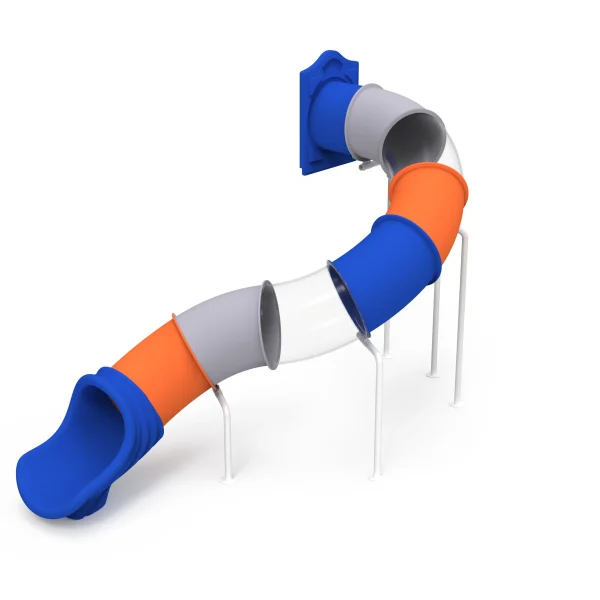
Design out horizontal ledges, open tube ends, and blind fastener holes where possible. Add weep holes at low points, slope decks and seat surfaces slightly, and use polymer washers or gaskets to separate dissimilar metals. For tube slides, provide drainage and ventilation at low and high points; a fully closed tube in a cloud forest becomes a condensation collector.
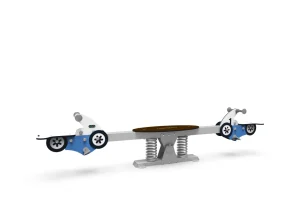
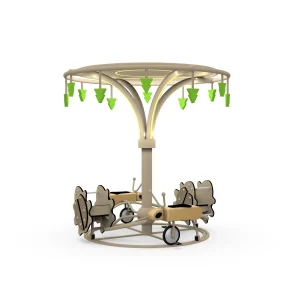
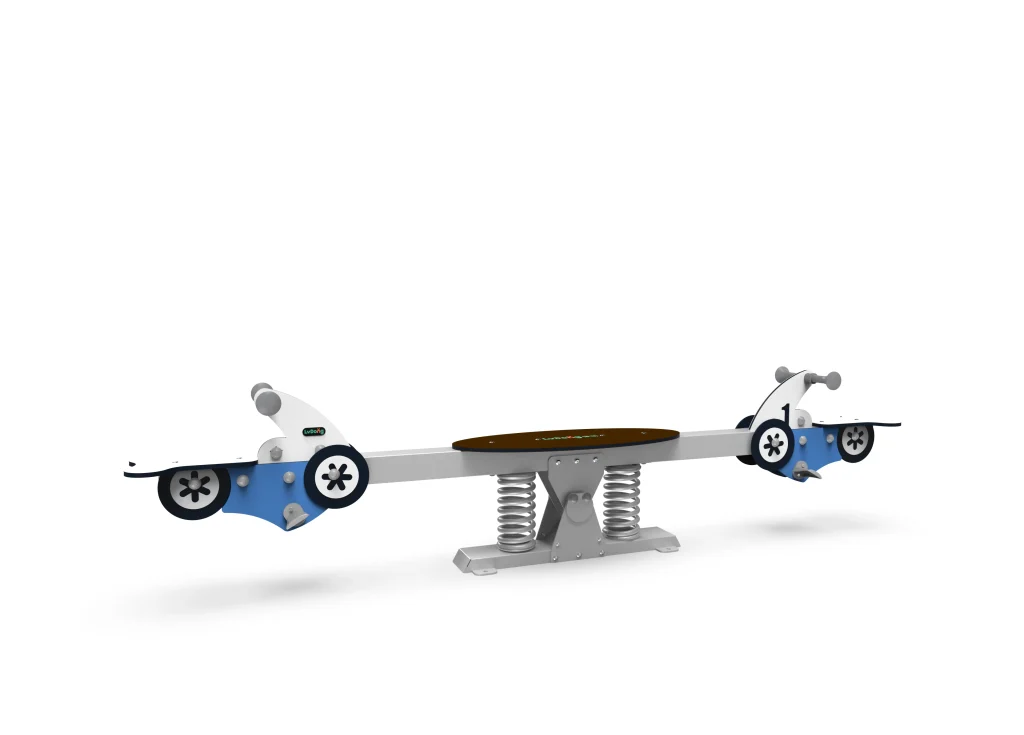
Ground-mounted spring riders, seesaws, and spinners require the same discipline. The concrete pad or footing should slope away from the base plate, the base should be sealed with a UV-stable polyurethane sealant after tightening, and anchor bolts should be covered or capped to prevent spore and water traps. Avoid burying uncoated steel or relying on compacted soil to shed water from a post base.
For elevated platforms with steel posts, the post-to-deck connection and post-cap details are critical. If water can run down a post and enter a sleeve or welded junction, the internal surface may corrode invisibly until the section is replaced. Seal the junction or leave it open in a way that allows positive drainage.

Cleaning, Inspection, and Maintenance Rhythms for Ultra-High Humidity Sites
Cleaning in a rainforest is not just about appearance; it removes the organic soil film that feeds surface fungi [8]. Leaf litter, bird droppings, pollen, and mineral dust collect on horizontal members and in low-flow corners. If they remain damp, they become a microhabitat rather than a maintenance issue.
A practical rhythm for many lodges is monthly removal of debris and visual inspection of high-risk zones, with a full clean performed whenever visible biofilm returns or after prolonged wet-weather events. Use a pH-neutral cleaner, soft brushes, and low-pressure rinse; avoid high-pressure spraying at close range because it can force water into micro-cracks and coating damage. After cleaning, allow surfaces to dry as completely as site conditions permit.
Inspection should look for white rust on galvanized parts, fine black filaments or staining under a topcoat, soft spots on composite panels, and loose or missing fastener caps. Those indicators matter because they usually appear before a part becomes structurally unsafe. Document findings and photographs as part of the equipment file; this supports warranty claims and operational decisions [4].
Mechanical components are part of the same inspection loop. A pitted chain, a stiff bearing, or a rust-stained spring seat is both a safety item and a moisture-ingress signal. Replace them early with the same alloy and coating class specified in the original package rather than with whatever is locally available.
Metal fatigue and corrosion often appear together: a pitted chain link or a rust-stained bearing housing is already weakening. <Replacing Chains Bearings Springs Lifespan Guide Strategies> covers replacement cycles and parts-level inspection for wet climates.
Rainforest Lodge Playground Specification Checklist
Operators and landscape architects should put the humidity-control strategy into the procurement document, not into a post-installation conversation. Key clauses include:
- A stated design relative humidity, altitude, canopy-cover, and rainfall regime for the exact site.
- Substrate preparation to the specified abrasive blast standard, verified before primer [7].
- Hot-dip galvanized structural members to ISO 1461 or an approved corrosion-resistant alternative [6].
- Anti-fungal topcoat tested to ISO 846 or ASTM G21, with no significant growth on the cured film [2], [3].
- 316 stainless or equivalent hardware in moving components and wet-contact joints.
- Drainage, ventilation, and sealing details for panels, tube slides, post caps, and ground-level bases.
- A written cleaning and inspection schedule with approved touch-up products and repair records.
Humidity-specific advice before ordering
If your lodge has condensation records, rainfall data, altitude information, or photographs of existing coating failures, include them with the equipment list. Those details change which substrates and sealants are appropriate, and a small drainage defect at a spring-rider base can determine whether an installation remains serviceable through two wet seasons. Send site data, humidity observations, and the planned equipment mix to [email protected] or WhatsApp +8613915684545.
Get a Rainforest-Ready Playground Specification
Equipment in ultra-high-humidity environments is only as durable as the specification. LvDong works with lodge operators, landscape architects, and contractors to match substrate, coating, hardware, drainage, and maintenance requirements to the site rather than to a generic package.
To start, send the site name, elevation, rainfall records, humidity monitoring data, age range, and equipment wish list. The team will respond with material and coating recommendations, drainage notes, and a maintenance-aware proposal.
Email: [email protected]
WhatsApp: +8613915684545
Frequently Asked Questions
What makes a coating anti-fungal rather than simply mold-resistant?
A properly described anti-fungal coating contains an active protection package that inhibits fungal germination and growth on the cured film, and it should be validated by test methods such as ISO 846 or ASTM G21 [2], [3]. Mold-resistant is sometimes used loosely; without a named test method, the term does not tell the buyer how the product performs under sustained condensation.
How often should rainforest lodge play equipment be cleaned?
Most operational sites should remove organic debris and inspect high-risk areas at least monthly. A full cleaning with a pH-neutral product should follow whenever visible biofilm returns or after prolonged wet-weather events, depending on canopy cover and guest traffic. Cleaning also removes the organic film that supports fungal growth [8].
Is stainless steel required for all rainforest playground components?
No universal rule requires every component to be stainless. Hot-dip galvanized structural steel with an intact coating system can perform well for posts, decks, and frames. However, fasteners, chains, bearings, and other crevice-prone parts benefit from 316 stainless or an equivalent corrosion-resistant alloy because wet-contact corrosion concentrates at those points [6].
Can a scratched anti-fungal finish be repaired with ordinary touch-up paint?
Using ordinary architectural touch-up paint is not advisable. A repair should use a compatible primer and an anti-fungal topcoat from the same system, applied to cleaned and lightly abraded substrate. Otherwise, the scratch remains the weakest point and may trap moisture under a less-resistant film [5], [7].
References
[1] World Meteorological Organization, Guide to Climatological Practices, WMO-No. 100, 2018.
[2] ISO 846:2019, Plastics — Evaluation of the action of microorganisms, International Organization for Standardization, Geneva, 2019.
[3] ASTM G21-15, Standard Practice for Determining Resistance of Synthetic Polymeric Materials to Fungi, ASTM International, West Conshohocken, PA, 2015.
[4] EN 1176-1:2017, Playground equipment and surfacing — Part 1: General safety requirements and test methods, European Committee for Standardization, Brussels, 2017.
[5] ISO 12944-5:2019, Paints and varnishes — Corrosion protection of steel structures by protective paint systems — Part 5: Protective paint systems, International Organization for Standardization, Geneva, 2019.
[6] ISO 1461:2022, Hot dip galvanized coatings on fabricated iron and steel articles — Specifications and test methods, International Organization for Standardization, Geneva, 2022.
[7] ISO 8501-1:2007, Preparation of steel substrates before application of paints and related products — Visual assessment of surface cleanliness — Part 1: Rust grades and preparation grades of uncoated steel substrates and of steel substrates after overall removal of previous coatings, International Organization for Standardization, Geneva, 2007.
[8] World Health Organization, WHO Guidelines for Indoor Air Quality: Dampness and Mould, WHO Regional Office for Europe, Copenhagen, 2009.
If you’re interested, check out these related articles:
Optimizing Playground Equipment Spare Parts Lead Time and Stock
Top 10 Animal Spring Rider Designs for Modern Playgrounds
Playground Slides Buying Guide Height Slope and Critical Safety
Eco Friendly Playground Equipment SGS REACH RoHS Standards Explained
International Playground Equipment Procurement A Step by Step Guide