Playgrounds built over water or on stilts are no longer a novelty. Floating villages, riverfront settlements, and coastal resort piers now include play areas as part of family infrastructure. However, a slide or spinner on a pier is not the same product with a different view: tidal movement, wind uplift, salt-laden humidity, limited fall zones, and the consequences of a failed anchor all shape every equipment choice.
This guide sets out what buyers, landscape designers, and procurement teams should evaluate before placing unpowered play equipment on piers and stilt structures. It draws from Suzhou LvDong Amusement Equipment Co., Ltd.’s engineering experience in coastal, high-humidity, and space-constrained projects, with reference to the main international playground and corrosion standards.
Why Floating Village Play Areas Need Different Design Discipline
On land, playground equipment is set into concrete footings with predictable bearing soil. On a floating village pier, the support system is often timber or steel decking over water. Wave action and pedestrian loads create repeated micro-movement; even a well-built structure flexes, so a rigid anchor detail can crack welds or loosen bolts over time. Equipment should be fixed to structural beams rather than deck boards, and every connection needs a system for load distribution and vibration damping.
Safety geometry also becomes stricter. EN 1176-1 requires impact attenuation, head and finger entrapment prevention, and free-space protection around moving equipment [1]. On a pier, the free space may end at a railing or water edge, so the usual landside fall zone cannot be assumed. ASTM F1487 similarly requires playground owners to evaluate site conditions that may require barriers or increased protective surfacing [2]. The result: equipment that meets the product standard still needs site-specific anchoring and containment design.
The most common failure modes are fasteners corroding from salt spray, base plates lifting under wind, and slide supports shifting on piers. These are manageable when addressed at the specification stage rather than during installation.
A floating-village playspace requires the same safety documentation as any public playground, plus site-specific verification. <Essential Checklist for Playground Equipment Safety Test Reports> covers the certificates and test reports buyers should review before accepting a waterfront installation.
Site Assessment Before Anchoring Begins
Before selecting equipment, assess the pier structure: beam spacing, deck load capacity, tidal range, wave height, wind exposure, and maintenance access. ASCE/SEI 24 notes that flood-prone sites require elevated or anchored systems able to resist buoyancy, wave, and debris loads [3]. A floating village play area is effectively a flood-prone site, even if the dwellings are occupied year-round.
The assessor should record several conditions before any equipment is ordered:
- structural beam spacing and direction;
- available safe fall zone in every direction;
- railing height and strength;
- distance from water surface at high tide;
- saltwater or freshwater exposure;
- wind funnelling between buildings.
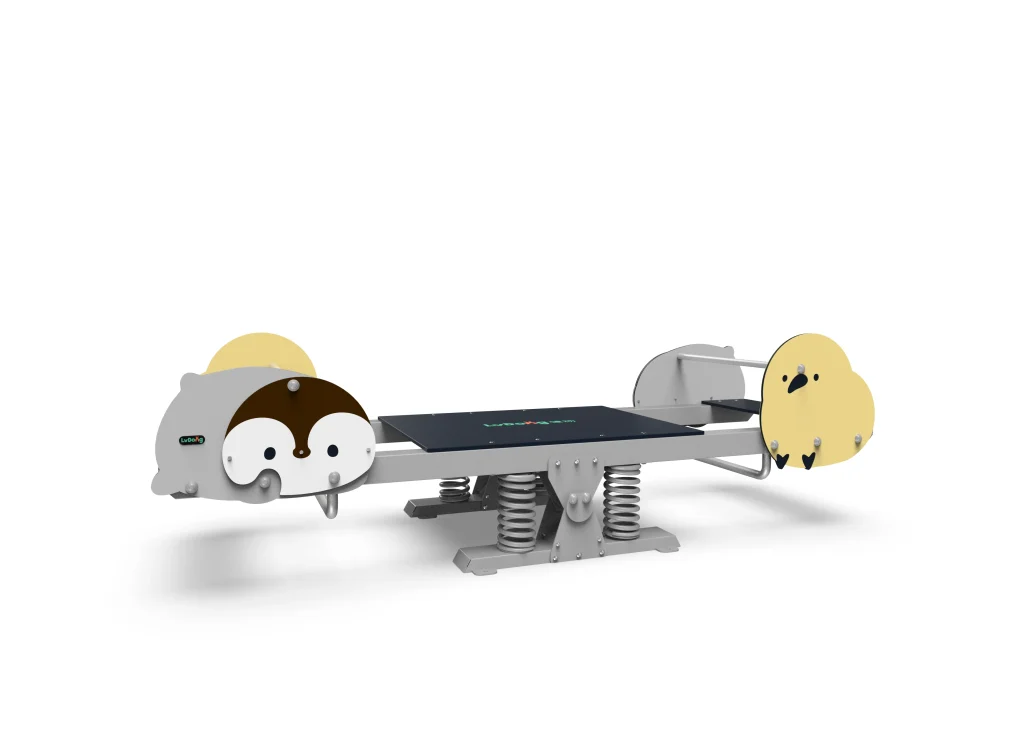
These observations determine whether a compact spring rider, a multi-user seesaw, or a more ambitious slide structure is appropriate. They also determine whether the deck must be reinforced locally to spread dynamic play loads.
Anchoring Systems for Piers and Stilt Structures
Anchor selection depends on whether the deck is timber, concrete, or steel. Through-bolting with backing plates spreads load and prevents point compression. Where through-bolting is not possible, epoxy-set anchors into concrete beams or welded base plates onto steel frames may be appropriate. Fasteners should be A4 stainless steel or hot-dip galvanized to match the design life of the structure.
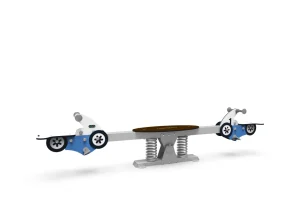
Spring riders and seesaws are often the easiest fit for narrow piers because their base plates can be aligned with single structural beams. Suzhou LvDong’s spring riders use a stable base and low fall height, making them a practical first anchor point on a boardwalk. 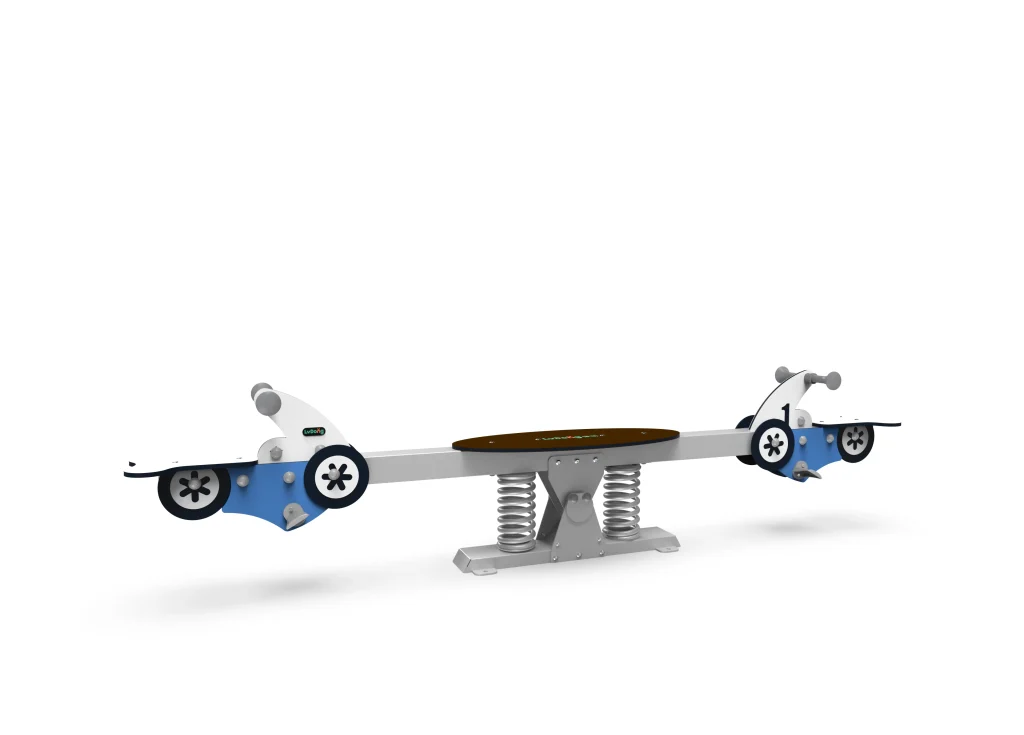
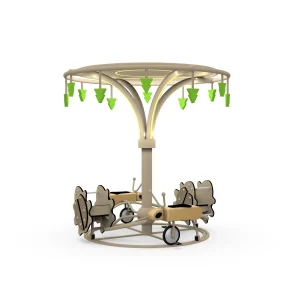
For multi-user equipment such as spinners, the anchor pattern must resist both vertical weight and lateral rotational forces. A standard surface mount may not be enough. LvDong’s multi-player spinners rely on a stable round base, but on a pier they should be attached through the structural deck with vibration-resistant fasteners and inspected more frequently than land-based installations.
Corrosion Protection for Saltwater and Humid Environments
Salt spray accelerates rust, especially where stainless and carbon steel meet. ISO 12944-2 classifies marine and coastal atmospheres among the most corrosive, requiring high-durability paint systems or appropriate stainless alloys [4]. For floating villages, the protective approach should start with material selection: 304 stainless steel for above-water components, 316 in direct splash zones, hot-dip galvanized frames for clamped zones, and powder-coated finishes over properly prepared surfaces.
Bearings and rotating parts need sealed ratings. For interactive panels used near water, enclosures should carry at least IP65, while components exposed to washdown or storm spray benefit from IP67. 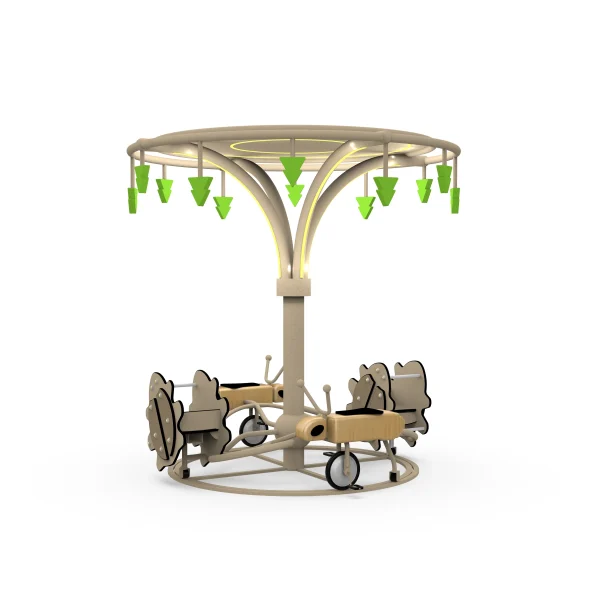
Need a pier-specific specification early? Send your site plan or beam layout to [email protected] or WhatsApp +86 139 1568 4545, and LvDong’s engineering team can recommend anchor patterns, stainless grades, and maintenance-friendly equipment before you commit to a layout.
Equipment Selection for Constrained Waterfront Footprints
Footprint is often the limiting factor. A floating village play deck may have only 20–40 square meters of usable area, so each product must earn its place. Single-user spring riders, compact seesaws, activity panels, and small spinners often fit better than long run-out slides.
When slides are used, select exit runouts that end well inside the deck edge. Curved slides can direct exit traffic parallel to the pier rather than toward the water. 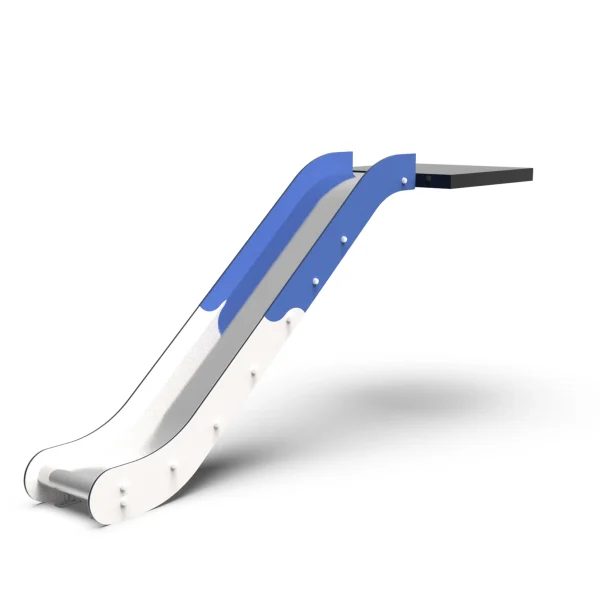
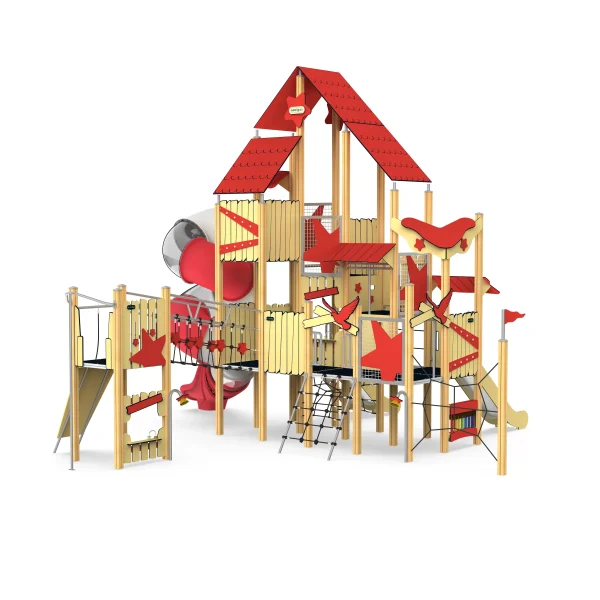
Tunnel slides on piers need more than a standard mount. <Advanced Tunnel Slide Support Structure and Ventilation Design> covers the support frame, tube ventilation, and structural bracing details that matter in humid marine settings.
Safety Surfacing and Edge Containment on Piers
Impact attenuation is harder over water. Rubber tiles are common because they drain well and stay in place if fixed correctly. Loose-fill materials such as wood chips are generally unsuitable on piers because they can scatter into water and do not provide consistent depth on a flexible deck. Whatever surfacing is chosen, it must meet the critical fall height of the equipment as required by EN 1176-1 [1] and the impact attenuation criteria in ASTM F1487 [2].
Edge containment is equally important. A railing may stop a child but not a dropped toy or a low rebound from a seesaw. Toe boards, mechanically fixed surfacing edges, and continuous barriers should be part of the design.
Installation and Maintenance on Waterfront Sites
Installation should not be done by a general deck crew alone. The team must know how to torque fasteners on moving structures, protect sealants during tidal shifts, and inspect connections below deck level. Regular maintenance should include checking anchor bolt torque each quarter, flushing salt deposits from stainless and moving parts, inspecting bearing seals for water ingress, and checking base plates for hairline corrosion or lifting.
Suzhou LvDong recommends keeping spare springs, bearing sets, and touch-up coating on site for piers because access can be limited during high water or rough weather.
Whether you are equipping one pier platform or a whole stilt village, supplier service quality changes long-term cost. <Effectively Compare Playground Equipment Suppliers Services> covers how to evaluate installation support, spare parts, and after-sales response side by side.
Plan Your Floating Village Play Area With LvDong
Suzhou LvDong Amusement Equipment Co., Ltd. was founded in 2015 and operates a modern production base spanning more than 10,000 square meters. The company has completed over 1,500 projects across municipal parks, high-end communities, cultural tourism sites, and educational institutions, with an integrated service chain covering R&D, design, production, installation, and after-sales support.
For floating village and stilt-structure projects, LvDong provides application-specific recommendations for anchor patterns, stainless grades, compact equipment footprints, and maintenance planning. Send a site plan, beam spacing, and target age group to [email protected] or WhatsApp +86 139 1568 4545, and the team will respond with product options and anchor recommendations.
Frequently Asked Questions About Floating Village Play Equipment
What types of play equipment are safest on a floating village pier?
Compact spring riders, small seesaws, activity panels, and round spinners are generally the easiest to anchor on narrow piers because they have smaller footprints and lower fall heights. Slides can work if the exit runout is kept well inside the deck edge and the support structure is designed for the pier.
Can playground equipment be installed on a timber pier without damaging it?
Yes, when the equipment is through-bolted to structural beams with backing plates and load-spreading details. Fixing only into deck boards is not recommended because deck boards are not designed to carry concentrated dynamic loads.
How do you prevent corrosion in saltwater environments?
The main steps are using 304 or 316 stainless steel, hot-dip galvanized steel, sealed bearings, and powder-coated finishes applied over properly prepared surfaces. Regular washing to remove salt deposits also extends component life.
What surfacing works best on playground piers?
Fixed rubber tiles are usually more practical than loose-fill materials because they drain well, stay in position, and can be mechanically secured to the deck. The surfacing depth must still match the critical fall height of the equipment.
Does LvDong provide spare parts and after-sales support for remote waterfront sites?
Yes. LvDong can supply spare springs, bearing sets, touch-up coatings, and installation guidance. For remote pier locations, the company recommends keeping critical parts on site to reduce downtime during high water or rough weather.
References
[1] European Committee for Standardization, “EN 1176-1:2017 Playground equipment and surfacing — Part 1: General safety requirements and test methods,” CEN, Brussels, Belgium, 2017.
[2] ASTM International, “ASTM F1487-21 Standard Consumer Safety Performance Specification for Playground Equipment for Public Use,” ASTM International, West Conshohocken, PA, USA, 2021.
[3] American Society of Civil Engineers, “ASCE/SEI 24-14 Flood Resistant Design and Construction,” ASCE, Reston, VA, USA, 2014.
[4] International Organization for Standardization, “ISO 12944-2:2017 Paints and varnishes — Corrosion protection of steel structures by protective paint systems — Part 2: Classification of environments,” ISO, Geneva, Switzerland, 2017.
If you’re interested, check out these related articles:
Playground Slide Materials LLDPE vs 304 Steel Performance
Playground Play Panels Material Selection and Secure Installation
Outdoor Playground Set Layout Strategic Design for Optimal Play
12 Critical Post Installation Acceptance Tests for Playgrounds
To discuss a pier-mounted play-area layout, contact the LvDong team with your project requirements.