A municipal park or school complex with a dozen play zones, hundreds of children per hour, and a multi-year maintenance cycle demands more than a simple catalog purchase. Selecting a playground equipment supplier for large projects is a decision that ripples through safety, budget, and community satisfaction. In over ten years of designing and manufacturing unpowered playgrounds, I have seen too many well-intentioned projects stumble because the procurement focused on unit price while overlooking integration capacity. The right supplier becomes a strategic partner, managing design, production, installation, and after-sales service under one roof. This guide identifies the supplier qualities that matter most when the scale of a project leaves no room for error.
Define Your Project Scale and Requirements
Before you evaluate any supplier, clarify the scale of your playground. A large project typically involves multiple play zones, age-specific equipment groups, and often custom theming. Unlike a small playground with a single swing and slide set, a large municipal park may require coordinated installation of spring riders, multi-person seesaws, spinning equipment, and large tunnel slides across separate areas. Start by documenting the target daily capacity, the age groups you will serve, and the total area available. Our team always advises clients to map out the play flow and circulation paths before selecting any specific equipment, because the spatial plan dictates which models fit safely together. For example, a high-throughput slide area needs adequate run-out space and impact-absorbing surfacing, while a quiet sensory corner with play panels requires shade and seating. Defining these parameters early prevents costly redesigns later and gives you a clear brief to share with potential suppliers.
Verify Your Playground Equipment Supplier’s Production and Certifications
A supplier’s ability to deliver on time and meet quality standards starts with its manufacturing base. For large projects, a factory under 5,000 square meters often cannot produce, assemble, and test equipment for a whole park within one production cycle. At Suzhou LvDong, our 10,000-square-meter facility houses dedicated lines for metal fabrication, plastic molding, and assembly, allowing parallel production of different equipment types. Certifications are another non-negotiable filter. International playground equipment must conform to EN 1176 for European clients or ASTM F1487 for U.S. projects, and many governments require GB/T 34272 compliance for domestic installations. Ask the supplier to show current certification certificates and test reports for the exact models you plan to buy, not just company-level credentials. A manufacturer that disclaims responsibility for testing individual units should raise a red flag.
| Standard | Region | Key Focus |
|---|---|---|
| EN 1176 | Europe | Entrapment, impact attenuation, structural integrity |
| ASTM F1487 | USA | Head entrapment, protrusions, dynamic load |
| GB/T 34272 | China | Safety distances, material toxicity, foundation design |
A supplier that can demonstrate compliance with multiple standards has invested in engineering quality beyond the minimum. When evaluating proposals, prioritize those who attach current test reports for each equipment model rather than a blanket certificate.
What certifications does a playground equipment supplier need for international projects?
The minimum requirement depends on your project location, but for any large export project, EN 1176 is the most widely recognized. Additionally, ISO 9001 quality management certification indicates the supplier maintains consistent production processes. If the playground will be installed in a country with its own national standard, such as GB/T 34272 in China or ASTM F1487 in the United States, the supplier must hold those specific certifications. Do not accept a general statement of “meets international standards” without supporting documents.
Demand Full-Chain Integration from Design to Maintenance
The biggest bottleneck in a large playground project is not manufacturing lead time; it is the handoff between separate design, production, installation, and maintenance companies. When a supplier only manufactures equipment and leaves installation to local contractors, miscommunication about foundation dimensions, surfacing requirements, or assembly sequence can delay opening by weeks. A full-chain service model — where the same company produces the 3D concept, custom designs equipment, manufactures to specification, installs on site, and offers after-sales support — eliminates these gaps. I recall a community park project we supported where the original plan involved a separate design studio and an installation crew that had never worked together. We consolidated the entire workflow, and the project went from final design to operation in 45 days, compared to the initial 90-day projection.  For your own project, look for a supplier that offers integrated service and can supply references for similar, complete, end-to-end deliveries. Ask specifically how they handle design revisions, on-site adjustments, and warranty claims. A supplier who avoids discussing after-sales is telling you they expect the relationship to end at shipment.
If your large project involves custom playground equipment with specific safety or theme requirements, it is worth discussing your concept early at [email protected] to confirm technical feasibility and avoid redesign delays.
How does a supplier’s after-sales support reduce long-term costs?
Proactive after-sales support extends equipment lifespan and reduces unexpected repair bills. A supplier that maintains a spare parts inventory, supplies an annual maintenance calendar, and offers remote troubleshooting can save a municipality thousands of dollars over a decade. For a large playground with hundreds of moving joints, replacing chains, bearings, and spring assemblies on schedule is far cheaper than emergency repairs after failure. In our experience, clients who follow our recommended maintenance program report 40% lower lifetime equipment costs.
Structure Your Playground Equipment Supplier Procurement Workflow
Turning a large playground concept into installed equipment requires a disciplined procurement workflow. The following steps will keep your project on schedule and within budget.
- Define your technical specification: equipment list, age groups, safety standard, and surfacing requirements. This becomes the basis for all quotations.
- Issue a Request for Quotation (RFQ) to shortlisted suppliers. Include your timeline, site plan, and expected quantities. Request quotes that separate equipment costs, shipping, and installation.
- Evaluate samples: for large orders, request actual samples of key components — handrails, deck boards, plastic posts — to assess finish quality and uniformity.
- Negotiate the contract with clear milestones: design approval, production start, factory inspection, shipment, installation, and final acceptance. Include payment terms that protect both parties.
- Conduct a factory visit or virtual inspection during production to verify that the equipment being built matches the approved samples.
| Phase | Typical Duration |
|---|---|
| Design and quotation preparation | 2–3 weeks |
| Sample production and approval | 2–4 weeks |
| Manufacturing | 3–6 weeks |
| Shipping (sea freight) | 2–4 weeks |
| Installation and sign-off | 2–6 weeks |
Durations vary with project complexity, but a six-month total timeline is realistic for a comprehensive community park playground. Build in buffer weeks for customs clearance and weather delays.
What is a realistic lead time for a large custom playground order?
For a typical large project with 15–20 equipment pieces, expect 8–12 weeks from order confirmation to shipment, plus shipping and installation time. Custom-themed units or unusually large structures may add 2–4 weeks. The key is to agree on a schedule with your supplier early and tie progress payments to schedule milestones.
Inspect Quality Control and Your Supplier’s Factory Floor
A supplier’s quality control system is visible in its production floor, not just its brochures. Whether you visit in person or conduct a video tour, focus on these areas:
– Raw material storage: check that steel pipes and plastic resins are stored in dry, covered conditions and have traceable material certificates.
– Welding stations: uniform weld seam quality, no undercut or porosity, indicates skilled labor and consistent supervision.
– Surface treatment: powder-coating lines should be automated for consistent film thickness, and plastic parts should have UV-stabilized additives.
– Assembly and testing: finished products must undergo load and dimensional checks before packing. 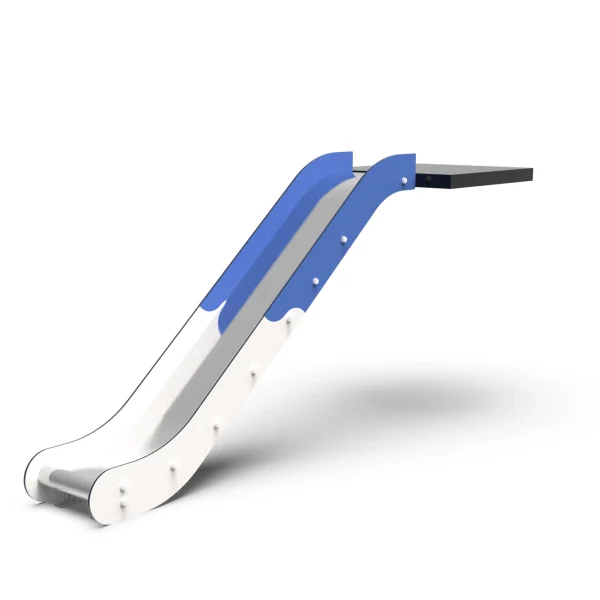 At our factory, every major weld is checked by a supervisor, and a random sample of each batch undergoes destructive testing.
A supplier who is reluctant to show the production floor during real work hours may be hiding capacity issues or third-party outsourcing. Always ask for photos of your specific order in production and request a final inspection report before shipment.
What should I look for during a playground supplier factory visit?
Observe the organization of the workshop: a clean layout with designated material, production, and testing zones suggests disciplined quality management. Ask to see the quality control handbook and inspect records for raw material traceability. If possible, talk to a senior engineer about how they handle design tolerances for safety-critical components like entrapment gaps and swing seat dimensions. A confident supplier will invite these questions.
Avoid Pitfalls in Large-Scale Playground Installations
Even a well-manufactured playground can fail to open on time if site conditions and coordination are overlooked. The most common pitfalls I have seen over the years include:
– Incomplete civil works: the equipment arrives but the concrete foundations are not cured, or the drainage layer has not been installed. Before ordering, confirm that the supplier supplies detailed foundation plans and that your local contractor understands the timeline.
– Mismatched safety surfacing: loose-fill rubber or artificial turf must meet the same impact attenuation standard as the equipment’s fall height calculation. Using a different supplier for surfacing often leads to gaps in compliance documentation.
– Assembly confusion: equipment with complex interlocking parts, such as large multi-level play structures, can take weeks for an inexperienced crew to assemble. 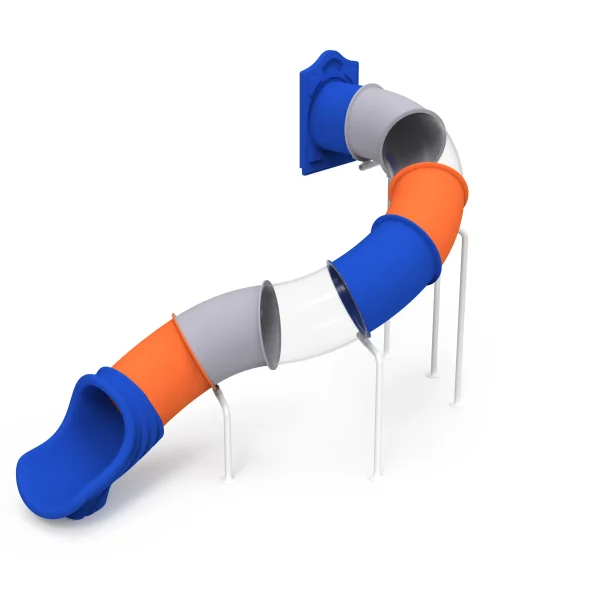 The supplier should supply an installation manual with exploded diagrams and offer on-site supervision at a minimum.
– Ignoring local regulations: a playground that meets European standards might still fail a local building department inspection if it lacks required clearances from property lines or parking areas. Engage local experts early to review the site plan.
A supplier that takes responsibility for the entire delivery — from site measurements to final safety sign-off — protects you from these headaches.
Begin Your Large Project with a Single Trusted Partner
Coordinating multiple vendors for a large playground creates unnecessary complexity and risk. Suzhou LvDong provides a single point of accountability, from initial 3D design through manufacturing, installation, and after-sales support. With over 1,500 completed projects, we understand the real-world challenges of delivering playgrounds that are safe, on budget, and on time.
Send your project requirements to [email protected] or message us on WhatsApp at +8613915684545. We will prepare a detailed proposal including equipment layout, timeline, and budget — at no obligation.
Answers for Large-Playground Procurement Teams
What certifications does a playground equipment supplier need for international projects?
The required certifications depend on the project’s location. For European projects, EN 1176 is mandatory; for the U.S., ASTM F1487. Additionally, ISO 9001 quality management certification is widely recognized as a baseline for consistent manufacturing. Many Asian countries now recognize GB/T 34272. Ask the supplier for the test report of each specific equipment model, not just a corporate certificate. Independent third-party testing from labs such as TÜV adds an extra layer of confidence.
How can I compare quotes fairly between different playground equipment suppliers?
A fair comparison starts with a harmonized scope of work. Request each supplier to quote the same list of equipment, including installation supervision, sea freight, and any customs duties. Ask for a breakdown showing equipment cost, packaging, logistics, and after-sales support separately. Some low-priced quotes exclude installation supervision or use thinner steel, which inflates long-term costs. I recommend preparing a comparison matrix with columns for technical compliance, warranty period, and included services, not just the bottom line.
What should I prepare for site and civil works before playground installation?
Misconception: site preparation is always the buyer’s responsibility. In reality, many playground equipment suppliers offer detailed civil works drawings that specify foundation dimensions, grounding conductor placement, and drainage gradients. You need to level the area, confirm proper soil compaction, and install underground utilities before equipment arrives. For large projects, I advise assigning a local civil engineer to coordinate with the supplier’s technical team to avoid discrepancies between the supplier’s anchor bolt pattern and the poured foundations.
How do I manage installation if the supplier is overseas?
It depends on the supplier’s service model. Some manufacturers send a factory supervisor to oversee local installers, while others offer turnkey installation with their own crew at additional cost. For a large playground with complex integrated structures, having a factory-trained installer on site is highly recommended. Clarify installation responsibilities in the contract, and confirm that the supervisor has experience with the specific equipment models. Remote video support during assembly can also work for simpler components.
What warranty terms are standard for commercial playground equipment?
In programs we have supported across China, standard structure warranties of 3 to 5 years are common, but for high-traffic municipal parks we often negotiate 5 years on all steel components and 1–2 years on moving parts like bearings and springs. The warranty should explicitly cover manufacturing defects and premature rusting, not just structural collapse. Request a written warranty certificate that lists the covered period for each component group. For a precise warranty and maintenance plan tailored to your project, send your specifications to [email protected] and we will outline the coverage options.
If you’re interested, check out these related articles:
UV Resistance Testing Protecting Outdoor Playground Spring Riders
How Indoor Playground Equipment Manufacturers Customize Solutions
Factory Visit Checklist Outdoor Playground Equipment Quality
Playground Spring Rider Foundations Expert Installation Guide