When you’re tasked with outfitting a hospital play area, standard commercial playground equipment simply won’t do. The requirements are different: play gear must be quiet enough not to disturb nearby patients, surfaces need to withstand aggressive hospital-grade disinfectants, and every component must meet rigorous safety standards for vulnerable young visitors. Most playground suppliers understand safety, but few grasp the intersection of acoustics, infection control, and pediatric-friendly design that defines a true hospital solution. That gap is where projects fail, and where the right hospital playground equipment supplier makes all the difference.
Why Do Hospitals Need Specially Designed Playground Equipment?
A waiting room or pediatric ward playspace is not the same as a community park. Even small amounts of noise can irritate patients in adjoining rooms, and shared surfaces become infection vectors if not cleaned properly between uses. Standard playground equipment tends to prioritize bold play actions and open-air durability. In a healthcare setting, you need equipment that quiets motion, cleans completely, and fits into a calm, controlled environment.
We’ve seen too many proposals for hospital play areas that start with off-the-shelf catalog items. That approach fails when the hospital’s infection control team reviews the specifications and finds crevices where liquid can pool, or when therapists realize that squeaky swings or rattling bearing housings will echo through quiet corridors. A specialized design is not optional. It is the starting point.
What Are the Key Differences Between a Standard Playground and a Hospital Play Area?
The biggest differences boil down to three constraints. First, hospitals demand near-silent operation. Second, all surfaces must be non-porous and withstand repeated disinfection with alcohol or quaternary ammonium solutions without degrading. Third, the equipment must be designed with pediatric patients in mind—lower fall heights, no sharp transitions, and calming color palettes that match interior designs rather than outdoor play colors. A supplier that understands these three constraints from the earliest design conversation saves you months of rework.
What Materials Offer the Best Cleanability and Durability for Hospital Play Equipment?
Material choice is the single largest factor in cleanability. Based on our manufacturing experience, two materials consistently perform best for hospital environments: rotationally molded LLDPE and 304 stainless steel.
LLDPE is a dense, non-porous plastic that resists chemical absorption. Hospital cleaning teams can wipe it down hundreds of times without surface pitting or color fading, provided the polymer is UV-stabilized and pigment is embedded during molding rather than applied as a coating. 304 stainless steel is the other workhorse. It handles aggressive disinfectants without rusting, and its smooth finish leaves nowhere for bacteria to hide. The downside is that stainless steel can be louder if a child strikes it, so we combine it with LLDPE cladding or use it only for structural cores hidden under plastic shells.
We avoid powder-coated steel for any surface a child can touch. Once the coating scratches, the exposed metal begins to corrode under repeated disinfection, and the roughened surface becomes more difficult to clean. That tradeoff is rarely discussed in generic playground buying guides, but infection control teams notice it immediately.
How Does LLDPE Compare to Stainless Steel for High-Disinfection Environments?
LLDPE tolerates chemical exposure with zero maintenance. It does not rust, it won’t need repainting, and its color remains consistent for years. Stainless steel offers higher structural strength and is preferred for moving parts or load-bearing joints, but it can require more careful selection of cleaning agents to avoid surface spotting. In our projects, we use LLDPE for all large molded parts—panels, seats, slide beds—and 304 steel for swing hangers, bearing housings, and any fastener that must carry dynamic loads. That combination gives you the best of both materials without compromising cleanability.
How Can Playground Equipment Be Designed to Minimize Noise?
Noise in a playground piece almost always comes from two sources: rotating or sliding metal-on-metal contact, and impact sounds when children land or hit edges. Both can be engineered out.
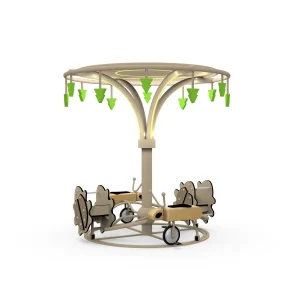
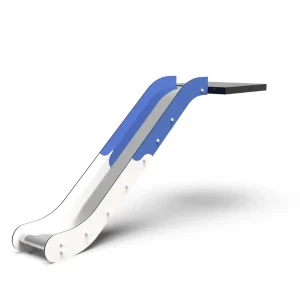
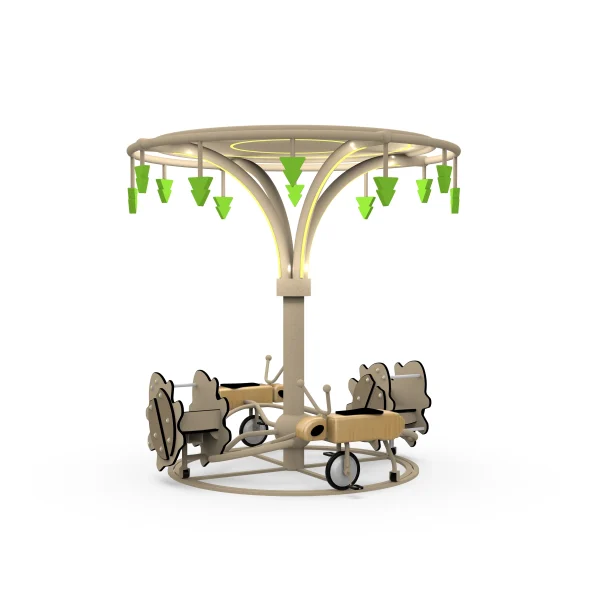
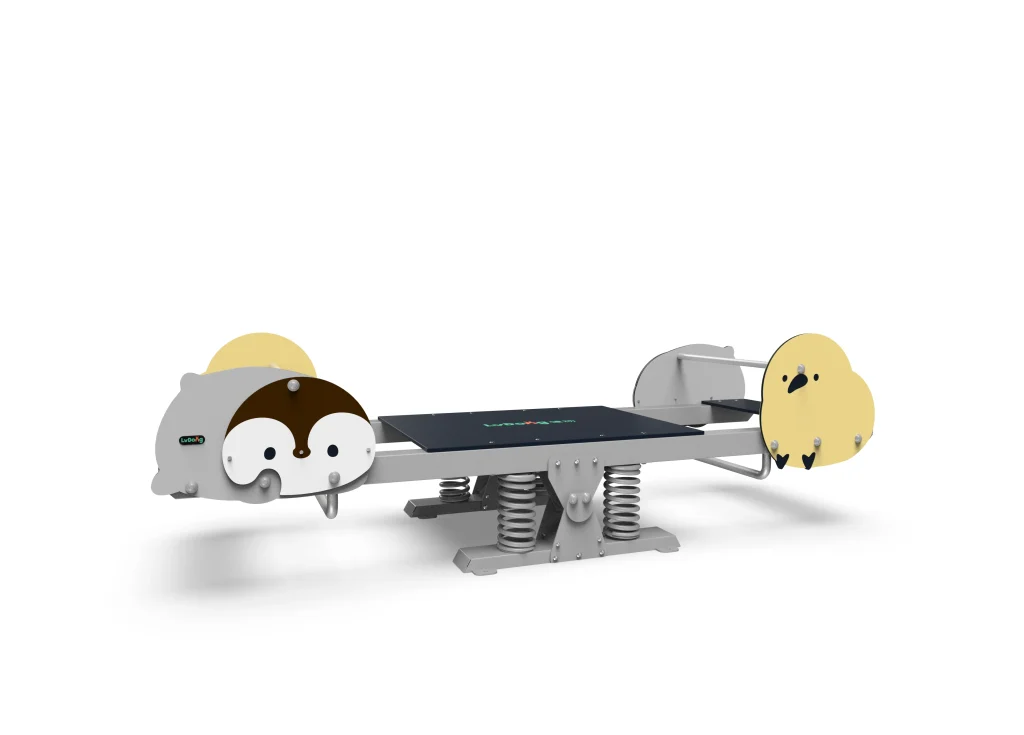
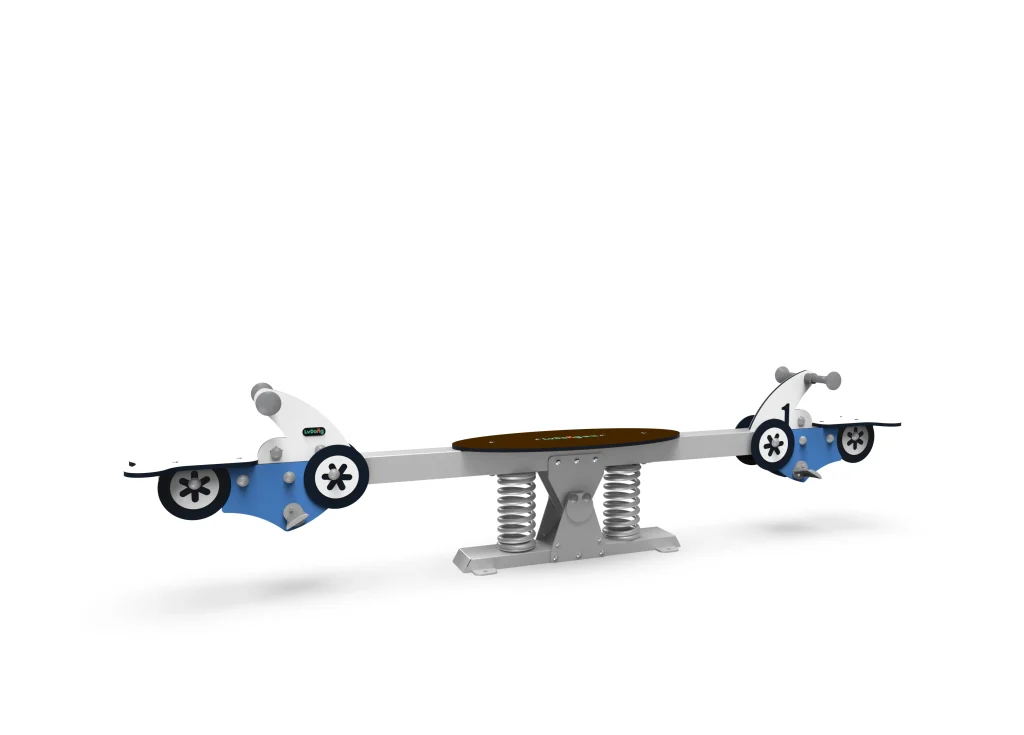
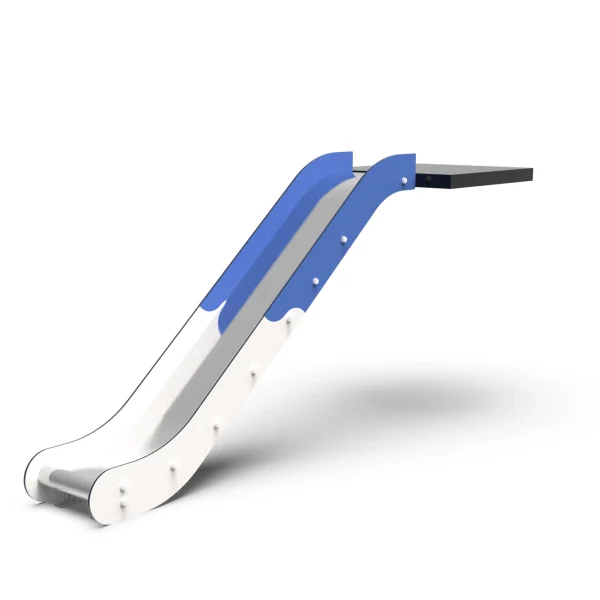
In our own spinning equipment, we replace open ball bearings with sealed, lubricated bearings that run nearly silent. For seesaws and spring riders, we incorporate polyurethane bushings at pivot points and use heavy-gauge steel springs with internal damping to suppress the pinging sound that lighter springs produce. Even slide platforms get attention: we mount them on rubber isolation pads to break the sound path into the building structure.
The other quieting technique is less about mechanics and more about mass. Thin-walled tubes or hollow plastic parts amplify noise. Thicker wall sections in rotomolded LLDPE absorb sound energy rather than radiating it. If a table or chart compares equipment at the specification stage, the wall thickness of the main body panels should be a listed parameter—not just an afterthought.
Which Moving Parts Cause the Most Noise, and How Are They Silenced?
Bearing assemblies and spring mounts are the worst offenders. In a standard commercial playground, a metal bearing might be lightly greased and left open. In a hospital unit, that same bearing must be factory-sealed and installed with a tolerance that eliminates play. We specify double-sealed bearings on all rotating components intended for indoor use, and we add acetal or nylon washers at hinge points to prevent metal-to-metal contact. The cost difference is small; the acoustic difference is pronounced.
What Safety Standards Apply to Hospital Playground Equipment?
Hospital playground equipment must meet the same structural and fall-height standards as any commercial outdoor playground: EN 1176, ASTM F1487, and in our case GB/T 34272-2017. These cover entrapment, protrusion, impact-absorbing surfacing, and load ratings. However, a hospital project also brings additional, less formal requirements.
There is no official “hospital playground” standard. Instead, the supplier must demonstrate that the equipment can be safely integrated into a healthcare environment. That means providing documentation on chemical resistance of materials, cleaning protocols, and surface disinfection compatibility. Fire safety can also play a role if the play area is in a hospital corridor: the equipment’s plastics must meet local flame-spread ratings for interior furnishings. We prepare a material safety datasheet (MSDS) for every polymer and coating we use, and that information matters more to hospital purchasers than any catalog description.
Are EN 1176 and ASTM F1487 Enough, or Are Additional Healthcare Requirements Needed?
EN 1176 and ASTM F1487 are the starting point—they establish the structural safety baseline. But a hospital should also request a written statement from the manufacturer confirming that the equipment can withstand a defined disinfection regimen (specify the chemical, concentration, and frequency) without material degradation. Without that statement, the risk sits entirely with the buyer. We’ve provided exactly that kind of document for healthcare clients, and it often becomes the decisive factor in supplier selection.
How Do You Evaluate a Supplier’s Experience with Healthcare Projects?
Most playground equipment suppliers have never completed a hospital installation. That does not make them bad suppliers, but it does mean they will learn the specific requirements on your project, and that learning curve can be expensive and slow.
When you are evaluating a potential partner, look for more than case studies. Ask the supplier to walk you through a previous hospital project in detail: what materials they used, how they addressed acoustic limits, and what the post-install disinfection protocol looked like. Ask if they provided installation guidance that accounted for hospital working hours and restricted access zones. If the conversation stays at the level of “we can do that,” you are likely speaking with a company that is guessing. When the supplier can cite specific model numbers, bearing types, and surface treatments they have already deployed in a healthcare setting, the gap between a generalist and a specialist becomes crystal clear.
What Documentation or References Should a Hospital Ask For?
At a minimum, request material chemical-resistance certificates, a written acoustic performance specification for any moving part, and a reference contact at a previous healthcare installation. Also ask for a dimensional drawing that shows how cleaning staff can access every surface without disassembling the equipment. In our factory, we include that cleaning-access drawing in every hospital project submittal, because hospital purchasing groups expect it.
What Customization Options Address Unique Hospital Layouts and Needs?
Hospitals rarely have large, open play areas. More often, the space is a converted waiting room corner or a narrow corridor alcove. That means standard equipment footprints do not work, and piecemeal selection from a catalog leads to mismatches in scale and safety surfacing.
Customization becomes essential. We frequently modify our multi-player spinning units and seesaw frames to fit tighter layouts, reducing diameter while keeping the play experience intact. For hospital playground equipment, we also adjust color schemes to match interior palettes—soft blues, warm grays, nature-inspired greens—rather than the high-contrast primaries typical of outdoor equipment. If the play area serves specific age groups, such as a pediatric oncology unit, we select sensory elements that provide gentle stimulation without high-energy spinning or bouncing.
Can Equipment Be Designed for Limited Space or Specific Patient Populations?
Yes. Compact modules with a small footprint are achievable if the design team starts from the space constraints rather than retrofitting standard units. For children with limited mobility, we can incorporate wider transfer platforms, lower entry points, and handrails designed for physical therapy support. This kind of adaptation requires close collaboration with the hospital’s therapy department, and a supplier with in-house design capability can iterate faster than one that relies entirely on a fixed product catalog.
What Hospital Procurement Teams Should Ask Before Finalizing an Order
Every hospital playground project introduces variables that a commercial park order does not. After working with several healthcare clients, we’ve found that the most successful projects start with a focused set of questions. The right supplier will answer them with specific data rather than general reassurances.
What is the chemical-resistance profile of the plastics and coatings?
All plastic components should come with documentation showing they can tolerate daily or multiple-times-daily exposure to the disinfectants your hospital uses. LLDPE with UV-stabilized, in-mold pigmentation generally holds up; polypropylene may not. Ask for accelerated aging test results if the equipment will be near UV-light sources such as large windows.
Can you guarantee a maximum noise level during normal use?
The supplier should be able to state a decibel rating for each moving part under standard loading. Even if you don’t need a formal acoustic study, knowing that a spinner operates under 45 dBA at full load can help your facilities team make informed placement decisions.
How do you handle post-installation support for hospital-specific concerns?
Hospitals often need faster response times for maintenance because a broken piece of equipment represents both a safety hazard and a lost therapeutic resource. Confirm the supplier’s average response time for spare parts, and whether they offer an extended warranty that covers disinfection-related wear.
If your facility is planning a new pediatric waiting area or replacing outdated play equipment, sharing your space dimensions and infection control requirements with a specialized manufacturer early will give you a more accurate quote and a safer outcome. Send your part numbers, space plans, and cleaning chemical list to [email protected], or contact us on WhatsApp at +8613915684545 to discuss your hospital playground equipment project directly.
Common Questions About Hospital Playground Equipment
Is Hospital Playground Equipment More Expensive Than Regular Commercial Equipment?
It can be, but the price difference is often smaller than expected when you weigh the longevity and reduced liability. The higher cost comes from sealed bearing assemblies, chemical-resistant plastics, and the additional documentation required for healthcare compliance. Over a five-year period, a purpose-designed hospital unit will require less replacement and fewer cleaning-related repairs than a standard commercial unit that degrades under frequent disinfection. When you factor in infection control compliance and acoustic performance, the total cost of ownership typically favors the specialized equipment.
How Often Should Hospital Playground Equipment Be Disinfected?
That depends on your hospital’s infection control protocol. In high-traffic areas, multiple-times-daily wipe-downs are common. The key is that the equipment should tolerate that frequency without surface degradation. We recommend establishing a disinfection schedule with the infection control team before installation, and then confirming that the manufacturer’s material certifications align with that schedule. With properly selected materials, daily disinfection will not shorten the equipment’s service life.
Can Outdoor Playground Equipment Be Used Inside a Hospital?
Generally, no. Outdoor equipment is designed for weather exposure and may use finishes, bearing assemblies, or fasteners that are not ideal for indoor acoustic or cleanliness requirements. Indoor hospital equipment needs to be designed for the specific flooring and fire-safety regulations of the building interior. If a hospital plans to use a covered outdoor courtyard, a hybrid approach can work, but the equipment still needs to meet interior disinfection and noise standards.
What Certifications Should I Request from the Supplier?
Start with EN 1176 or ASTM F1487 certificates for structural safety. Then request material compliance documentation for REACH and RoHS if the equipment will be used in the EU or similar regulated markets. Third, ask for flame-spread classification test reports if the equipment will be placed in a hospital corridor subject to life-safety codes. A supplier with healthcare experience will have these documents ready.
Do Suppliers Offer Post-Installation Maintenance Plans for Hospital Playgrounds?
The best suppliers do. A maintenance plan for a hospital playground should include scheduled bearing inspections, surface integrity checks for cleaning damage, and a quick-turnaround spare parts agreement. If the manufacturer also provides remote visual inspection support—reviewing photos or video of the equipment—you can reduce the number of on-site visits. For any hospital project, ask about post-installation support terms before signing the contract. We structure our support packages to match the cleaning frequency and expected wear that a healthcare environment imposes. Share your installation timeline with us at [email protected], and we’ll put together a maintenance plan specific to your equipment.
If you’re interested, check out these related articles:
Global Import Regulations for Playground Equipment by Country
Bike Spring Riders Realistic Design Safety Engineering
Negotiating Bulk Playground Equipment Orders Expert Strategies
Single vs Double Seat Playground Horse Spring Riders A Comparison