What Makes Spinner Anti-Slip Surfaces Lose Grip in Wet Weather?
Wet slip on a spinner deck is rarely a single material problem. In most failures I have analyzed, three conditions arrive together: water sits on the deck, the texture has wide flat areas, and the child applies sideways force while the unit is already rotating. The combination breaks the thin water film between shoe and surface.
A coating can pass a dry touch test but fail in service because water fills the shallow valleys and turns the profile into a smoother surface. That is why I treat the deck profile as the first inspection point, not the paint system alone.
Long-term outdoor durability comes down to how the top surface handles water, UV, and abrasion together. <Weatherproof Play Panels Material Durability Comparison> covers how panel materials separate under those conditions, and the same logic applies to a spinner deck coating.
Children often step onto the spinner at the same outside edge, grind grit into the surface, and gradually polish the texture. A durable anti-slip surface needs texture through the thickness of the top layer, not just a thin printed or painted ridge.
Which Texture Geometry Works Best on a Wet Spinner Deck?
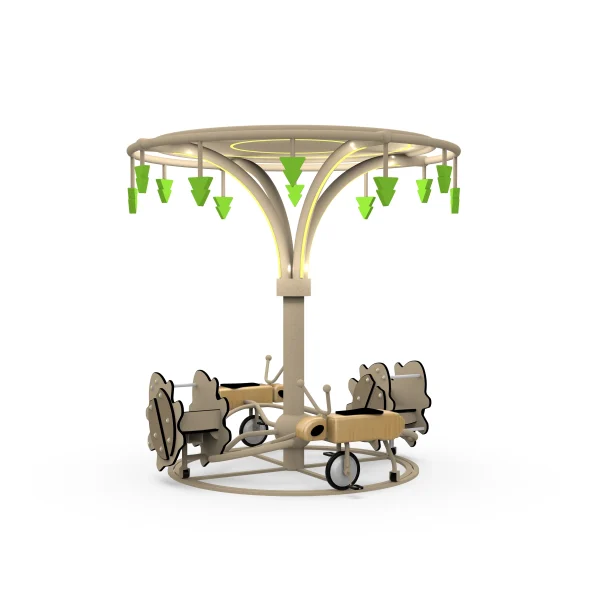
Wet grip comes from two mechanisms: mechanical locking between shoe tread and surface, and water displacement out of the contact zone. On a rotating platform, the second mechanism matters more because the foot is already moving. In our multi-player spinning wheel range, six to ten children can load the platform at once, with mixed standing and seated positions that change the contact direction every second. Single-player units concentrate all traction on a much smaller deck, so the surface profile has to work over a narrow foot placement.
Fine sand finishes improve dry feel but can hold water in shallow pockets. Coarser rounded profiles clear water faster but must not create pinch points or uncomfortable standing surfaces for bare knees and hands.
What happens when water fills a texture valley?
A thin water film is the main slip hazard. When valleys are too shallow, surface water stays in the contact zone instead of being pushed aside by the shoe. This leaves a boundary layer between rubber sole and deck. In wet inspections, I test with a wet shoe on the actual surface, watching whether water squeezes out the edges of the pattern or remains trapped. Trapped water is the failure signal.
When does deep texture become a new problem?
Deep textures improve wet grip, but only up to the point where they collect debris and make standing uncomfortable. If a child kneels or uses a hand on the deck, sharp ridges cause pressure points. The profile also must not catch laces or thin sandals. I prefer patterns with broad flat bearing areas separated by narrow drainage channels, rather than tall peaks and deep valleys. That gives stable foot support and fast water exit.
How Do Drainage and Edge Design Keep Water Off the Spinner Surface?
The deck texture only works if water can leave the surface. Many anti-slip failures I have seen come from edge details, not the coating. A smooth raised rim around the deck traps water, especially on single-player spinners with a shallow bowl shape. I ask the design team to place drainage breaks at low points and to avoid continuous edge forms that hold water on the platform.
A higher-priced coating does not solve a weak base material or a trapped-water edge detail. <Playground Equipment Balancing Price and Quality for Lasting Value> explains how long-term value depends on matching materials and manufacturing choices to the actual environment, which is exactly how wet performance should be evaluated.
Rotating equipment adds a second requirement. Water can be flung outward by rotation, which can reduce standing water on the outside portion but concentrate spray at the edge. Open drainage breaks let water exit without carrying grit toward the bearing area below. I specify open drainage breaks at multiple points and check that surface water cannot run toward the central bearing.
If your project will run through monsoon months or coastal rain, confirm surface texture with your supplier before production. Send your regional rainfall pattern and the specific spinner model to [email protected] and ask whether the deck profile and drainage design match that exposure.
How Should Buyers Compare Anti-Slip Options for Playground Spinners?
Playground spinner decks are not all the same. The right surface depends on whether users stand or sit, whether the spinner is exposed to full rain, and whether the location has salt or algae pressure. I compare three properties: profile depth, open drainage, and contact feel.
| Surface approach | Typical use | Wet grip mechanism | What to check |
|---|---|---|---|
| Fine-grit coating | Covered or indoor decks | Dry contact feel | Water escape after rain |
| Molded pattern in HDPE or steel deck | Outdoor spinners | Channels push water out | Edge spacing and debris buildup |
| Rubber inserts with drainage holes | Standing multi-player decks | Wide pads with open holes | Adhesive stability in wet heat |
| Grooved galvanized steel | High-traffic coastal sites | Mechanical locking and quick exit | Edge radius and hand contact |
| Perforated deck panel | Splash pad adjacent areas | Water falls through | Hole diameter against finger entrapment limits |
A spec sheet usually lists material thickness and color, but it seldom gives profile depth or wet drainage evidence. For multi-player spinners with a user capacity of six to ten children, open drainage matters even in brief rain because wet shoes keep bringing water back onto the deck. I ask for a photo or short video of water leaving the deck surface under wet conditions. If the supplier cannot show how water drains, I treat the anti-slip claim as unverified.
What Should You Inspect Before Ordering Spinner Anti-Slip Surfaces?
Factory inspection time should focus on the contact surface, not just the paint finish. I look at how the texture is formed. If it is applied as a thin coating, it can wear smooth at the same rate as the color. If it is molded or mechanically cut into the deck layer, it survives longer. The edge between two deck plates also matters, because trip points turn a good surface into a fall risk.
Surface details are easier to confirm before production than after shipping. <Factory Visit Checklist Playground Equipment Supplier Evaluation> covers the inspection points that expose manufacturing shortcuts, including some of the same contact and edge checks I use on spinner decks.
Should you ask for wet friction test data?
Most suppliers will not have a single pass or fail number for wet friction under the exact load of a rotating child. Still, ask for the surface treatment method, material hardness, and examples of high-humidity installations. I value a supplier that can explain profile depth and drainage design over one that only cites a general safety standard. EN 1176 addresses overall structural safety, but it does not replace a wet condition review.
Which surface details matter during a factory inspection?
Bring a wet-soled shoe sample if you can. Press it onto a production deck sample, turn it slightly, and watch the contact patch. If the deck has no drainage breaks at the outer edge, water will linger. If the texture is painted onto a smooth base, it will not last. I also check coating thickness at edges, where abrasion starts first.
If your next spinner order will be installed in a rainy, coastal, or high-humidity site, surface design should be part of initial approval, not an afterthought. Send your site exposure, target age group, and deck photos or drawings to [email protected] or WhatsApp +8613915684545. We will recommend a spinner deck texture and drainage layout for your actual operating conditions and confirm the production sample before shipping.
What Else Should Buyers Ask About Spinner Anti-Slip Surfaces?
Does a rougher surface always mean better wet grip?
No. Rougher surfaces can hold water and debris unless the profile also has drainage channels. A fine-grit coating may feel rough on dry hands but still leaves a water film under a shoe. For wet areas, I prefer larger contact pads separated by open channels, so water exits quickly while the child still has stable footing. That balance matters more than how abrasive the surface feels.
How often should anti-slip spinner surfaces be cleaned or refinished?
In coastal projects we have installed, decks stayed safer when operators brushed out grit and rinsed the surface every few weeks. Textured surfaces accumulate sand and algae in low spots, and a quick monthly check in rainy seasons catches early smoothing. Recoating may be needed after heavy foot traffic, though molded profiles generally last longer than painted finishes.
What is the difference between anti-slip paint and molded deck texture?
The difference is how the texture is formed, not the name on the coating. Anti-slip paint sits on top and can wear smooth at the edges where children step. Molded or machined texture is part of the deck material, so it remains after the color fades. If the site sees rain and high traffic, molded texture is usually the more durable choice.
Are spinner anti-slip surfaces required by EN 1176?
EN 1176 is not a single wet slip standard, which surprises some buyers. The standard covers structural requirements, entrapment gaps, and impact areas, while wet friction depends on material choice and surface geometry. A spinner can carry an EN 1176 certificate and still need a specific anti-slip deck review for rainy or splash-adjacent locations. If your project needs both EN 1176 documentation and wet-weather surface verification, send the tender clause and site photos to [email protected].
If you’re interested, check out these related articles:
Negotiating Bulk Playground Equipment Orders Expert Strategies
Playground Equipment Paint Refresh Optimal Surface Prep Recoating
Outdoor Childrens Slides Age Grading 2-5 Versus 5-12
Playground Equipment Warranty Comparison 1 3 or 5 Years
20 Essential Questions Choosing a Playground Equipment Supplier