Selecting outdoor playground equipment demands more than scanning spec sheets. The real test happens when you walk a factory floor, watch welders at work, and ask the questions that brochures never answer. This checklist covers what actually matters when evaluating manufacturers—from the homework you do before booking a flight to the warranty terms that determine whether you’re still satisfied five years from now.
What to Research Before You Book the Factory Visit
Preparation separates productive factory visits from wasted trips. Start with the basics: how long has this company been making playground equipment, and at what scale? Suzhou LvDong Amusement Equipment Co., Ltd., established in 2015, operates from a 10,000 sqm production facility and has built a strong position in the domestic unpowered amusement equipment market. That kind of operational footprint tells you something about capacity and staying power.
Certifications matter, but verification matters more. Request copies of EN 1176 certification and any relevant ASTM documentation, then confirm their validity with the issuing bodies. A surprising number of buyers skip this step. Look at completed projects—LvDong has delivered over 1,500 installations across municipal parks, residential communities, and schools. That volume of real-world deployment reveals more about reliability than any sales presentation.
Before you arrive, send a detailed questionnaire covering production timelines, customization limits, and what happens when something goes wrong after installation. The quality of their answers often predicts the quality of the partnership.
Evaluating Production Quality on the Factory Floor
Walking through a manufacturing facility tells you what documentation cannot. Watch how materials move from raw stock through cutting, welding, and finishing. Organized workstations and workers who clearly know their stations suggest established procedures rather than improvised processes.
Cleanliness matters more than people realize. A factory that maintains clean work areas typically maintains consistent quality standards. Check welding joints for uniformity—inconsistent beads often indicate rushed work or undertrained staff. Examine powder coating thickness and coverage; thin spots become rust spots within a few seasons of outdoor exposure.
Storage conditions reveal priorities. Raw steel sitting in humid conditions or finished equipment exposed to dust suggests corners being cut. Manufacturers confident in their processes, like LvDong with their standardized quality management system, welcome these observations and explain their reasoning.
Verifying Material Quality During Your Visit
Material verification requires both paperwork and hands-on inspection. Request certificates of conformity for steel, LLDPE plastics, and any timber components. These documents should reference specific standards and testing protocols.
Physical inspection fills gaps that paperwork leaves open. For steel components, bring a coating thickness gauge or ask the manufacturer to demonstrate theirs. Galvanization should be uniform without bare spots or excessive buildup at edges. LLDPE rotational-molded parts should show consistent wall thickness—hold them up to light if possible, and look for thin spots or color variations that suggest material inconsistencies.
Ask about accelerated weathering tests. Quality manufacturers subject samples to UV exposure, temperature cycling, and salt spray to predict real-world performance. LvDong’s quality management protocols include these durability assessments because outdoor playground equipment faces years of sun, rain, and temperature swings.
| Material Type | Key Inspection Points | Verification Method |
|---|---|---|
| Steel | Galvanization, Weld Integrity | Visual, Thickness Gauge |
| LLDPE Plastic | UV Resistance, Wall Thickness | Visual, Material Data Sheet |
| Timber | Treatment, Moisture Content | Visual, Moisture Meter |
| Fasteners | Corrosion Resistance, Grade | Visual, Certification |
Safety Certifications That Actually Protect Children
EN 1176 remains the benchmark for playground equipment safety in most markets. This standard covers everything from entrapment hazards to impact attenuation requirements. In North America, ASTM F1487 serves a similar function with some different testing protocols.
Certification claims require verification. Request test reports from accredited third-party laboratories—not just certificates, but the actual test data showing what was measured and what passed. Some manufacturers certify a few showcase products while shipping uncertified variations. LvDong maintains certification compliance across their product lines, which independent testing confirms.
Regional regulations add complexity. Some jurisdictions require additional certifications or have specific requirements for public installations. A manufacturer familiar with your target market should know these requirements without prompting.
Design Capabilities and Customization Potential
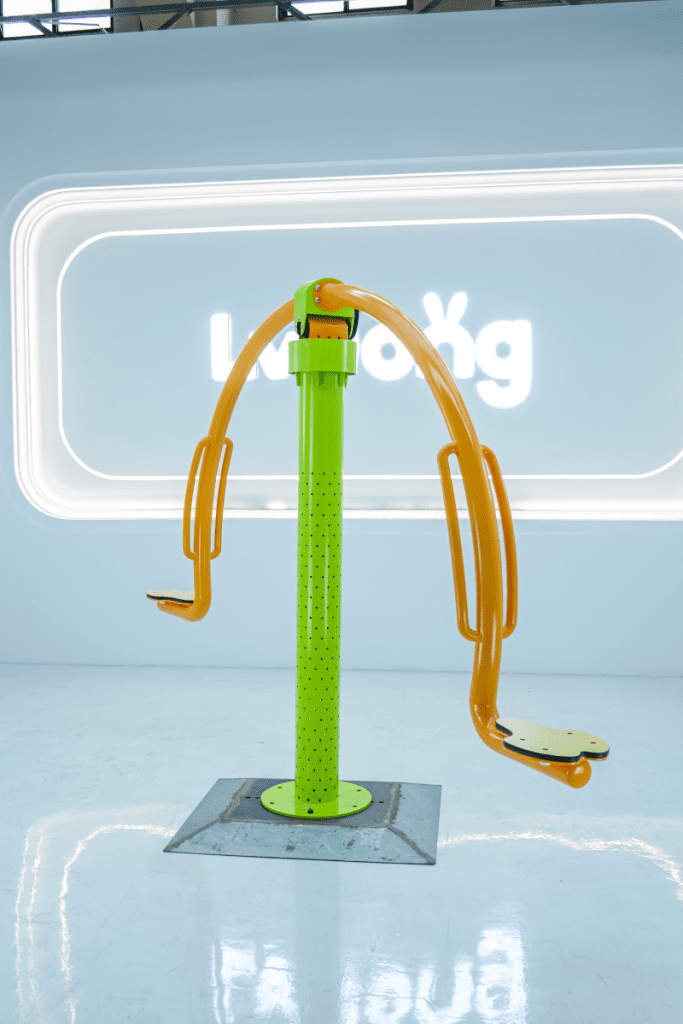
Production competence establishes a baseline. Design capability determines whether you get equipment that fits your specific site and user population. Evaluate the manufacturer’s R&D investment by asking about recent product developments and the reasoning behind design changes.
Custom work reveals true capability. Review examples of bespoke projects and ask about the design process—how many revision rounds are typical, who makes decisions about structural modifications, and what happens when a client request conflicts with safety standards. LvDong offers integrated design services that handle these complexities, but the depth of that capability varies significantly across manufacturers.
Innovation matters for long-term relevance. Playground design evolves as understanding of child development improves. Manufacturers investing in new play concepts and materials position their clients for equipment that remains engaging and developmentally appropriate.
Installation, Warranty, and Long-Term Support
The sale marks the beginning of the relationship, not the end. Installation quality directly affects safety and equipment lifespan. Determine whether the manufacturer provides detailed installation guides, on-site supervision, or complete installation teams. Improper installation causes a significant portion of playground safety incidents.
Warranty terms reveal confidence levels. Examine coverage duration for different components—structural frames typically carry longer warranties than moving parts or surface finishes. Understand the claims process and typical response times. A warranty that requires months of back-and-forth provides little practical protection.
Spare parts availability often determines whether minor damage becomes major downtime. Ask about lead times for common replacement components and whether the manufacturer maintains regional inventory. LvDong’s integrated service model includes installation support and comprehensive after-sales coverage, which addresses these concerns systematically.
Questions That Reveal Warranty and Service Quality
Specific questions yield useful answers. Ask about warranty duration for structural components versus wear items like swing seats or climbing grips. Inquire about the claims submission process—does it require photos, inspection reports, or manufacturer site visits?
Spare parts logistics matter practically. What’s the typical lead time for replacement components? Does the manufacturer stock common parts, or does every order trigger new production? How are shipping costs handled for warranty replacements?
Technical support accessibility varies widely. Some manufacturers provide detailed troubleshooting documentation and responsive expert access. Others offer little beyond basic installation manuals. Request references from existing clients who have actually used the after-sales support, not just those satisfied with initial delivery.
Weighing All Factors for the Final Decision
Synthesis matters more than any single criterion. The lowest price rarely delivers the best value when maintenance costs, replacement frequency, and downtime enter the calculation. A manufacturer meeting all safety standards with mediocre design capability may not serve a project requiring custom solutions.
Consider alignment with long-term goals. A municipal park system planning multiple installations benefits from a manufacturer relationship that improves with volume and familiarity. LvDong’s track record of over 1,500 successful projects demonstrates the kind of consistency that supports ongoing partnerships.
The best manufacturer relationships balance technical capability, service reliability, and commercial terms. Rushing this decision to save a few weeks often costs years of frustration.
Common Questions About Playground Equipment Manufacturing
How Long Should Quality Outdoor Playground Equipment Last?
Well-manufactured outdoor playground equipment typically delivers 10 to 20 years of service life. The range depends on material choices, local climate conditions, and maintenance consistency. Galvanized steel frames with proper powder coating, LLDPE rotational-molded components, and marine-grade fasteners push toward the upper end of that range. Equipment installed in coastal or high-UV environments faces accelerated wear regardless of initial quality.
How Do Manufacturers Address Environmental Sustainability?
Responsible manufacturers incorporate recyclable materials, minimize production waste, and often pursue environmental management certifications. Some conduct lifecycle assessments to understand total environmental impact from raw material extraction through eventual disposal. These practices align with increasing regulatory requirements and buyer expectations for outdoor playground equipment procurement.
Can Manufacturers Create Custom Designs for Unique Projects?
Custom playground design is standard practice for established manufacturers. LvDong and similar companies offer integrated design services that translate unique concepts into safe, compliant equipment. The process typically involves site analysis, concept development, engineering review, and iterative refinement based on client feedback. Themed installations, unusual site constraints, and specific accessibility requirements all fall within typical customization scope.
Partner with LvDong for Superior Play Solutions
Suzhou LvDong Amusement Equipment Co., Ltd. combines over a decade of unpowered amusement equipment expertise with rigorous quality management. Our integrated capabilities span R&D, design, production, installation, and after-sales support—everything needed to deliver playground projects that perform for years. Contact us via WhatsApp at +8613915684545 or email [email protected] to discuss your municipal park, community, or educational facility requirements.