Remote mining town playgrounds are not ordinary park projects. When the closest sealed road is far away, and the final leg depends on a mine access track, barge, rail siding, or helicopter sling, the equipment list has to be built around the delivery reality. A playground can absolutely be delivered to a roadless site, but only when procurement treats access as a design constraint from the first conversation.
Start With the Delivery Constraint, Not the Catalogue
Before choosing a spinner, slide, or swing set, the buyer should confirm exactly how the equipment will complete the last leg. A mine access track may limit trailer length. A barge may limit pallet weight. A helicopter sling may require the shipment to be broken into smaller bundles with certified lifting points. Equipment that reaches a nearby depot but cannot move the final distance is still undelivered.
In many remote mining communities, the final few kilometres are more difficult than the international shipping leg. The specification should therefore begin with a simple question: what can the site physically receive, and how many lifts are available on arrival?
Choose Equipment That Survives the Journey and the Climate
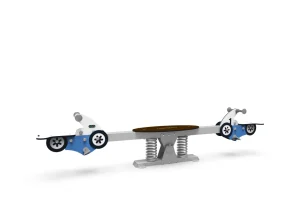
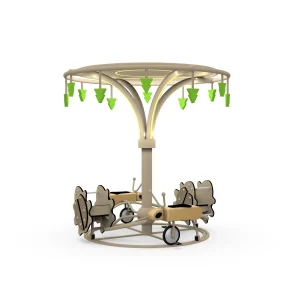
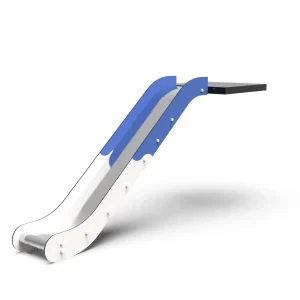
Remote mining towns often sit in high-UV, dusty, and high-wind environments with limited maintenance crews. Unpowered equipment is usually the most reliable choice because it does not depend on grid electricity or scheduled software support. Spring riders, seesaws, spinners, and slides keep children active without adding electronic failure points.
That does not mean safety requirements can be relaxed. Equipment should meet EN 1176-1:2017 for structural integrity, entrapment protection, and general playground safety [1]. Where the project falls under Australian or Canadian jurisdiction, AS 4685.0:2017 or CSA Z614:20 may add site and installation requirements [2][3]. The maximum free height of fall must also be matched to the impact-attenuating surface specified for each piece of equipment [1].
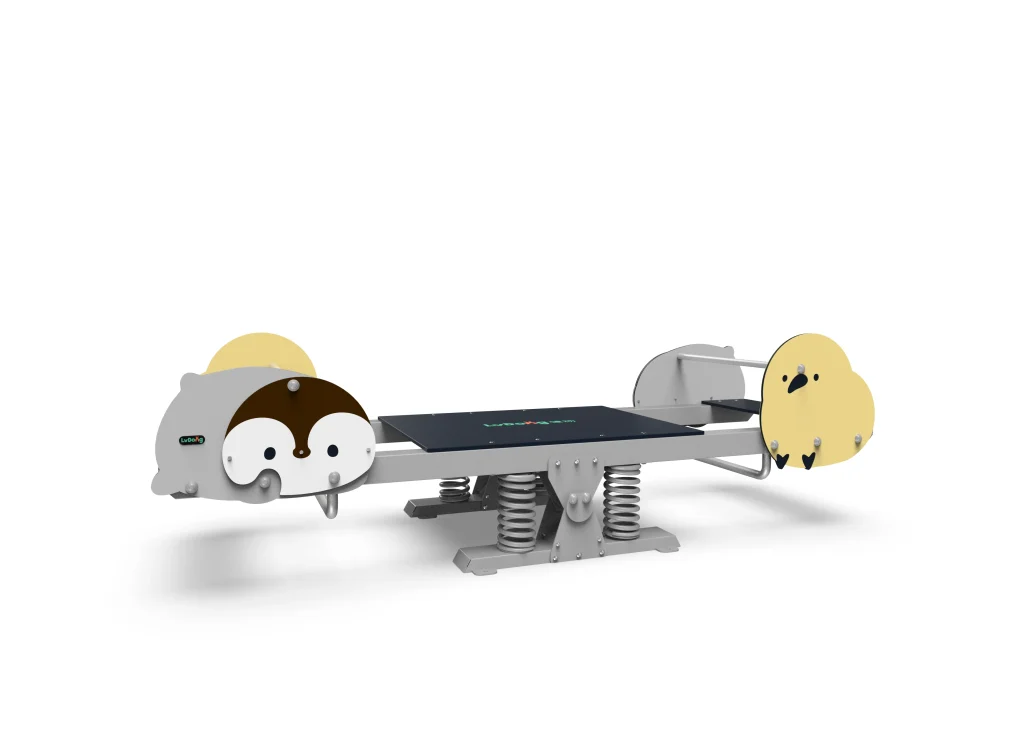
Modular designs with bolted connections reduce the risk of damage during repeated transloading. Where a crane may not be available, components that a small site crew can carry and position are easier to stage. For example, a compact spring rider with a steel base plate can be anchored without heavy lifting equipment, making it a practical first phase for a remote playground.
Packaging and Site Preparation for a Roadless Delivery
Protective packaging needs to go beyond standard export cartons. Dust can enter bearings and joints. Rain can collect inside wrapped steel. Repeated handling can abrade powder-coated surfaces. The supplier should use sealed wraps, bolted timber crates, and clearly marked lifting points that match the transport plan rather than a generic container manifest.
Foundation work is just as important. In remote mining towns, concrete, water, and formwork are often limited, so site preparation should begin before the shipment leaves the factory. The playground area should be levelled, drained, and checked for bearing capacity. Anchor bolts and base plates need to be set to the manufacturer’s foundation drawings, and the surfacing zone should be defined before the first component is in place.
Remote sites often leave foundation work until the equipment arrives, which creates avoidable downtime. <Playground Spring Rider Foundations Expert Installation Guide> covers anchoring methods, concrete checks, and practical base preparation for spring riders and similar units.
High-Use Durability and Remote Installation Checks
A remote mining town playground may serve many children for long stretches each day, often with fewer professional inspections than a city park. High-traffic components such as swing chains, bearings, and slide entry platforms should be selected for wear resistance and easy replacement. Galvanised or stainless steel hardware generally performs better in dusty or moisture-exposed remote sites than unprotected fasteners.
The operational question is not only whether the equipment can reach the site, but whether it will remain safe when spare parts and specialist technicians are weeks away.
If a remote playground will run for long periods without professional inspections, durability decisions need to be locked in at the specification stage. <High Traffic Durability Tips for Airport Playground Equipment> covers material selection, wear-point planning, and maintenance thinking for high-use public installations.
After installation, acceptance should not be visual alone. Remote sites make it expensive to schedule a return visit, so every check must happen while the crew is still on site. Loose fasteners, missing caps, surfacing depth, entrapment gaps, and clearance zones can all be verified with a simple inspection sequence before the team departs.
Closing a remote playground project without a structured acceptance check can leave small defects to become serious safety issues. <12 Critical Post Installation Acceptance Tests for Playgrounds> covers the post-installation checks remote and municipal buyers should complete before opening the playground.
Turn the Access Description Into a Delivery-Ready Inquiry
Before finalising an order, the buyer should send the supplier a short access description: the nearest sealed road, the last-leg transport mode, any weight or length limits, and the installation window. This information allows the manufacturer to adjust packaging, module sizes, and foundation drawings before production begins.
For remote mining town projects, Suzhou LvDong Amusement Equipment Co., Ltd. can align the equipment list with the delivery mode and site staging plan. Contact [email protected] or WhatsApp +8613915684545 to discuss the specific roadless site rather than ordering from a generic catalogue.
Build a Remote Playground That Opens on Time
Start with the delivery plan. Suzhou LvDong supports remote and mining township projects through modular design, protective export packaging, foundation drawings, and installation guidance. To move the project forward:
- Send the site access description and nearest transport hub.
- List the intended age range and expected daily users.
- Request foundation drawings and a packing plan for the final leg.
- Schedule production around the delivery window.
- Confirm the acceptance checks before the installation crew leaves.
Contact [email protected] or WhatsApp +8613915684545, and the team will prepare a delivery-first proposal for the site.
Frequently Asked Questions
Can playground equipment be delivered to a mining town with no road access?
Yes. The approach is to design the shipment around the available final leg, such as barge, rail, mine access track, or helicopter sling. The key is breaking the load into modules that the site equipment can actually receive.
What type of playground equipment works best in remote mining towns?
Unpowered, modular equipment is usually the most reliable. Spring riders, seesaws, spinners, and slides without complex electronics reduce the need for grid power and specialised repair parts. Equipment should meet EN 1176-1:2017 minimum safety requirements [1].
How do you prepare a remote site before delivery?
Level and drain the area, verify ground bearing capacity, and set anchor points according to the manufacturer’s foundation drawings. Completing foundation work before shipment arrival prevents idle crews and prolonged storage exposure.
What should a remote installation acceptance check include?
The check should cover structural fasteners, protective caps, impact-attenuating surfacing depth, entrapment gaps, and clearance zones. A remote site especially needs a complete check before the installation crew departs, because scheduling a return visit is expensive.
How can a buyer compare delivery options for a roadless site?
Ask the supplier for a packing plan with module weights and lifting points. Then compare the final-leg options. Helicopter delivery may be fastest but limits load size, while barge or rail allows larger modules but adds transloading steps. The right choice depends on the site’s distance and available equipment.
References
[1] European Committee for Standardization. EN 1176-1:2017, Playground equipment and surfacing — Part 1: General safety requirements and test methods. CEN, Brussels, 2017.
[2] Standards Australia. AS 4685.0:2017, Playground equipment and surfacing — Part 0: Development, installation, inspection, maintenance and operation. Standards Australia, Sydney, 2017.
[3] CSA Group. CSA Z614:20, Children’s playground equipment and surfacing. CSA Group, Toronto, 2020.
If you’re interested, check out these related articles:
Playground Equipment Safety Your Essential Self Inspection Checklist
Small Space Solutions for Restaurant Childrens Play Areas
Age Appropriate Playground Sets for Child Development
Outdoor Playground Set Layout Strategic Design for Optimal Play
Selecting Commercial Playground Manufacturers A Step by Step Guide
To discuss remote-site delivery requirements, contact the LvDong team with your project requirements.