Customs classification is one of the least visible cost levers in playground equipment importing, yet it sits behind nearly every import invoice. A slide shipped under the wrong heading can change the duty rate, delay clearance, invite audit scrutiny, and quietly reshape the total landed cost of a project. This guide explains how playground slides are classified under the Harmonized System, where material and structure change the classification, which documents keep a classification defensible, and how buyers can plan duty treatment without drifting into misdeclaration.
Why Slide Classification Drives Total Landed Cost
Classification does more than assign a number. The chosen heading sets the base duty rate before any free-trade agreement, temporary suspension, or preferential origin program is applied. It also determines whether an import needs extra certificates, whether anti-dumping or safeguard measures touch the shipment, and how customs brokers describe the goods across the invoice, packing list, and bill of lading.
Playground slides are generally classified under Chapter 95 of the Harmonized System, specifically heading 9506, which covers articles and equipment for general physical exercise, gymnastics, athletics, other sports, and outdoor games not specified elsewhere [1]. Most playground slides land in the residual subheading structure under 9506 99 because the HS does not maintain a separate, slide-specific tariff line [2][3]. That broad heading sounds simple, but the simplicity ends as soon as material, completeness, and component status enter the picture.
The Baseline: Heading 9506 and the Toy Distinction
Importers sometimes assume a playground slide is a toy under heading 9503, but playground equipment is not usually treated as toy merchandise in tariff terms. Heading 9506 is the more precise fit for fixed playground structures because the goods function as outdoor play and exercise equipment rather than as tabletop or portable toys [1]. This distinction matters because the two headings can carry different duty treatment and different documentation expectations.
The proper analysis follows the General Rules for the Interpretation of the Harmonized System. Classification begins with the heading text and section notes under GRI 1, then moves through the remaining rules only when the goods require further legal interpretation [4]. For slides, the text of heading 9506 plus the Chapter 95 notes is usually enough to anchor the heading; the deeper question is the correct subheading at the eight- or ten-digit level, which depends on destination tariff schedules.
Material and Structure: Where Classification Splits
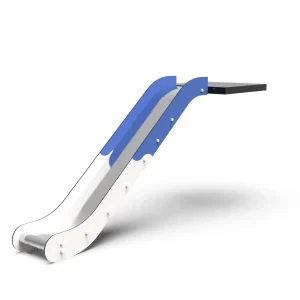
Material alone does not create a new heading for most playground slides, but it shapes subheading selection and the supporting description used at the border. A stainless-steel tunnel slide, an LLDPE curved slide, and a metal-and-plastic combination slide may all remain under heading 9506, yet each description must be precise enough for the broker to assign the destination market’s residual line correctly [2][3].
The table below shows the factors most likely to influence classification at the subheading level.
| Factor | Classification influence | Supporting documentation |
|---|---|---|
| Plastic slide body | Usually residual 9506 99 line for unpowered playground equipment | Material breakdown, technical drawing |
| Stainless-steel slide bed | Same heading; description emphasizes outdoor play equipment | Grade certificate, fabrication drawing |
| Tunnel vs open slide | Function unchanged under 9506; detail drives broker line choice | Product specification sheet |
| Slide with platform/stairs | Assessed as a complete play unit unless disassembled for shipping | Assembly drawing, export invoice |
| Separate slide component/spare part | Chapter 95 Note 3 may classify with the parent article [1] | Spare-parts list, relation to parent model |
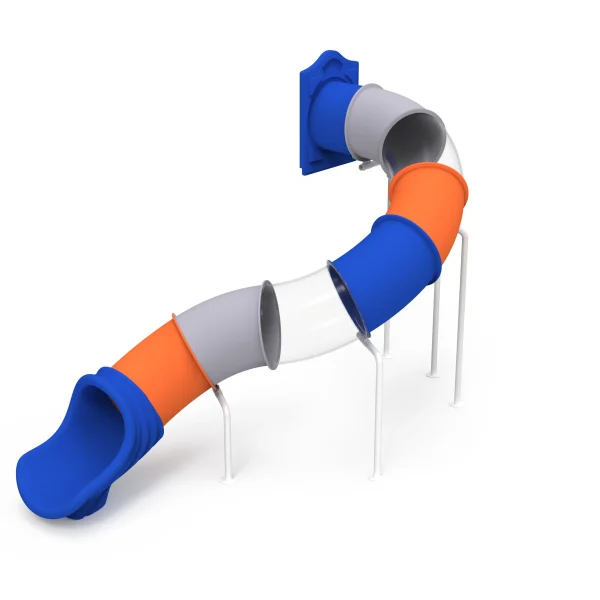
A tunnel slide often receives the same heading treatment as an open slide because the difference is structural rather than functional. What importers should prepare for is not a different chapter but a richer product description. Customs authorities rely on visual and written detail — tube diameter, platform height, bed material, whether the slide is free-standing or attached to a multi-play structure — to apply the correct residual line and any related controls.
Curved Slides and the Functional-Description Standard
Curved slides and banked-turn designs introduce the same classification logic: the goods remain playground equipment under heading 9506, but the curvature, radius, and exit geometry become part of the commercial description [1]. Buyers who supply only “playground slide” on a commercial invoice leave the broker without enough information to defend a line choice under audit.
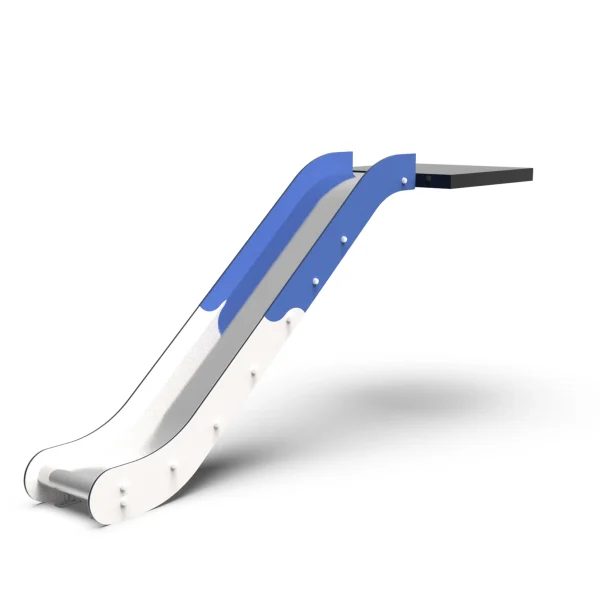
The safer practice is to treat the customs description as a short engineering summary. A defensible description includes the primary material, the slide type, the age range, the mounting method, and whether the item is complete or supplied as a component. That level of clarity does not guarantee a lower rate, but it does reduce reclassification risk and clearance delay.
Customs classification sits inside a longer import chain, from supplier verification to final delivery. <International Playground Equipment Procurement A Step by Step Guide> covers supplier checks, freight planning, and the document set buyers need before goods ship.
Components, Spare Parts, and Incomplete Shipments
Slides are often shipped disassembled, in multiple crates, or as spare parts for an existing playground. GRI 2(a) allows incomplete or unassembled articles that retain the essential character of the complete article to be classified as the complete article [4]. That means a knocked-down slide shipped with its platform and handrails may still classify under the slide’s heading rather than as loose metal parts.
Chapter 95 Note 3 also treats parts and accessories suitable solely or principally for use with articles of that chapter as part of those articles [1]. A replacement slide bed for a specific model, for example, can follow the parent article’s classification when the link is documented. The common failure is shipping spare parts without describing the parent model, which invites the broker to default to a generic parts line that may carry a different rate.
Supporting Documents That Keep Classification Defensible
The best defense against reclassification is documentation that mirrors the tariff description. Importers should keep three groups of records: technical drawings showing slide structure, material certificates identifying the dominant substances, and safety-standard documentation that confirms the product is playground equipment [5].
A product file that includes EN 1176 or equivalent test references is useful because it demonstrates intended use. Classification is ultimately about objective characteristics and function, not the seller’s preference, so the file should describe what the slide is made of and how it is used rather than how it is marketed [1][5].
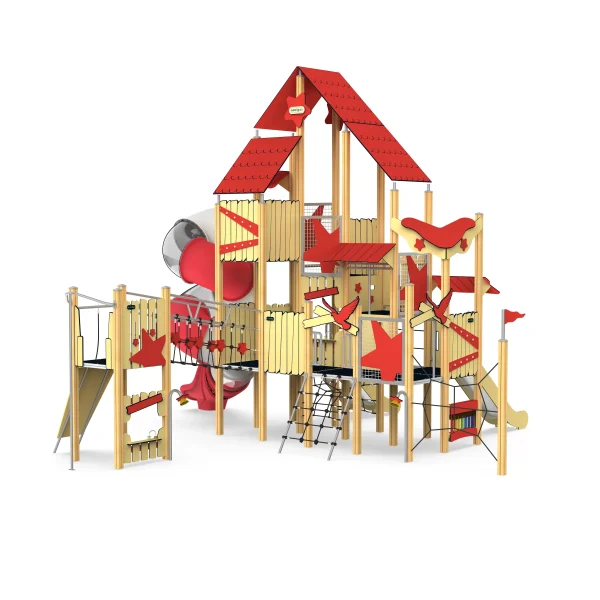
When a shipment contains a slide with an attached platform, stairs, and roof element, the combined structure is generally classified according to the essential character of the whole under GRI 3(b) [4]. Usually the slide and play structure together remain within heading 9506, with the destination schedule’s residual line controlling. Importers who split the item across multiple invoices solely to alter the characterization create a misdeclaration risk that is rarely worth the perceived saving.
Tariff Planning Without Misdeclaration
Legitimate tariff planning works within the classification system: selecting the correct line, claiming a preferential origin where the goods qualify, using temporary import reliefs where available, and structuring documentation to match the legal description. Misdeclaration is different — it is assigning a code the goods do not fit to capture a lower rate.
The first planning step is to confirm the destination tariff version and its statistical suffix. Major markets maintain online tariff platforms: the U.S. HTSUS for heading 9506, the EU TARIC for the Combined Nomenclature, and national tariff schedules elsewhere [2][3]. Because rates and controls change, the code should be rechecked for each annual schedule update, not recycled from the last shipment.
The second step is cost modeling. A small shift in classification can change duty, bond requirements, and the landed cost calculation across a full container. Buyers evaluating supplier quotes should ask for the suggested six- or eight-digit code, the full commercial description, and the product drawings — then verify all three against the destination tariff before ordering.
Duty is not the only cost driver in playground imports. <Playground Equipment Balancing Price and Quality for Lasting Value> covers how material choice, build quality, and expected service life affect lifetime cost.
Need Help With Slide HS Codes and Export Documentation?
Suzhou LvDong Amusement Equipment supports importers with HS code suggestions, product drawings, material breakdowns, mill certificates, and safety-standard documentation to help accurate customs classification. Send the destination country and slide specifications to [email protected] or WhatsApp +8613915684545, and the team will return a classification support note with the recommended description and document checklist.
End CTA: Verify Before You Ship
A wrong HS code is cheaper to fix before departure than after the goods arrive. LvDong supplies the technical documentation buyers need for classification review — drawings, material data, product photos, and EN 1176 test references — so brokers can assign the correct line without guesswork. For the slide range, including tunnel and curved models, see Playground Slide Manufacturer OEM or contact [email protected] with your destination country, slide type, and shipment details for a document package review before order confirmation.
FAQ
What HS code is used for playground slides?
Playground slides are generally classified under Chapter 95, heading 9506, which covers articles and equipment for general physical exercise, gymnastics, athletics, other sports, and outdoor games. Most slides enter the destination country’s residual subheading under 9506 99 because no separate slide-specific tariff line exists in the standard HS structure [1][2][3].
Are tunnel slides classified differently from open slides?
Usually not at the heading level. Tunnel and open slides both remain playground equipment under heading 9506 because the function is unchanged. The difference matters most in the commercial description and subheading detail provided to the customs broker [1][3].
Does material change the HS code for a slide?
Material rarely moves a playground slide out of heading 9506, but it influences the description, the subheading line, and supporting documents such as material certificates and grade records. The key requirement is that the invoice and packing list describe the dominant material accurately [2][3].
Do importers need EN 1176 certificates for customs?
EN 1176 certificates are not usually a customs requirement, but they are valuable classification support because they demonstrate that the product is playground equipment used for outdoor play. Technical documentation strengthens the intended-use and function analysis behind the tariff line [5].
How can importers reduce import duty legally?
Legal approaches include confirming the correct line, claiming preferential origin where the goods qualify, using temporary import reliefs where available, and reviewing the destination tariff annually. Assigning a code the goods do not fit is misdeclaration and creates audit, penalty, and clearance risk [2][3][4].
References
[1] World Customs Organization. Harmonized Commodity Description and Coding System (HS) Nomenclature, 2022 Edition, Chapter 95, heading 9506 and Chapter 95 Note 3. https://www.wcotradetools.org
[2] U.S. International Trade Commission. Harmonized Tariff Schedule of the United States (HTSUS), Chapter 95, heading 9506. https://hts.usitc.gov
[3] European Commission. TARIC Consultation, Heading 9506 99. https://ec.europa.eu/taxation_customs
[4] World Customs Organization. General Rules for the Interpretation of the Harmonized System, Rules 1, 2(a), 3(b), and 6. https://www.wcoomd.org
[5] European Committee for Standardization. EN 1176-1: Playground equipment and surfacing – Part 1: General safety requirements and test methods.
If you’re interested, check out these related articles:
Playground Equipment Paint Refresh Optimal Surface Prep Recoating
Large Playground Slide Transport and Crane Planning
Child Development Benefits Playground Spinning Toy Impact
Mastering Metal Slide Heat Prevention Strategies for Playgrounds
Slide Platform Height and Exit Safety Guidelines for Playgrounds