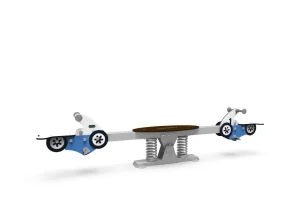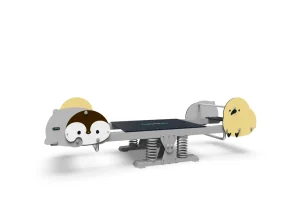
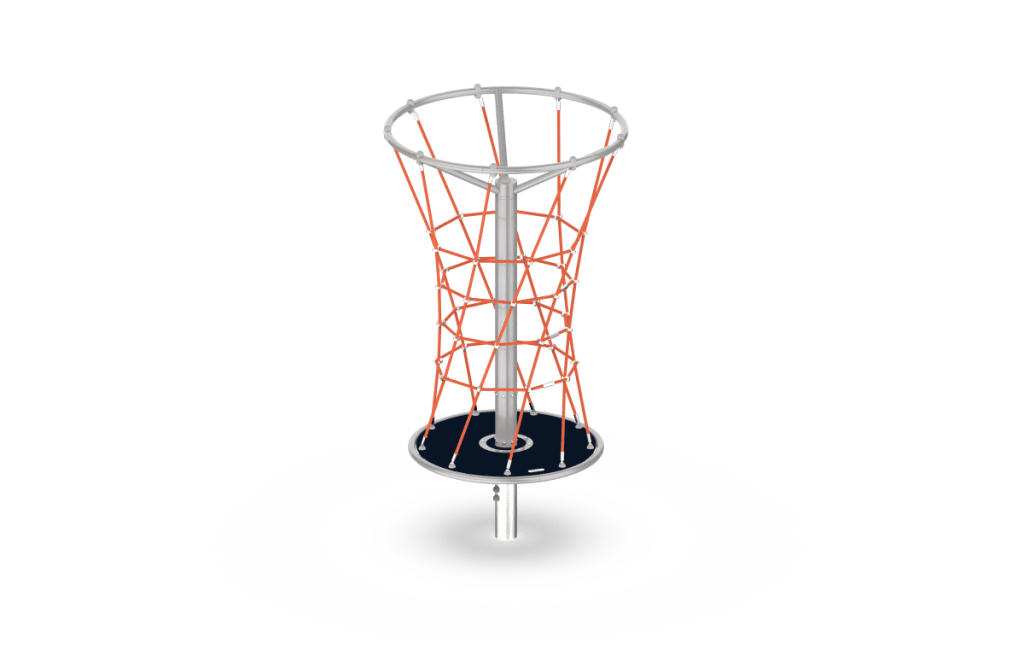
The first time I watched a group of kids on a playground spinner, I noticed something that stuck with me. One child who usually hung back from group activities was right in the middle, laughing and holding on while the others pushed. That moment captured what spinning equipment actually does — it pulls children into physical engagement, shared experience, and sensory challenge all at once. These aren’t just fun diversions. Playground spinning toys build foundational skills across physical, cognitive, and social domains in ways that static equipment simply cannot replicate.
How Spinning Activates the Vestibular System and Supports Sensory Integration
The vestibular system, housed in the inner ear, governs how children perceive movement, gravity, and spatial orientation. Playground spinning toys deliver direct stimulation to this system, which in turn drives sensory integration — the brain’s capacity to organize and interpret signals from the body and surroundings. This process shapes proprioception (awareness of body position) and helps children manage competing sensory inputs without becoming overwhelmed.
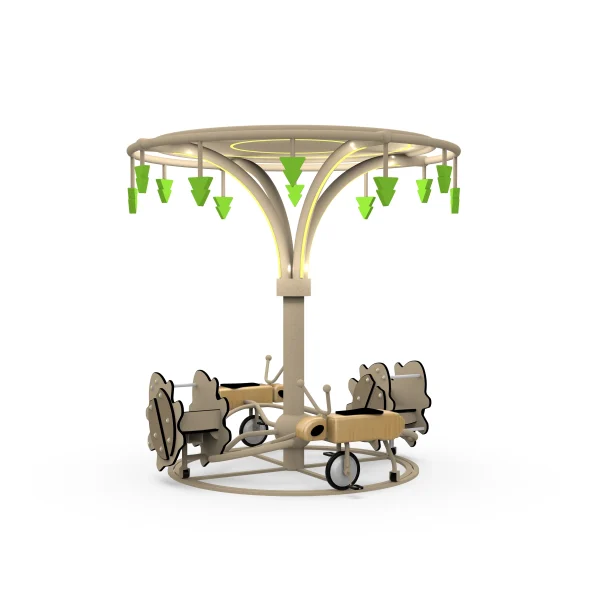
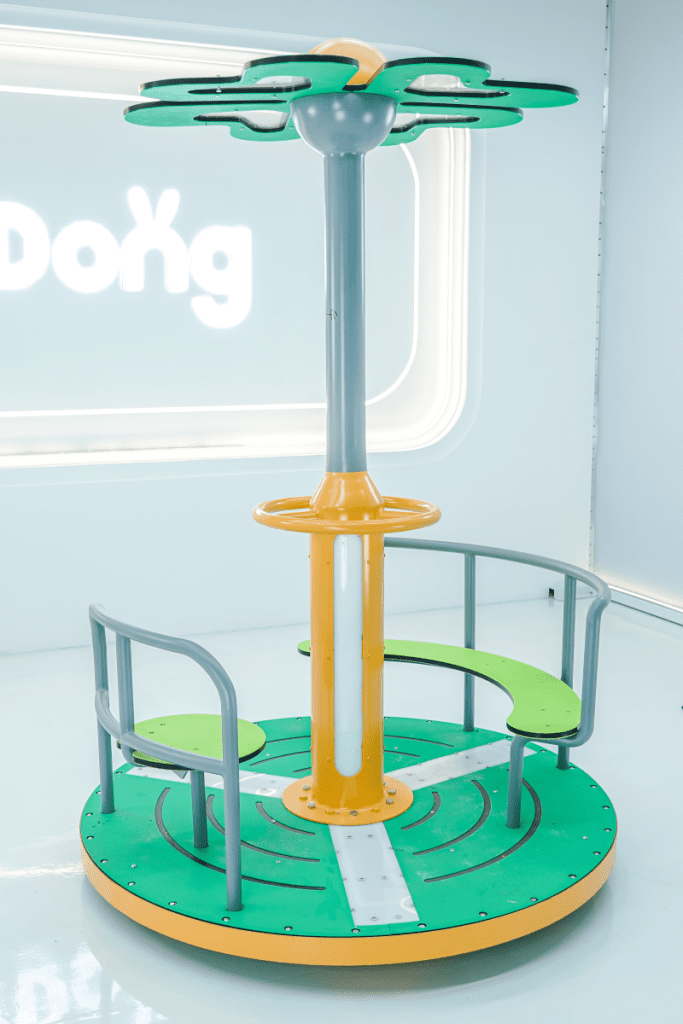
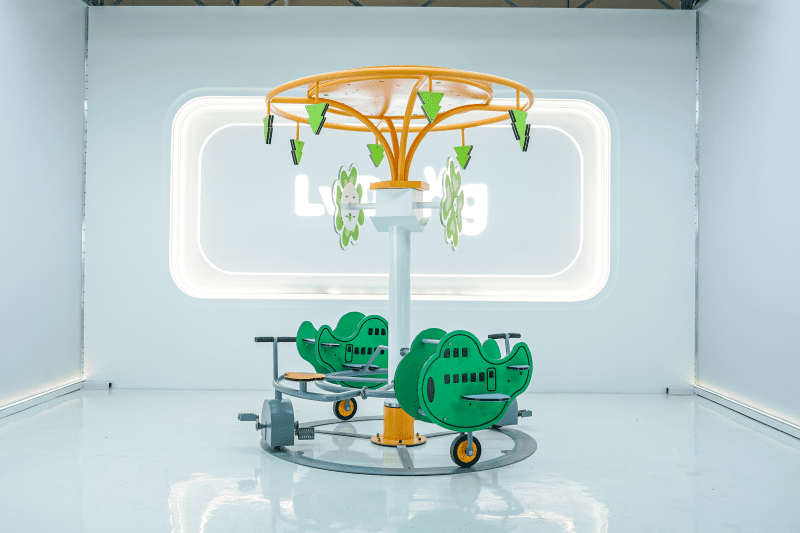
Pediatric therapy research consistently points to rotational movement as a key intervention for children with sensory processing challenges. The controlled spin of well-designed equipment provides graded vestibular input, allowing children to build tolerance and regulation over time. Our Multi-Player Playground Spinning Wheel and Single-Player Playground Spinning Equipment deliver varied rotational experiences calibrated for developmental benefit.
Motor Skill Development Through Rotational Play
Spinning playground equipment demands active physical participation. Children must initiate rotation, sustain momentum, and adjust their bodies to maintain balance — all of which strengthen gross motor skills. The continuous feedback loop between movement and balance refines coordination and spatial awareness in ways that repetitive, predictable play cannot match.
Regular use of dynamic equipment like our Multi-Player Playground Spinning Wheel shows measurable gains in balance coordination. Children also develop early risk assessment abilities as they learn to gauge speed, anticipate changes in motion, and respond accordingly. Grip strength and postural control — components of fine motor development — receive secondary reinforcement through the act of holding on during rotation.
How do spinning toys contribute to a child’s sensory development?
Spinning toys deliver vestibular input that engages the inner ear and trains the brain to process balance, spatial awareness, and sensory integration. This input affects coordination, focus, and the ability to filter sensory information effectively. Varied rotational speeds and directions enhance sensory regulation and body awareness, forming essential elements of a healthy sensory diet for developing children.
For deeper insights into creating optimal play spaces, consider reading 《Outdoor Playground Set Layout Strategic Design for Optimal Play》.
Cognitive and Social-Emotional Benefits of Shared Spinning Experiences
Playground spinning toys that accommodate multiple users create natural opportunities for cognitive and social-emotional growth. When children share a Multi Player Playground Spinning Wheel, they must coordinate movements, negotiate roles, and solve problems together. These interactions build cooperation skills and teach emotional regulation as children manage excitement, frustration, and turn-taking.
The shared physical experience strengthens social bonds and builds self-confidence. Children who master the coordination required for group spinning often show improved attention span and cognitive flexibility in other contexts. Creative play emerges spontaneously as children invent rules, games, and scenarios centered on the spinning motion.
Inclusive Design Principles for Spinning Equipment
Thoughtful playground design ensures that spinning equipment serves children across a range of developmental needs and physical abilities. Accessibility requires more than compliance — it demands intentional selection of equipment types and configurations that welcome diverse users.
Effective inclusive playgrounds integrate multiple spinning options. Seated models like our Single Player Playground Spinner accommodate children who need postural support, while standing platforms challenge those ready for more dynamic engagement. This variety supports different developmental milestones and maintains adherence to child safety standards. Suzhou LvDong Amusement Equipment Co.,Ltd designs unpowered amusement equipment with accessibility as a core principle, not an afterthought.
What age groups benefit most from playground spinning equipment?
Children between ages 3 and 8 gain the most significant developmental advantages from spinning equipment, as this period involves rapid physical and cognitive growth. Inclusive designs extend these benefits to older children and those with diverse abilities, ensuring that early childhood education environments and community playgrounds serve broad populations effectively.
To learn more about tailoring play spaces for different age ranges, explore 《Mastering Age Inclusive Outdoor Play Equipment Solutions》.
Safety Standards and Material Quality in Spinning Equipment Selection
Selecting playground spinning toys requires rigorous attention to safety certification and manufacturing quality. Equipment must meet international standards including EN 1176 and GB/T 34272-2017, which specify structural requirements, fall height limits, and entrapment prevention measures.
Material durability matters as much as design. Spinning equipment faces constant stress from rotational forces, weather exposure, and high-frequency use. Wear-resistant materials rated for outdoor sun and rain exposure — as well as intensive indoor use — extend service life and maintain safety margins. Our Multi-Player Playground Spinning Wheel features high structural stability and controlled rotation mechanics designed for sustained heavy use. Proper installation and scheduled maintenance inspections complete the safety picture.
| Feature | Multi-Player Spinning Wheel | Single-Player Spinning Equipment |
|---|---|---|
| User Capacity | 6–10 children | 1 child |
| Age Range | 2+ to 6+ years (model dependent) | 2 years and above |
| Max Falling Height | 55–77 cm | 34 cm |
| Installation Time | 1–2 persons, approx. 2 person-hours | 1 installer, approx. 2 person-hours |
| Safety Standards | EN 1176, GB/T 34272-2017 | EN 1176, GB/T 34272-2017 |
| Play Mode | Standing platforms, seats, climbing frames, or enclosed pods | Seated spinning and rocking or standing spin-and-sway interaction |
Are there specific safety considerations for spinning playground toys?
Key safety requirements include impact-absorbing surfacing beneath and around equipment, clear use zones to prevent collisions with other children or structures, secure ground anchoring, and materials rated for heavy use and weather exposure. Regular maintenance inspections and adherence to EN 1176 and GB/T 34272-2017 standards minimize injury risk while preserving the developmental benefits of spinning play.
For comprehensive safety insights, we recommend reading 《Essential Checklist for Playground Equipment Safety Test Reports》.
Frequently Asked Questions About Playground Spinning Toys
How do spinning toys contribute to a child’s sensory development?
Spinning toys stimulate the vestibular system in the inner ear, training the brain to process balance, spatial orientation, and sensory integration. This affects coordination, focus, and the ability to manage competing sensory inputs. Varied rotational speeds and directions build sensory regulation and body awareness — core components of healthy sensory development in children.
What age groups benefit most from playground spinning equipment?
Preschoolers and early elementary children (ages 3-8) experience the greatest developmental gains from playground spinning toys, as this period involves intensive physical and cognitive growth. Inclusive equipment designs extend benefits to older children and those with diverse abilities, making spinning play valuable across a wider age and ability spectrum.
Are there specific safety considerations for spinning playground toys?
Critical safety factors include appropriate fall surfacing, clear zones around equipment, secure anchoring, and durable construction materials. Regular maintenance and compliance with international safety standards such as EN 1176 and GB/T 34272-2017 are essential. These measures reduce injury risk while allowing children to experience the full developmental benefits of rotational play.
Partner with Suzhou LvDong for Premium Play Solutions
Bring developmentally focused playground spinning toys to your next project. Suzhou LvDong Amusement Equipment Co.,Ltd brings over a decade of expertise in unpowered amusement equipment, offering integrated R&D, design, production, installation, and after-sales support. Our rigorously quality-managed equipment creates engaging, safe environments that support holistic child development. Contact us for a consultation.
WHATSAPP: +8613915684545 | [email protected]