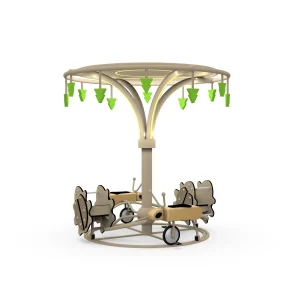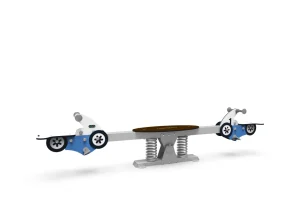
If you import commercial playground equipment from China, the difference between a smooth project and an expensive after-sales problem often comes down to what happens before the container leaves the factory. Third-party testing is not a formality. An independent inspection by SGS or TUV Rheinland gives you documented evidence that slides, spinners, spring riders, and swings meet the agreed safety and quality requirements before you pay the balance and ship the goods.
This article explains how to use third-party testing effectively for playground equipment orders, what to include in the inspection scope, and how to make the results work for your import process.
Why Pre-Shipment Testing Changes the Risk Profile
Manufacturers have internal quality control, but internal teams can miss the same issue repeatedly. A third-party inspector is paid to find nonconformities, not to protect production output. For playground equipment, a missed weld crack, a sharp edge inside a tunnel slide, or an incorrect fall-height label can delay customs clearance, create liability exposure, or force you to repair equipment before installation.
Standards such as EN 1176 provide the technical benchmark for safety and durability [1]. Chinese production often follows GB/T 34272-2017 as the domestic baseline. The problem is that a factory test report alone may not satisfy your destination market or your insurance reviewer. Independent testing bridges that gap.
Third-party testing is especially valuable when you cannot visit the factory, when the order includes custom components, or when the equipment will be installed in a high-traffic public space. It also gives you a clear acceptance record: you release the shipment based on evidence, not on trust.
SGS and TUV Rheinland: What Each Brings to the Inspection
SGS is a global inspection, testing, and certification company with a strong presence in China and broad acceptance in international trade [2]. TUV Rheinland is a German-based testing service provider known for technical rigor and strong recognition in European and safety-critical markets [3]. Both can inspect playground equipment, review production records, and issue reports showing whether the order meets the agreed specification.
The key is not which company is better in general. The key is which one your buyer, municipality, or local authority accepts, and whether the proposed lab holds accreditation under ISO/IEC 17025 for the specific tests you need [4]. Ask for the accreditation scope, not just the brand name.
You can also use both models in the same order. For example, a pre-production review might verify steel grade certificates, coating systems, and welding procedures. A final pre-shipment inspection can then check finished products, dimensions, labeling, and packing.
If you are comparing suppliers, documentation depth often signals how seriously a factory treats compliance. <8 Essential Certifications for Playground Equipment Manufacturers> covers the certificates worth requesting before an order starts.
What Should Be in the Testing Scope
A useful pre-shipment inspection for playground equipment should cover more than visual appearance. The scope should follow the relevant standard and your purchase specification.
1. Structural and Mechanical Safety
The inspector should check welds, joints, fasteners, and moving parts against the applicable standard. For EN 1176 compliance, this includes head and neck entrapment probes, finger-entrapment checks, protrusion limits, and access-opening requirements [1]. For rotating equipment, the inspector should verify that rotation is controlled and that fasteners are secure.
2. Coating, Materials, and Restricted Substances
Surface finish affects both durability and child safety. The report should record paint or powder-coating thickness, visible damage, and sharp edges. If your destination market requires restricted-substance screening, request evidence under the relevant regulation, such as REACH [5].
3. Product Dimensions and Age Grading
Third-party inspectors can verify that the actual product matches your approved drawing. This includes platform height, slide width, guardrail height, seat height, and fall-height markings. Small dimensional changes can create compliance problems even when the product looks correct.
4. Functional Load and Durability Checks
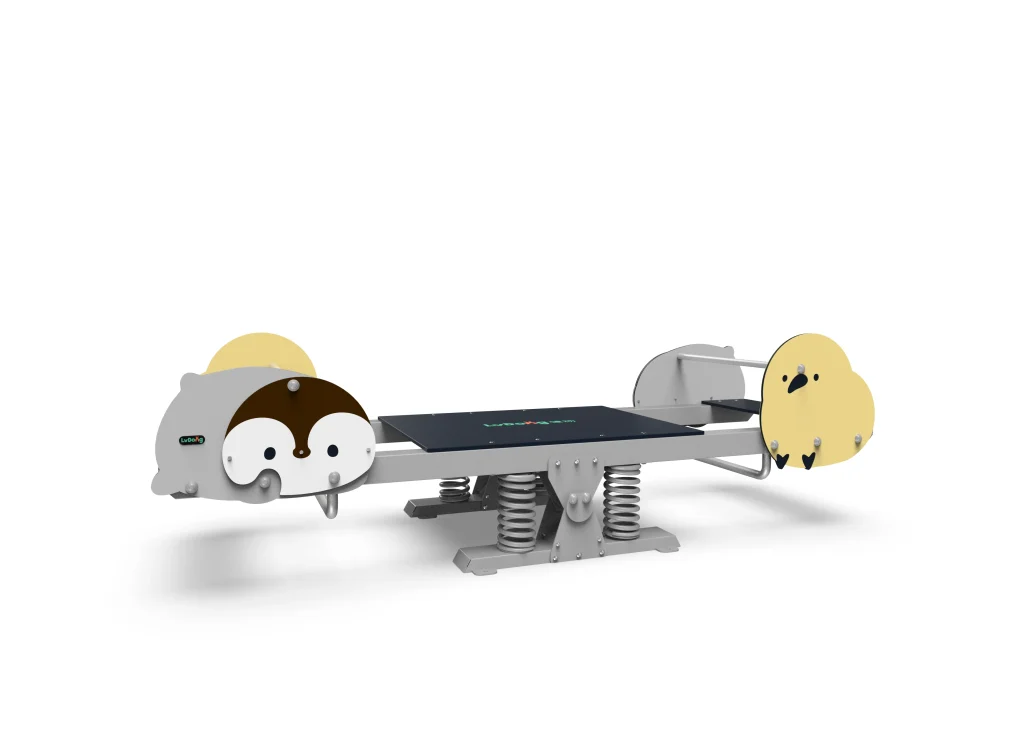
For swings, spinners, spring riders, and seesaws, static visual inspection is not enough. The inspection should record load-test evidence, dynamic function checks, and any deformation after testing. Where possible, review the factory’s own test reports and compare them with the third-party findings.
| Test area | What the lab or inspector checks | Why it matters |
|---|---|---|
| Welds and fasteners | Cracks, incomplete welds, loose bolts, missing locking devices | Structural failure risk |
| Entrapment probes | Head, neck, and finger openings on slides, panels, and joints | Child entrapment prevention |
| Moving parts | Bearings, springs, pivots, swing connectors | Pinch, wear, and ejection hazards |
| Coatings | Thickness, adhesion, visible damage, sharp edges | Corrosion resistance and safety |
| Dimensions | Platform height, guardrails, seat height, slide width | Compliance with fall-height and age rules |
| Load evidence | Factory test records, inspector functional checks | Verification of durability claims |
How to Set Clear Pass/Fail Criteria
Do not leave pass/fail decisions to the inspector’s opinion. Set the acceptance criteria before production begins.
Define which standard applies, which clauses must be tested, and what defect classification you will use. Many buyers use an AQL sampling approach based on ISO 2859-1 to determine how many units to inspect and when to reject a lot [6]. For playground equipment, critical defects should normally require correction before shipment, while minor cosmetic issues may be accepted with documentation.
Your instruction to the testing company should include:
- Product list and quantities
- Destination market and applicable standard
- Drawing version or approved specification
- Required tests and sampling level
- Defect classification: critical, major, minor
- Report format and photo requirements
- Identity of authorized recipients for the final report
Clear criteria prevent disputes. If the report shows only “minor scratches found,” you can accept and ship. If it shows “guardrail height below drawing tolerance,” you can stop the shipment and require correction.
Common Weak Points in Playground Equipment Orders
Some playground elements fail more often than others. Understanding these weak points helps you direct the inspector’s attention.
Tunnel slides should be checked for internal seams, bolt heads, and opening dimensions. A visually smooth exterior can hide a sharp internal edge. Tube sections should be inspected at joints and exit openings.
Spring riders need attention where the spring meets the base plate and where the handle connects to the body. Weld quality and coating adhesion in these areas directly affect safety and maintenance life.
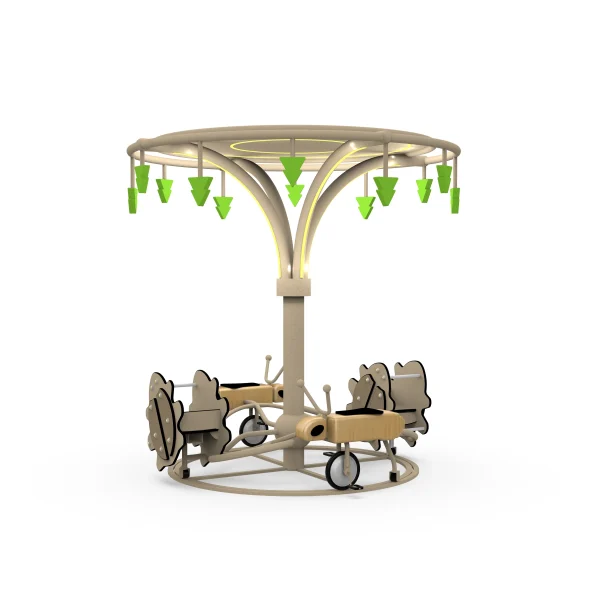
Multi-person seesaws and spinners carry dynamic loads. Inspect bearings, pivot points, wear plates, and all bolted connections. If the equipment has a standing platform or climbing opening, the inspection should verify that the opening size is correct for the intended age group.
For commercial swings, check chain or rope connectors, seat hardware, and frame joints. A failure in a swing connector is different from a paint scratch. It should be treated as a critical defect.
If you are managing high-traffic public spaces, repeated dynamic loading matters more than static appearance. <Hurricane Spinner Load Testing Unpacking Playground Safety Standards> covers how continuous rotation testing exposes fatigue issues.
Running the Inspection Without Slowing Your Shipment
Third-party testing works best when it is scheduled into the production plan rather than added at the end. A late inspection creates pressure to accept marginal results because the vessel cut-off is approaching.
Plan three control points:
Pre-production review
Before mass production, the lab or inspector can verify materials, components, and the first article. This catches drawing misunderstandings while correction is still cheap.
During-production inspection
For large orders, request an in-process visit after roughly 30 to 50 percent of the product is assembled. This allows the factory to correct systemic issues before the entire batch is finished.
Pre-shipment inspection
After production and packing, the final inspection should verify quantity, random sample quality, labeling, and packing. This is the report you use before releasing payment.
If a pre-shipment inspection fails on a critical point, do not ship anyway. Request corrective action and a re-inspection. The cost of re-inspection is small compared with the cost of returning goods or defending a safety complaint after installation.
If you want to reduce the number of surprises found at pre-shipment, an earlier factory visit can help. <Factory Visit Checklist Outdoor Playground Equipment Quality> covers a step-by-step inspection framework before production begins.
Plan Your Pre-Shipment Testing Early
A clear testing protocol protects your budget, your installation schedule, and your reputation. If you are preparing a playground equipment order and need help matching your product list to the right standard and inspection scope, contact our team before production starts.
Send your product list, destination market, and any buyer-specific testing requirements to [email protected] or WhatsApp +8613915684545. We can prepare a pre-shipment inspection checklist based on your order and help you coordinate with the third-party testing company.
FAQ
Is SGS or TUV Rheinland mandatory for playground equipment exported from China?
No single testing company is mandatory for all playground equipment exports. What is usually mandatory is compliance with the safety standard required in the destination market, such as EN 1176 in Europe. Some buyers, municipalities, or certification schemes may require testing by an accredited third-party laboratory, and they often name accepted providers such as SGS or TUV Rheinland. Confirm the exact requirement before production starts.
Does third-party testing replace EN 1176 certification?
Not automatically. Third-party testing verifies whether the inspected sample meets the agreed requirements, but certification may involve additional factory audits, documentation review, and ongoing conformity obligations. For European projects, buyers may still need a certificate, declaration of conformity, or technical file. Use the test report as evidence, but do not assume it replaces all certification documents.
What happens if a sample fails the pre-shipment inspection?
If the failure is minor and cosmetic, the buyer may accept the shipment with a documented concession. If the failure is critical, such as a structural crack, incorrect guardrail height, or an entrapment opening outside the required range, the shipment should be corrected and re-inspected before release. Clear pass/fail criteria make this decision faster and less emotional.
How much does third-party testing cost and who arranges it?
Cost depends on factory location, order size, number of samples, test complexity, and whether laboratory testing or only visual inspection is required. In many export transactions, the buyer arranges and pays for independent inspection to keep the reviewer impartial. The factory or trading partner may coordinate the schedule, but the final report should go directly to the buyer.
Can I use the same test report for customs or my local safety authority?
Sometimes yes, but not always. Some authorities accept third-party inspection reports as part of the import file. Others require specific certification marks, local laboratory recognition, or additional documentation. Before relying on one report, check with your customs broker, insurer, or the authority that will approve the playground.
References
- European Committee for Standardization. EN 1176-1:2017, Playground equipment and surfacing — Part 1: General safety requirements and test methods. CEN. https://standards.cencenelec.eu/dyn/www/f?p=205:110:0::::FSP_PROJECT:34104
- SGS Group. Pre-Shipment Inspection Services. SGS. https://www.sgs.com/en/services/pre-shipment-inspection
- TUV Rheinland. Product Testing and Certification. TUV Rheinland. https://www.tuv.com/world/en/product-testing-and-certification.html
- International Organization for Standardization. ISO/IEC 17025:2017, General requirements for the competence of testing and calibration laboratories. ISO. https://www.iso.org/ISO-IEC-17025-testing-and-calibration-laboratories.html
- European Union. Regulation (EC) No 1907/2006 concerning the Registration, Evaluation, Authorisation and Restriction of Chemicals (REACH). EUR-Lex. https://eur-lex.europa.eu/legal-content/EN/TXT/?uri=CELEX%3A32006R1907
- International Organization for Standardization. ISO 2859-1:1999, Sampling procedures for inspection by attributes. ISO. https://www.iso.org/standard/1141.html
If you’re interested, check out these related articles:
Outdoor Childrens Slides Age Grading 2-5 Versus 5-12
Hotel Kids Club Playground Equipment Configuration Guide