After a disaster, play is not a pause in recovery; it is one of the ways children recover. Physical play restores ordinary rhythms, gives children a manageable sense of control, and creates a setting where adults can observe distress and respond early. The UN Convention on the Rights of the Child recognizes play as a right, including in emergency settings [1]. Mental health and psychosocial support guidelines similarly place safe, structured play spaces among practical first-line responses [2].
Why Play Is a Core Recovery Tool
When schools, homes, and public spaces are damaged, children lose more than buildings. They lose routines, peer contact, and safe places to move. A playground can be rebuilt or deployed quickly, but its value is not only physical. Climbing, swinging, rocking, and spinning provide repetitive motion that helps regulate stress. Group play restores cooperation and social trust. In psychosocial support frameworks, child-friendly spaces with play equipment are used to reduce acute distress and support caregivers [2].
What matters in emergency reconstruction is not scale at first. A small, safe, quickly installed play area is often more useful than a large project that takes months. The equipment should be low-risk, easy to inspect, and sturdy enough for heavy daily use.
Site and Equipment Priorities in Post-Disaster Reconstruction
Rapid-deploy playground planning begins with the site, not the catalogue. The first question is whether the ground is stable enough for anchoring. Softened soil, debris, underground utilities, and uneven drainage must be checked before installation. The second question is who will use the space. In post-disaster settings, mixed age groups often share a single area, so equipment should include low fall heights and clearly separated movement zones.
Playground equipment for this context should meet the same structural safety standards as permanent equipment. EN 1176 sets general safety and test requirements for playground equipment and surfacing [3]. ASTM F1487 provides performance requirements for public playground equipment in the United States, including entrapment, head and neck openings, and protective surfacing [4]. Buyers should request documentation that rapid-deploy products have been tested to the applicable standard for the destination country.
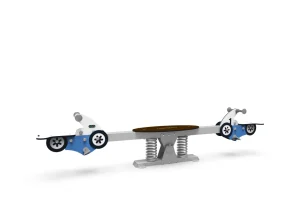
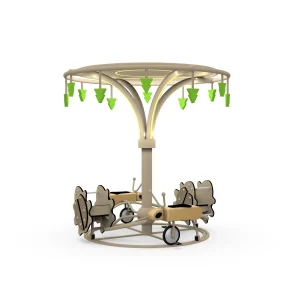
Spacing also changes in emergency settings. A rapid deployment may use compact site footprints while still preserving safety zones. Modular pieces such as spring riders, spinners, and multi-person seesaws can be arranged as a cluster without requiring the full footprint of a large climbing structure.
Reconstruction projects often begin with a crowded, irregular site rather than a clean master plan. <Free 3D Design for Community Park Playground Equipment Solutions> covers how layout planning can balance safety zones, drainage, and site access in real-world constraints.
Rapid-Deploy Equipment Features That Reduce Installation Time
Speed matters, but speed must not sacrifice safety. Rapid-deploy equipment is defined less by a special category and more by design decisions: compact packaging, pre-assembled modules, clear anchoring points, and installation processes that do not require heavy machinery or large specialized crews.
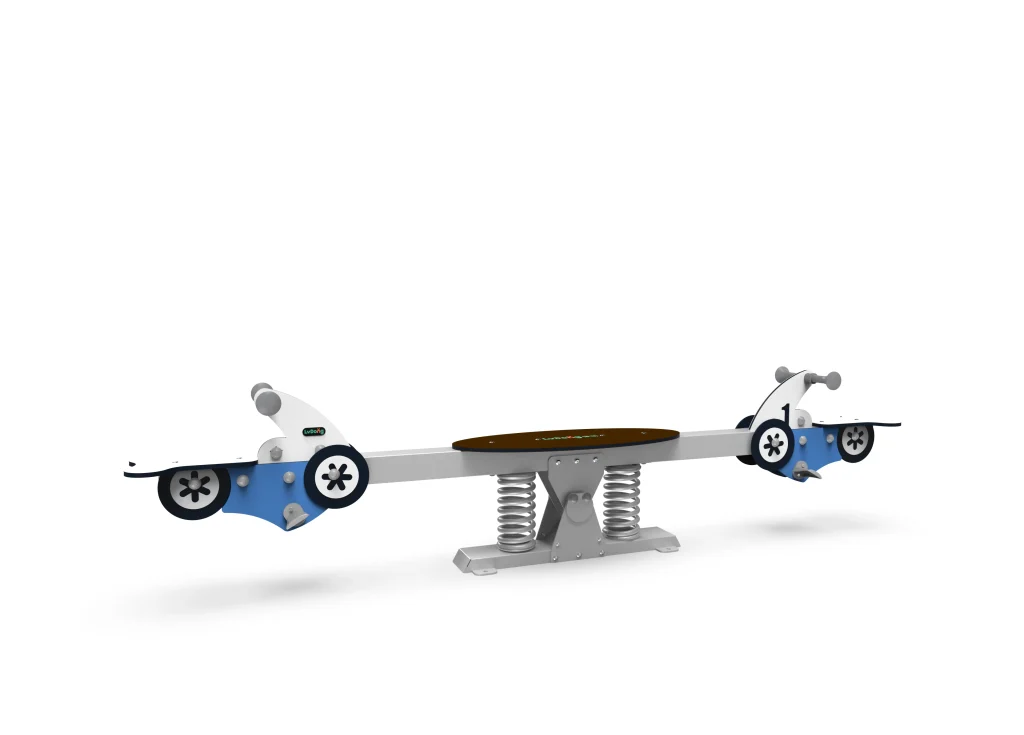
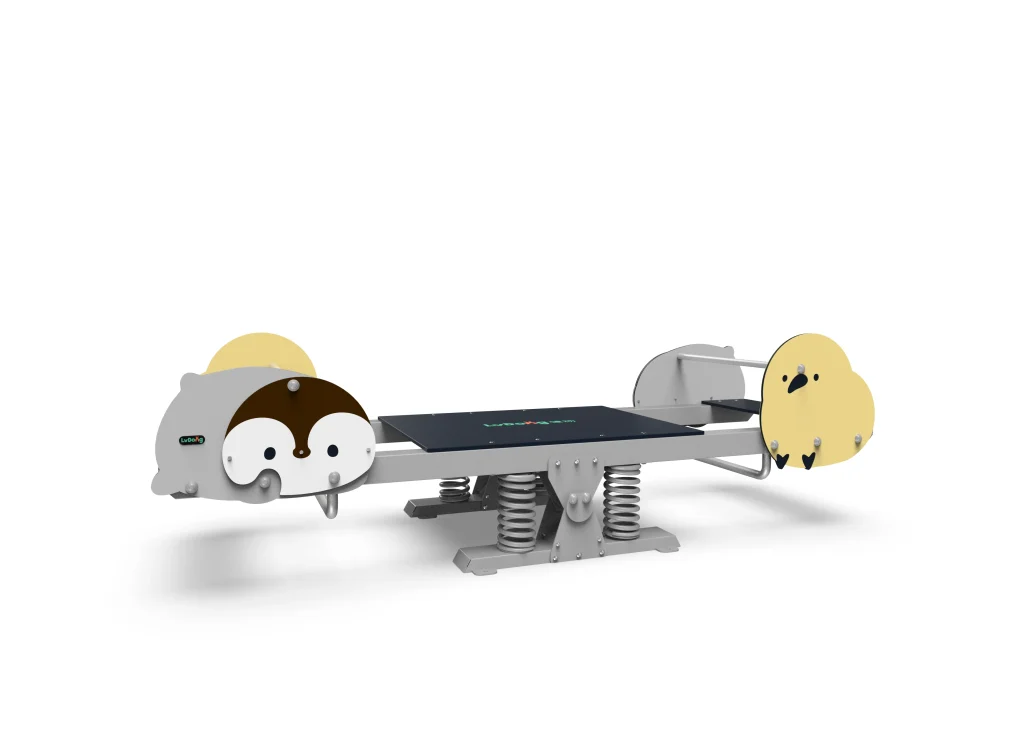
In manufacturer product data, single-user spring riders can often be installed by one person in approximately 0.5 person-hours, with a maximum fall height of 50 cm. Multi-player spinners can be installed in about 2 person-hours depending on the model, with capacity for 6 to 10 children. Multi-person seesaws, with a fall height around 60 cm, provide group play while maintaining a stable base. These figures come from product-side installation planning rather than a universal standard, so site preparation is the larger variable.
For disaster recovery, three design choices are especially important:
- Anchor compatibility. Equipment should have base plates or ground anchors that work with concrete pads, compacted soil, or engineered temporary foundations.
- Corrosion-resistant hardware. Coastal and flood-exposed sites require stainless or heavily galvanized fasteners.
- Simple inspection points. Pivot bearings, spring bases, and fasteners should be visible so local staff can check them daily without specialized tools.
Trauma-Sensitive Equipment Selection
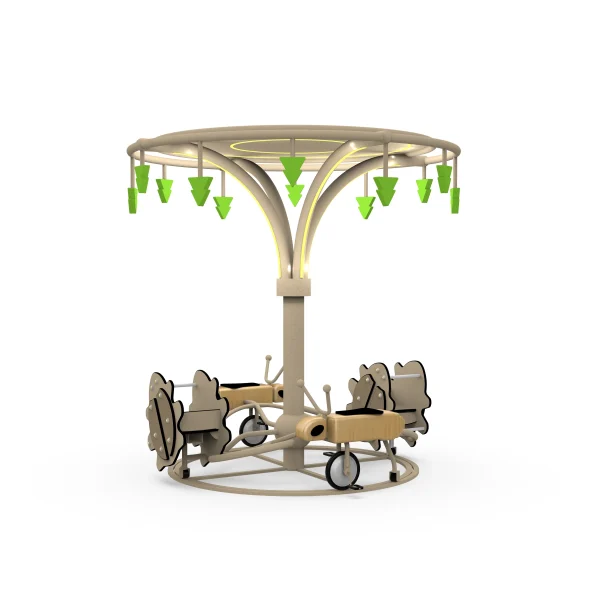
Not all play is equal in recovery. Some children need quiet, slow, repetitive motion before they can tolerate high-energy group play. Spring riders and single-person spinners offer seated, rhythmic movement that a child can control. Multi-person seesaws and spinners then reintroduce cooperation and turn-taking. Activity panels can support focused, calming interaction for children who are not ready for large motor play [2].
Low-sensory and high-sensory options should be placed close enough to allow choice but separated enough to prevent collision. Mixed age groups are common in emergencies, so equipment should follow age-appropriate selection principles without creating a segregated layout. For example, a spring rider for ages 2 and up can sit near a multi-person seesaw for ages 3 and up.
Developmental fit matters more intensely after displacement or loss. <Age Appropriate Playground Sets for Child Development> covers selection principles for creating mixed-age play areas without unnecessary risk.
Start With a Site-Specific Rapid-Deploy Plan
If your organization is restoring play space after an emergency, send the site dimensions, target age range, and required delivery window to the design team at [email protected] or via WhatsApp at +86 13915684545. A site-specific plan can identify the smallest set of equipment that restores meaningful play without overloading limited local resources.
Inspection and Maintenance After Rapid Deployment
Emergency sites experience heavier use, more weather exposure, and less supervision than permanent parks. Rapid-deploy installations need a short but serious inspection routine from day one. CPSC guidance recommends regular checks of hardware, anchoring, surfacing, and visible wear in public playgrounds [5]. In post-disaster settings, these checks should also include debris accumulation, soil erosion around footings, and damage from temporary vehicle movement.
The most useful inspection is visual and physical: shake handrails, check bolt movement, look for cracking in springs and seating, and confirm that fall-zone surfacing is still in place [5]. When the equipment has low maximum fall heights, such as 34–77 cm across different spinner models, the surfacing and anchoring requirements are more forgiving, but they are not optional.
Emergency installations still need a repeatable field check. <Playground Equipment Safety Your Essential Self Inspection Checklist> covers a practical inspection routine that can be adapted for rapid-deploy sites.
Planning for Long-Term Community Recovery
A rapid-deploy playground is often the first version of a longer-term community space. Modular equipment can remain useful after the first recovery phase. The same spinners, seesaws, and spring riders can be repositioned, expanded, or integrated into a permanent park design later. This prevents the waste that comes when emergency investments are discarded after a few months.
The planning approach should treat the first installation as an asset, not a placeholder. Choose materials and anchoring that can serve both temporary and permanent phases. Document installation details so that future renovations can reuse the same foundation points where practical. A phased plan also helps local governments and aid organizations justify the investment beyond the emergency window [1][2].
Plan Your Rapid-Deploy Playground
Post-disaster play infrastructure works best when it is specified the same way as permanent infrastructure: clear site data, realistic delivery dates, and standards documentation.
A practical inquiry list for rapid-deploy playground equipment includes:
- Site address, soil condition, and available installation crew
- Target age range and expected number of children per day
- Required delivery date and port or border details
- Applicable safety standard for the destination market
- Surfacing type already on site or planned
- Whether the equipment must later be moved or integrated into a permanent park
The LvDong design and production team can provide product data, installation guidance, and standards documentation for each item. Contact [email protected] or WhatsApp +86 13915684545 with the list above to start the planning process.
Frequently Asked Questions
How fast can post-disaster playground equipment be installed?
Single-user spring riders and compact spinners can often be installed by one or two people in less than one full working day after the foundation is ready. The main time variable is site preparation: soil compaction, anchoring, and surfacing usually take longer than equipment assembly.
What safety standards should rapid-deploy playgrounds meet?
Rapid-deploy equipment should meet the same destination-market standards as permanent playground equipment. EN 1176 [3] and ASTM F1487 [4] are the most commonly requested references. Buyers should confirm the tested standard for each item before shipment.
Which equipment is best for children after a disaster?
Rhythmic, controlled play is often the best starting point. Spring riders, single-person spinners, and low-height seesaws provide movement that children can regulate. Activity panels can support quieter engagement, while multi-person equipment gradually restores social play [2].
Can rapid-deploy equipment be moved later?
Yes, if the equipment is modular and the foundation points are documented. Anchor-based installation is easier to relocate than heavy embedded concrete, but the footing must still be sufficient for the fall height and expected loads.
How do we inspect temporary playgrounds?
Use the same daily inspection habits as permanent playgrounds: check anchors, fasteners, springs, bearings, and surfacing, and remove debris or damaged components from service until repair [5]. Emergency sites benefit from a written checklist carried by local staff.
References
[1] United Nations. Convention on the Rights of the Child, Article 31. 1989.
[2] Inter-Agency Standing Committee (IASC). Guidelines on Mental Health and Psychosocial Support in Emergency Settings. 2007.
[3] European Committee for Standardization (CEN). EN 1176-1:2017, Playground Equipment and Surfacing — Part 1: General Safety Requirements and Test Methods.
[4] ASTM International. ASTM F1487-21, Standard Consumer Safety Performance Specification for Playground Equipment for Public Use.
[5] U.S. Consumer Product Safety Commission. Public Playground Safety Handbook.
If you’re interested, check out these related articles:
Essential Checklist for Playground Equipment Safety Test Reports
Annual Maintenance Calendar for Outdoor Play Equipment A Guide
To discuss equipment needs for a reconstruction site, contact the LvDong team with your project requirements.