Visitor centers in national parks occupy a narrow line between welcoming families and protecting the ecosystems that make these places worth visiting. Play equipment in these settings must do more than meet safety standards; it must respect root zones, hydrology, viewsheds, and the long-term ecological value of the protected landscape. For park managers, architects, and procurement teams, low-impact playground equipment is not a design trend. It is a practical way to offer children a place for movement and discovery without leaving a heavy construction footprint.
What Low-Impact Means in a Protected Ecosystem
Low-impact play design begins with a clear objective: add value for young visitors while avoiding permanent change to native soils, vegetation, water movement, and landscape character. The U.S. National Park Service frames natural and cultural resource protection as a core management responsibility [1]. In practice, that means a play area near a visitor center should be planned more like a landscape intervention than a conventional municipal playground.
Low-impact equipment configurations generally share several characteristics:
- Minimal excavation and foundation depth
- Unpowered movement that removes the need for electrical trenching
- Compact footprints with low visual mass
- Durable materials that reduce repainting, replacement, and maintenance trips
- Earth-tone or landscape-compatible colors that do not compete with surrounding scenery
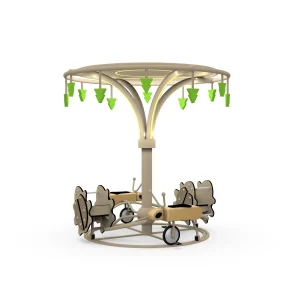
These characteristics do not reduce play value. A well-placed spring rider, small spinner, or ground-level activity panel can support balance, sensory exploration, and social play while keeping the site’s ecological relationships intact.
Foundation Strategies That Keep Roots and Soils Intact
The most damaging part of a playground installation in a protected ecosystem is often the foundation work. Conventional concrete piers, large pad footings, and deep trenching can sever root systems, alter subsurface drainage, and create hard barriers that persist long after the play area is removed. For visitor center settings, the preferred approach is to use surface-mounted frames with helical piles, shallow ballast, or engineered ground frames that distribute loads without deep excavation [1].
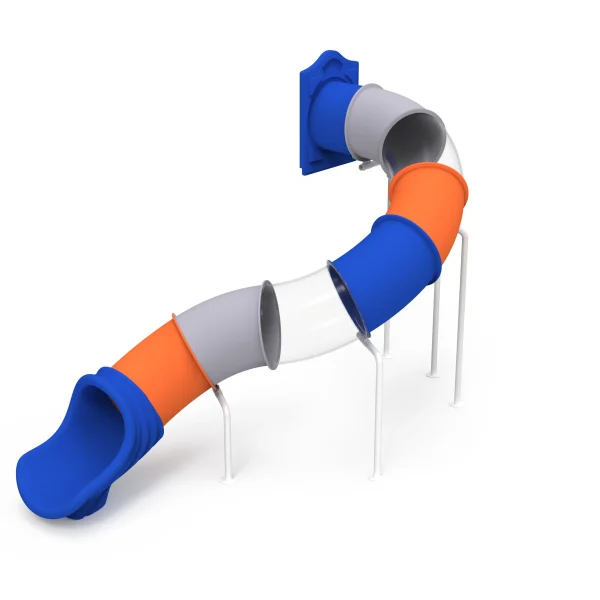
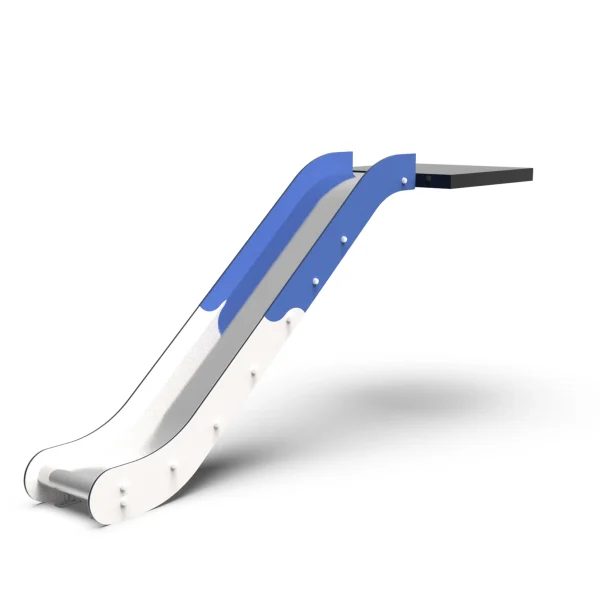
The same restraint applies to drainage. Rather than regrading a site or installing extensive stormwater infrastructure, designers should work with the existing slope and preserve a permeable surface where possible. A slide exit, for example, can be integrated into a shallow runout zone with a geotextile separation layer and impact-attenuating fill. This keeps water moving through the soil instead of collecting around footings.
Low-disturbance groundwork also depends on slide runout and drainage. <Playset Ground Leveling and Drainage Solutions for Outdoor Slides> covers slope, buffer zones, and drainage methods suitable for sensitive sites.
Materials and Finishes for Sensitive Landscapes
Material selection has both environmental and operational consequences. Hot-dip galvanized steel and marine-grade stainless steel tend to offer longer service life in humid, high-UV, or salt-adjacent environments, which means fewer coating reapplications and less risk of metal particles entering the soil. Powder-coated frames can be acceptable when the coating system is designed for outdoor exposure and includes proper pretreatment, but color fading and abrasion should be evaluated before installation.
Timber elements, if used, should come with clear chain-of-custody documentation or recognized forest certification. In protected landscapes, specifying recycled-content components or recyclable steel can support broader sustainability goals without making unverified environmental claims. The key is to choose materials that will not require frequent chemical cleaning, aggressive stripping, or early replacement.
For panel material comparisons in humid or high-UV protected settings. <Weatherproof Play Panels Material Durability Comparison> covers coating, substrate, and maintenance trade-offs.
Equipment Choices That Preserve the Visitor Experience
Visitor center play areas usually serve a different pattern than municipal parks. Children arrive for short breaks, often between interpretive programs or during a family stop. Compact, low-height equipment tends to fit this rhythm better than large multi-deck structures.
Suitable low-impact options include:
- Single-user spring riders with low fall height and small ground contact area
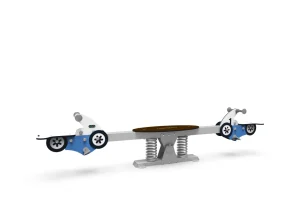
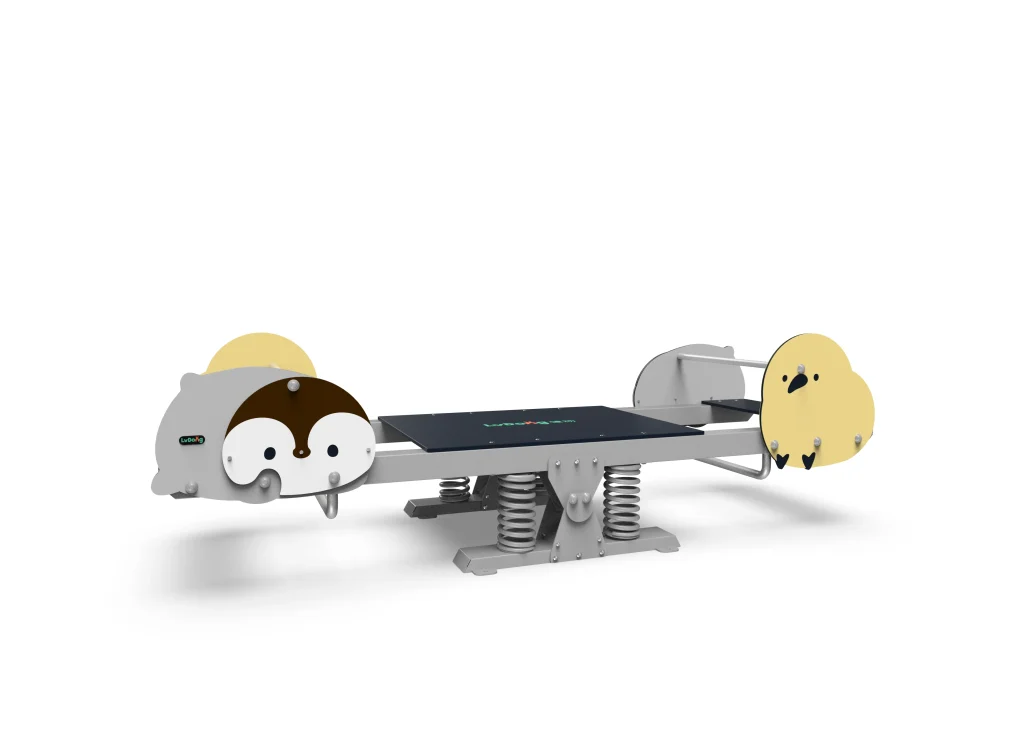
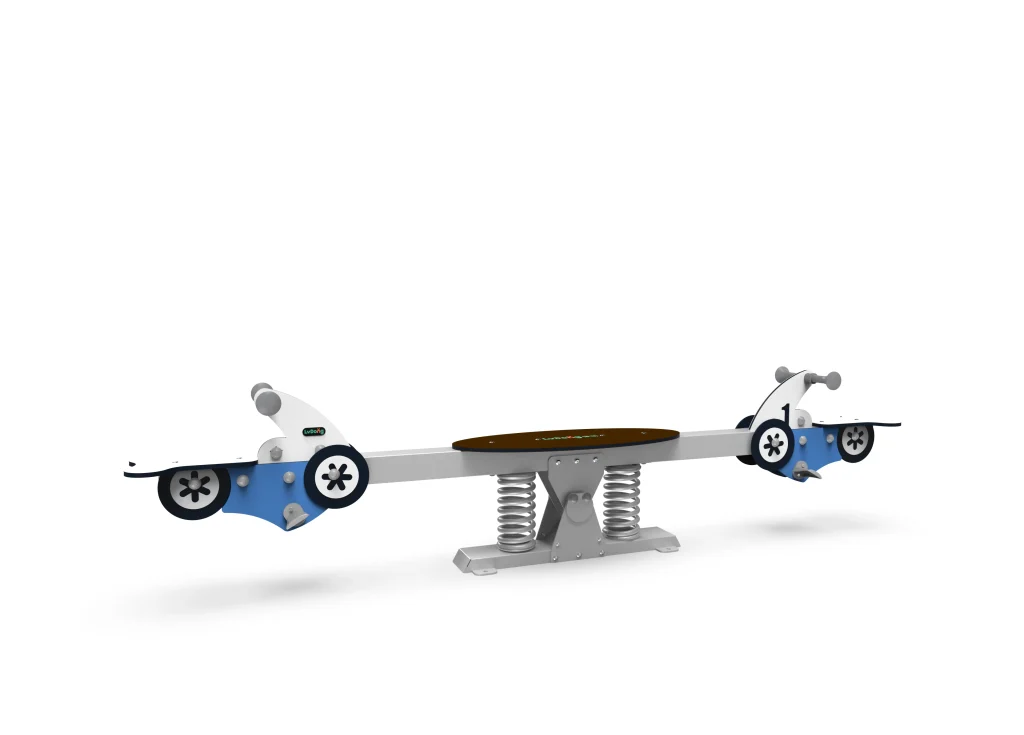
- Multi-person seesaws with controlled motion and predictable load paths
- Low-profile spinning equipment that supports group play without a large footprint
- Ground-level play panels that engage children at accessible heights
- Short runout slides integrated into the existing grade
Lower maximum fall heights can reduce the required depth and extent of impact-attenuating surfacing, which in turn reduces excavation, fill, and long-term surface replacement. At the same time, the equipment should remain visually recessive. A muted green or earth-tone finish often works better near a national park visitor center than bright primary colors.
Planning a visitor-center play area under ecological review? Send a site sketch, root-zone constraints, and estimated daily visitor numbers to [email protected] or ask for a low-impact equipment checklist. Direct inquiries help identify compact, non-powered configurations and surfacing options that fit the review timeline.
Safety, Accessibility, and Compliance in Natural Settings
A protected ecosystem does not bend safety requirements. In the United States, public play equipment should be evaluated against ASTM F1487 for equipment safety [2]. In European or EN-aligned jurisdictions, EN 1176-1 provides the primary performance framework [3]. Impact-attenuating surfacing within the use zone must meet the relevant test specification such as ASTM F1292 [4]. These standards remain applicable even when the surrounding landscape appears natural and the equipment is deliberately low-profile.
Accessibility is equally non-negotiable. On federal or federally funded projects, the accessible route and ground-level play components should be planned around the U.S. Access Board standards [5]. That may include firm, stable, and slip-resistant surfaces, appropriate clear floor space, and reach ranges that allow children and caregivers with disabilities to use the play area. A low-impact design can satisfy these requirements by using compact equipment at accessible heights and by providing a stabilized accessible path that does not require extensive grading.
Stewardship, Inspection, and Low-Impact Maintenance
Low-impact installations should remain low impact after installation. A preventive maintenance program that emphasizes manual inspection and seasonal adjustment reduces the need for heavy equipment, repeated vehicle trips, and chemical cleaners. Cleaning should use non-toxic products and should avoid pressure washing near watercourses or sensitive vegetation. Biodegradable lubricants can help protect moving parts without introducing harmful residues.
An environmental management system aligned with ISO 14001 principles can make these practices part of routine park operations [6]. Inspection records should note fastener tightness, surfacing displacement, corrosion, and any signs of erosion around footings. When a small issue is corrected early, the repair tends to be lighter, cheaper, and less disruptive to the landscape.
For a field-tested inspection routine. <Playground Equipment Safety Your Essential Self Inspection Checklist> covers the checks that keep low-impact installations compliant and safe.
For site-specific inspection calendars and material data sheets, contact [email protected] with the park’s climate zone, seasonal visitation pattern, and existing maintenance resources.
Design a Low-Impact Play Area for Your Protected Site
The most successful low-impact playgrounds are not selected from a catalog alone. They begin with the park’s ecological constraints and visitor flow. When you prepare a project inquiry, include the information that most affects foundation choice, material selection, and site disturbance:
- Site plan or aerial image with protected areas and access routes marked
- Tree protection zones or known root-sensitive areas
- Watercourse, wetland, and drainage constraints
- Accessibility route requirements
- Local temperature, UV, and humidity exposure
- Estimated daily child visitor count and age mix
- Any federal, state, or local environmental review requirements
Email [email protected] or message WhatsApp +8613915684545 for a project-specific low-impact equipment and surfacing review. A focused inquiry helps identify compact configurations, appropriate finishes, and installation methods that support both child development and ecological protection.
Frequently Asked Questions
Are unpowered playground structures acceptable inside national park visitor center areas?
Many park units prefer unpowered equipment because it avoids electrical infrastructure, reduces ongoing energy use, and keeps the play experience tied to physical activity. Final acceptability depends on the park’s planning documents, environmental review requirements, and resource-management objectives [1].
Can low-impact equipment still meet accessibility requirements?
Yes. The play area should be located on an accessible route, with ground-level play components and sufficient clear floor space. U.S. Access Board standards guide reach ranges, turning space, and transfer systems [5]. Low-impact surfacing can include stabilized accessible paths over a porous base.
What type of surfacing is least disruptive around protected trees?
In many cases, an organic engineered wood fiber system over a geotextile separation layer minimizes excavation and allows some water movement, but each root protection zone must be reviewed by a landscape architect or arborist. Impact attenuation must still comply with ASTM F1292 [4].
How can maintenance avoid chemical and mechanical disturbance?
Use non-toxic cleaners, perform manual inspections before scheduling power equipment, and keep maintenance vehicles outside the root zone. Routine checklists aligned with environmental procedures can reduce pressure washing and unnecessary parts replacement [6].
References
[1] U.S. National Park Service, Management Policies 2006, Washington, DC, USA: U.S. Department of the Interior, 2006.
[2] ASTM F1487-21, Standard Consumer Safety Performance Specification for Playground Equipment for Public Use, West Conshohocken, PA, USA: ASTM International, 2021.
[3] EN 1176-1:2017, Playground equipment and surfacing — Part 1: General safety requirements and test methods, Brussels, Belgium: CEN, 2017.
[4] ASTM F1292-18, Standard Specification for Impact Attenuation of Surfacing Materials Within the Use Zone of Playground Equipment, West Conshohocken, PA, USA: ASTM International, 2018.
[5] U.S. Access Board, Americans with Disabilities Act Accessibility Guidelines for Buildings and Facilities, Washington, DC, USA, 2010.
[6] ISO 14001:2015, Environmental management systems — Requirements with guidance for use, Geneva, Switzerland: ISO, 2015.
If you’re interested, check out these related articles:
Replacing Chains Bearings Springs Lifespan Guide Strategies
How Indoor Playground Equipment Manufacturers Customize Solutions
Playground Equipment Safety Your Essential Self Inspection Checklist