For playground equipment buyers serving Saudi Arabia, EN 1176 compliance is rarely the end of the conversation. The European standard provides a strong technical foundation for structural safety, entrapment protection, impact attenuation, and surfacing requirements, but the Saudi import system adds a national conformity layer that many first-time buyers underestimate. Understanding where EN 1176 ends and SASO and SABER requirements begin helps purchasers avoid clearance delays, rejected shipments, and equipment that clears documents but struggles in the local climate.
SASO and EN 1176: Where Saudi Compliance Goes Beyond Europe
SASO, the Saudi Standards, Metrology and Quality Organization, sets national technical requirements and enforces them through the Saudi Product Safety Programme, commonly known as SABER [1][2]. EN 1176 is a European standard series published by CEN that has become the most widely accepted technical reference for unpowered playground equipment in many international markets [1]. Saudi Arabia does not automatically accept a European conformity declaration as the final step; imported products must typically pass through a national platform that verifies documentation, product classification, and shipment details before customs clearance [2].
The practical meaning for buyers is straightforward. A manufacturer may hold EN 1176 test reports from an ISO/IEC 17025 accredited laboratory, but the Saudi importer still needs to complete SABER registration, confirm the correct HS code, submit the technical file, and obtain the required certificates for the shipment [2][6]. The mechanical safety knowledge in EN 1176 remains essential, but it operates inside a different administrative framework.
The Role of the Saudi Product Safety Programme
SABER links regulators, importers, manufacturers, and certification bodies in one electronic workflow [2]. In a typical playground equipment import, the applicant registers the product, selects the applicable technical regulation, submits test reports and technical documentation, and secures a Product Certificate of Conformity before the goods ship [2]. A separate Shipment Certificate is then issued per consignment after invoice and logistics details are verified [2].
Gulf Conformity Context
Playground equipment can also fall within harmonized Gulf Technical Regulations published by the GCC Standardization Organization, which references technical safety provisions consistent with the EN 1176 approach for children’s play structures [3]. Buyers should confirm with their certifier whether a Gulf Conformity Marking applies in addition to SASO handling, particularly when the same order will be distributed across multiple GCC member states [3].
The Documentation Chain Buyers Should Plan Before Ordering
Saudi compliance depends as much on paperwork discipline as on product testing. Before production ends, buyers should assemble a documentation package that includes current EN 1176 test reports, technical drawings, materials declarations, product photos, installation and maintenance guidance, and the correct customs classification [1][2]. Arabic labelling requirements and importer registration details should be confirmed with the certification body handling the file [2].
A clear sequence helps. First, validate the product category and its applicable EN 1176 parts. Second, confirm that the manufacturer’s test reports come from an accredited laboratory and remain current [6]. Third, register the product on SABER and obtain the product certificate. Fourth, request the shipment certificate once the consignment details are finalized [2]. Missing or outdated reports are among the most common reasons files stall at this stage, not the underlying product quality.
What EN 1176 Covers and What the Saudi Market Adds
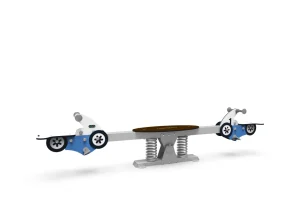
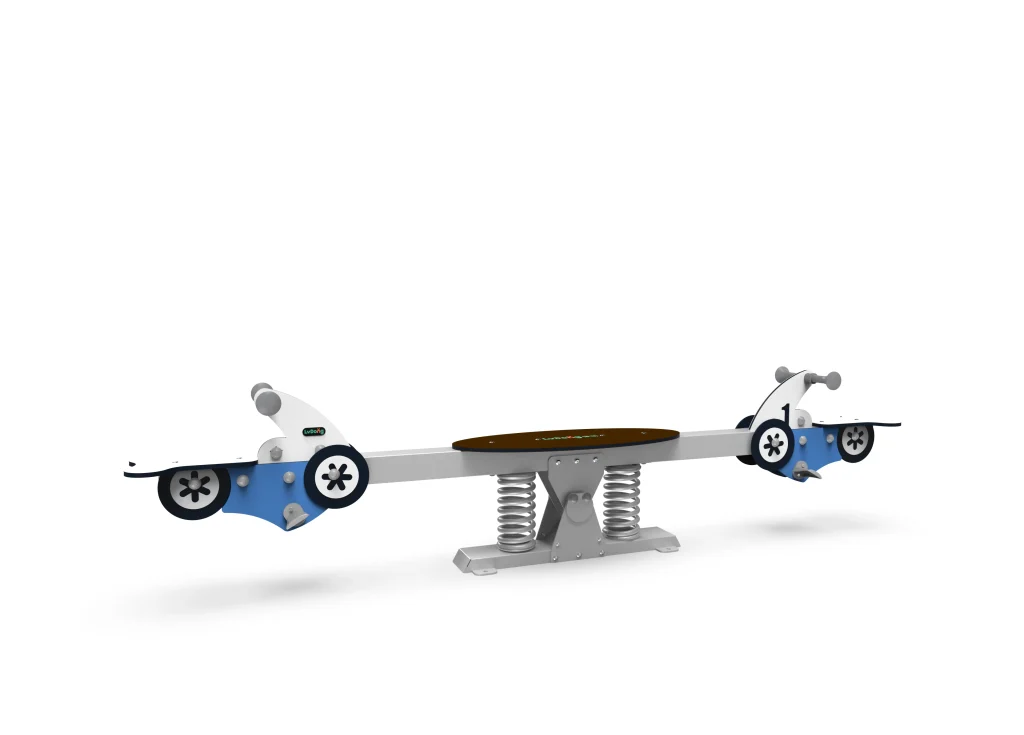
EN 1176 is best understood as a family of standards. Part 1 establishes general safety requirements and test methods covering clearances, entrapment openings, protrusions, structural integrity, and equipment-related surfacing expectations [1]. Subsequent parts address specific equipment categories, including slides, swings, carousels and spinners, and rocking equipment such as spring riders and seesaws [1]. A separate part covers installation and maintenance.
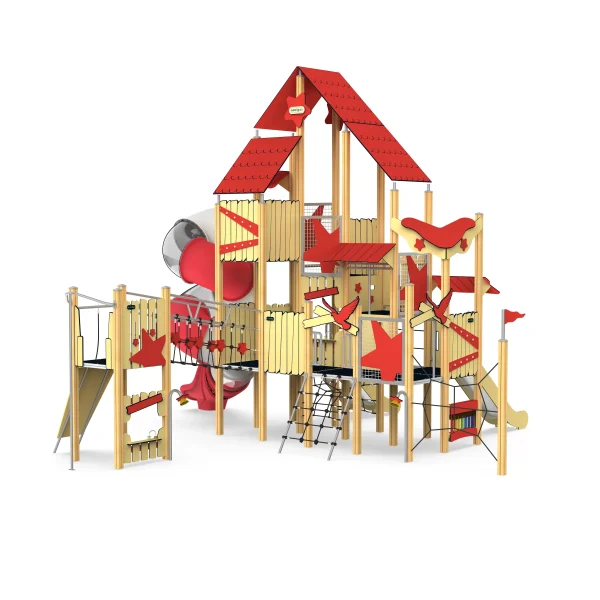
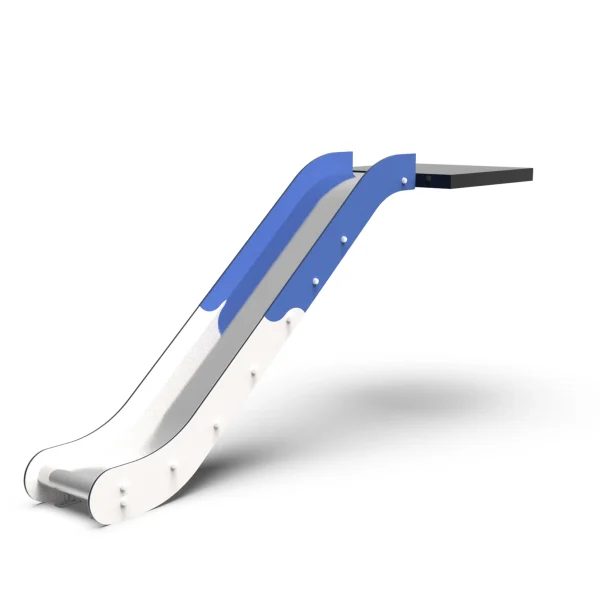
For residential and public projects, the same product discipline applies across categories. Playground Slide Manufacturer OEM products should reference the slide-specific part of EN 1176, while Playground Spring Rider Manufacturer OEM equipment falls under rocking-equipment requirements [1]. Spinners and multi-user rotating structures carry their own stability and fall-height considerations that testing must document clearly.
Electronic and Interactive Elements Under SASO
Interactive panels, sound modules, and lighting bring additional responsibilities. Electrically powered playground features may trigger SASO electrical safety and electromagnetic compatibility requirements beyond the mechanical scope of EN 1176 [4]. An IECEE certificate can strengthen the file for such components because it provides internationally recognized electrotechnical conformity evidence that certification bodies understand quickly [5].
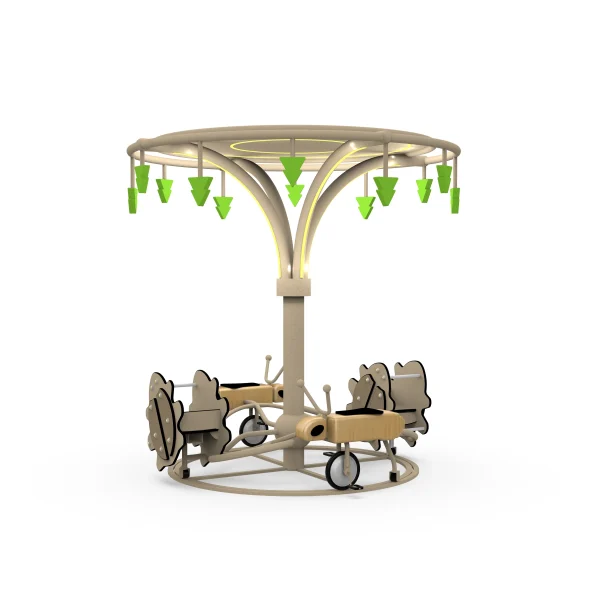
For Interactive Playground Equipment Manufacturer OEM suppliers, the value of separating mechanical compliance from electrical compliance becomes clear in the Saudi file. The mechanical structure must meet the relevant EN 1176 parts, while the powered module should carry its own electrical conformity evidence suitable for SASO review [1][4][5].
Climate-Driven Verification Saudi Buyers Commonly Request
Beyond registration, experienced Saudi buyers often request verification that reflects local operating conditions. High UV exposure, sand ingress, and elevated surface temperatures put different stress on materials than a temperate European playground. The following table separates the EN 1176 baseline from what the Saudi market commonly adds.
| Verification area | EN 1176 baseline | Saudi market add-on |
|---|---|---|
| Mechanical safety | Parts 1–7 structural and entrapment tests | SABER product and shipment certificates on top of any EN report |
| Technical documentation | Test reports and technical file | Arabic labelling, HS code mapping, importer registration |
| Outdoor exposure | General weathering suitability | UV and heat conditioning checks; surface temperature awareness |
| Interactive components | Mechanical safety under EN 1176 | SASO electrical and EMC review; IECEE certificate support |
| Surfacing | Impact attenuation expectation under Part 1 | Site-level surfacing verification and shade planning |
| Conformity review | Third-party laboratory report | SABER platform submission and certification body validation |
| Marking | EN 1176 marking clauses | Gulf Conformity Marking where applicable |
The table should not be read as a legal substitute for current regulation text. It is a planning lens: buy-side teams that treat EN 1176 as the technical floor and SASO as the market-entry layer tend to build stronger files and avoid last-minute certificate scrambling [2].
Practical Procurement and Factory Verification
When a Saudi project timeline depends on certification, the supplier conversation should start with document readiness rather than price. Ask whether the manufacturer can provide current EN 1176 test reports, whether those reports match the exact product configuration ordered, and whether previous exports have cleared SABER without corrective requests [1][2]. A supplier that treats certification as an afterthought will cost more in schedule risk than any initial price difference.
Saudi import planning works best when procurement and compliance move together. <International Playground Equipment Procurement A Step by Step Guide> covers the step-by-step process for planning overseas playground equipment procurement.
Certification is only one layer of supplier evaluation. <Why ISO Certification Elevates Commercial Playground Equipment Manufacturers> covers how quality-management system certification strengthens long-term manufacturer reliability.
When buyers can visit before production, document checks should extend to the physical facility. Welding consistency, surface treatment quality, component traceability, and packaging discipline all influence whether the tested sample and the shipped product remain the same design [1]. A factory visit also lets the buyer collect the photographs and material evidence that strengthen the SABER file.
Before committing to a shipment, on-site checks close gaps that documents alone cannot reveal. <Factory Visit Checklist Outdoor Playground Equipment Quality> covers the inspection points buyers should verify at a supplier’s production site.
Suzhou LvDong Amusement Equipment Co., Ltd. organizes SASO-oriented document packages for Saudi buyers the same way it builds EN 1176 compliant equipment: sequentially, with the mechanical file and the electrical file separated before submission. Buyers who need to map an existing project against Saudi requirements can send the equipment list, target HS codes, and current certificates to [email protected] or WhatsApp +8613915684545 for a document-readiness review.
End CTA
If you are preparing a Saudi playground order and need a supplier that treats EN 1176 as the baseline rather than the finish line, Suzhou LvDong Amusement Equipment Co., Ltd. can help you verify the certificate chain before production begins.
With a 10,000-square-meter intelligent production base and more than 1,500 completed projects across municipal parks, communities, cultural tourism sites, and educational institutions, LvDong coordinates design, production, installation, and after-sales support under one quality management system. For Saudi buyers, that continuity means fewer gaps between the tested product and the delivered equipment.
To start the SASO readiness check, contact our team:
- Email: [email protected]
- WhatsApp: +8613915684545
- Recommended: send your equipment list, current EN 1176 reports, project location, and target installation date
Our team will review which equipment categories require electrical conformity support, confirm the applicable EN 1176 parts for each structure, and outline the documentation sequence your Saudi importer should expect.
Frequently Asked Questions
Is EN 1176 alone enough to import playground equipment into Saudi Arabia?
In most cases, no. EN 1176 supports the technical safety evidence, but Saudi Arabia usually requires SABER registration, a Product Certificate of Conformity, and a Shipment Certificate per consignment [1][2]. Buyers should confirm the exact route with their certification body before shipping.
What is the difference between a PCoC and an SCoC?
A Product Certificate of Conformity, or PCoC, covers the product model after documentation and test report review [2]. A Shipment Certificate, or SCoC, is issued for a specific consignment after commercial invoice and logistics information are validated on SABER [2]. Both are typically required in sequence.
Do interactive playground components need separate SASO electrical approval?
Interactive or powered modules may fall under SASO electrical safety and electromagnetic compatibility requirements beyond the mechanical scope of EN 1176 [4]. An IECEE certificate can simplify review of these components [5].
How can buyers check that test reports are accepted for SABER?
Confirm that the laboratory is accredited to ISO/IEC 17025 and that the report is current and matches the exact product configuration [6]. The certification body handling the SABER file can pre-review reports before shipment.
Does SASO require Arabic product marking?
Arabic labelling and importer information requirements commonly apply to imported consumer-relevant products [2]. Buyers should verify current marking requirements with their certification partner because details can vary by technical regulation and product category.
How far in advance should buyers plan certification for a Saudi project?
Start before production approval, not after. Document review, lab report confirmation, SABER registration, and certificate issuance can add several weeks to a normal procurement schedule [2]. Tying certification milestones to the production plan reduces the risk of finished goods waiting on paperwork.
References
[1] EN 1176-1:2017, “Playground equipment and surfacing – Part 1: General safety requirements and test methods,” European Committee for Standardization (CEN), Brussels, 2017.
[2] Saudi Standards, Metrology and Quality Organization (SASO), “Saudi Product Safety Programme (SABER) conformity assessment platform,” Riyadh. [Online]. Available: https://saber.sa
[3] GCC Standardization Organization (GSO), “Gulf Technical Regulations for children’s playground equipment and related conformity marking procedures,” GSO, Riyadh.
[4] Saudi Standards, Metrology and Quality Organization (SASO), “Technical Regulations for Electrical and Electronic Equipment and Electromagnetic Compatibility requirements,” Riyadh.
[5] IECEE, “IEC System of Conformity Assessment Schemes for Electrotechnical Equipment and Components (IECEE CB Scheme),” Geneva.
[6] ISO/IEC 17025:2017, “General requirements for the competence of testing and calibration laboratories,” International Organization for Standardization, Geneva, 2017.
If you’re interested, check out these related articles:
Child Development Benefits Playground Spinning Toy Impact
Kindergarten Outdoor Play Equipment Strategic Upgrade Priorities
Multi Function Playhouse with Slide and Swing Commercial Solutions