When playground equipment leaves a factory, the paperwork rarely tells the whole story. Certifications matter, but what actually keeps a spinning wheel safe after three years of daily use? That question sits at the center of ISO certification for commercial playground equipment manufacturers. The standards themselves are straightforward enough. The real challenge is building systems that deliver consistent results across thousands of units, each destined for different climates, usage patterns, and maintenance realities.
Why ISO Certification Shapes Market Position and Client Decisions
ISO certification for commercial playground equipment, particularly ISO 9001 for Quality Management, creates measurable advantages that extend beyond the certificate itself. The standard forces manufacturers to document every process, track every deviation, and prove that quality controls actually function. For buyers evaluating suppliers, this documentation provides something concrete to assess beyond sales claims.
The practical effects show up in production data. Manufacturers operating under ISO 9001 typically report lower defect rates because the system requires root cause analysis when problems occur. A rejected batch of swing hangers cannot simply be replaced and forgotten. The system demands investigation, documentation, and corrective action that prevents recurrence.
Suzhou LvDong’s standardized quality management system reflects these ISO 9001 principles throughout operations. The approach treats quality as a process outcome rather than an inspection checkpoint, which changes how teams think about their work at every stage from initial design through final shipping.
| ISO 9001 Benefit | Description | Impact for Playground Manufacturers |
|---|---|---|
| Enhanced Reputation | Demonstrates commitment to quality and customer satisfaction. | Attracts more clients seeking reliable, safe equipment. |
| Increased Efficiency | Streamlines processes, reducing waste and rework. | Lowers production costs and improves delivery times. |
| Customer Satisfaction | Ensures consistent product quality, meeting or exceeding expectations. | Fosters repeat business and positive referrals. |
| Market Access | Often a prerequisite for tenders and international markets. | Expands business opportunities globally. |
| Continuous Improvement | Establishes a framework for ongoing process and product enhancement. | Leads to innovative and safer playground designs. |
Building Brand Trust Through Verified Quality Systems
A standardized quality system changes how manufacturers relate to their customers. When a buyer knows that every Multi Player Playground Spinning Wheel comes from a documented process with traceable materials and verified inspections, the conversation shifts from persuasion to partnership.
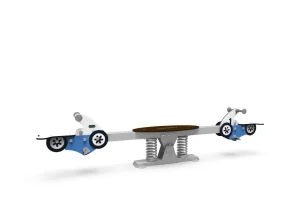
The consistency matters most over time. A Multi Person Playground Seesaw installed today should perform identically to one installed two years ago, assuming the same model and specifications. ISO 9001 makes this consistency auditable. Buyers can request production records, inspection results, and material certifications knowing the documentation exists and follows standardized formats.
Suzhou LvDong’s quality control processes apply this principle across the entire product range. The system treats a simple spring rider with the same procedural rigor as a complex climbing structure because inconsistency in any product category undermines the entire quality promise.
Safety Standards That Determine Equipment Longevity
Safety and durability in commercial playground equipment depend on overlapping standards that address different aspects of performance. ISO certification provides the management framework, while standards like EN 1176 and ASTM F1487 specify the technical requirements for design, materials, and testing.
EN 1176, the European Safety Standard, defines impact attenuation requirements, entrapment hazards, and structural load specifications. ASTM F1487 covers similar ground for North American markets with some variations in testing methodology and acceptance criteria. Both standards require physical testing, not just design calculations.
The Spring Playground Equipment in Suzhou LvDong’s catalog complies with EN 1176 and GB/T 34272-2017, the Chinese national standard. This dual compliance matters because different standards sometimes conflict in their specific requirements. Meeting multiple standards simultaneously requires careful design choices that satisfy the most restrictive interpretation of each requirement.
A decade of manufacturing experience reveals patterns that standards alone cannot capture. Certain weld configurations that pass initial testing may develop fatigue cracks under specific loading patterns. Certain paint systems that meet corrosion specifications in laboratory conditions may fail prematurely in coastal environments. These insights accumulate over time and inform design decisions that go beyond minimum compliance.
The Mechanics of Certification-Driven Safety Improvements
ISO certification for commercial playground equipment enhances safety through systematic processes rather than individual heroics. The system requires risk assessment at design initiation, not as an afterthought before production. Design teams must identify potential hazards, evaluate their severity and likelihood, and document the controls that address each risk.
Material traceability ensures that a Single Player Playground Spinner contains exactly the components specified in the design. If a bearing fails prematurely, the traceability system allows investigation of the entire batch from that supplier. This capability transforms quality problems from mysteries into solvable engineering challenges.
Continuous improvement processes create feedback loops between field performance and design decisions. When maintenance reports indicate unexpected wear patterns, the information flows back to engineering teams who can evaluate whether design modifications are warranted. This ongoing refinement distinguishes manufacturers who treat certification as a living system from those who view it as a one-time achievement.
!Commercial teeter totter

## Production Efficiency Through Integrated Management Systems
ISO management systems extend beyond quality into environmental and occupational health domains. ISO 14001 addresses environmental management, while OHSAS 18001 covers workplace safety. These standards share a common structure that allows integrated implementation, reducing administrative burden while improving overall operational performance.
ISO 14001 implementation for playground equipment manufacturers typically focuses on material efficiency, waste reduction, and energy consumption. The standard requires measurement and target-setting, which creates accountability for environmental performance. A manufacturer tracking powder coating overspray, for example, has both environmental and economic incentives to optimize application parameters.
OHSAS 18001 protects workers while simultaneously improving productivity. Safer workplaces experience fewer interruptions from injuries, lower insurance costs, and better employee retention. The systematic approach to hazard identification often reveals process improvements that benefit both safety and efficiency.
Suzhou LvDong’s production facility integrates these management systems across its full-industry-chain operations. The approach recognizes that quality, environmental, and safety objectives frequently align. A cleaner production process typically produces more consistent results. A safer workplace typically operates more efficiently.
International Market Access Through Recognized Standards
ISO certification for commercial playground equipment functions as a common language in international trade. When a buyer in Germany evaluates a manufacturer in China, ISO certification provides a shared reference point for quality expectations. The certification does not guarantee excellence, but it establishes a baseline that facilitates meaningful comparison.
Regional standards add complexity to international expansion. European markets require EN 1176 compliance, which involves specific testing protocols and documentation requirements. North American markets reference ASTM F1487, which uses different test methods and acceptance criteria for some parameters. Australian markets have their own standards with unique requirements.
Suzhou LvDong’s experience with over 1,500 projects nationwide provides a foundation for international expansion. The company’s ISO-aligned processes produce documentation that translates readily into international tender requirements. This documentation capability often determines whether a manufacturer can even participate in competitive bidding processes.
Regional Certification Requirements for Export Markets
ISO 9001 provides the quality management foundation, but export success requires understanding regional safety standards. European market entry demands EN 1176 compliance, which specifies everything from fall height calculations to chain link dimensions. The standard includes multiple parts addressing different equipment types, each with specific requirements.
North American markets reference ASTM F1487 for public playground equipment safety. The standard shares many objectives with EN 1176 but differs in specific test methods and acceptance criteria. A manufacturer targeting both markets must design equipment that satisfies both standards simultaneously, which sometimes requires conservative choices that exceed either standard individually.
Suzhou LvDong maintains compliance with international and regional standards to support global market access. The company’s engineering teams understand the nuances of different standards and design products that meet multiple requirements without unnecessary cost or complexity.
!Playground Seesaw
If you’re interested in the specific material choices that contribute to the longevity and safety of playground equipment, you might find our article on 《Playground Slide Materials LLDPE vs 304 Steel Performance》 insightful.

The Long View on Certification Investment
ISO certification for commercial playground equipment represents a strategic commitment rather than a compliance exercise. The standards create frameworks for continuous improvement that compound over time. A manufacturer with ten years of ISO-certified operations has accumulated insights, refined processes, and built capabilities that newer competitors cannot quickly replicate.
The investment pays returns across multiple dimensions. Quality improvements reduce warranty costs and enhance reputation. Environmental management reduces operating costs and appeals to sustainability-conscious buyers. Occupational health systems protect workers and improve productivity. Together, these systems create organizational capabilities that support long-term competitive advantage.
Suzhou LvDong’s decade of craftsmanship reflects this long-term perspective. The company’s certified processes and accumulated expertise position it as a reliable partner for projects requiring consistent quality, verified safety, and professional execution.
Partner with Suzhou LvDong: Your Trusted Source for Certified Playground Excellence
At Suzhou LvDong Amusement Equipment Co., Ltd., our decade of expertise and commitment to rigorous quality management underscore our dedication to crafting unpowered amusement equipment that sets industry benchmarks for safety, durability, and innovation. With ISO-aligned processes and a track record of over 1,500 successful projects nationwide, we are poised to bring your vision for exceptional play spaces to life. Discover how our certified solutions can elevate your next project. Contact our expert team today to discuss your specific requirements and explore our comprehensive range of services, from R&D and design to installation and after-sales support. WHATSAPP:+8613915684545 | [email protected]
Frequently Asked Questions About ISO Certification for Playground Equipment
What steps does a playground equipment manufacturer follow to achieve ISO certification?
The certification path moves through distinct phases. Initial gap assessment identifies where current practices diverge from ISO requirements. Documentation development creates the quality manual, procedures, and work instructions that define how the system operates. Implementation puts these documents into practice across the organization. Internal audits verify that people actually follow the documented procedures. Management review evaluates system effectiveness and sets improvement priorities. External certification audits by an accredited body confirm that the system meets ISO requirements. The entire process typically spans six to twelve months depending on organizational readiness and complexity.
How does ISO certification affect equipment lifespan and maintenance requirements?
ISO certification for commercial playground equipment drives quality improvements that directly extend service life. The system requires material specifications, supplier qualification, and incoming inspection that ensure components meet design requirements. Manufacturing process controls reduce variability that can create weak points in finished equipment. Final inspection and testing verify that each unit meets performance specifications before shipping. These controls produce equipment that wears more predictably and requires less unplanned maintenance. Documentation requirements also mean that maintenance personnel receive accurate information about inspection intervals, lubrication requirements, and replacement part specifications.
What role does ISO 14001 play in sustainable playground equipment production?
ISO 14001 creates accountability for environmental performance through measurement, target-setting, and continuous improvement. For playground equipment manufacturers, this typically addresses material efficiency, waste management, energy consumption, and emissions. The standard requires identification of significant environmental aspects and implementation of controls to minimize negative impacts. Practical applications include optimizing cutting patterns to reduce material waste, recycling production scrap, improving paint booth efficiency to reduce overspray, and selecting materials with lower environmental footprints. The certification demonstrates environmental commitment to buyers who increasingly consider sustainability in purchasing decisions.
Does ISO certification reduce product liability exposure for manufacturers?
ISO certification for commercial playground equipment provides documented evidence of systematic quality and safety management. When liability questions arise, manufacturers can demonstrate that they followed established procedures, used qualified suppliers, conducted required inspections, and maintained traceability records. This documentation creates a defense based on reasonable care and industry best practices. The system also reduces the likelihood of defects reaching the market by catching problems before shipment. Compliance with safety standards like EN 1176 or ASTM F1487, documented through the ISO system, provides additional evidence that products met recognized safety requirements at the time of manufacture.