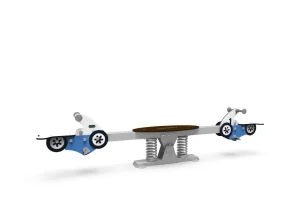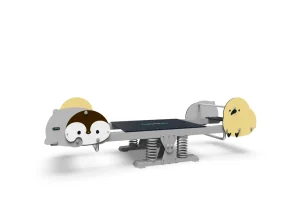
Spring rider sound module battery life is a maintenance variable that operators should treat as a planned consumable, not a surprise repair event. When a sound module goes quiet, the deeper cost is not the battery itself but the loss of engagement and the extra service call. Most battery guidance stops at cell chemistry. On a public playground, the practical service window shifts with enclosure sealing, seasonal temperature swings, mounting position, and daily activation count. I have seen well sealed modules run toward the upper end of their planning range while exposed units fail early from moisture ingress. This article turns those field conditions into a replacement model that operators can budget against.
Battery Life Factors for Spring Rider Sound Modules
Three conditions control spring rider sound module battery life on an outdoor site. The first is activation frequency. A module that plays a 15 second audio clip each time a child rocks the rider drains much faster than one that emits a short phrase. The second is enclosure sealing. Sound modules mounted under the seat or inside a sealed hatch are protected from water ingress; modules mounted near the base plate or in pockets where water can sit are more likely to corrode at the battery contacts. The third is local temperature. Cells lose capacity in cold weather and degrade faster in sustained heat.
Enclosure sealing matters more than chemistry because water ingress creates a failure chain: the battery compartment corrodes, the contacts build resistance, the sound becomes intermittent, and the module eventually stops reading as a battery problem. We have found that a well designed drain channel below the battery compartment does more for service life than moving from an alkaline cell to a lithium cell in an unsealed housing. This is the ranking operators should use when comparing spring riders.
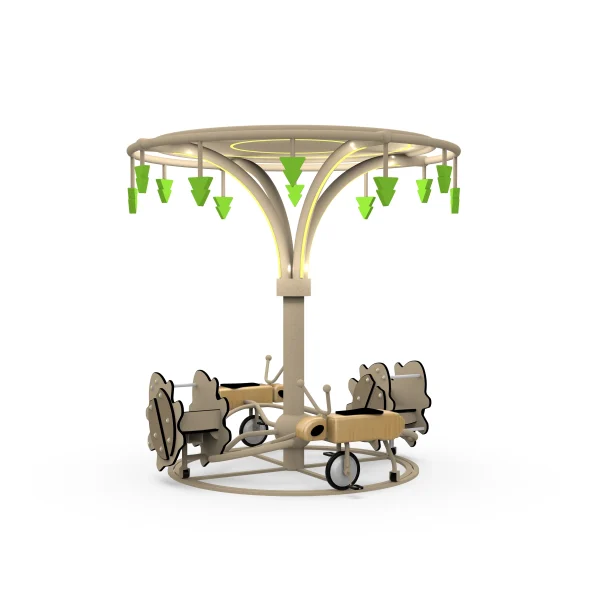
Outdoor heat and UV exposure age the sound module housing even before the battery fails. <UV Resistance Testing Protecting Outdoor Playground Spring Riders> covers how UV stabilized enclosures and accelerated aging tests reveal whether a rider’s electronic housing will crack or fade in direct sun, which directly affects battery compartment sealing.
Replacement Cycle Planning for Sound Module Batteries
Planning is more reliable than waiting for silence. We set replacement cycles around the activation count a site expects, then back that up with a simple calendar check. A busy municipal playground may log several hundred activations a day during spring, while a hotel garden rider may see a handful. The right interval for these two sites is not the same.
The ranges below are planning assumptions we use in maintenance discussions, not laboratory data.
| Battery Type | Typical Planning Window | Best Use | Replacement Notes |
|---|---|---|---|
| Alkaline | 6 to 12 months | Low use indoor or shaded sites | Replace on calendar, not after failure |
| Lithium primary | 18 to 36 months | Remote or hard to reach sites | Higher unit cost but lower labor demand |
| NiMH rechargeable | 12 to 24 months | Managed sites with charging access | Requires moisture proof charger port |
| Lithium-ion rechargeable | 24 to 36 months | High use sites with maintenance staff | Needs voltage monitoring and seasonal storage |
For operators, the key shift is budgeting sound module batteries as a stocked spare. A battery that is replaced on schedule prevents a silent spring rider during the busiest weeks. It also avoids the patchwork of different cell brands and voltages that can appear when staff buy replacements locally.
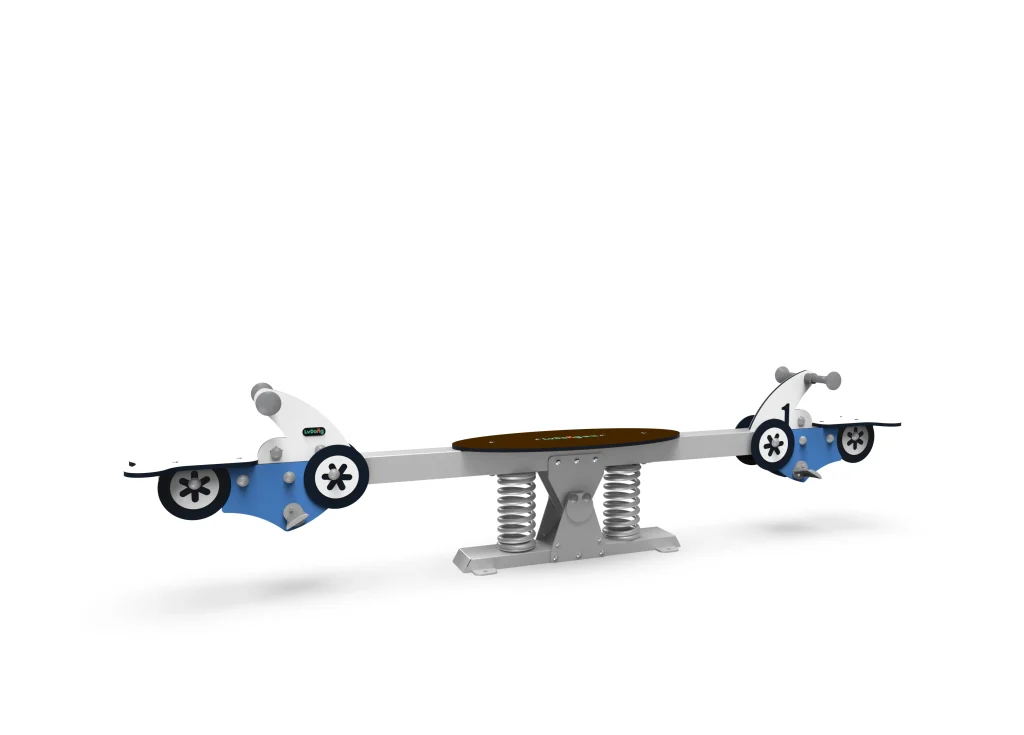
If your site has direct coastal exposure or winter temperature swings below freezing, confirm the connector and seal specification before choosing a battery chemistry. Send your module photo and operating environment to [email protected] and we will confirm the right replacement approach.
Scheduling batteries as a stocked spare changes the replacement conversation from repair to routine. <Optimizing Playground Equipment Spare Parts Lead Time and Stock> covers how operators can reduce downtime by holding critical consumables like sound module batteries and seals in their maintenance inventory.
Battery Selection and Housing for Longer Service Life
For an outdoor spring rider, the battery and the housing are one system. A high quality cell inside a poorly sealed compartment will fail just as early as a cheap cell in a good housing, but the failure path is different. The first fails from moisture entering the battery area; the second fails when the cell itself reaches the end of its useful voltage range.
On a spring rider already certified to EN 1176 and GB/T 34272-2017, the sound module is an add on component. It must not change the rider’s fall height, entrapment gaps, or spring force. When our team reviews a sound module, we check the battery door for a flush fit, a gasket or O-ring, and a drain path that does not direct water onto the spring or the child’s foot area.
I have seen operators choose rechargeable cells for a municipal site and then stop using them because staff lost chargers or forgot to recharge. The better configuration for that site was a sealed lithium primary pack, which cost more per cell but required no routine handling. The deciding factor was labor, not chemistry.
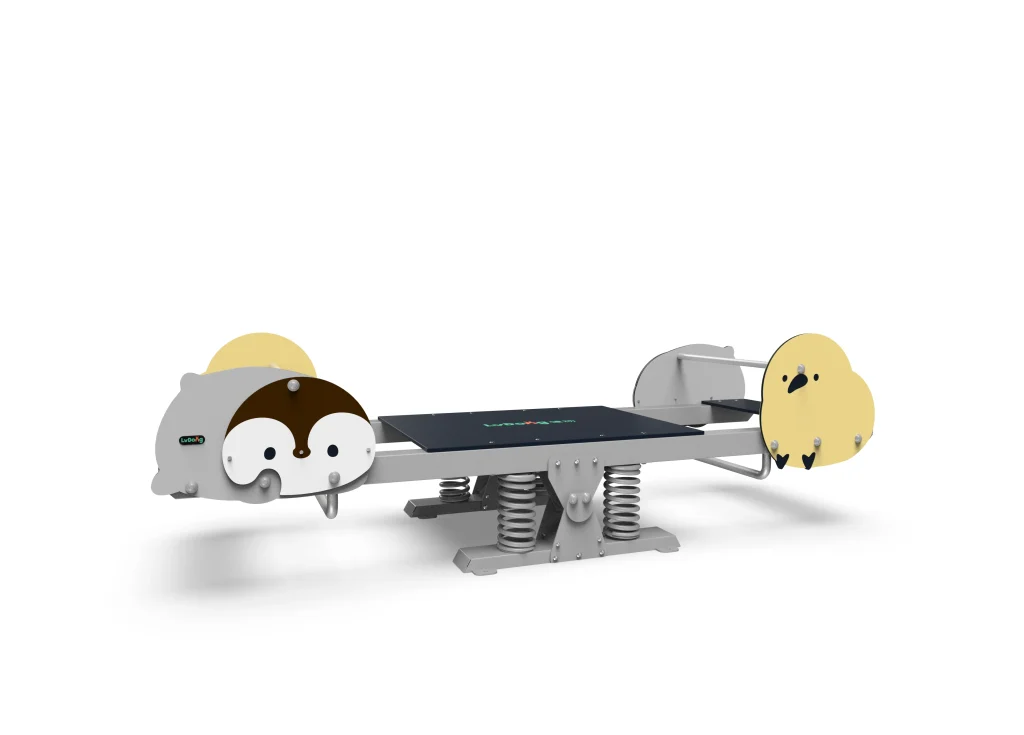
The mounting position of a sound module is bracketed by the same structural constraints as the rider body, and retrofit kits add more risk than factory integrated modules. <Bike Spring Riders Realistic Design Safety Engineering> covers how integrated wiring and protected module placement are handled in factory built riders.
Inspection and Replacement Schedule for Operators
Operators need a schedule that can be completed in minutes. The sequence below keeps the sound module problem visible before it becomes a complaint.
- Monthly: activate the sound module during a walk through and confirm that the audio is clear and full volume.
- Quarterly: open the battery compartment, check for white or green corrosion on the contacts, and confirm the drain hole is clear.
- Seasonally: replace the battery according to the selected planning window, record the date on a small label inside the door, and note the replacement battery brand.
- Annually: inspect the gasket, the speaker grille, and the module fasteners for cracking or looseness.
One failure mode repeats across sites. A module that works after rain but cuts out later is usually a wet contact, not a dead battery. Replacing the cell without drying and sealing the compartment fixes the symptom for a few weeks, then the same failure returns. This is why a quarterly contact check matters more than adding a second spare battery to the storeroom.
Sourcing Batteries and Support for Spring Rider Sound Modules
When a spring rider goes silent, purchase managers often order a generic battery and then find the replacement does not fit the sealed housing or lacks the right connector polarity. The safer path is to confirm the module’s exact battery format, voltage, and seal rating before ordering. At Suzhou LvDong Amusement Equipment, we identify the correct replacement and stock the matching seals and battery doors. Send the rider’s module photo and your estimated activation count to [email protected] or WhatsApp at +8613915684545, and we will confirm a replacement schedule that fits your site.
Common Questions About Spring Rider Sound Module Batteries
How often should operators actually replace spring rider sound module batteries?
Most operators should schedule replacement between 18 and 36 months for lithium primary cells and every 6 to 12 months for alkaline cells. The wider range exists because activation count, moisture exposure, and temperature change the drain rate. A shaded residential rider may reach the upper end; a busy seaside rider may reach the lower end. Rather than wait for silence, choose a calendar interval and record each replacement inside the battery door. That record turns a vague battery question into a site specific maintenance history.
Can a low battery damage the sound module?
A low battery by itself rarely damages the module, but the way it fails can. When a cell voltage drops, some modules begin powering on and off rapidly. That repeated startup can stress the audio amplifier and corrupt stored sound clips in older modules. The more common problem is alkaline cell leakage, which corrodes the contacts and the surrounding compartment. This is why we treat battery replacement as a preventive action. A scheduled cell change avoids both the electronic stress of low voltage operation and the chemical damage from leaked cells.
Are rechargeable sound module batteries worth the extra handling?
It depends on the operating model. Rechargeable cells work on sites with trained maintenance staff, protected charging access, and a clear point person for the chargers. They do not work well when equipment is shared across municipal departments or when volunteers handle maintenance. In those settings, sealed lithium primary packs are more reliable because they demand no routine handling. We have seen rechargeable programs fail because chargers go missing, not because the cells were poor.
What does an intermittent sound indicate?
In the field, an intermittent sound usually points to a wet connector or corroded contact rather than a completely dead battery. After rain, moisture inside the compartment raises resistance across the terminals, so the module may work in the morning and cut out by afternoon. The first step is to open the housing, dry the contacts, and inspect the gasket and drain hole. Replace the battery only after the compartment is dry and sealed again. If the module is still intermittent, the issue is more likely a wiring or speaker fault. Share your module photo and activation pattern with us and we will confirm the replacement interval for your site.
If you’re interested, check out these related articles:
20 Essential Questions Choosing a Playground Equipment Supplier
Playground Turntable Safety EN1176 vs ASTM Standards Unpacked
To discuss replacement-parts requirements for spring riders, contact the LvDong team with your project requirements.