Seesaw rubber bumpers determine whether a playground reads as lively background play or as a repeat complaint about impact noise. In residential communities, the bumper is not a finishing detail. It is the first line of acoustic control at the point where the beam tip meets the ground plate. I have seen the same steel seesaw structure produce very different noise outcomes when the bumper material, thickness, and mounting clearance change. The quieter setup does not remove motion energy. It extends the contact time and turns a sharp pressure peak into a lower, softer impulse. This article explains how to specify and maintain bumpers for residential sites where noise limits are tight.
Why Do Seesaw Rubber Bumpers Cause Most Residential Noise Complaints?
Most residential noise complaints about seesaws are not caused by the steel beam or the pivot. They come from the instant the beam tip contacts the ground plate through the rubber bumper. That contact is short, but it sends a low-frequency pulse through the frame, into the surfacing, and toward the nearest building. Children play in short cycles, so the pulse repeats. The harder or thinner the bumper, the sharper the pulse. A soft bumper with enough thickness lengthens the contact time and shifts more energy into deformation heat rather than audible vibration.
In community projects we have supported, the noisy unit often has a bumper that is still present but has become compressed, cracked, or polished smooth. One common mistake is treating the bumper as a cosmetic cap. It is a functional stop. On a spring-assisted seesaw, the spring controls the descent, but the final stop still determines whether the movement reads as a thud or a soft arrival.
What Rubber Materials and Shore Hardness Ratings Work Best?
Shore hardness is the first specification to fix. For outdoor seesaws, we usually work within Shore A 55 to 70. Below that, the bumper deforms too much under repeated loading and can bottom out. Above that, the bumper behaves more like a rigid puck and the sound pressure rises. The exact choice depends on the unit’s fall energy and the age of the riders.
| Material | Durometer range | UV and ozone resistance | Wear behavior | Residential use |
|---|---|---|---|---|
| EPDM | Shore A 55 to 70 | High | Resists hardening | Preferred for exposed community sites |
| Natural rubber | Shore A 40 to 60 | Low | Strong rebound but cracks with UV exposure | Shaded or indoor settings |
| SBR | Shore A 55 to 70 | Low | Moderate compression set | Temporary or low-UV sites |
| Polyurethane | Shore A 60 to 75 | High | Very good | Heavy traffic when specified softer |
Hardness values follow ASTM D2240 Type A.
If the original shore rating is not marked, do not judge it by appearance. Two compounds can look identical after a season outdoors and behave very differently under a child’s impact load. Send the unit model, bumper thickness, and a photo of the deformed contact surface to [email protected], and we can confirm whether the replacement should be softer, thicker, or both.
How Do You Mount and Specify Seesaw Rubber Bumpers Correctly?
Mounting details that prevent edge loading
The bumper must sit in a recessed metal seat or against a flat plate large enough to carry the full contact area. When only one edge of the bumper touches the ground plate, the rubber works in shear and tears early. We specify a recessed seat so the bumper cannot slide sideways, with a through-bolt and a wide washer on the underside. Adhesive-only mounting fails on outdoor equipment because repeated shear load and temperature changes break the bond before the rubber itself wears out.
RFQ specifications that produce a quieter replacement
- Material: EPDM for exposed sites or polyurethane for high traffic
- Durometer: Shore A 55 to 65 unless the seesaw’s fall energy is higher
- Minimum thickness: 25 mm at the thinnest load point
- Mounting: recessed seat, through-bolt, no exposed threads on the contact face
- Compression set: below 25 percent after testing to ASTM D395
- Quantity: include two spare bumpers per seesaw in the order
What Inspection and Replacement Cycles Fit Residential Sites?
Rubber ages even when the seesaw is not in use. UV exposure, ozone, and compression under the beam all change the material. We recommend a monthly visual check during the high-use season and a quarterly durometer check. The bumper should be replaced when the contact surface has taken a set, when visible cracks deepen, or when the impact note turns sharp. On residential sites, the goal is to replace the bumper before the sound changes enough for a resident to notice, not after the complaint is logged.
Rubber components age faster than metal frames, and a bumper that looks intact can still transmit impact noise after its rebound has hardened. <Playground Equipment Safety Your Essential Self Inspection Checklist> covers the inspection sequence we recommend for operators, including the moving part checks that catch noise sources before residents file complaints.
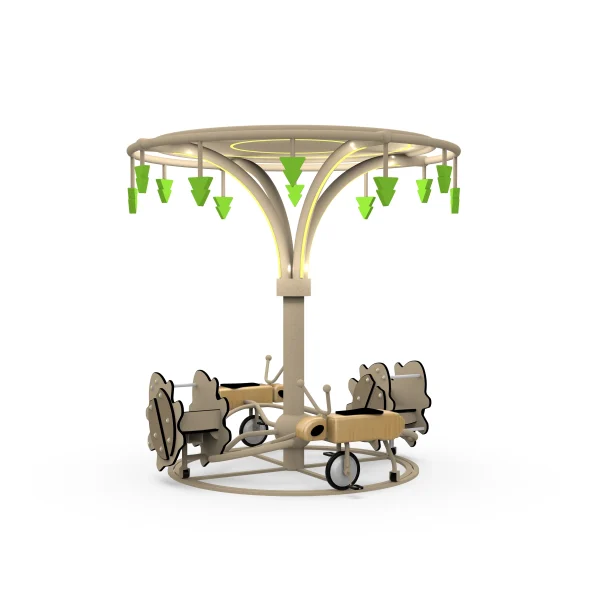
The same inspection logic applies when a site includes multiple impact and motion components, from seesaws to spinning equipment.
Need a Seesaw Noise Fix Before the Next Resident Complaint?
A residential noise complaint usually starts with one seesaw near a bedroom window. Replacing the bumper is less expensive than relocating the equipment or shortening play hours, but it only works when the part matches the original mounting and the real impact energy of the frame. Suzhou LvDong can match the bumper to the original seesaw geometry. Send the model name, a photo of the current bumper and ground plate, and the measured gap between the beam tip and the plate. We will specify a material, thickness, and mounting type rather than shipping a generic part number. Contact Liu Ming at [email protected] or WhatsApp +8613915684545.
What Else Should Community Buyers Ask About Seesaw Rubber Bumpers?
Can I replace rubber bumpers without replacing the whole seesaw?
Yes. On most commercial seesaws the bumper is a service part held by a through-bolt or a recessed plate. Replacement takes about one hour per unit when the original seat is intact. If the seat is bent or the bolt hole has elongated, repair that metal first. A new bumper alone will not correct noise if the beam tip is striking at an angle or only one edge is carrying the load.
Does a bumper that looks new still need replacement?
A bumper can look new and still be acoustically worn. UV hardening changes the surface first, while visible cracking appears later. If the rubber no longer returns to its original shape after a firm hand squeeze, the impact tone has already shifted. The Shore hardness has likely moved outside the original range. In residential locations, that is the point to replace it rather than waiting for cracks.
Do spring-assisted seesaws still need rubber bumpers?
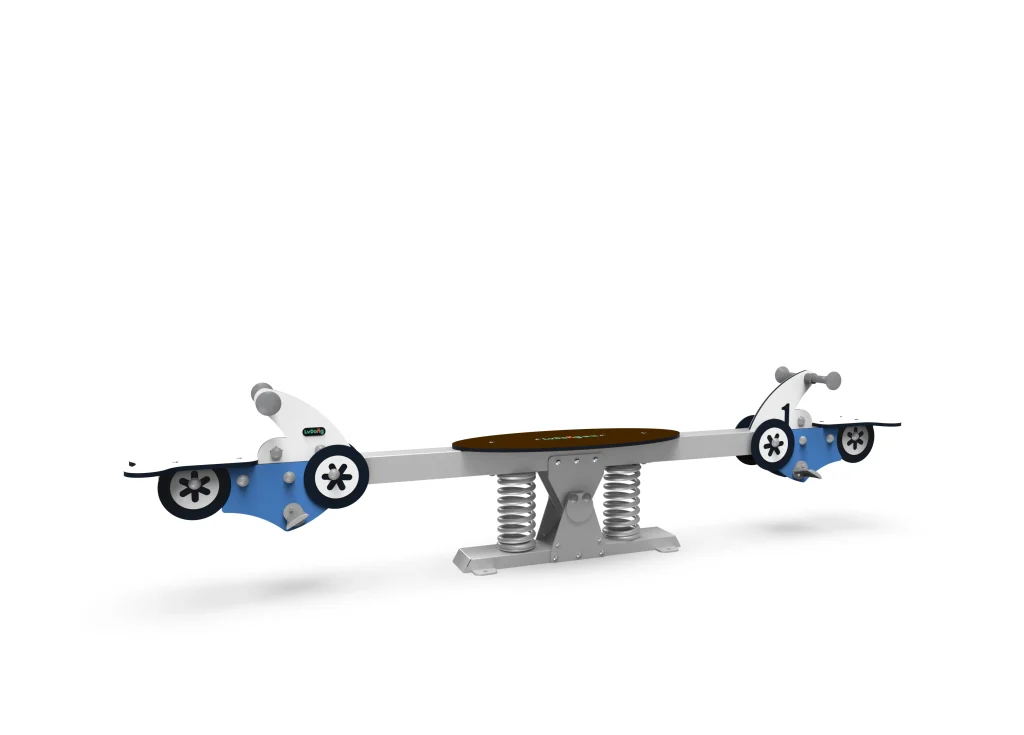
In the spring-assisted seesaws we supply, the spring smooths the descent and reduces the severity of the stop, but the beam still reaches the stop plate. The rubber bumper remains necessary as the final energy absorber. Removing it transfers the load directly into the metal seat and creates a sharper sound and faster wear. The spring changes how the beam approaches the stop, not whether the stop needs a compliant surface.
Should I replace bumpers on all equipment at once or only the noisy unit?
It depends on how the equipment is used. If all seesaws face the same sun and similar traffic, the bumper set ages at a comparable rate and grouped replacement saves labor. If one unit sits in full afternoon sun or carries heavier traffic, replace that one first and check the others on a shorter cycle. For a mixed site, a phased plan avoids both premature parts cost and a return of the noise complaint. Send your equipment list and a few site photos to [email protected], and we will confirm the bumper specification for each seesaw before you order.
If you’re interested, check out these related articles:
Annual Maintenance Calendar for Outdoor Play Equipment A Guide
Playground Equipment Quotes Spotting Hidden Costs Explained
Key Contract Clauses for Commercial Playground Equipment Purchase