Understanding Manufacturer Obligations After a Sale
Every playground equipment manufacturer hopes a product performs exactly as designed for its entire service life. Reality is less forgiving. A batch of fasteners loosens under vibration, a weld detail cracks at a stress concentration, or a rotating hub wears faster than accelerated aging predicted. When a design flaw appears after equipment has shipped and been installed, the question is no longer whether the manufacturer should respond. It is how quickly, how completely, and with what legal and ethical obligations.
A post-sale design flaw may involve a slide exit runout that allows rear-end collisions, a seesaw pivot that loosens under rhythmic loading, a spinner bearing seal that admits moisture and grit, or a guardrail gap that can trap a child’s limb. In each case, the same sequence applies: contain the risk, investigate the failure, notify the authority when required, and execute a corrective action that can be validated.
Recalls, Retrofits, and Reporting Triggers
When a Recall Applies
In the United States, a recall is not only a company press release. Manufacturers, importers, distributors, and retailers have reporting and corrective-action obligations under Section 15(b) of the Consumer Product Safety Act when a defect could create a substantial product hazard [1]. A report must be made to the U.S. Consumer Product Safety Commission within 24 hours of obtaining reportable information, followed by a corrective action plan. That plan may include stop sale, consumer notice, repair, replacement, or refund.
For playground equipment placed on the EU market, the General Product Safety Regulation (EU) 2023/988 establishes a modernized safety net for consumer products not covered by a specific market-access directive. It applies from 13 December 2024 and reinforces corrective action, recall, and traceability duties [2]. It also requires products to have a responsible economic operator in the EU and preserves the Safety Business Gateway as the notification channel for corrective actions.
When a Retrofit Makes More Sense
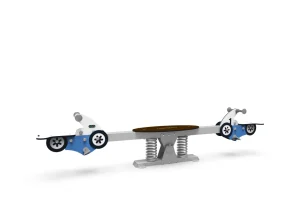
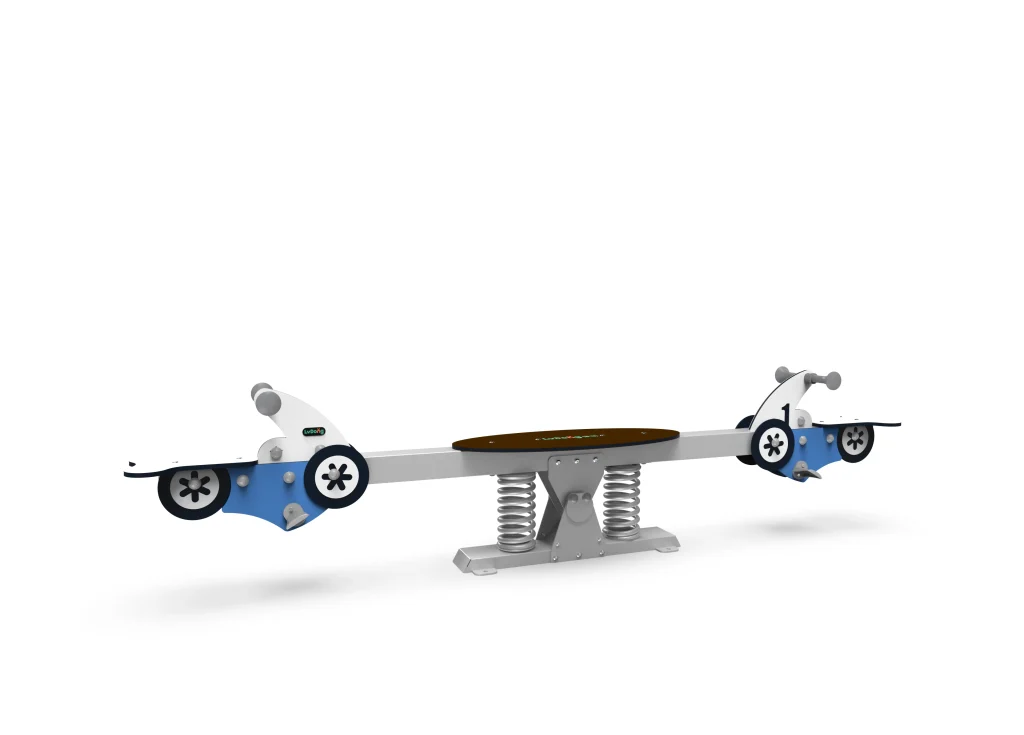
Not every field problem requires a full recall. A retrofit is usually appropriate when the failure mode is addressed by adding, replacing, or re-engineering a component; when the hazard is localized; or when in-field correction is more protective than returning equipment. Examples include upgraded anchor bolts, a redesigned spring-rider stop, or a retrofit damper for a seesaw. The legal test is whether the corrective action eliminates the substantial product hazard, not what it is called.
Deciding whether to repair or replace an aging structure follows the same logic as planning a corrective action. <Old Playground Renovation Keep or Replace Decisions> covers the cost, safety, and service-life comparisons operators use before committing to a retrofit.
Root-Cause Assessment and Corrective Action Planning
From Failure Report to Failure Mechanism
The corrective action decision should begin with a root-cause analysis. A complaint that a spinner wobbles at high cycle counts is not the cause; it is the effect. The root cause may be a bearing preload too low, a frame gusset placed on the wrong side of load, or an installation tolerance that was never specified. A structured risk-management approach such as ISO 31000 can keep the failure, consequence, likelihood, and correction linked [3].
Design change decisions should be tested, not inferred. For playground equipment, dynamic load testing, weld evaluation, and environmental exposure are used to validate that a corrective part performs under the intended use. A manufacturer should be able to show that the replacement part is not simply different but is measurably better.
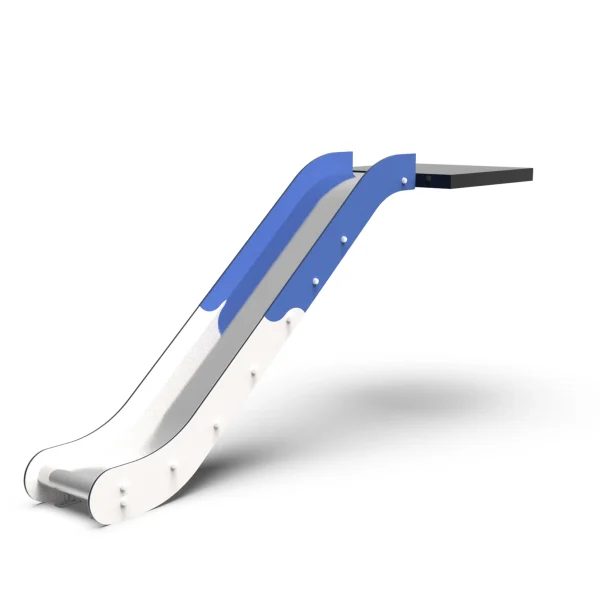
Corrective Action Decision Table
| Factor | Key Question |
|---|---|
| Hazard severity | Can normal use produce entrapment, ejection, impact, or a fall beyond the applicable standard limit? |
| Affected population | How many sites, serial ranges, and age groups are exposed to the defect? |
| Traceability | Can production and shipping records identify every affected batch by serial range or date? |
| Correction validation | Has the proposed fix passed a test plan tied to the root failure mode? |
| Corrective burden | Can the fix be installed safely at the site without introducing a new hazard? |
| Interim control | Must the equipment be removed from service until the retrofit is complete? |
Many post-sale failures concentrate in moving components and their anchor systems. <Playground Spring Rider Foundations Expert Installation Guide> covers the anchoring details that determine whether a field retrofit holds up over time.
Executing a Field Retrofit Without Creating New Hazards
The Engineering File for a Retrofit Kit
A retrofit is not a spare part with a longer label. It should ship with installation instructions that specify tools, torque, orientation, compatible units, and inspection after installation. If the retrofit alters mass, stiffness, or clearances, the manufacturer should evaluate the affected assembly against the same standard used for the original design. ASTM F1487-21 and the EN 1176 series are the baseline safety standards for public playground equipment in many markets; they cover entrapment, protrusion, head and neck hazards, and fall-related requirements [4][5].
Operators also need pass/fail checks before reopening the play area. A retrofit that corrects a weld crack but leaves a mismatched guardrail gap has not finished the job. This is where a formal post-installation acceptance routine becomes part of the corrective record.
Retrofits should end with the same discipline as new construction. <12 Critical Post Installation Acceptance Tests for Playgrounds> covers the pass/fail checks that belong in every remediation package.
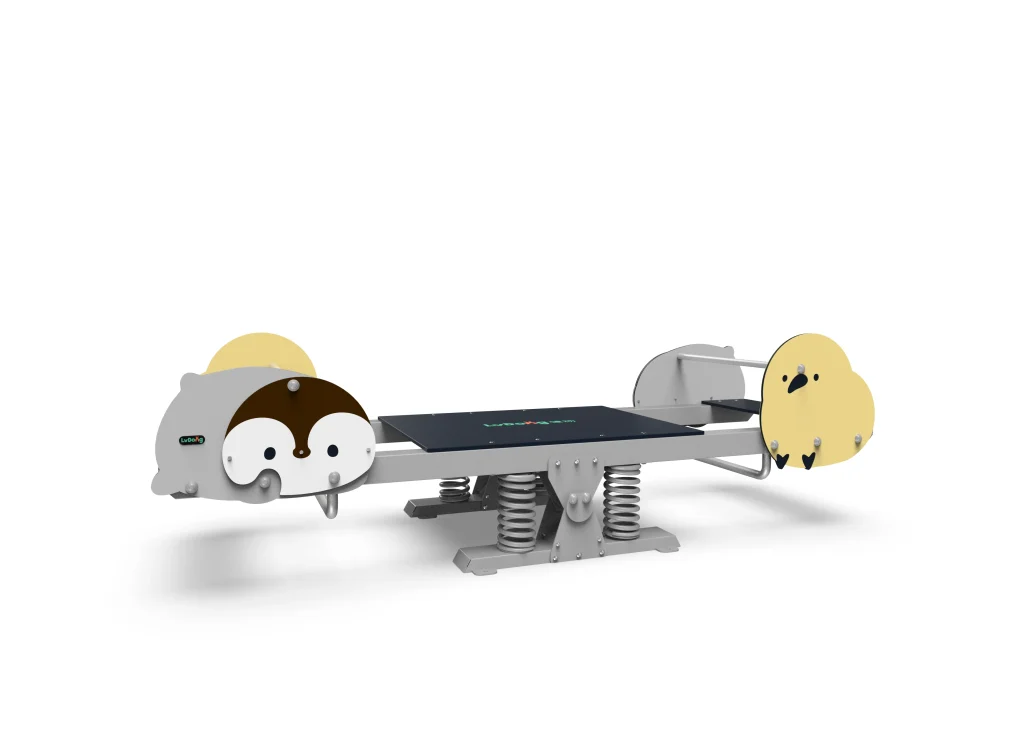
Verification Documentation
The manufacturer should retain the original design review, the field failure report, the root-cause analysis, the corrective action approval, design verification tests, the production records of retrofit kits, and the site installation sign-offs. This chain is what regulators, insurers, and certified playground inspectors will ask for after an incident. ISO 9001’s documented-information and nonconformity requirements provide a repeatable structure for that record [6].
Need a corrective-action review before you reopen a play area? Send the equipment model, serial range, failure description, and site photos to [email protected]. A retrofit must be validated against the original standard before it returns to service — an engineering review can confirm whether the fix is sufficient or whether a broader recall is warranted.
Documentation, Traceability, and Quality System Readiness
Serialization and Batch Control
A recall is only as fast as its traceability. If the manufacturer cannot say which serial numbers, production dates, or container loads contain the affected part, every unit is treated as suspect. That expands the recall, increases operator burden, and undermines trust. Serial-ranged records for steel frames, spring assemblies, rotating hubs, and plastic panels let a manufacturer isolate affected units with precision.
Public Communication and Operator Notice
Risk communication should be direct: describe the hazard, the affected models, the serial range, the corrective action, and what the operator must do until repair. Warnings alone are rarely a sufficient corrective action for a safety-critical design flaw. If the equipment can remain in service safely with an interim control, state the control explicitly. If not, say it must be taken out of service.
A clean post-sale file also protects the buyer. It shows the playground was not simply purchased, but supported through its actual risk lifecycle. That is the difference between a transactional supplier and a manufacturer that treats recall readiness as a quality requirement.
Speak With a Manufacturer That Plans for Post-Sale Responsibility
At Suzhou LvDong Amusement Equipment Co., Ltd., post-sale support is part of the design lifecycle, not an afterthought. Our work covers unpowered playground equipment including spinners, spring riders, seesaws, slides, swings, activity panels, and thematic play structures. We operate from a 10,000-square-meter production base and have delivered more than 1,500 projects across municipal parks, high-end communities, cultural tourism sites, and educational institutions. That field record is the reason our engineering and aftersales teams prepare for replacement parts, technical bulletins, and retrofit kits, not just initial shipments.
To validate a retrofit path for your site or review your next procurement specification, contact our project team:
- WhatsApp: +8613915684545
- Email: [email protected]
We respond with a calm, detailed evaluation of equipment history, applicable standards, repair options, and verification steps.
FAQ
Is a manufacturer obligated to repair a design flaw after the warranty ends?
Warranty defines commercial coverage, but regulatory safety obligations can run independently. A safety defect may create reporting and corrective-action duties under Section 15(b) of the Consumer Product Safety Act or the EU General Product Safety Regulation regardless of warranty status, if the equipment is still in use and the hazard is present.
What should a playground operator do while waiting for a retrofit?
Follow the manufacturer’s interim control. If the flaw is safety-critical, close, fence, or remove the equipment from service. Document the action taken and do not modify the equipment without written approval, because an unauthorized field change can shift liability and invalidate the original conformity assessment.
Does a retrofit change the original certification?
It may. If the retrofit changes structural or safety-related characteristics, the affected assembly may need re-evaluation against ASTM F1487, EN 1176, or the relevant national standard. The manufacturer should document how the corrective part preserves the original design intent and, where necessary, issue a revised conformity statement.
How are affected serial numbers identified?
Through batch records, production dates, purchase orders, container loading lists, and installation records. A strong traceability system should connect the finished product serial range to the raw material batch, weld operator, production date, and final inspection record.
Are warnings enough instead of a retrofit?
Usually not when the hazard is severe and latent. Warnings may reduce exposure temporarily, but a corrective action generally must address the defect itself. If a warning is used as an interim control, the manufacturer should still proceed with a validated repair, replacement, or retrofit.
What documentation should the buyer retain after a retrofit?
The buyer should retain the manufacturer’s notice, installation instructions, test or verification summary, affected serial range, site sign-off record, and any updated maintenance requirements. These documents form the protective record if a future inspection or insurance review occurs.
References
[1] U.S. Consumer Product Safety Commission, “Section 15(b) Reporting Requirements for Manufacturers, Importers, Distributors, and Retailers,” CPSC, Bethesda, MD. [Online]. Available: https://www.cpsc.gov/Business–Manufacturing/Recall-Guidance
[2] Regulation (EU) 2023/988 of the European Parliament and of the Council of 10 May 2023 on general product safety, Official Journal of the European Union, L 135, 23.5.2023, p. 1.
[3] ISO 31000:2018, Risk management — Guidelines, International Organization for Standardization, Geneva, Switzerland.
[4] ASTM F1487-21, Standard Consumer Safety Performance Specification for Playground Equipment for Public Use, ASTM International, West Conshohocken, PA, 2021.
[5] EN 1176 series, Playground equipment and surfacing, European Committee for Standardization, Brussels, Belgium.
[6] ISO 9001:2015, Quality management systems — Requirements, International Organization for Standardization, Geneva, Switzerland.
If you’re interested, check out these related articles:
Educational vs Entertainment Play Panels A Strategic Guide
School Playground Equipment Zoning for Grade Based Development
Double Slide Playground Design for Optimal Traffic Flow Strategies