Selecting a playground equipment supplier for your school is not a purchase decision you can reverse easily once the equipment is installed and children are using it daily. In over ten years of designing and manufacturing unpowered playground equipment, I have seen schools compromise on supplier quality to meet budget constraints, only to face safety issues or premature equipment failure within two years. This article covers the five factors that matter most when evaluating playground equipment suppliers: safety certifications, design capability, manufacturing quality, project delivery, and long-term partnership value. Each factor draws on what we have learned from delivering more than 1,500 projects across China’s municipal parks, communities, cultural tourism sites, and schools.
Safety Certifications Every School Playground Equipment Supplier Must Hold
Certifications are not decorative badges on a supplier’s website. They are the difference between equipment that has been independently verified for structural integrity and impact attenuation, and equipment that has not.
For any supplier you consider, ask for their EN 1176 compliance documentation first. EN 1176 is the European standard governing playground equipment safety, covering everything from entrapment hazards and head and neck entrapment to surfacing requirements and structural stability. A supplier who cannot produce current EN 1176 test reports for their product range is not ready for a school project. In China, the equivalent national standard is GB/T 34272-2017, which aligns closely with EN 1176 on critical safety parameters. We hold both certifications across our product lines because school buyers in different regions need different documentation, and a supplier operating only within one standard may not understand the safety requirements relevant to your jurisdiction.
Beyond the core equipment standards, check whether the supplier’s materials carry their own compliance documentation. LLDPE panels, steel structural components, fasteners, and spring mechanisms all have separate testing requirements under REACH and RoHS for chemical safety. Schools serving younger children, particularly ages two to five, should insist on full material traceability. A supplier who brushes past this question with “all our materials are safe” without offering specific test reports is not one you want to work with.
Certifications also need to be current. Standards are updated periodically, and test reports from five years ago may not reflect current requirements. Ask for the issue date on every certificate and confirm the testing laboratory is accredited. In our experience, about one in four factory visits reveals at least one expired certification that the supplier had not updated, usually because no client had asked recently.
How Design Capability Shapes Playground Safety and Engagement
A supplier who only manufactures equipment to standard dimensions without understanding how children actually move through a playground will deliver a safe-on-paper installation that underperforms in practice. Design capability is the factor that separates suppliers who build equipment from suppliers who build playgrounds.
Age-appropriate design is the first test. Playground equipment for children aged two to five requires fundamentally different dimensions, grip diameters, step heights, and fall zones than equipment for ages five to twelve. A spring rider sized for a three-year-old differs from one for a six-year-old in seat height, spring resistance, and handgrip positioning. If a supplier’s catalog shows the same equipment listed for “ages two to twelve,” they are either misunderstanding the safety implications or hoping you will not notice.
Good design also manages traffic flow. Slides, swings, climbers, and spinning equipment each have use zones that must not overlap. A supplier with real design capability will produce a site-specific layout drawing that maps fall zones, circulation paths, and sight lines before you commit to equipment selection. This is not a sales extra; it is the minimum evidence that the supplier understands how children and supervising adults will use the space. We produce 3D renderings and zone analysis for every school project because a layout that looks efficient on a product list can become a congestion point on the ground, and congestion around play equipment is a safety risk.
Thematic coherence matters more than many buyers expect. Schools invest in playgrounds that shape the campus environment, and a mismatched collection of equipment from different design languages feels institutional rather than inviting. A supplier with integrated design capability can propose a cohesive visual theme across multiple equipment types while maintaining age-appropriate differentiation between zones. This is the difference between a playground that children run toward and one they use because it is there.
Manufacturing Quality Checks That Reveal a Supplier’s True Standards
Certifications confirm that a supplier’s products can meet standards. Manufacturing quality determines whether every unit shipped actually does.
Start with materials. For outdoor playground equipment, the primary structural material is typically galvanized steel tubing. The wall thickness, diameter, and galvanization grade directly determine how the equipment withstands years of sun, rain, and daily use. Ask for the specific steel grade and pipe dimensions used in the supplier’s standard construction. A supplier who cannot answer this question immediately is likely sourcing from multiple fabricators with inconsistent quality. In our production facility, we document material specifications per product line and keep certificates of conformity for every batch of steel and LLDPE raw material that enters the workshop.
Welding quality is the second inspection point. On a factory visit, look at weld seams on finished and in-progress equipment. Consistent bead width, full joint penetration, and absence of spatter or undercut are the visual indicators of a supplier whose welding process is controlled rather than operator-dependent. Post-weld treatment matters too: galvanization after welding protects the entire joint, while painting over untreated welds hides corrosion that will appear within the first year.
Surface finishing and edge treatment should be inspected on sample units, not just catalog photos. Run your hand along edges, joints, and any point where a child’s fingers might reach. A quality supplier deburrs all edges, rounds all corners to a minimum radius, and uses countersunk or capped fasteners throughout. This level of finishing is not achievable with rushed production; it requires a supplier who allocates sufficient labor time per unit and maintains a quality management system that catches finishing defects before packaging.
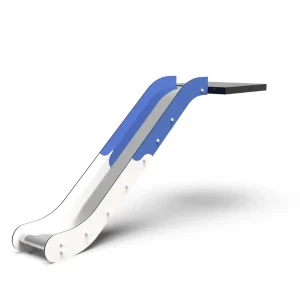
For plastic components like slides, panels, and spring rider seats, the material specification matters. Rotomolded LLDPE offers better impact resistance and UV stability than lower-cost alternatives. Ask which polymer grade is used and request weathering test data. We use LLDPE across all plastic components because its combination of flexibility and strength handles the repeated impact and temperature cycling that school playgrounds experience. Cheaper polymers become brittle after two to three years of outdoor exposure, creating a crack propagation risk that is easy to miss during installation but impossible to ignore once it appears.
The manufacturing floor itself reveals a supplier’s priorities. A clean, organized production environment with clearly separated workstations for cutting, welding, finishing, and assembly indicates process control. A cluttered floor with mixed work-in-progress and no visible quality checkpoints suggests that consistency depends on individual worker attention rather than system design. When you visit, note whether inspection stations exist between production stages; their absence means defects are caught, if at all, only at final inspection when rework is most expensive.
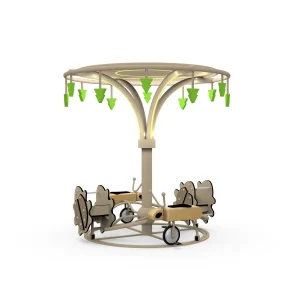
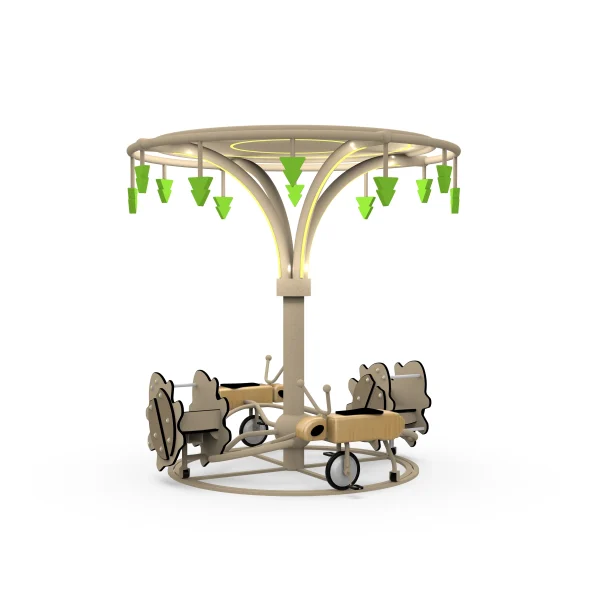
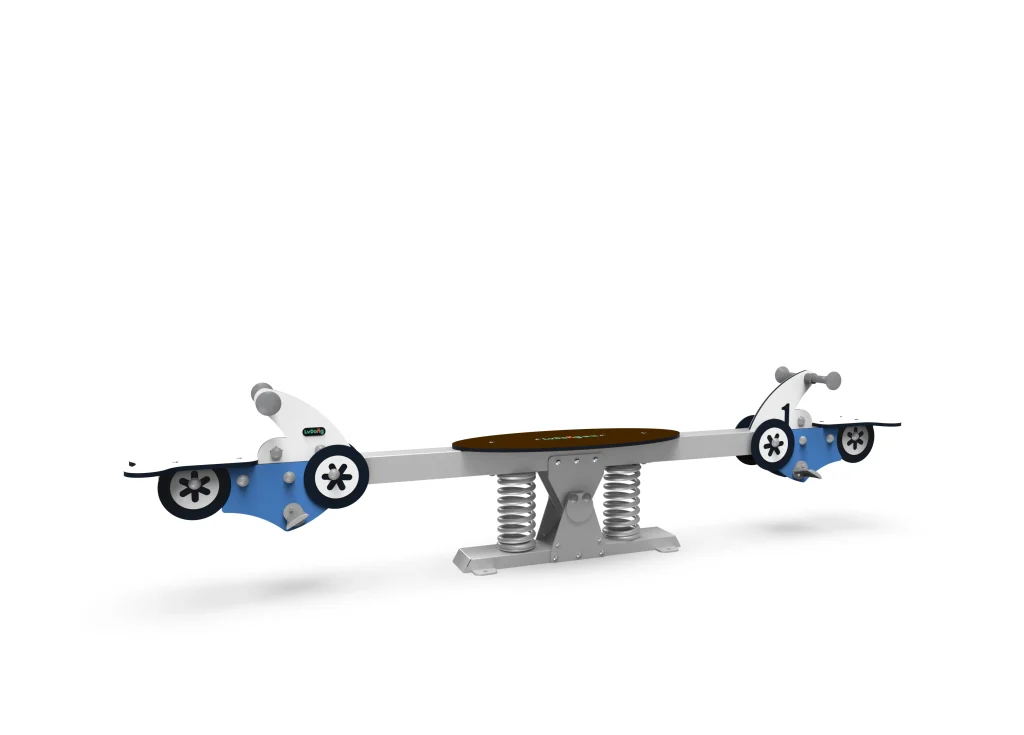
If your school project involves specialized equipment such as multi-user spinning wheels that support six to ten children at once or spring-balanced seesaws with complex motion dynamics, the manufacturing tolerance requirements are tighter than for static equipment. A supplier whose core business is simple standalone units may not have the engineering capability to produce complex interactive equipment that remains safe under dynamic loading. Ask about their experience with the specific equipment categories your project requires.
Project Delivery: What Happens Between Order and Installation
A well-manufactured playground delivered late or installed incorrectly creates the same outcome as poor equipment: children cannot use it safely, and the school has a problem to solve.
Project delivery starts with site assessment. Your supplier should request site dimensions, soil conditions, drainage patterns, and existing utilities before finalizing equipment selection. A supplier who quotes based on a satellite image without a site visit or detailed site survey is skipping the step where real problems surface. We have seen sites where a seemingly flat area had a one-meter grade change across the playground footprint, requiring retaining walls that the original quote did not include. That kind of discovery after equipment arrives on site turns a straightforward installation into a budget overrun and a delayed opening.
Packaging and logistics matter for school projects with tight summer installation windows. Playground equipment ships in multiple crates or pallets, often with installation hardware packed separately from structural components. A supplier who does not provide a detailed packing list with crate contents labeled by installation zone is setting up the installation team for confusion and lost time on site. Confirm that the supplier’s logistics documentation matches your receiving team’s capability to check and stage deliveries.
Installation should be performed or directly supervised by the supplier’s own technicians, not subcontracted to a local crew unfamiliar with the equipment. This is non-negotiable for school projects. Proper foundation depth, concrete curing time, fastener torque specifications, and safety surfacing installation all affect structural integrity and compliance. A crew that has never installed this specific equipment will follow generic instructions, and generic does not account for site-specific adjustments that experienced installers make as a matter of routine. In our projects, we send our own installation team or provide on-site supervision for every school installation because the final safety responsibility rests with the manufacturer who designed the equipment, not with a third-party crew working from a printed manual.
Post-installation acceptance testing should be part of the standard project scope, not an extra service. This includes impact attenuation testing of safety surfacing, structural load verification, entrapment probe testing, and a complete visual inspection documented with photos and a signed report. If a supplier’s project scope does not include a formal acceptance test, add it to your contract and agree on the pass criteria before the project starts.
After-Sales Support and the Value of a Long-Term Supplier Partnership
The first year of a playground’s life reveals whether the supplier relationship was transactional or built for the long term. Equipment that was perfect at installation can develop issues as foundations settle, fasteners work loose through thermal cycling, and high-wear components like bearings and spring mechanisms accumulate cycles.
A supplier’s warranty terms are the starting point, but the real question is how they handle claims. A five-year structural warranty is only as good as the supplier’s responsiveness when you report a crack in a weld or a slide surface that has degraded faster than expected. Before signing, ask for the warranty claims process in writing. Who pays for replacement shipping? What is the response time commitment? Is there a local service partner, or does the supplier need to dispatch a technician from their factory?
Spare parts availability separates serious suppliers from the rest. Playground equipment uses wear components: swing bearings, spring mechanisms, rotating joints, and surface coatings all have finite service lives. A supplier who maintains a stocked spare parts inventory with published lead times is signaling that they expect to support their equipment beyond the warranty period. A supplier who treats spare parts as a special-order item with open-ended delivery dates is telling you they have moved on to the next sale. For school buyers, this difference determines whether a broken swing seat means a two-week repair or a six-month closure.
Maintenance support is the third pillar of after-sales value. An annual maintenance calendar specific to your equipment and climate conditions should be part of the supplier’s handover documentation. This is not a generic checklist; it should reference your specific equipment models, identify inspection points unique to each piece, and include torque specifications for re-tightening fasteners. We provide a maintenance schedule with every school installation because, in our experience, schools that follow a structured maintenance plan get roughly twice the service life from their equipment compared to schools that inspect only when something breaks.
A supplier who views the project as complete at installation and moves on is not a partner. The schools we work with longest are the ones where we have built trust through responsive support, honest timelines, and a shared commitment to keeping their playground safe and functional year after year. That kind of relationship does not happen by accident; it starts with selecting a supplier whose business model depends on reputation rather than one-time transactions.
What School Buyers Should Verify Before Committing to a Supplier
If you are evaluating multiple playground equipment suppliers for a school project, here is what I recommend verifying before you commit. These are the items that separate capable suppliers from the rest, based on what we have seen work and fail across hundreds of school installations.
First, request full documentation rather than summary statements. A supplier who says “we are EN 1176 certified” without providing the actual test reports for the specific equipment models in your quote is not being transparent. Ask for model-specific certification documents with issue dates and accredited laboratory names. Cross-reference the model numbers in the test reports with the model numbers in your quotation; mismatches are more common than you might expect.
Second, insist on visiting the production facility if your project budget exceeds a threshold that justifies the travel cost. A factory visit reveals production organization, quality control presence, and working conditions in ways that a website or brochure cannot. Look for organized material storage, visible inspection stations, and finished goods that match the quality level of the samples you were shown. If the factory floor does not reflect the same attention to detail as the sales presentation, the equipment you receive will likely follow the factory standard rather than the sales promise.
Third, contact references who have had the equipment installed for at least two years. First-year references tell you about the sales and installation experience. Second-year and later references tell you about durability, after-sales responsiveness, and whether the supplier still answers the phone when warranty issues arise. Ask specifically about spare parts orders and how long they took to arrive.
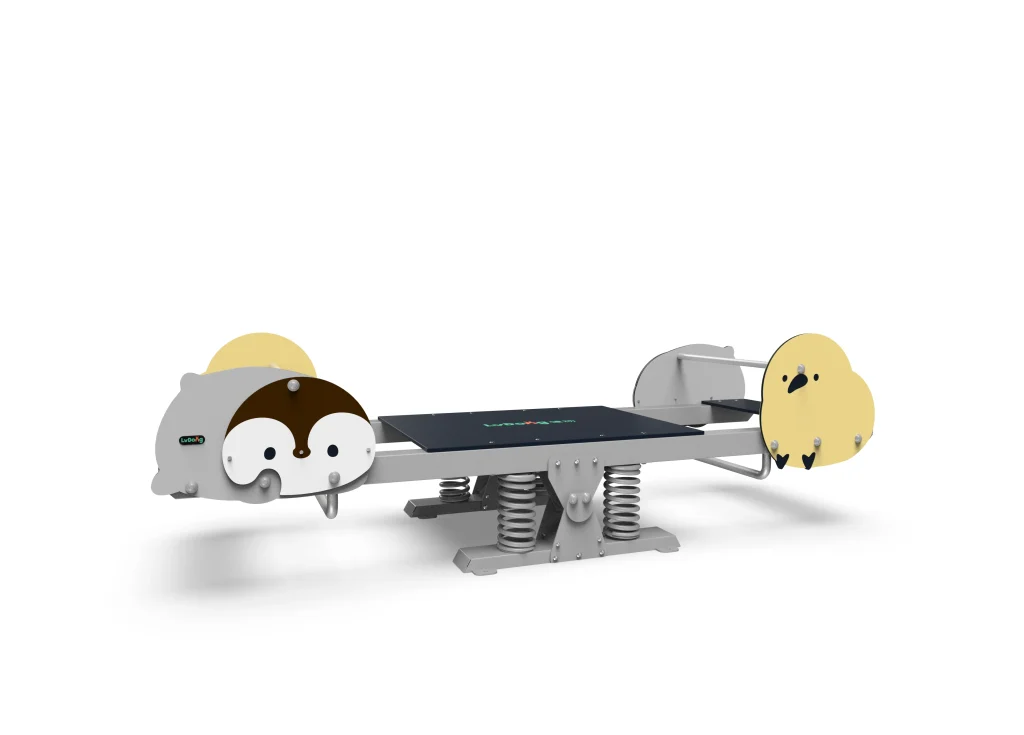
If your school requires equipment that spans multiple age groups or includes complex interactive pieces, the evaluation bar should be higher. A supplier who has built only simple standalone units may not have the engineering depth to design and manufacture a multi-zone playground with integrated play structures, climbing elements, and dynamic equipment like multi-user spinning wheels or spring-balanced teeter totters. Ask to see project portfolios that match the complexity of what you are planning.
If your timeline is tight or your site has challenging conditions, confirm the supplier’s capacity to meet your schedule and their experience with sites similar to yours. Share your specific requirements and we can help you assess whether they align with what a quality supplier should deliver, including realistic lead times, installation planning, and compliance documentation availability.
Questions Schools Often Ask Before Choosing a Playground Supplier
Do lower-cost suppliers produce safe equipment if they have the same certifications on paper
The short answer is that certifications establish a minimum baseline, but they do not guarantee consistent manufacturing quality across every unit shipped. A supplier can pass a type test with a carefully prepared sample while production units vary in weld quality, material thickness, or finishing standards. This is why factory visits and reference checks matter as much as certification documents. In our experience, the cost difference between suppliers usually shows up in areas that certifications do not directly address: the grade of steel used, the thickness of powder coating, the quality of fasteners, and the level of finishing on edges and joints. These differences accumulate into equipment lifespan, maintenance frequency, and the overall safety and appearance of the playground over time. The real cost comparison is not between two quotations; it is between a playground that lasts eight years with minimal intervention and one that needs major refurbishment by year four.
Do I need different suppliers for different types of playground equipment
Not necessarily, and there are advantages to working with a single supplier who can deliver a complete playground. When one supplier provides slides, swings, climbers, spinning equipment, and spring riders, they take responsibility for the overall layout, zone planning, and safety integration between equipment types. If you split the order across multiple suppliers, you become the integrator, coordinating delivery schedules, foundation requirements, and safety zone overlaps between equipment from different manufacturers. Some schools do this successfully for simple additions to an existing playground. For a new build or major renovation, a single supplier with a broad product range usually produces a more coherent result with fewer coordination problems. The key is verifying that the supplier genuinely manufactures or directly quality-controls all the equipment types in their catalog rather than reselling third-party products with their own branding.
How long should a school playground last before major refurbishment
A well-manufactured outdoor playground installed correctly and maintained according to a structured schedule should deliver eight to twelve years of safe service before requiring major component replacement. The structural frame and posts should last longer, often fifteen years or more with proper galvanization and coating. High-wear components like swing bearings, spring mechanisms, and rotating joints typically need replacement at the five-to-eight-year mark depending on usage intensity and climate exposure. Plastic components like slides and panels may show surface wear and UV fading earlier, but rotomolded LLDPE should retain structural integrity for the full service life of the playground. The single biggest factor in lifespan, beyond manufacturing quality, is whether the school follows an annual maintenance routine that catches loose fasteners, surface cracks, and corrosion early. We have seen identical equipment last six years in one school and twelve in another, with the difference being entirely in maintenance discipline. If your program involves coastal exposure or extreme temperature cycling, it is worth confirming material specifications for those conditions with your supplier before finalizing your order. Share your site conditions and we can help assess whether a supplier’s material choices are appropriate for your environment.
If you’re interested, check out these related articles:
Choosing a Soft Play Specialist Indoor Playground Equipment Expertise
Playground Slide Materials LLDPE vs 304 Steel Performance