Transfer passengers rarely have long to wait, but children experience those minutes differently. In a busy high-speed rail station, a short transfer window can become a period of restlessness, wandering, and last-minute rushing. A well-planned play corner changes that. It gives children a clear, contained place to move while parents stay close to departure boards. Suzhou LvDong Amusement Equipment Co., Ltd. approaches these compact play zones as part of station passenger flow: short 10-minute play cycles, easy supervision, and equipment selected for safety, durability, and low maintenance.
Why 10-Minute Play Cycles Work for Rail Transfers
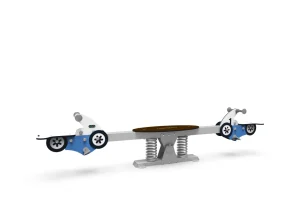
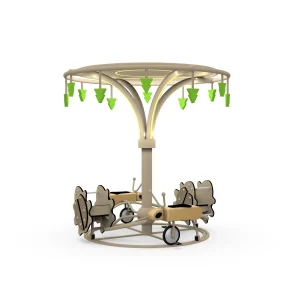
High-speed rail stations are not destination playgrounds. A child may use the space for only a few minutes before boarding. Equipment should therefore support complete, satisfying play moments that do not require long instructional periods or uninterrupted sequences. A spring rider offers immediate sensory feedback. A ground-level activity panel can be approached and released quickly. A spinner provides short bursts of balance and social interaction.
Passenger behavior also improves when children have a defined activity zone near the waiting area. Families are less likely to spread into ticketing queues or along platform edges. Station operators can use visual boundaries, signage, and low barriers to keep the play corner within sight of gate information. The design goal is not extended play but repeated short visits that match the transfer rhythm.
Station operators who want to shape these short sessions can contact LvDong at [email protected] or WhatsApp +8613915684545 once they have observed where families already wait.
Space Planning for Rail Station Play Corners
A rail station play corner must fit within existing circulation. Leave enough room for luggage, strollers, and through-passenger movement. In an indoor setting, the footprint should grow from passenger counts, available floor area, and required circulation rather than from a fixed formula. Wall-mounted play panels and single-child spring riders are easier to fit than multi-level structures. LvDong’s compact single-player spinning equipment, for example, has a starting footprint of approximately 60 × 60 × 90 cm and a maximum fall height of 34 cm, which helps station planners integrate play without deep protective surfacing.
Layout should also plan for sight lines. Parents must be able to see their children and the departure screen at the same time. Place play equipment away from main passenger paths but within direct view of seating. This reduces the temptation for children to leave the area and makes boarding less stressful.
Rail station play corners work best when every square meter is planned around passenger flow. <Maximizing Space Strategic Designs for Mall Indoor Playgrounds> covers spatial strategies for compact, high-traffic indoor play areas.
Equipment Selection for Short-Burst Play
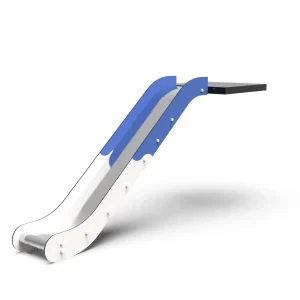
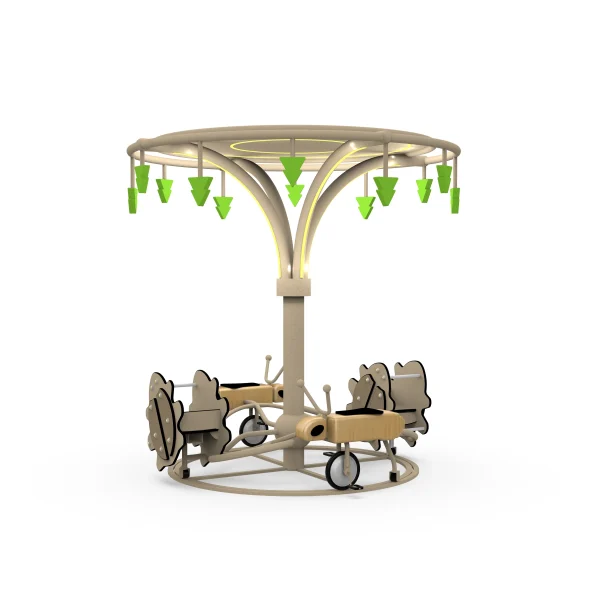
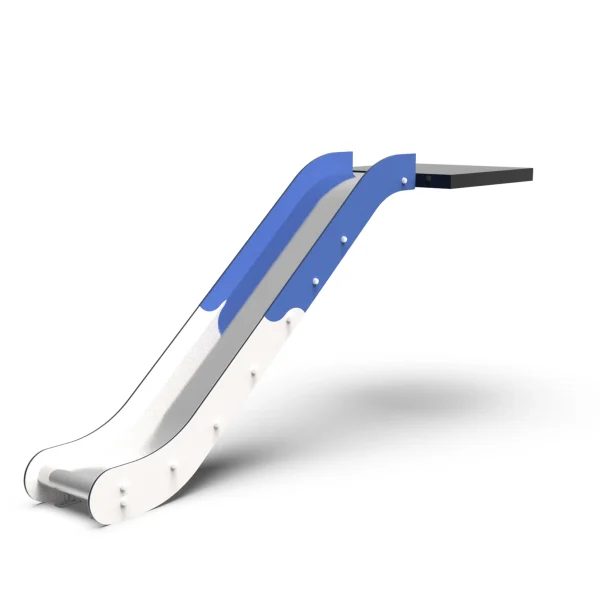
Station play corners should prioritize equipment that children can begin using immediately. A playground spinner or playground spring rider offers continuous motion without long setup. Playground play panels provide tactile and auditory engagement that can be paused when boarding begins. If a slide is included, a compact ground-level or low-platform model may be better than a large tower.
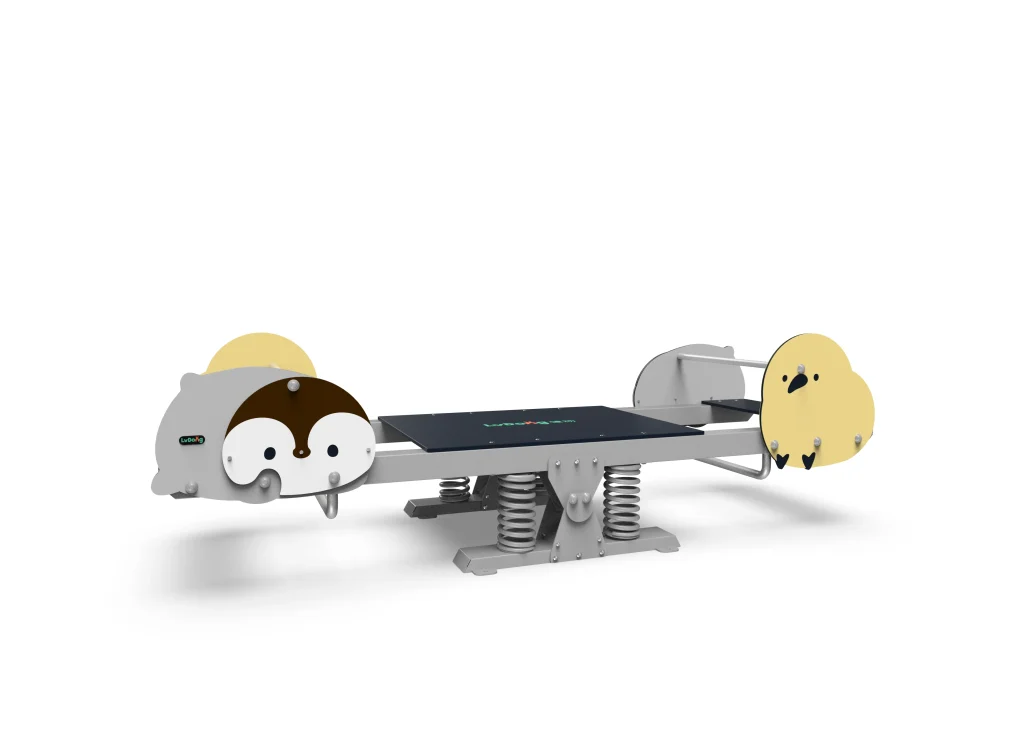
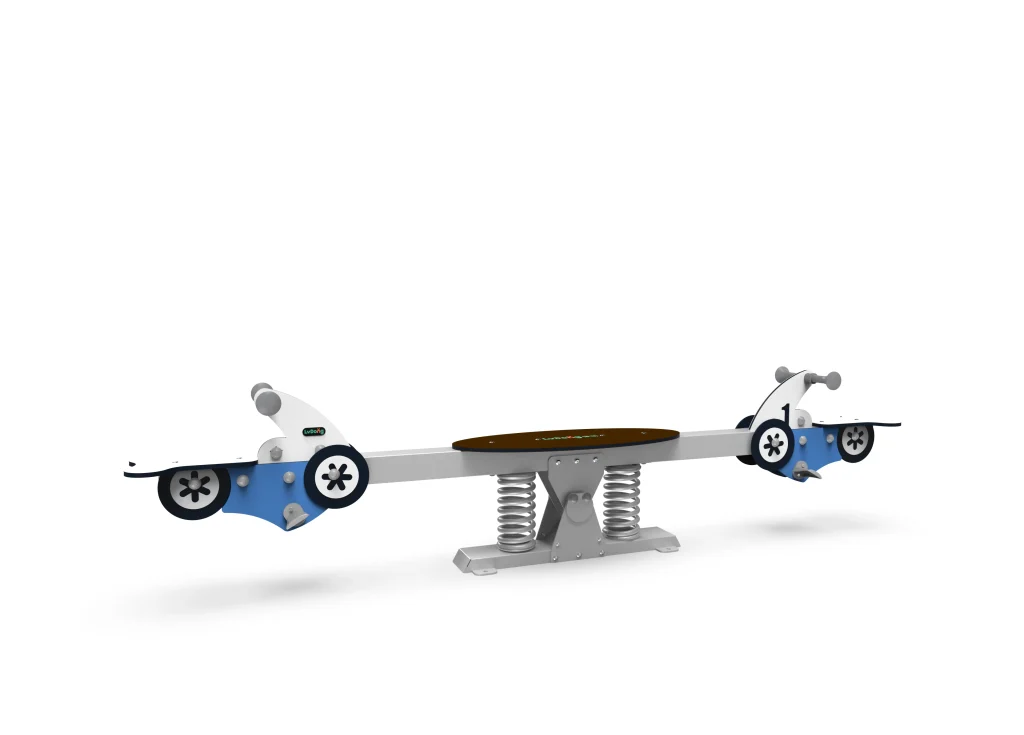
A balanced mix, such as two spring riders, one spinner, and one sensory panel, can spread attention across the short transfer window. In a station, operators should confirm that any multi-user equipment fits the waiting area and supervision model. LvDong’s spring riders use high-strength steel springs with stable rebound and controlled rocking. The company’s multi-player spinning equipment supports six to ten children per unit, but station applications usually call for careful capacity matching.
Equipment selection should also avoid queues. A station play corner should not have one popular item with a long wait while other items stand empty. <Outdoor Playground Set Layout Strategic Design for Optimal Play> covers how to sequence equipment zones for clear, low-conflict circulation.
Safety, Surfacing, and Supervision in Transit Environments
Any public play installation should follow recognized safety standards. EN 1176 provides requirements for general safety, entrapment, impact attenuation, and free space [1]. In China, GB/T 34272-2017 sets comparable safety requirements for children’s playgrounds [2]. The U.S. Consumer Product Safety Commission’s Public Playground Safety Handbook offers practical guidance on surfacing and supervision [3].
Even low-height play equipment needs appropriate use zones. LvDong’s single-player spinner has a maximum fall height of 34 cm, and many spring riders have a maximum fall height of 50 cm. These low fall heights reduce the extent and cost of impact-attenuating surfacing, which is useful in station concourses where flooring transitions are frequent.
Supervision remains essential. Play corners near station platforms should have clear sight lines, no blind spots, and visual separation from escalator or stair access. Avoid loose accessories that can be thrown into passenger flow. Equipment should also be positioned so that boarding announcements and departure boards remain visible from the seating area.
Material Selection and Maintenance for High-Traffic Station Corners
High-speed rail stations operate long hours with high user turnover. Equipment should be easy to clean and resistant to intensive use. This favors high-strength steel springs, smooth powder-coated frames, and UV-stable plastic components designed for indoor-outdoor transition spaces. LvDong’s spring riders and spinning equipment are manufactured with weather-resistant, wear-resistant materials and are suitable for high-frequency use.
Daily inspection and sanitation should be simple. Removable or replaceable parts, accessible fasteners, and surface finishes that withstand disinfectants help station facility teams manage ongoing care. Keep a short checklist for springs, bearings, fasteners, and surfacing. For rail environments, schedule rapid repairs outside peak periods and keep commonly needed spare parts accessible.
Operator procurement should also consider support and service before installation. <Playground Equipment Warranty Comparison 1 3 or 5 Years> covers warranty structures and what they include.
For a specific station layout, contact LvDong at [email protected] or WhatsApp +8613915684545 to discuss equipment combinations and maintenance planning.
Plan the Right High-Speed Rail Station Play Corner
Start with four pieces of information: estimated transfer passenger volume, available floor area, target age range, and existing surfacing or flooring. Then define the 10-minute play cycle you want to create—an arrival moment, a brief active play phase, and a clear transition back to boarding. This is a practical planning exercise, not a purely promotional pitch.
Send a station plan or photographs to [email protected] or WhatsApp +8613915684545. LvDong can advise on equipment combinations, layout drawings, and compliance documentation before you commit to procurement.
Frequently Asked Questions
What is a 10-minute play cycle in a rail station?
A 10-minute play cycle is a planned sequence that lets children and families use a play corner during short transfer windows. It may include arrival, brief movement on a spring rider or spinner, sensory engagement at a wall panel, and departure to the boarding gate. The goal is complete, satisfying play without long sessions that interfere with boarding.
Which equipment is most suitable for a high-speed rail station play corner?
Low-fall-height items tend to work best: single-child spinners, spring riders, wall-mounted activity panels, and small seesaws. They require limited setup, easy supervision, and compact safety zones. Large multi-level structures are usually less suitable unless the station has a dedicated family waiting zone with trained staff.
How should station operators maintain play corners during long operating hours?
Use smooth, easy-clean materials and keep a short daily inspection checklist. Inspect fasteners, springs, bearings, and surfacing. For rail environments, schedule repairs outside peak periods and keep spare parts accessible. LvDong products are designed for high-frequency use, but site-specific maintenance planning is still important.
Does a rail station play corner need special certification?
The equipment should meet the same public playground standards as any commercial installation, such as EN 1176 [1] and GB/T 34272-2017 [2]. Rail operators may also have local fire, accessibility, and evacuation requirements that affect placement and materials. Certification documents should be reviewed during procurement.
References
[1] European Committee for Standardization, EN 1176-1:2017 Playground equipment and surfacing — Part 1: General safety requirements and test methods, CEN, Brussels, 2017.
[2] Standardization Administration of China, GB/T 34272-2017 Safety requirements for children’s playgrounds, Beijing, 2017.
[3] U.S. Consumer Product Safety Commission, Public Playground Safety Handbook, Publication No. 325, Washington, D.C., 2015.
If you’re interested, check out these related articles:
Playground Slide Materials LLDPE vs 304 Steel Performance
Hotel Kids Club Playground Equipment Configuration Guide
Global Import Regulations for Playground Equipment by Country