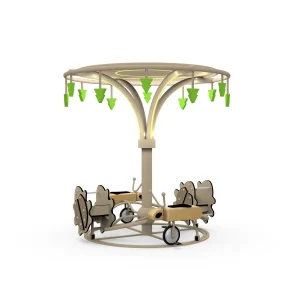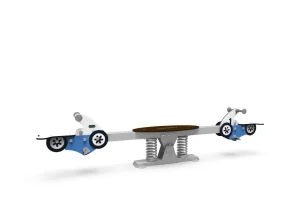
Food court play zones fail hygiene audits for two reasons: surface choices that hold food residue, and seams that trap moisture where inspectors look. Easy-clean food court play zones do not depend on more cleaning hours; they start with the material, joint, and drain details designed into the equipment. In equipment reviews for compact restaurant sites, I have watched operators compare slide colors before confirming whether a spring base drains, and that sequence creates avoidable audit risk. The difference is specifying for audit access first: closed profiles, drainable recesses, and surfaces a staff member can wipe without moving restaurant tables.
Which Food Court Play Zone Surfaces Simplify Hygiene Audits?
Most surface comparisons stop at material wipeability. In food court play zones, hidden junctions decide the issue. A surface that looks smooth in a catalog still passes or fails based on joints, edge treatment, and how liquids leave the equipment. For food court settings, we favor closed, low-porosity materials with few recessed fasteners. Rotationally molded LLDPE slide beds and HDPE panels resist sugary films and do not absorb grease. 304 stainless steel offers the same cleanability for handrails, posts, and connector points, but only when joints are sealed and wiped dry. Powder-coated steel works for frames if the coating remains intact and edges are rounded. Avoid open-cell seating pads, deep anti-slip grooves, and exposed bolt pockets. These collect condensed food grease even when the main surface is wiped twice a day.
| Component | Preferred material | Cleaning behavior | Inspection risk |
|---|---|---|---|
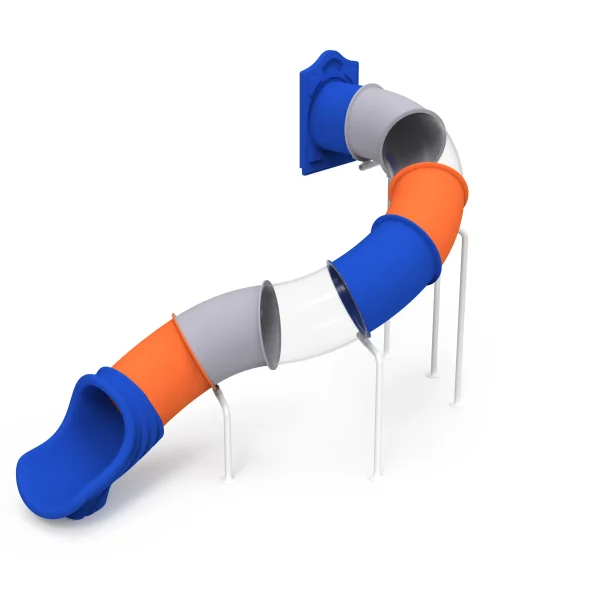
| Slide bedway | LLDPE or 304 stainless steel | Non-porous, releases sugary film | Seams between sections if grooved |
| Activity panels | HDPE with sealed printed graphics | Flat, sanitizer-resistant | Mounting gaps behind panel |
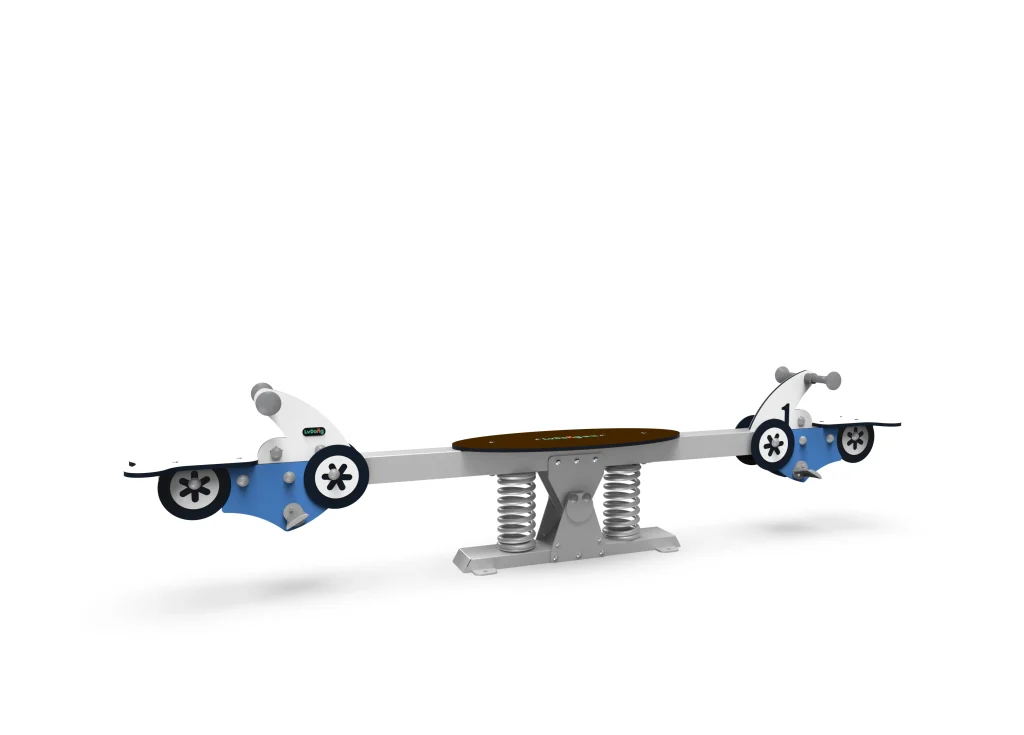
| Springs and riders | Galvanized or stainless spring, sealed seat | Smooth, drains freely | Recessed spring pocket traps debris |
| Surfacing transition | Seamless rubber or closed-cell tile | Mop-friendly | Lifted edges hold food |
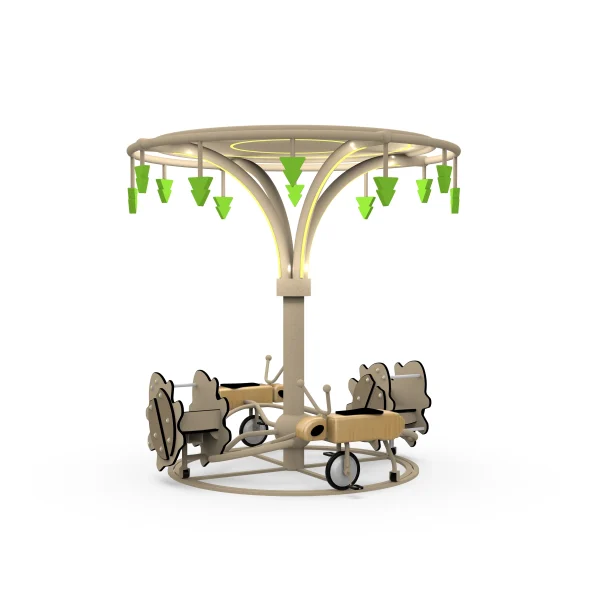
Panel choice has a direct effect on cleaning time in a food court play area. <Playground Play Panels Material Selection and Secure Installation> covers why sealed panel edges and correct mounting reduce the gaps where food residue and cleaning chemicals collect, which is exactly what an inspector looks for after a busy lunch window.
Where Do Food Court Play Zones Fail Hygiene Inspections?
In audits we have prepared for, the largest slide surface is rarely the problem. The failures cluster in hidden zones: the underside of a toddler seat, the flat seam behind a play panel, the cup-shaped depression around a spring base, and the transition where rubber surfacing meets a post. Food court air carries oil mist. That film settles on equipment after hours and darkens in recesses. When an inspector runs a glove or swab along a joint, the finding is usually not surface dirt but trapped contamination.
Design detail matters more than cleaning effort at these points. We prefer closed profiles, minimum flat horizontal shelves, and through-openings under seats so a mop or cloth can pass without removing covers. Equipment with decorative holes should drain rather than pocket. If a surface cannot be reached with a wiping motion, it will eventually fail, no matter how many logs the operator keeps.
Small food court footprints make cleaning access harder. <Small Space Solutions for Restaurant Childrens Play Areas> covers layout decisions that keep equipment reachable for staff and inspectors without giving up play value.
If your food court combines play equipment with seating, a water feature, or a branded activity wall, confirm access clearances before you finalize the layout. Send your floor plan and target age range to [email protected], and we will mark the surfaces and inspection spots your hygiene checklist should include.
What Cleaning Routines Protect Easy Clean Food Court Play Equipment?
Daily cleaning should be a wipe-and-inspect pass, not a cosmetic once-over. Use warm water with a neutral pH detergent on HDPE, LLDPE, and stainless steel. Disinfect touchpoints such as handrails, panel knobs, and spinner grips at the strength required by the facility, then rinse or wipe dry. Do not let disinfectant pool in joints. High-concentration cleaners left on powder coating can cause fading or peeling before the equipment shows any other wear.
Weekly deep cleaning moves beyond visible surfaces. Remove seat covers if present, flush debris from drain holes, and check that no fastener is loosening. We also track seam condition. A small lifted edge can hold enough residue to become an audit finding after a weekend. Cleaning staff should photograph any cracked coating or separated joint immediately. Repairs made early keep the surface clean and keep the audit trail current.
How Do You Specify Play Equipment That Passes Food Court Audits?
Specifications should begin with the audit checklist, not the catalog. When we receive a food court inquiry, I ask the operator for the health department checklist or building management standard that applies. Then we match equipment details against it. This includes surface finish, joint sealing, drain paths, and whether staff can reach the back of every panel. Equipment built to EN 1176 and GB/T 34272-2017 gives a safety foundation, but hygiene audits add cleaning access and contamination control on top of those requirements.
Ask the supplier for photographs of hidden surfaces and a simple cleaning access drawing. If a spring rider has an open pocket under the seat, specify a cover or a drain opening. If a play panel mounts against a wall, confirm the gap is either fully sealed or wide enough for a cloth. A food court layout also needs a radius from seated dining to catch airborne spray. Compact equipment matters, but place it where staff can clean without moving tables.
Before ordering, sample evaluation catches surface quality issues that catalogs hide. <Evaluate Playground Equipment Samples Before Buying A Guide> covers how to test panel edges, fasteners, and coating quality before committing to a food court equipment package.
How Do You Order an Easy Clean Food Court Play Zone?
Audit preparation consumes manager time, and most food court play zone failures come from specifications that were never checked against cleanability. We can shorten that process. Send us your floor plan, age range, and hygiene audit checklist, and we will return a shortlist of easy-clean food court play equipment with the joint, drain, and access details already matched to your inspection points. For a direct specification review, email [email protected] or WhatsApp +8613915684545.
What Questions Do Food Court Operators Ask About Play Zone Hygiene?
How often should a food court play zone be deep cleaned?
Daily touchpoint cleaning and weekly deep cleaning are the practical minimum for a food court play zone. The daily pass removes fresh food residue, oil film, and visible spills from handrails, seats, and panels. The weekly pass clears the recesses that attract audit findings: seat undersides, spring bases, drain holes, and panel mounting gaps. If the play area sits within splash distance of dining tables or a serving counter, increase the wipe pass. The key is not adding time but matching the frequency to the location and documenting completed checks.
What surface finish is easiest to clean in a food court play area?
The shiniest surface is not always the easiest audit pass. High-gloss paint can look clean and still hide residue along fasteners. The better choice is a non-porous material with minimal texture and no open edge, such as LLDPE or 304 stainless steel with sealed joints. Some texture helps grip, but deep anti-slip grooves hold food film. We specify smooth contact surfaces with texture only where it has a safety function. The finish matters less than the detail: sealed edges, proper drainage, and no horizontal shelf where grease can settle.
Can interactive play panels be sanitized without damaging graphics or electronics?
It depends on panel construction and the sealing rating. Panels with flush printed surfaces and sealed edges tolerate routine wiping and approved disinfectants better than panels with exposed screens or open corners. For food court use, specify an easy-clean activity panel with IP-rated enclosures when electronics are included. Avoid abrasive pads or strong solvents. Apply the cleaner to the cloth rather than spraying the panel, and wipe dry afterward. This protects both the graphic and the electrical components while still meeting hygiene requirements.
What should I ask a playground supplier about hygiene audit support?
In food court projects we work on, the highest-value request is a cleaning access drawing rather than a generic warranty statement. Ask whether the equipment has open pockets, sealed panel gaps, and drain holes that staff can reach. Ask for material documentation and a cleaning procedure that matches your health department checklist. A supplier with production control can also confirm which surfaces are sanitizer-safe and which should be wiped with water only. Send your audit checklist and food court floor plan to [email protected], and we will confirm which surfaces and access details match the points your inspector checks.
If you’re interested, check out these related articles:
Slide Platform Height and Exit Safety Guidelines for Playgrounds
Wholesale Pricing MOQ for Spring Riders A Strategic Guide