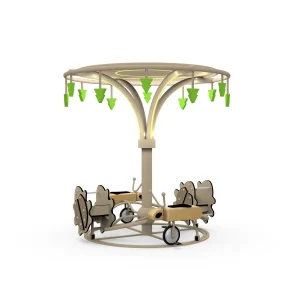
For many buyers, the dealership waiting area is the first practical test of how a business treats families. A child who is bored, restless, or underfoot can turn a routine service visit into a tense experience. A carefully planned play corner changes that dynamic. It gives children a clear place to play, gives parents room to focus, and gives the dealership a calm, branded environment that supports longer conversations and repeat visits.
The Role of Waiting Spaces in Dealership Retention
Service wait times are part of automotive retail, but perceived wait often matters more than measured wait. In service environments, physical surroundings influence customer satisfaction and behavioral intentions, including whether a customer returns [1]. A waiting area that acknowledges young visitors is not a cosmetic extra; it is part of the customer experience equation.
For dealerships, retention often depends on small signals: a clean coffee station, a clear service timeline, a safe place for children. A branded play corner sends a consistent message that the business organizes its space around real family needs. It also gives sales and service staff a useful conversation point when parents arrive with children.
Safety, Compliance, and Space Planning
Indoor and semi-outdoor play areas in commercial settings still need the same safety discipline as public playgrounds. Equipment should be selected to meet recognized public-use standards such as ASTM F1487 [3] or EN 1176 [5]. These standards address head and neck entrapment, protrusion hazards, fall height, and structural loading. Even a compact branded play corner should use equipment designed and tested for public, high-frequency settings rather than residential toys.
Surface and clearance matter as much as the equipment. The U.S. Consumer Product Safety Commission handbook recommends protective surfacing and use zones for moving play elements [2]. In a showroom, that can mean low-profile rubber matting, a defined boundary, and enough space around spinners or riders to avoid collisions with furniture and foot traffic. Clear floor space and reach range should also follow accessible design requirements such as the ADA Standards for Accessible Design [4].
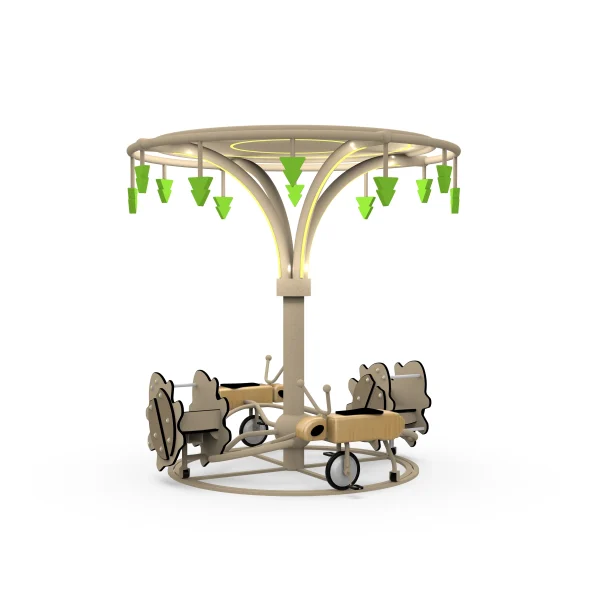
A dealership play corner does not need a large footprint to be effective. Wall-mounted activity panels can work in a corridor while single-player spinners and spring riders can work in a waiting lounge corner. The key is to place the play area where parents can see it from seating, but outside the main circulation path. Sight-line visibility reduces supervision stress and helps staff keep the area tidy.
The same sight-line and buffer-zone logic used in full outdoor playgrounds applies when fitting a small commercial play corner into a showroom. <Outdoor Playground Set Layout Strategic Design for Optimal Play> covers slide, swing, and climber positioning for safer traffic flow.
When floor area is limited, a perimeter play wall or a single compact spinner may be more practical than a multi-station structure. The goal is one clear activity zone, not scattered toys that create tripping hazards. A branded play corner should also include a visual boundary, such as a colored mat or low divider, so the space reads as intentional rather than temporary.
Choosing Equipment That Is Calm, Quiet, and Easy to Clean
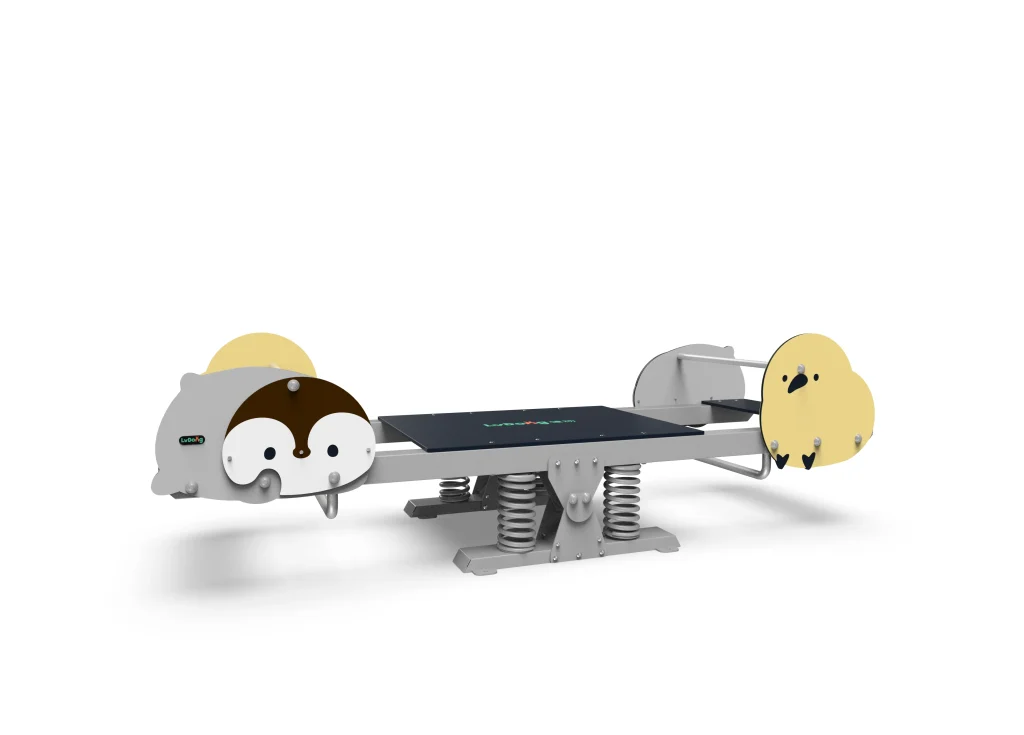
A dealership waiting area is not a playground. The equipment should support short bursts of play without overwhelming the room. Sound and movement should be controlled. Mechanical play elements such as single-player spinning equipment and spring riders offer motion without batteries or loud electronic feedback. This is useful in a setting where customers are making financial decisions and do not want repeated audio interruptions.
Wall-mounted play panels can provide tactile and visual engagement at a lower activity level. These panels fit into waiting lounges and service write-up areas without demanding dedicated floor space. For a branded play corner, panels can carry the dealership’s colors, logo, or model themes through powder coating and durable graphics.
Sensory panels offer a compact way to keep waiting children engaged while keeping noise levels manageable. <Sensory Playground Panels Touch Visual Audio Options> covers material, interaction, and installation choices for commercial play walls.
Cleanability is an operational requirement. Smooth powder-coated steel, rotationally molded plastic, and washable panel surfaces should be standard. Avoid porous materials or complex gaps that collect crumbs and dust. Daily cleaning should be possible with mild detergent and a soft cloth without damaging graphics or moving components.
The table below shows representative compact equipment parameters for commercial play corners.
| Equipment option | Age range | Typical footprint | Max fall height | Notes for a dealership |
|---|---|---|---|---|
| Single-player spinning equipment | 2+ years | Approximately 60 × 60 × 90 cm to 95 × 80 × 160 cm | 34 cm | Compact seated spinning and rocking |
| Spring rider | 2+ or 3+ years | Approximately 60–99 × 35–39 × 79–110 cm | 50 cm | Low fall height with secure hand grips |
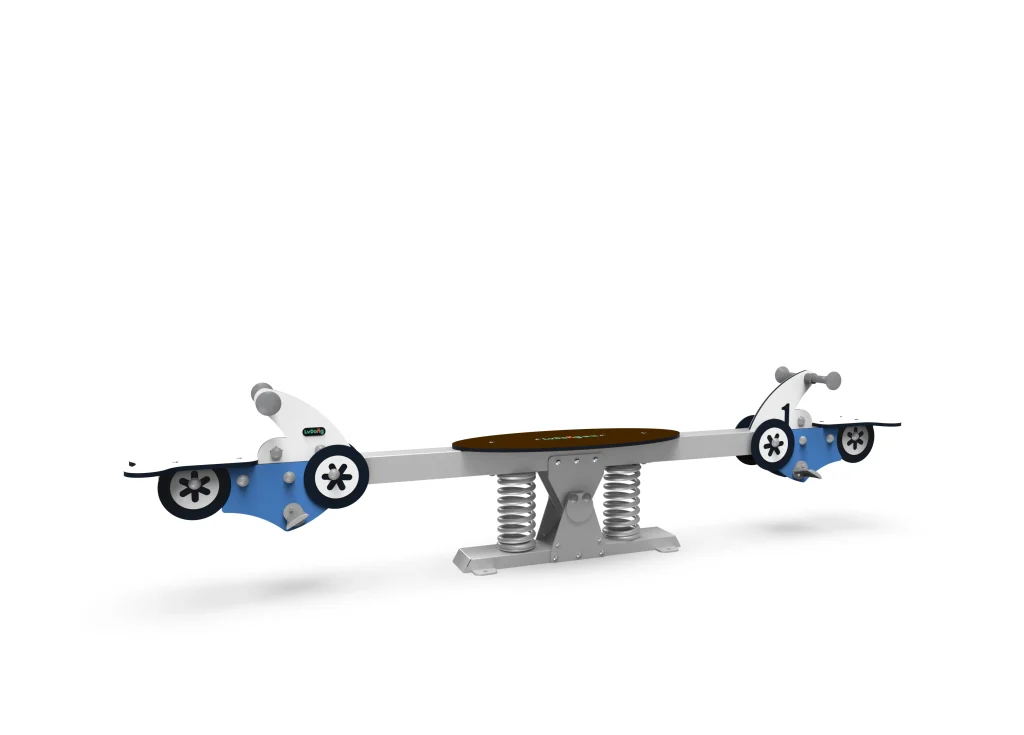
| Multi-person seesaw | 3+ years | Approximately 300–320 × 39–110 × 72–97 cm | 60 cm | Supports 2–10 children for cooperative play |
| Multi-player spinning wheel | 2+ to 6+ years | Diameter 120–200 cm, height 70–220 cm | 55–77 cm | High capacity; theme options available |
| Activity wall panels | 2+ years | Wall-mounted | Not applicable | Tactile, visual, and audio engagement |
Planning a branded play corner for a dealership waiting area? Send floor dimensions and a short description of the intended age range to huyg@lvdongtoys.com or WhatsApp +86 139 1568 4545. A design contact can review the layout and recommend low-footprint play elements that fit without disrupting showroom flow.
Sensory and Developmental Value for Waiting Families
Short play opportunities serve more than distraction. Movement helps children regulate energy during a long service wait. Spinning, rocking, and tactile play provide proprioceptive and vestibular input that can calm some children and help them transition back to seated waiting. In a dealership context, this means fewer tantrums, less running, and a quieter shared space.
Playground spinning toys can support active play while helping children build balance and coordination, which is why they are often valued beyond large public parks. <Child Development Benefits Playground Spinning Toy Impact> covers the developmental benefits of spinning toys and how movement supports child engagement.
A play corner can serve a wide age range if it includes a quiet sensory wall for toddlers, a low spring rider for 2-to-3-year-olds, and a compact spinner or small seesaw for older children. Age separation can be as simple as placing the toddler panel on one wall and the moving equipment on another, with a visual cue for parents to stay nearby.
Maintenance, Branding, and Long-Term Value
A branded play corner should be treated as an asset rather than a one-time amenity. Fixed anchors, torque-checked fasteners, and sealed bearings reduce the chance of equipment becoming loose or noisy. A simple daily check for visible damage, missing caps, and sharp edges can be completed by showroom staff in a few minutes. Annual inspection by a qualified playground supplier or certified inspector adds another layer of protection.
Branding can be integrated without turning the space into a theme park. A restrained palette, a dealership logo on a panel or equipment badge, and perhaps a model-line color accent can create a memorable but professional look. The strongest branded play corners feel like a natural extension of the showroom rather than a separate attraction.
The long-term benefit is operational. A waiting area that works for families can reduce perceived wait stress, lower the emotional friction of the service visit, and increase the likelihood that the customer returns for routine maintenance. For dealerships competing on convenience and trust, a small branded play corner can be a meaningful differentiator.
Plan a Branded Play Corner With Suzhou LvDong
Suzhou LvDong Amusement Equipment Co., Ltd. designs and manufactures unpowered play equipment for commercial, educational, and municipal settings. The product range includes compact spinners, spring riders, activity panels, seesaws, and modular playground structures that can be configured for dealership waiting areas, hotel kids clubs, airport family zones, and similar high-traffic indoor spaces.
For project assistance, send floor measurements and intended age range to huyg@lvdongtoys.com or WhatsApp +86 139 1568 4545. The design team can provide layout options, safety documentation, and finish recommendations before the equipment is produced.
Frequently Asked Questions
What age range should a dealership play corner serve?
Most dealership spaces perform well with a mix for ages 2 to 8. A low spring rider or wall panel can serve toddlers, while a compact spinner or multi-person seesaw can engage older children. The age range should be marked on a small sign and matched to the equipment’s rated fall height and user capacity.
How much floor area does a branded play corner require?
A basic wall-mounted sensory panel requires very little floor footprint. A single moving element such as a compact spinner or spring rider can work in a corner or against a wall when the required use zone is maintained. The exact layout depends on the selected equipment and sight lines from the waiting area.
Are the finishes cleanable for an indoor showroom?
Yes. Powder-coated steel, rotationally molded plastic, and smooth play panels can be cleaned with mild detergent and a soft cloth. Materials should be chosen to resist staining and to avoid fibers or crevices that collect dust.
Does adding a play corner create insurance or compliance risk?
When equipment is selected for public-use standards and installed with correct anchoring and protective surfaces, risk is manageable. Documented maintenance and a brief daily inspection routine also support safety. Buyers should confirm that the supplier can provide test reports and compliance documentation.
Can the play corner be branded without looking like an amusement park?
Yes. A limited color palette, a single logo placement, and a clean divider or mat can brand the space while keeping it professional. The strongest commercial play corners resemble a considered showroom feature more than an indoor playground.
References
[1] Bitner, M. J. (1992). Servicescapes: The Impact of Physical Surroundings on Customers and Employees. Journal of Marketing, 56(2), 57–71.
[2] U.S. Consumer Product Safety Commission. Public Playground Safety Handbook, Pub. No. 325.
[3] ASTM International. ASTM F1487-21: Standard Consumer Safety Performance Specification for Playground Equipment for Public Use.
[4] U.S. Access Board. Americans with Disabilities Act Accessibility Standards, 2010.
[5] European Committee for Standardization. EN 1176-1:2017: Playground Equipment and Surfacing — General Safety Requirements and Test Methods.
If you’re interested, check out these related articles:
Factory Direct Playground Spring Riders Unbeatable Value Quality
Kindergarten Outdoor Play Equipment Strategic Upgrade Priorities