Ocean freight scratch prevention is a packaging specification decision, not a last-minute packing task. When powder-coated steel frames, stainless steel slide tubes, pre-finished panels, and molded plastic components travel in a 40HQ container for several weeks, the wrong protective layer can turn a clean production finish into touch-up work, repainting, or a formal damage claim at destination.
This guide compares foam and bubble wrap across the conditions that actually cause scratches and surface damage in ocean freight: vibration, condensation, edge abrasion, load shift, and repeated handling. It also shows how packaging standards, when written into a purchase order, reduce disputes and protect playground equipment through the supply chain.
Packaging Decisions and Scratch Risk in Ocean Freight
Scratch damage rarely comes from one impact. It accumulates through a voyage: the container moves from factory floor to truck, port yard, vessel, transfer, and final delivery. At each step, stacked loads experience vibration and compressive force. ISTA test procedures for unitized loads reflect these conditions because real transit subjects packages to repeated low-frequency movement and occasional shock [1].
Why Ocean Freight Punishes Poor Packaging
Ocean freight introduces risks that domestic trucking rarely presents. Containers are stacked in terminals and on vessels, so lower packages carry sustained compression for days or weeks. Humidity changes inside the container create condensation, which wets cardboard and softens some cushioning materials. Lateral movement during crane lifts and road transfer can shift heavy items inside crates, forcing polished surfaces against wooden battens, other components, or container walls.
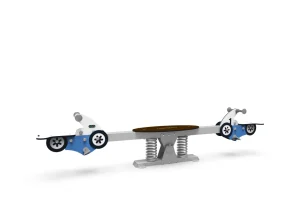
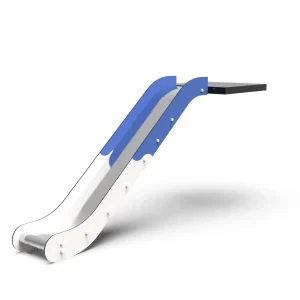
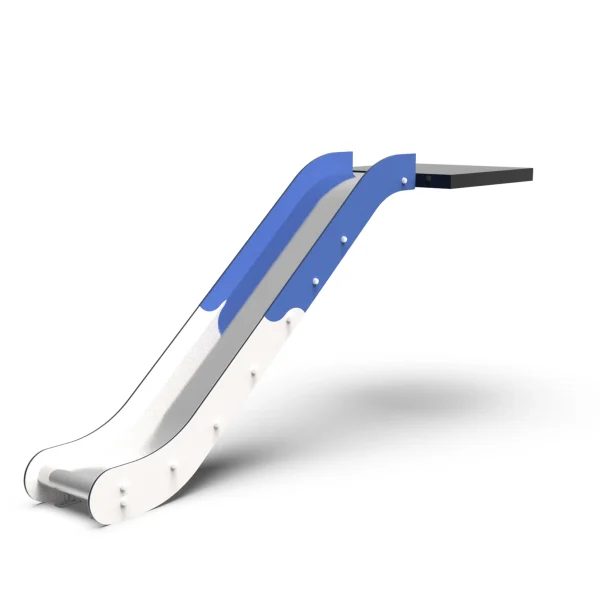
For playground equipment, these risks are compounded by shape. Slides, spinners, seesaws, and spring riders are not flat cartons. They have curved shells, protruding hubs, handrails, and coated steel frames. If the protective layer does not stay in place around those contours, edge wear begins early in the journey.
The Cost of Surface Damage in B2B Playground Equipment
Surface damage is more than repainting. A scratched slide tube or chipped post requires inspection, documentation, and repair coordination at the destination site. If the buyer is a municipality, hotel, or school, visible damage can delay opening, trigger liquidated damages, or reduce confidence in the supplier’s quality control. Packaging is therefore a procurement issue: the buyer is not paying for foam or bubble wrap. The buyer is paying to prevent a finish problem from becoming a project delay.
The choice between foam and bubble wrap should be based on the finish being protected, the shape of the part, the length of the voyage, and the loading method. There is no single material that is universally best.
Foam vs. Bubble Wrap: Material Performance
Both foam and bubble wrap reduce surface damage, but they work through different mechanisms. Foam absorbs and disperses pressure across a larger area. Bubble wrap creates a ventilated, flexible barrier that cushions light impacts and separates surfaces.
What Foam Does Well
Closed-cell polyethylene foam and polyurethane foam provide consistent thickness, high compressive strength, and stable edge retention when cut or routed into profiles. For heavy steel frames and slide components, foam planks can be placed between stacked layers so weight is spread evenly. Foam edge profiles can be taped along sharp corners, stainless steel edges, and powder-coated handrails to prevent the metal-to-metal or metal-to-wood contact that causes most scratch damage.
Closed-cell foam also resists moisture absorption better than open-cell foam or corrugated board. This matters in ocean freight because condensation inside a container can persist for long periods. A closed-cell layer keeps a dry, stable contact surface against the equipment finish.
What Bubble Wrap Does Well
Bubble wrap is light, flexible, and fast to apply. It works effectively as a secondary wrap around irregular shapes because it conforms to curves and can be stretched around protrusions. It also creates a non-abrasive contact surface that prevents two finished parts from rubbing directly against each other.
Bubble wrap performs best when the load is light and the movement is limited. For spring rider seats, small brackets, and pre-packaged hardware, bubble wrap is often sufficient when combined with a rigid outer carton or divider. It also provides a useful moisture barrier in its film layer, though trapped air and condensation can remain an issue if the wrap is completely sealed without ventilation.
Where Each Fails in a Container
Foam is not automatically protective. Thin, low-density foam compresses under load and loses its cushioning value. Open-cell urethane foam can hold moisture against metal and cause staining or oxidation. Foam also requires accurate cutting; if it is roughly torn or taped incorrectly, it may fall away during transit.
Bubble wrap fails when it is asked to do structural work. Under a heavy stack, air cells can burst, leaving only a thin film that offers little abrasion resistance. Bubble wrap alone around steel slide modules is generally inadequate because the weight of stacked components compresses the bubbles and creates sharp contact through the collapsed film.
Selection Criteria and Packaging Standards
The practical choice is not simply foam or bubble wrap. Most durable packaging systems use both materials in different roles. Foam handles load-bearing protection and edge blocking; bubble wrap handles surface separation and contour wrapping.
| Selection Criterion | Foam | Bubble Wrap | Recommended Approach |
|---|---|---|---|
| Heavy stacked load | High-density closed-cell foam resists compression | Thin bubbles collapse under high weight | Use foam planks or edge profiles for load-bearing layers |
| Powder-coated steel finish | Edge protection and planks reduce abrasion | Good as a first wrap but not enough alone | Combine bubble wrap with foam edges |
| Sharp corners and bolt heads | Foam profiles hold position | Bubble wrap can tear on sharp edges | Apply foam profiles, then overwrap |
| Irregular curved parts | Cut-to-shape foam possible but slower | Fast contour wrapping | Bubble wrap the contour, foam the contact points |
| Condensation risk | Closed-cell foam resists water absorption | Film can trap moisture if unventilated | Use closed-cell foam, breathable outer wrap |
| Reuse at destination | Rigid foam can be stored and reused | Bubble wrap has limited reuse life | Specify foam for reusable export crates |
| Cost per unit | Higher initial material cost | Lower initial material cost | Compare total landed cost, not material price only |
Commercial packaging standards provide a baseline for workmanship, marking, and performance expectations. ASTM D3951 describes standard practice for commercial packaging, including workmanship and protection levels for different shipping modes [2]. Horizontal impact test methods in ISO 2244 help evaluate whether edge protection and package design survive repeated handling [3].
For wooden crates and pallets used in international shipment, ISPM 15 requires heat treatment or fumigation and an official mark [4]. This is not a scratch-protection rule, but it affects how dunnage, battens, and crate materials are prepared. Barrier wrap and desiccant practices used in military packaging also offer useful benchmarks for long-duration ocean freight [5].
Need help matching packaging to your purchase order? Send your equipment list, quantities, and destination port to [email protected] or WhatsApp +8613915684545 for a packaging specification review before production.
A Practical Packing Sequence for Playground Equipment
A clear packing sequence prevents the common failure where one material is overused and the other is missing at the exact point of damage.
Surface Preparation
Clean and inspect each part. Remove loose debris that could become trapped under film and rub against the finish.Edge Protection
Apply foam edge profiles to sharp edges, welded seams, and powder-coated corners. Tape them securely so they remain in position during loading.Primary Wrap
Wrap curved parts in bubble wrap or PE film to create a non-abrasive contact surface. For closed tubular sections, avoid sealing one end so moisture can drain and air can circulate.Structural Blocking
Use closed-cell foam planks between heavy stacked layers. Block the load against crate walls so it cannot shift laterally.Crating and Dunnage
Use ISPM 15-treated wood for export crates and internal battens [4]. Pad any internal wood contact point that faces a finished equipment surface.Moisture Control
Add desiccant where condensation risk is high, and keep a breathable outer barrier rather than a fully sealed plastic envelope around metal parts.Marking and Documentation
Mark weight, handling orientation, and crate numbers on all sides. Photograph the packed crate before closing as part of the shipment record.
When slide geometry is custom, packaging drawings need the same tolerance review as the 3D design. <Custom Playground Slide Design From Vision to 3D Reality> covers how design data transfers into production planning.
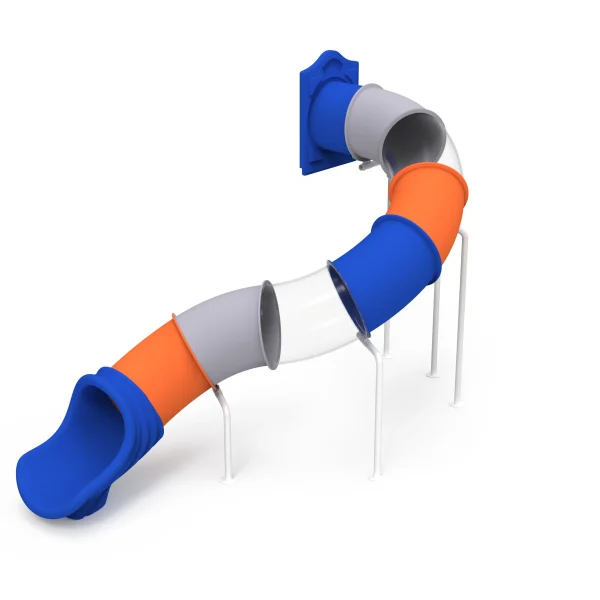
Because slide winder modules and tunnel sections are often the largest components in a playground shipment, their combined dimensions dictate container loading and crate design. <Large Playground Slide Transport and Crane Planning> covers oversized slide handling from factory to site.
Packaging choices also influence environmental claims and documentation. <Eco Friendly Playground Equipment SGS REACH RoHS Standards Explained> covers how material and coating declarations support procurement compliance.
Packaging Support and Specification Review
A packaging specification should travel with the purchase order. Buyers can request a written packing protocol that names the materials, thicknesses, placement points, and inspection photos for each equipment category.
For a packaging specification review, provide the following:
- Equipment dimensions and quantities
- Destination port and inland delivery point
- Surface finish type, such as powder-coated or stainless steel
- Existing packaging standards required by the buyer
- Reuse or return requirements for export crates
- Previous damage history, if any
Contact Suzhou LvDong Amusement Equipment Co., Ltd. at [email protected] or WhatsApp +8613915684545 to review packing requirements before production begins.
Frequently Asked Questions
Is bubble wrap enough for powder-coated playground equipment?
Bubble wrap alone is usually not enough for heavy powder-coated components. It works well as a first non-abrasive wrap, but load-bearing contact points also need closed-cell foam profiles or planks to prevent compression damage and edge abrasion.
Which foam is appropriate for ocean freight?
Closed-cell polyethylene foam is generally preferred for ocean freight because it resists moisture absorption and retains thickness under compression. The required density and thickness depend on component weight, stack height, and contact area. A packaging specification should state these values rather than relying on generic terms such as “foam sheet.”
Does foam cause condensation or mold on metal parts?
Closed-cell foam does not absorb water the way open-cell foam or cardboard can. However, any fully sealed wrapping can trap moisture against metal. The better practice is to use closed-cell foam in combination with a breathable outer barrier and, where needed, desiccant.
How do packaging standards affect warranty claims?
Packaging standards help establish the condition at dispatch. When packing follows recognized workmanship and test references such as ASTM D3951 [2] and when photographs document the closed crate, it becomes far easier to distinguish transit damage from manufacturing defects. Buyers should therefore request a packaging protocol as part of the order file.
References
[1] International Safe Transit Association. ISTA 3E: Unitized Loads of Same Product. ISTA, 2018.
[2] ASTM International. ASTM D3951-18: Standard Practice for Commercial Packaging. ASTM, 2018.
[3] International Organization for Standardization. ISO 2244:2000 Packaging — Complete, filled transport packages and unit loads — Horizontal impact tests. ISO, 2000.
[4] International Plant Protection Convention. ISPM 15: Regulation of Wood Packaging Material in International Trade. FAO, 2019.
[5] U.S. Department of Defense. MIL-STD-2073-1E: Standard Practice for Military Packaging. DoD, 2008.
If you’re interested, check out these related articles:
Double Slide Playground Design for Optimal Traffic Flow Strategies
Buying Playground Spinners Pricing Discounts and Supplier Insights
Hurricane Spinner Load Testing Unpacking Playground Safety Standards
12 Critical Post Installation Acceptance Tests for Playgrounds