A custom themed playground rarely moves from first sketch to opening day in a straight line. The schedule is shaped by design revisions, safety verification, material availability, factory planning, shipping arrangements, and site preparation. For buyers planning a hotel kids club, municipal park, cultural tourism site, or school yard, the most useful document is not only a quotation but a stage-by-stage timeline that shows when decisions lock, when production begins, and where the usual delays appear. This guide explains the full customization path and how to keep each stage moving without sacrificing safety, finish quality, or long-term durability.
Standard playground equipment can ship quickly because the design, tooling, and structural files already exist. A themed playground usually includes one or more custom elements: a branded play panel, a marine-themed seesaw, a slide integrated with a playhouse, color-matched frames, or a custom multi-player spinner. Each custom element enters a sequence of design freeze, engineering review, material confirmation, fabrication, finishing, and inspection. When buyers treat custom elements as if they were stock items, schedules fail at the approval point. The more detail that is fixed early — theme references, dimensions, colors, safety surfacing, and access requirements — the more predictable the production timeline becomes.
Stage 1: Concept Sketch and Design Lock
The first milestone is the design lock. The process starts with hand sketches or reference images, then moves to 2D layout drawings and a 3D model that places the equipment in the actual site context. At this stage, the buyer should confirm the target age range, user capacity, available footprint, fall height limits, and theme direction. A slide tower with a nautical theme, for example, may require different platform heights and guardrail details than a compact urban pocket park slide. After the 3D model is approved, the engineering team checks every tube opening, platform edge, and moving part against EN 1176-1 safety requirements [1]. In the U.S. market, ASTM F1487-21 is used as the corresponding public playground standard [2]. These checks must happen before material procurement, not after fabrication. Changing the slide radius or platform height later can push the entire production schedule back.
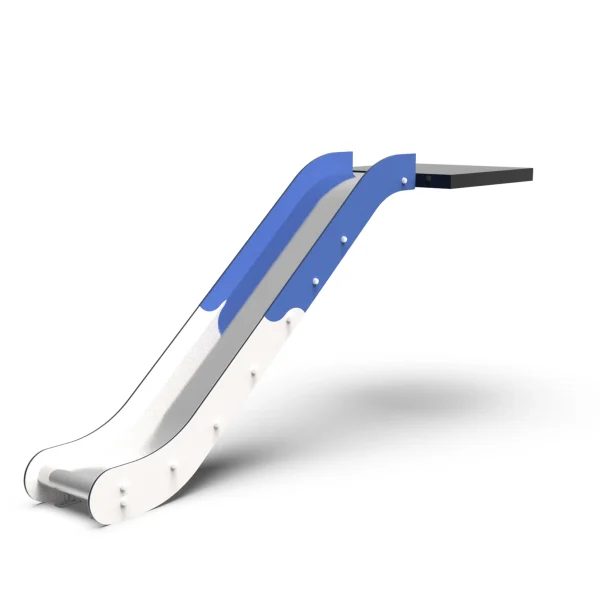
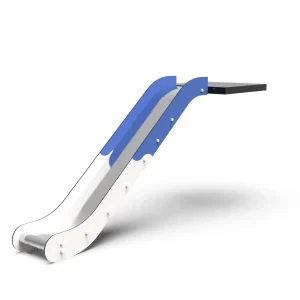
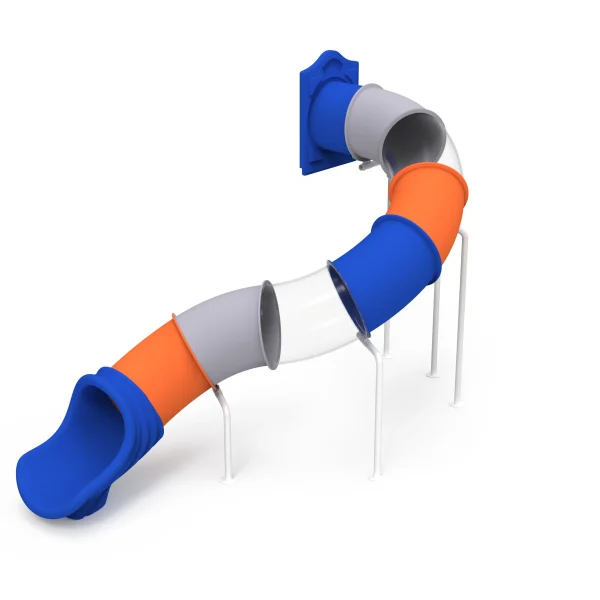
Custom slide geometry is one of the most frequent sources of late changes. A curved slide may look simple in a render, but the bend radius, tube diameter, support spacing, and exit runout all affect speed, clearance, and entrapment risk. Buyers who review a custom playground slides configuration early can lock the relevant dimensions before structural drawings proceed.
Stage 2: Engineering, Safety, and Supplier Validation
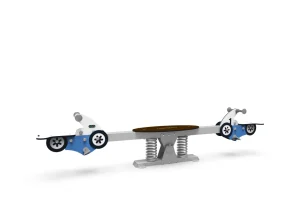
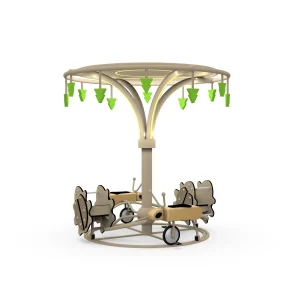
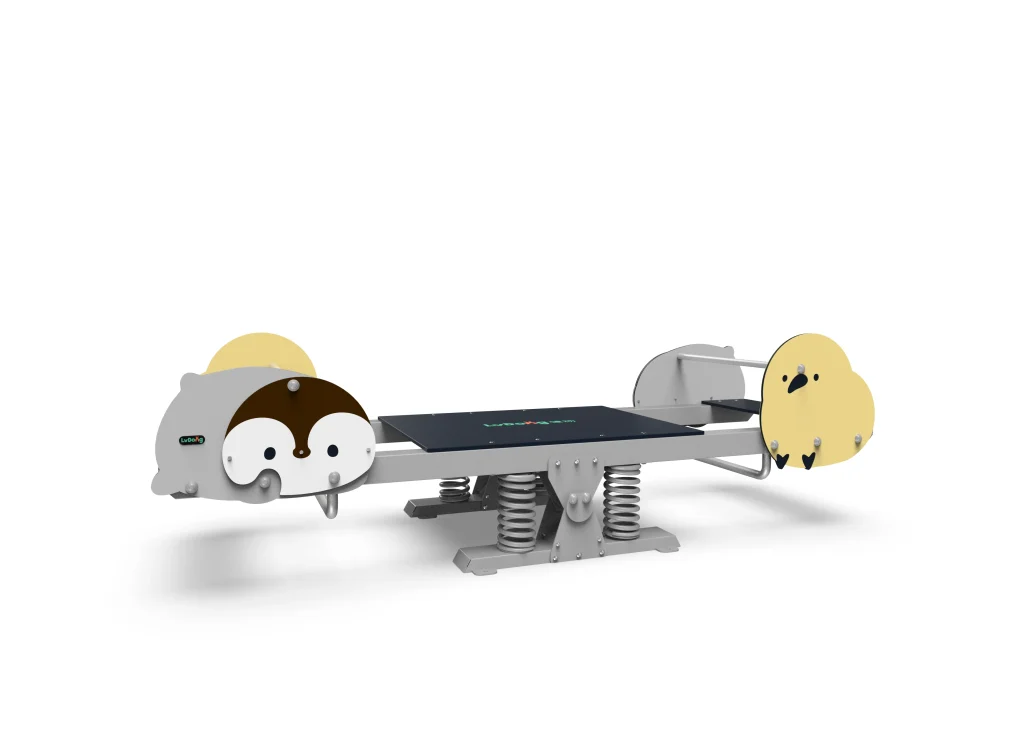
After design lock, the project enters engineering review. For a themed playground, this review covers fall height calculations, impact attenuation requirements for the intended surfacing, guardrail height, handrail position, and clearance around moving parts. CPSC guidance is widely used in North America to confirm layout distances, age separation, and sight lines [3]. For spinners and seesaws, the engineering team checks the balance point, damping system, and maximum fall height so that motion stays predictable. A themed multi player playground spinning wheel or a shaped multi person playground seesaw must meet the same structural checks as a standard model. The themed exterior should not create extra pinch points, protrusion hazards, or unstable hand positions.
Buyers often focus on the 3D render but skip the factory-level verification. Before you approve a production slot, request a walkthrough of the welding area, coating line, and quality-control records. The purpose is to confirm that the factory can repeat the approved finish and structural quality across every custom part, not just produce one good sample.
Before you approve a custom playground supplier, request a factory walkthrough that covers welding areas, coating lines, and quality records. <Factory Visit Checklist Playground Equipment Supplier Evaluation> covers the inspection points that reveal whether a production schedule is realistic.
Stage 3: Material Procurement and Production Scheduling
Once engineering review closes, procurement begins. Steel frames are cut and welded; springs are checked for rebound and material specification; LLDPE slide sections and panels are molded or formed; then parts go through surface treatment and color matching. ISO 9001:2015 provides a process-based quality management framework that links incoming material inspection to final testing [4]. In China, GB/T 34272-2017 sets additional safety requirements for children’s playgrounds and is used alongside international standards for domestic and export projects [5]. For a themed slide, the tube section, support structure, and viewing window all need to be verified against both the approved 3D file and the relevant opening and entrapment tests.
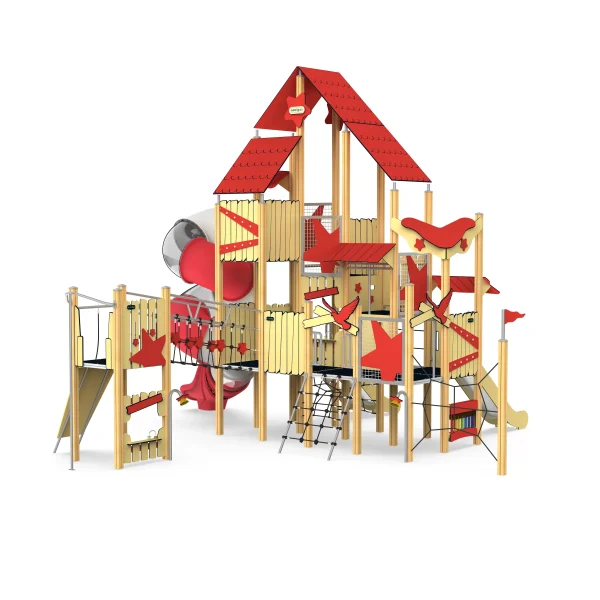
Production scheduling should be treated as a sequence of dependent steps rather than a single ship date. When a buyer asks for a shorter lead time, the fastest reliable path is usually to limit custom scope, reuse an existing platform, or standardize the color palette. A fully bespoke multi-level themed structure takes longer than a stock frame with themed panels. For example, a coastal resort order with salt-spray exposure may require stainless hardware and a more protective anti-corrosion treatment; that selection is best confirmed during material procurement rather than after welding has begun.
At this point, many buyers want a realistic production window before they sign. Send your site plan, theme references, and target opening date to [email protected] with the subject line “Custom Timeline Review.” Include the site location and whether you need a single unit or a full playground set. Our team will return a phased production estimate that shows where design, fabrication, finishing, packing, and shipping are expected to land.
Stage 4: Finishing, Inspection, and Packing
Finishing affects both appearance and lifespan. Powder coating must cure correctly so that colors match the approved Pantone reference and edges remain smooth. Hidden welds are checked before coating, moving parts are assembled and tested, and fabric components are inspected for tightness and attachment strength. Pre-shipment inspection usually covers dimensions, color, welding, coating thickness, and labels. Packing then protects finished parts for ocean freight or container transport. A playground with tunnel slide is typically separated, edge-protected, and braced so the tube does not deform in transit.
No schedule should leave inspection as an afterthought. If a defect is found at the destination instead of at the factory, the delay includes not only replacement time but also demurrage, customs handling, and site labor. The inspection stage is therefore a schedule protection step, not an administrative formality.
Stage 5: Shipping, Customs, and On-Site Installation
After packing, the equipment moves into logistics. Bulky playground parts are usually consolidated into a 40HQ container or a mix of flat-pack and pre-assembled modules. The shipping leg depends on the destination port, but the timeline also includes export documentation, certificate of origin, packing list, and any country-specific approval. Many Middle East and EU public tenders require documentation that goes beyond the commercial invoice. Importers should confirm third-party inspection requirements, SASO or EN 1176 documentation, and any local language manuals before production closes.
Import documentation delays often consume more time than fabrication when destination requirements are unclear. <Global Import Regulations for Playground Equipment by Country> covers country-specific approvals that should be confirmed early in the customization schedule.
On-site installation is the final stage. A custom themed playground may need a foundation plan, anchor bolts, and a short site checklist before the crew arrives. Installation sequencing matters: anchor the main structure first, then attach slides, spinners, and panels, and finally check surfacing and clearance zones. A clean installation day depends on decisions made weeks earlier during design and packing.
Common Delay Points and How to Avoid Them
One of the most common schedule risks is a late theme change. Changing a theme after engineering review can force new drawings, new approval, and new material orders. A similar risk appears when buyers choose the lowest quote without checking whether the factory can hold the required finish and weld quality. Rework after delivery removes any initial saving and adds replacement, shipping, and site downtime.
A lower unit price can extend your timeline if rework or replacement parts are needed after delivery. <Playground Equipment Balancing Price and Quality for Lasting Value> covers the cost decisions that most affect long-term project success.
Other avoidable delays include incomplete site data, unclear compliance targets, and late confirmation of import documents. Each of these items should be placed on a small checklist at the start of the project. The buyer does not need to be an engineer, but the buyer does need to provide site dimensions, age groups, theme direction, color references, and target installation date in one complete package. That single step moves the timeline from guesswork to production planning.
Plan Your Themed Playground Timeline
Every themed playground project benefits from a clear stage plan. If you are evaluating suppliers or preparing a budget, contact Suzhou LvDong Amusement Equipment Co., Ltd. at [email protected] or WhatsApp +8613915684545 with your theme, site dimensions, and target completion date. We can provide a design and production timeline that aligns with your procurement calendar and safety requirements.
FAQ
What should be finalized before requesting a custom playground production timeline?
The buyer should confirm the site dimensions, target age range, user capacity, theme direction, color references, preferred materials, and target installation date. The more complete this information is, the more accurate the production timeline becomes.
How do EN 1176 and ASTM F1487 differ in a custom playground schedule?
EN 1176 is the European playground equipment safety standard, while ASTM F1487 is the U.S. public playground equipment standard. Both influence design review, but the relevant standard depends on the destination market and the procurement documentation required by the buyer.
Can a themed playground be produced faster by reducing custom parts?
Usually yes. Reusing an existing platform, standardizing the color palette, or limiting the number of fully bespoke components can shorten the design and production window while preserving a strong themed appearance.
When should import and certification documents be prepared?
These documents should be confirmed before production closes. Country-specific approvals, third-party inspection requirements, and local language manuals should be identified during the design or engineering stage so they do not create a shipping delay later.
What is the most common timeline delay in themed playground projects?
Late design changes are among the most common delays. Changing a theme, dimension, or material selection after engineering review usually forces new drawings and material planning, which extends the schedule more than most buyers expect.
References
[1] European Committee for Standardization, EN 1176-1:2017 Playground equipment and surfacing — Part 1: General safety requirements and test methods. Brussels, Belgium: CEN, 2017.
[2] ASTM International, ASTM F1487-21 Standard Consumer Safety Performance Specification for Playground Equipment for Public Use. West Conshohocken, PA: ASTM International, 2021.
[3] U.S. Consumer Product Safety Commission, Public Playground Safety Handbook. Bethesda, MD: CPSC, 2015.
[4] International Organization for Standardization, ISO 9001:2015 Quality management systems — Requirements. Geneva, Switzerland: ISO, 2015.
[5] Standardization Administration of China, GB/T 34272-2017 Safety requirements for children’s playgrounds. Beijing, China: SAC, 2017.
If you’re interested, check out these related articles:
Effectively Compare Playground Equipment Suppliers Services
Key Contract Clauses for Commercial Playground Equipment Purchase
Hurricane Spinner Load Testing Unpacking Playground Safety Standards
Sensory Play Panels Inclusive Design for Special Needs