Playground downtime is rarely dramatic. More often an operator hears a bearing begin to grind, sees a spring-rider base plate shift after a storm, or receives a parent report about a loose handrail. In those hours, the difference between a safe closure and a managed correction is the supplier’s after-sales response time. A 24-hour commitment is not a promise that every part will be replaced within one day; it is a structured first response that identifies the fault, rates the risk, and issues a corrective plan before the site opens for another full day of use [1][5].
Why After-Sales Response Time Is an Operational Metric
Public playgrounds are not static structures. Moving parts, dynamic loads, weather exposure, and high child-frequency use create wear that routine inspection alone cannot always predict. European guidance for playground operation requires installation and maintenance records, documented inspection routines, and corrective action when a hazard is identified [1]. The U.S. Consumer Product Safety Commission similarly frames maintenance as an active requirement: a playground that is not kept in a safe operating condition should be repaired, closed, or removed from service [2]. In that framework, speed is not mainly a customer-service value; it is part of the operator’s legal and safety control system.
An unresponsive supplier converts a small mechanical issue into an extended closure. An operator with a clear 24-hour response protocol can instead make one report, receive technical triage, and post the correct temporary or permanent control without lengthy back-and-forth. Over a year of operation, these response minutes accumulate into measurable downtime, inspection backlog, and parent confidence. Facility management standards treat such losses as controllable performance indicators when maintenance response and backlog are tracked [6].
| Response Stage | Operator Action | Supplier Action |
|---|---|---|
| Report | Submit labeled photos, equipment tag, and location within one working hour | Confirm receipt and assign a technical contact |
| Triage | Share use frequency and any incident context | Classify as safety-critical, operational, or cosmetic within 24 hours |
| Corrective plan | Review proposed temporary measure and approve access | Issue a written plan with photos, parts lead time, and remote guidance |
| Verification | Sign off after reinspection and update maintenance log | Provide service report and confirm closure criteria |
The table does not assume every issue is resolved in 24 hours. It distinguishes a response from a repair. That distinction is the core of an enforceable after-sales clause [1][4].
What a 24-Hour Commitment Should Cover in a Contract
A vague promise to “respond promptly” rarely survives a safety-critical Monday morning fault. Operators should instead define the after-sales response in observable terms: what is acknowledged, by whom, through which channel, and what deliverable follows. Under EN 1176-7, maintenance information should support inspection, and the supplier or installer should provide relevant technical documentation for safe operation [1]. ISO 9001 requires a quality management system to include customer communication and corrective action that prevents recurrence [4].
A workable 24-hour scope includes five items:
- A named technical contact for the operator’s market or service region.
- Photo- or video-based diagnostic feedback that confirms whether the unit can remain open with mitigation.
- A written triage classification and the reason behind it.
- A parts availability check with an expected lead time.
- A follow-up task or appointment with a committed window.
When these items are absent, an operator may receive an email within 24 hours but no usable next step. The response has technically happened without changing the site condition. Contract language should therefore ask for a corrective plan, not simply an acknowledgment [4].
Documenting the Handover to Make Future Response Faster
Many after-sales delays are not manufacturing problems; they are documentation gaps. If the as-built component list, foundation detail, fastener specification, and earlier acceptance results are not available, the supplier must reconstruct site context before diagnosis can begin. The handover record is therefore part of the response-time system [1].
An operator can reduce this risk by keeping a simple field pack: equipment serial or tag numbers, installation drawings, surfacing certificates, previous maintenance reports, and dated photos from each inspection. When an issue is reported, that pack becomes the first evidence set for the supplier’s engineering team. Without it, even a well-intentioned response window burns through its first hours on questions the operator could answer immediately [4].
For operators preparing a new installation or auditing an older site, the acceptance record is the baseline for fast future support. It tells the supplier what was correct at handover and what has changed since.
A structured acceptance phase also reveals which documentation should travel with the asset into long-term operation. <12 Critical Post Installation Acceptance Tests for Playgrounds> covers the practical checks that make after-sales diagnosis faster and less speculative.
Maintainability Decisions That Reduce the Number of Urgent After-Sales Calls
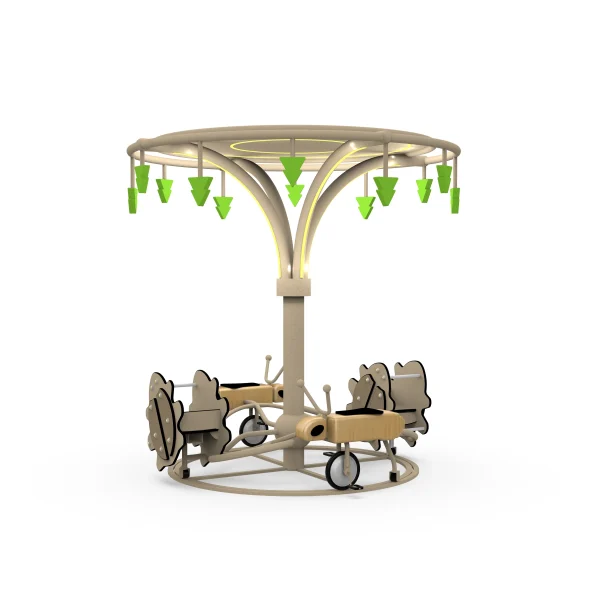
Response speed improves when equipment is designed for diagnosis and replacement. Accessible bearing housings, non-proprietary fasteners, removable panels, and readable part labels allow an operator to photograph the right detail and act on remote guidance. A spinner with a sealed cartridge bearing may take longer to inspect than a design with visible grease points, but it may also require fewer emergency calls overall. These are not cosmetic trade-offs; they change the volume and urgency of service events [3][4].
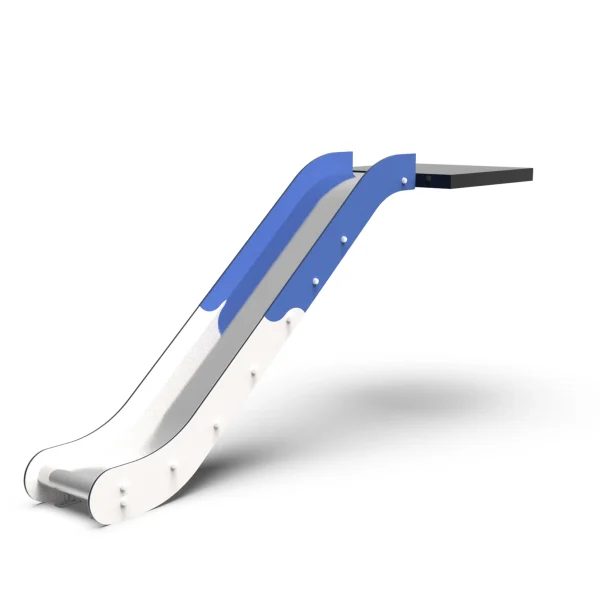
Material selection matters just as much after installation as it does during procurement. A slide bed that resists UV, abrasion, and cleaning chemicals ages differently from a lower-cost alternative. When a part is identified by material specification rather than by guesswork, replacement procurement becomes faster. This is a small design-time decision with a long operational tail.
For high-use venues, durability choices are a form of preventive after-sales management. <High Traffic Durability Tips for Airport Playground Equipment> covers the equipment decisions that reduce emergency calls and make scheduled upkeep more predictable.
If you are currently drafting after-sales response language for a procurement, email [email protected] or message +86 139 1568 4545 for a plain-language response-time checklist that can be incorporated into tender and warranty documents.
Verification After the Supplier’s First Reply
A response is not complete when the supplier sends the corrective plan; it is complete when the operator confirms the hazard has been controlled. That confirmation should occur through a follow-up inspection, a retained service report, and a revised maintenance log [1]. The CPSC handbook describes inspection as an ongoing duty for public playgrounds, with high-use sites requiring more frequent checks [2]. After a repair, those checks should include a short monitoring interval to catch early signs of recurrence.
A practical verification loop includes three steps:
- Re-inspect the repaired component before reopening the full play zone.
- Mark the corrective action in the maintenance log with date, root cause, and replacement part.
- Schedule a follow-up check within the next routine inspection to confirm the fix has held.
When these steps are part of the response protocol, the after-sales interaction becomes a closed loop rather than a series of repeated complaints. That loop is exactly what insurers, inspectors, and parent communities can review when downtime or incidents are questioned [2][4].
Site planning is part of that control; equipment that is difficult to access cannot be inspected efficiently.
For moving equipment, installation and site planning can influence how often a component needs after-sales attention. <Tornado Playground Spinner Strategic Installation Site Planning> covers the site-level details that shape long-term maintainability and response urgency.
Get a Written 24-Hour Response Commitment for Your Playground Project
Send your equipment list, site constraints, and current inspection records to [email protected] or WhatsApp +86 139 1568 4545. Suzhou LvDong will provide a written after-sales response commitment, a maintenance calendar for your equipment, and a no-obligation quotation tailored to your site.
FAQ
What does a 24-hour after-sales response actually promise?
It promises a structured first technical reply within 24 hours of a reported issue: the supplier confirms the fault, classifies the risk, and issues a corrective plan. It is not the same as a 24-hour repair.
Is 24-hour response the same as 24-hour repair?
No. Response includes triage, remote diagnosis, parts identification, and a planned correction. The actual repair time depends on part availability, site access, and severity. Operators should contract both the response window and the repair window.
How can a playground operator measure supplier response performance?
Use a simple log: report timestamp, first useful reply timestamp, corrective plan timestamp, and closure timestamp. Review it monthly. Consistent gaps between report and first usable reply are the metric to improve [6].
Does a 24-hour commitment apply to export orders or remote sites?
Yes, but it may be delivered through remote diagnosis, local agent support, or a scheduled technician rather than an immediate site visit. The contract should state the chosen service channel for the site’s location.
What documentation should be ready before filing an after-sales request?
Send the equipment tag or serial number, dated photos or video, a short description of the fault, the most recent inspection record, and any incident context. That evidence allows the supplier to begin triage without delay [1][4].
References
[1] CEN. EN 1176-7:2020, Playground equipment and surfacing — Part 7: Guidance on installation, inspection, maintenance and operation. European Committee for Standardization, Brussels, 2020.
[2] U.S. Consumer Product Safety Commission. Public Playground Safety Handbook, Publication No. 325. 2015 edition.
[3] ASTM International. ASTM F1487-21, Standard Consumer Safety Performance Specification for Playground Equipment for Public Use. ASTM International, West Conshohocken, PA, 2021.
[4] International Organization for Standardization. ISO 9001:2015, Quality management systems — Requirements. ISO, Geneva, 2015.
[5] CEN. EN 1176-1:2017, Playground equipment and surfacing — Part 1: General safety requirements and test methods. European Committee for Standardization, Brussels, 2017.
[6] International Organization for Standardization. ISO 41001:2018, Facility management — Management systems — Requirements with guidance for use. ISO, Geneva, 2018.
If you’re interested, check out these related articles:
Playset Ground Leveling and Drainage Solutions for Outdoor Slides
Buyers Guide to Spinning Playground Equipment in 2025
Global Import Regulations for Playground Equipment by Country
Free 3D Design for Community Park Playground Equipment Solutions
To discuss after-sales requirements for your equipment list, contact the LvDong team with your project requirements.