Family areas at polar research stations have to do something difficult: create normal childhood play in an environment defined by extreme cold, long periods of limited sun, and remote logistics. The equipment is not a standard playground order. The most useful specification starts with how the site behaves through a full winter cycle, then works backward into materials, fasteners, surfacing, and maintenance. EN 1176 and ASTM F1487 set the minimum public-playground safety frame [1][2], but polar sites add a second layer: cold-soak performance, snow and ice accumulation, and reduced visual contrast during long twilight seasons. This guide covers the decisions that matter when planning a family area at a polar research station.
Site Conditions to Design Around Before Specifying Equipment
Before comparing equipment categories, specify the physical conditions the playground must tolerate. Polar stations commonly experience sustained sub-freezing temperatures, strong ground cooling, drifting snow, and seasonal darkness or twilight. These conditions affect metal, rubber, plastic, and fasteners differently. A useful design tool is a cold-soak index, which tracks not just the lowest air temperature but how long components stay below 0°C before a heating or occupancy cycle returns. This index matters more than a single extreme reading: a component may tolerate a short drop to -20°C but behave differently after weeks below -10°C. EN 1176-1 requires that materials be selected and installed so that they remain safe under reasonably foreseeable conditions of use [1]. At a polar station, the cold-soak and snow-load cycle should be treated as reasonably foreseeable rather than exceptional.
Key site inputs for the specification should include:
- Lowest expected air and ground temperature
- Duration of continuous sub-zero exposure
- Snow drifting depth and ice formation near surfacing
- Number of usable daylight or twilight hours by month
- Access for inspection and component replacement
Material Selection for Extreme Cold and Limited Sun
Material choices decide whether equipment stays smooth and reliable through months of cold. Some materials gain stiffness as temperatures drop, while others remain stable across a wider range. Instead of chasing a single all-purpose solution, the specification should match each component to its cold exposure. Stainless steel is generally preferred for bearings, fasteners, and structural connections in cold, moisture-laden environments because of corrosion resistance and low-temperature toughness; however, the exact grade still matters. Polyethylene and rubber components should be reviewed for cold flexibility, because rigid impact zones can create new pinch or fall-risk conditions when they harden [1][2].
Limited sun reduces ultraviolet load compared with desert or coastal sites, but it does not remove the need for weather-sealed surfaces. Moisture, ice, and freeze-thaw cycles are the more aggressive weathering mechanisms.
| Component | Common material | Cold-weather concern | Specification note |
|---|---|---|---|
| Structural posts and frames | Galvanized steel | Thermal contraction at joints; ice adhesion | Use full-penetration welds and inspect joints per EN 1176-1 [1] |
| Fasteners | 304 or 316 stainless steel | Galvanic corrosion with carbon steel; thread seizure | Match material to adjacent metal and use cold-rated thread treatment [4] |
| Slide bed and panels | LLDPE or HDPE | Cold stiffening | Use rotationally molded HDPE rated for low-temperature impact [1][3] |
| Springs and moving parts | Spring steel | Embrittlement and rebound loss | Specify material and cycle testing for low-temperature service [1] |
| Bearings | Sealed stainless steel | Grease thickening | Use low-temperature grease and sealed housings; inspect monthly in deep cold [1] |
| Fall surfacing | Rubber or engineered wood fiber | Hardening, ice crust, freeze-thaw | Plan drainage and recheck loose-fill depth after snow clearing [2] |
For polar station purchases, a temperature profile is more useful than a generic “cold-weather” label. Send the station’s lowest expected sustained temperature, snow-load assumptions, and surfacing plan to [email protected] or WhatsApp +8613915684545 for a material review.
Structural, Fitting, and Surfacing Details That Matter in Polar Conditions
Cold-related failure usually shows up at joints, anchors, and surfacing before it shows up in the main structure. Thermal contraction can loosen fasteners that passed a torque check in the warm season. Anchoring systems should be designed for both frost heave and snow clearance loads; shallow surface mounting is usually inappropriate where ground freeze and snow removal equipment operate [1]. Fall surfacing must remain effective in the low-sun season. Loose-fill material can become compacted under ice or snow, and unitary surfaces can lose resilience at low temperatures. ASTM F1487 requires use zones and protective surfacing to be maintained in accordance with the manufacturer’s instructions and the standard’s performance expectations [2]. In areas with frozen ground, subsurface drainage and raised edges help prevent meltwater from refreezing into an uneven surface.
- Verify anchor depth below local frost penetration.
- Use bolt and nut locking methods that tolerate thermal cycling.
- Plan snow clearance without scraping protective topcoats.
- Inspect fall surfacing after every thaw-refreeze cycle.
Play Value Under Limited Sun: Motion, Contrast, and Indoor Support
Limited sun changes how children see and use the playground. Long twilight periods and dark winter afternoons reduce color separation; yellow, orange, and bright blue tend to remain visible when soft greens and dark reds disappear into shadow. Equipment with high contrast at edges, marked entry points, and enclosed play elements can support safer movement when light is low [1]. At the same time, cold muscles need gradual entry into active play.
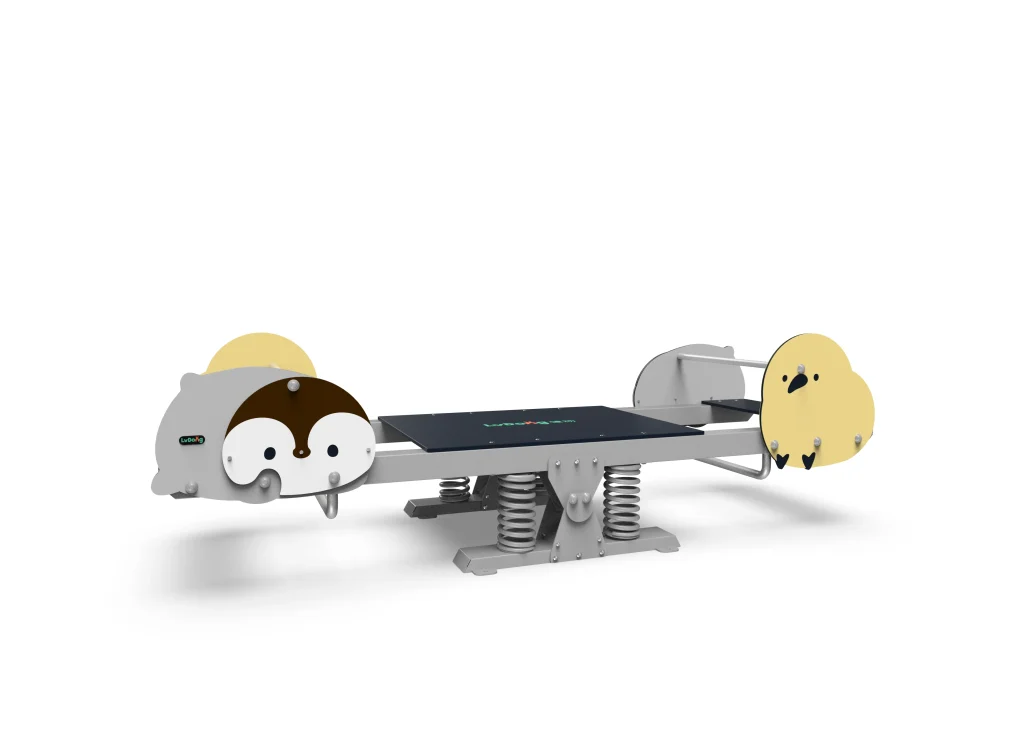
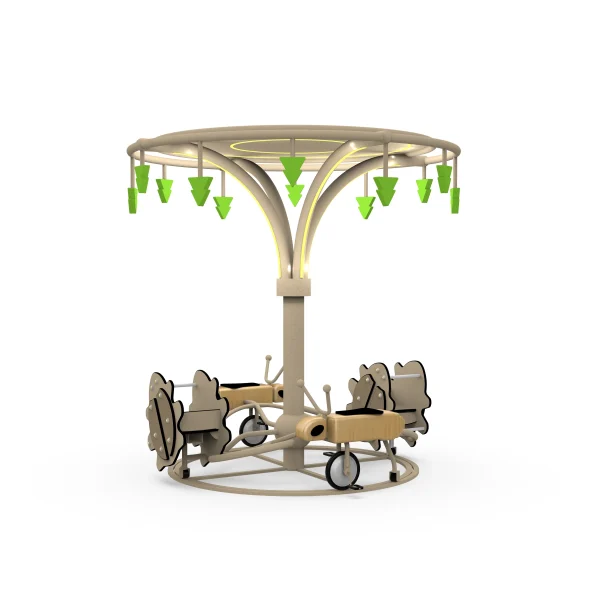
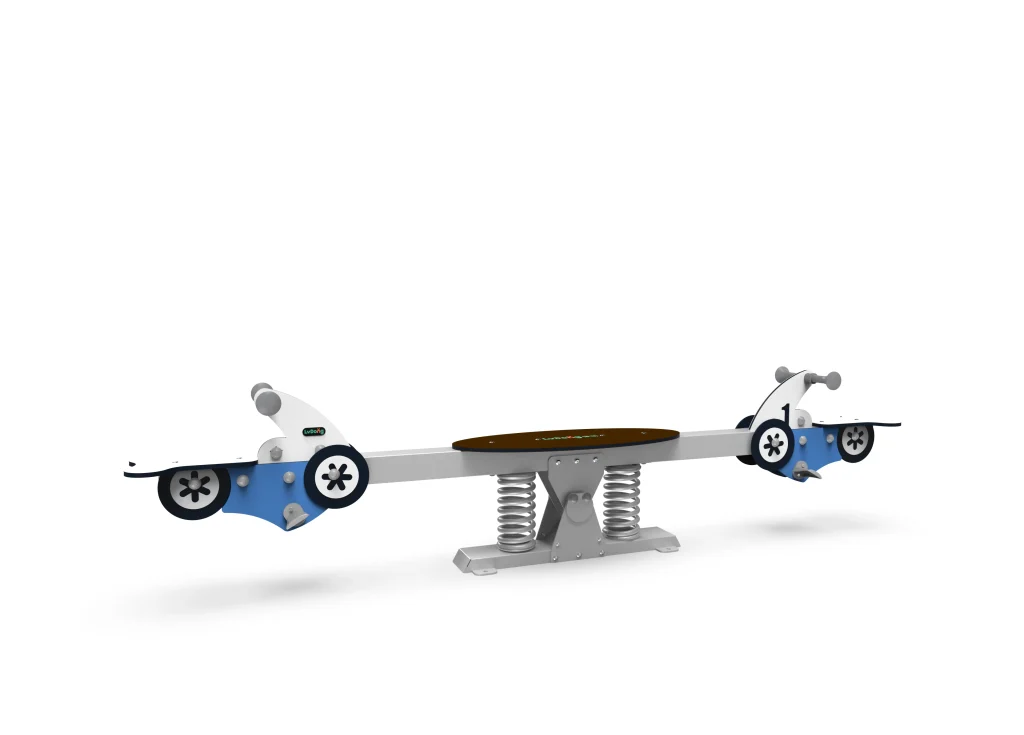
Spring riders and multi-person seesaws provide controlled motion that encourages balance and social play without requiring a long climb onto a cold structure. Multi-player spinning equipment can support short bursts of cooperative activity, but surfaces and hand grips need to remain tactile when children wear thicker gloves. Indoor family rooms are often part of the polar station; outdoor equipment should complement, not duplicate, those spaces. If a station has a bright indoor play room, the outdoor area can focus on open-ended physical play and sensory contrast.
| Equipment type | Best use in a polar family area | Low-sun consideration | Product parameter from LvDong library |
|---|---|---|---|
| Spring rider | Solo balance and controlled rocking | Bright seat and handgrip contrast | Suitable for 2+ or 3+ years; fall height 50 cm |
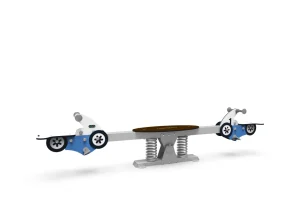
| Multi-person seesaw | Social play and cooperative movement | High-visibility seat edges | 2–10 children; fall height 60 cm |
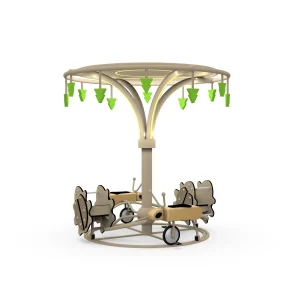
| Multi-player spinning wheel | Short-burst cooperative motion | Anti-slip platform texture | 6–10 children; fall height 55–77 cm |
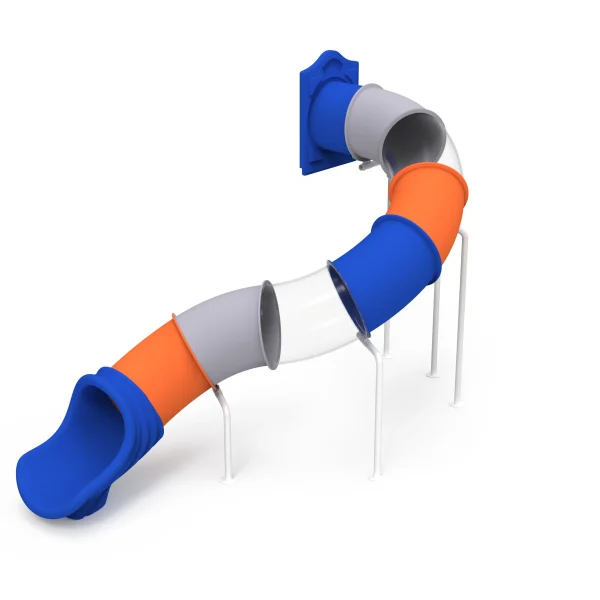
| Tunnel slide | Gross motor outlet | Interior visibility and exit contrast | Depends on selected slide model [3] |
Maintenance and Remote Logistics for Year-Round Operation
At a remote polar station, maintenance is a logistics problem as much as a technical one. Delivery windows are short, weather interruptions are frequent, and site staff may have limited time for inspections. The maintenance schedule should be built around the station calendar: pre-winter tightening and lubrication, mid-winter surface checks, and post-thaw structural inspection. Components that require frequent attention, such as bearings, chain-type swings, and rubber parts, should either be minimized or covered by a small on-site parts stock. Without that stock, a simple bearing issue can turn into a long downtime event because replacement parts cannot arrive quickly [1][5].
Polar stations need maintenance sequenced around pre-winter, mid-winter, and post-thaw windows because weather often blocks routine access. <Annual Maintenance Calendar for Outdoor Play Equipment A Guide> covers seasonal task ordering that can be shifted for cold-climate operation.
Remote sites have little room for inspection gaps, because small failures become larger when snow load and ice conceal the early warning signs. <Playground Equipment Safety Your Essential Self-Inspection Checklist> covers the pre-opening checks that matter before a polar family area reopens.
A polar station cannot afford to wait through a closed shipping window for a bearing or spring. <Optimizing Playground Equipment Spare Parts Lead Time and Stock> covers stocking logic for sites with long delivery intervals.
If you are replacing equipment on an existing polar playground, send inspection photos and the failed component list to [email protected]. A spare-parts and retrofit recommendation can be built around the station’s shipping windows.
Operational Specification Checklist for Polar Family Areas
- Confirm anchor depth and frost-heave strategy.
- Select cold-flexible plastics, rubber, and lubricants.
- Specify stainless fasteners and bearing housings at connection points.
- Mark high-contrast edges and play entries for low-sun visibility.
- Plan snow and ice removal without damaging protective surfaces.
- Stock foundation fasteners, bearing sets, and gloved-use handgrips.
- Schedule pre-winter, mid-winter, and post-thaw inspections per EN 1176-1 [1].
- Keep movement clearances within standard entrapment limits after cold contraction [2].
Plan Your Polar Station Family Area Around the Site’s Real Conditions
A polar family area works when the equipment matches the station’s temperature, light, and logistics profile. Avoid specifying by habit; instead use the cold-soak index, snow loads, and delivery windows as design inputs. Suzhou LvDong Amusement Equipment Co., Ltd. works with project teams on cold-climate equipment selection, material review, and phased delivery planning. For a project-specific review, send the following:
- Lowest sustained air and ground temperature data
- Snow drift and clearance method
- Outdoor area dimensions and fall-surfacing plan
- Planned installation window and shipping constraints
- Equipment capacity and age range needed
Contact: WhatsApp +8613915684545, email [email protected].
Frequently Asked Questions
What makes playground equipment suitable for extreme cold?
Cold-suitability comes from material behavior, connection design, and maintenance access. The equipment should be reviewed for thermal contraction, low-temperature stiffness, snow and ice accumulation, and whether fall surfacing remains effective through freeze-thaw cycles [1][2].
Can standard public playground equipment survive polar winter temperatures?
It depends on the materials and exposure. Some standard equipment can be made polar-ready, but joints, bearings, surfacing, and anchor details need cold-specific verification. Meeting EN 1176 or ASTM F1487 in a warm climate does not automatically confirm safe performance in sustained deep cold [1][2].
How does limited sun affect playground equipment?
Limited sun reduces ultraviolet fading but raises the importance of high-contrast markings and low-light visibility. Dark finishes may disappear into shadow, while bright yellow, orange, and blue generally remain more visible during long twilight periods [1].
What maintenance should be planned for a polar station family area?
Plan three shifts: pre-winter tightening and lubrication, mid-winter surface and fastener checks, and post-thaw structural inspection. Snow clearing and freeze-thaw cycles make regular checks more important than a spring-only routine [1][5].
Is indoor play equipment required in polar research stations?
Indoor family rooms are common because they provide reliable year-round play. Outdoor equipment can complement them by offering whole-body movement and sensory contrast, but it may need seasonal closure during severe storms or extended darkness [1].
References
[1] European Committee for Standardization. EN 1176-1:2017, Playground equipment and surfacing — Part 1: General safety requirements and test methods. CEN, Brussels, 2017.
[2] ASTM International. ASTM F1487-21, Standard Consumer Safety Performance Specification for Playground Equipment for Public Use. ASTM International, West Conshohocken, PA, 2021.
[3] European Committee for Standardization. EN 1176-3:2017, Playground equipment and surfacing — Part 3: Additional specific safety requirements and test methods for slides. CEN, Brussels, 2017.
[4] International Organization for Standardization. ISO 9227:2022, Corrosion tests in artificial atmospheres — Salt spray tests. ISO, Geneva, 2022.
[5] European Committee for Standardization. EN 1176-7:2008, Playground equipment and surfacing — Part 7: Guidance on installation, inspection, maintenance and operation. CEN, Brussels, 2008.
If you’re interested, check out these related articles:
Indoor Playground Design Consultation Your Project Blueprint
Small Space Solutions for Restaurant Childrens Play Areas
Top 10 Animal Spring Rider Designs for Modern Playgrounds
Outdoor Childrens Slides Age Grading 2-5 Versus 5-12
Playground Pony Spring Rider Dimensions for Ages 2-5