Music festival family camps combine two demanding operational modes. The campground must be welcoming enough for parents and young children, while still working as a controlled temporary venue from early morning until late evening. The play area is part of that same daily rhythm. Children arrive in waves, play for long stretches, and return after meals or performances; staff members need to inspect, clean, and secure the zone without a large maintenance crew. Overnight-durable playground equipment, therefore, means more than surfaces that can sit outside. It means equipment that can be staged quickly on grass, used heavily for several consecutive days, checked at low cost each morning, and packed down without damaging the venue.
What Makes Festival Family Camp Play Different
Most permanent playgrounds are planned around fixed foundations, a stable owner, and a known daily user pattern. A music festival family camp is different. The playground may sit on a festival field, a campground edge, or a temporary hard-standing area. It must coexist with tents, footpaths, food areas, and generator cable routes. The equipment also needs to remain stable on soft or uneven ground and stay safe when dew, dust, or light rain changes the surface during the night.
That does not mean festival equipment can be a lighter instructional version of a public playground. The CPSC Public Playground Safety Handbook treats protective surfacing, use zones, and equipment condition as interlocking safety elements [2]. The same logic should be applied to a festival site: the play zone needs a defined boundary, a protected entry path, and enough space around moving equipment so children do not spill into camp roads or tent lines. If planners treat the play area as a separate operational zone from the start, they usually avoid the worst congestion and sightline problems.
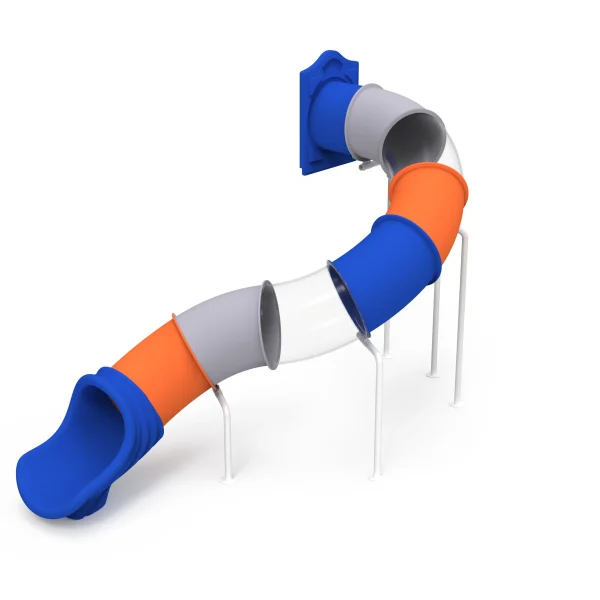
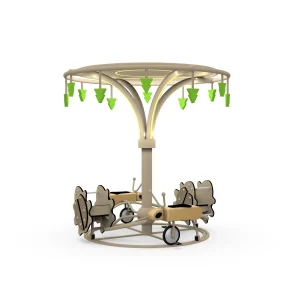
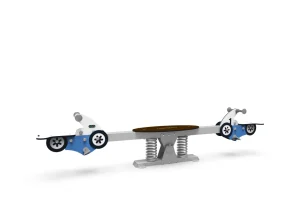
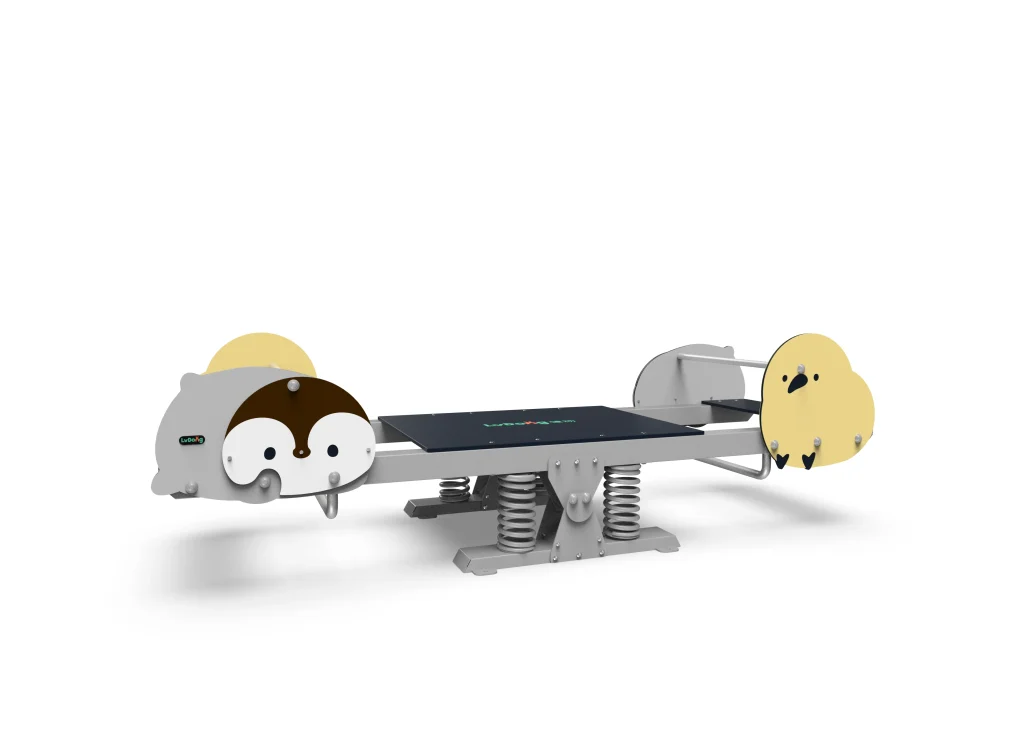
For planners still narrowing the equipment list, start with low-fall-height items and easy-anchor designs rather than large multi-deck structures. Compact spinners, spring riders, low seesaws, and short slides tend to be simpler to stage, inspect, and relocate. If you are comparing configurations for a specific festival site, send the plot shape, expected daily child count, and ground condition to Suzhou LvDong Amusement Equipment Co., Ltd. at [email protected] or WhatsApp +8613915684545 for a short-list matched to temporary use.
Material Selection for Overnight and Multi-Day Exposure
The first failure on an overnight festival site is usually not a broken deck or a cracked panel; it is a fastener, a bearing seat, or an open steel section that collects moisture. For multi-day use, look for closed tube ends, galvanized steel or powder-coated frames, sealed bearings, and stainless fasteners in high-contact areas. Open profiles may look acceptable at setup and then become gritty or corroded after one or two overnight cycles.
In humid, coastal, or rain-heavy festival locations, galvanized steel generally resists salt mist and continuous dampness better than untreated carbon steel. Powder coating adds a protective layer, but any chip should be treated promptly so moisture cannot work beneath the film. Plastic and rotational-molded parts should be UV-stabilized to prevent rapid fading or surface hardening under full-day sun. EN 1176-1 sets general safety requirements for playground equipment, including structural integrity, entrapment protection, and protrusion limits [1]. ASTM F1487-21 establishes similar safety expectations for public-use playground equipment in the United States [3].
When the camp includes mixed age groups, seat size and weight limits need to be specified as part of the layout rather than after delivery. A spring rider that is right for a five-year-old may not be suitable for a tall eight-year-old, and a double-seat design may create different supervision needs than a single-seat unit.
Seat size and weight limits shape how safely a spring rider works across mixed ages. <Single vs Double Seat Playground Horse Spring Riders A Comparison> covers how rider configuration changes age suitability and supervision.
Equipment Selection for Temporary Grass Fields
A temporary festival site shapes the selection in three ways: the equipment should have moderate fall heights, simple foundations, and limited hidden compartments where dirt can gather. The table below summarizes the main categories.
| Equipment type | Key specification points | Overnight durability focus |
|---|---|---|
| Spring riders | Weight rating, seat height, base plate, anchor points | Sealed spring base, protected fasteners, stable footing |
| Spinners | User capacity, deck height, handrail or grip position | Sealed bearings, anti-slip coating, drainage holes |
| Seesaws | Seat count, pivot damping, fall height | Pinch-point guards, rubber bumper, corrosion-resistant pivot |
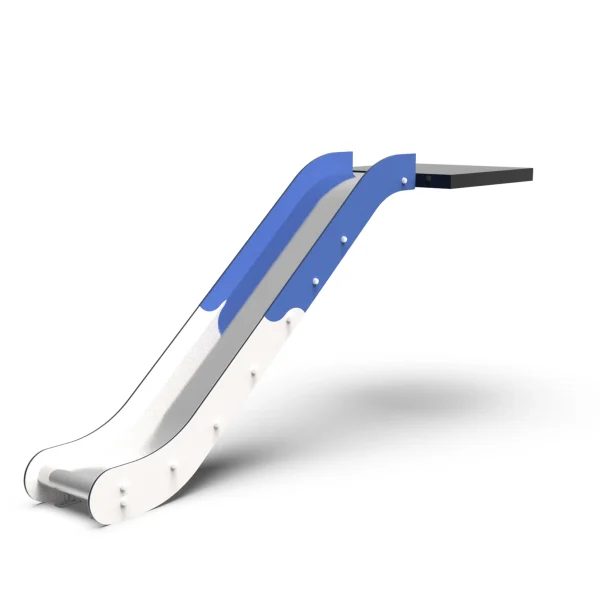
| Slides | Platform height, slide runout, material | UV-stable panels, heat-resistant surface, water drainage |
| Activity panels | Mounting height, graphic durability, sensory features | Sealed edges, tamper-resistant fasteners, cleanable face |
Unpowered equipment tends to match festival conditions because it does not depend on electrical supply, battery charging, or software updates. That reduces the number of items that need a technician during the event. However, moving parts still need daily attention. Spinner bearings can grind with fine dust, seesaw pivots can hold moisture overnight, and slide surfaces can become slippery with morning dew if the exit is shaded.
Anchoring, Fall Surfacing, and Site Protection
On a festival field, concrete footings are often restricted or impractical. Many temporary playground layouts use galvanized ground anchors, screw anchors, or weighted base frames when the manufacturer approves them for the equipment model. The anchor scheme should be selected for the expected wind load, rider movement, and soil type. A compact spinner that may be stable on dry clay can shift on loose fill or wet turf unless the base is secured correctly.
Fall protection is still required for temporary installations. Under EN 1176-1, equipment with a free height of fall above 600 mm requires impact-attenuating surfacing [1]. For CPSC-aligned projects, protective surfacing should be installed under and around equipment to reduce the risk of head injury, with the use zone based on fall height and movement [2]. Festival planners should bring enough surfacing to cover the full use zone, not only the shadow of the equipment, because children may step or fall outside the immediate footprint.
Daily Inspection, Cleaning, and Safe Close
A multi-day festival is not a one-time opening. The play area needs a morning inspection before families arrive, a light midday visual pass during peak use, and a closing check after the zone has emptied. Each check should confirm that anchors are firm, fasteners are tight, moving parts have not picked up grit or debris, guardrails are intact, and protective surfacing has not been kicked away from the fall zone. Non-abrasive cleaning is usually sufficient; harsh chemicals can damage coatings and panel graphics.
A multi-day festival is not the place to discover loose fasteners at closing time. <Playground Equipment Safety Your Essential Self Inspection Checklist> covers the daily checks that help volunteers catch issues before they become injuries.
EN 1176-7 provides guidance on installation, inspection, maintenance, and operation of playground equipment [4]. Even when a festival team follows a simpler checklist, that guidance can help establish a defensible routine for volunteer supervisors, security staff, and event operations leads. If an item is loose, unusually hot, cracked, or making a new noise, isolate it until a competent person can evaluate it.
Procurement and Strike Planning
Festival procurement should include pack-down as part of the specification, not as an afterthought. Ask the supplier for labeled hardware, touch-up materials, spare fasteners, anchor tools, and a sequenced installation and removal plan. Equipment that arrives in a single bundle without documentation may be fast to order but slow to correct if a part is missing at midnight before opening day.
Check whether the supplier can stage the equipment in the order it will be installed, mark components for each zone, and provide dimensional drawings for the fall surface and anchor layout. This matters because festival labor is often shared across many teams, and the crew installing the family camp may not be the same crew that removes it three days later.
For buyers handling multiple sites or cross-border delivery windows, a phased procurement plan reduces last-minute confusion around customs, freight, and site readiness. Ask the supplier for a sequenced timeline from container loading to site handover, and identify the acceptance checks that must happen before the festival opens.
Festival organizers often have fewer days to inspect and accept equipment than permanent site operators. <International Playground Equipment Procurement A Step by Step Guide> covers phased planning from specification through delivery and installation.
If your festival program needs compact, unpowered equipment that can be installed on grass, inspected quickly, and packed efficiently at the end of the event, share the site dimensions, expected daily child numbers, and the surface type with Suzhou LvDong Amusement Equipment Co., Ltd. The team can propose a lower-fall-height selection with matching anchor and surfacing details. Contact [email protected] or WhatsApp +8613915684545.
Ready to Plan a Festival-Ready Family Camp Zone?
A music festival family camp should feel dependable to parents while remaining practical for event operations. That balance comes from selecting equipment with the right materials, moderate fall heights, clear anchors, and an inspection routine that fits a short event window. A supplier who understands temporary installations can help you avoid the common failure points: soft-ground instability, poor drainage under rotation points, missing spare fasteners, and pack-down confusion.
When you are ready to move from site sketch to equipment schedule, send the following to Suzhou LvDong Amusement Equipment Co., Ltd.:
- A simple site plan showing the proposed family camp boundary and available play area
- The expected number of children per day and their age range
- The ground type, drainage condition, and whether concrete is allowed
- The number of event days and the required installation or removal window
- Any local standard, certification, or surfacing requirement that the equipment must meet
Contact [email protected] or WhatsApp +8613915684545 for a festival-specific equipment short-list, weight and foundation details, and lead-time confirmation.
Frequently Asked Questions
What is the difference between festival playground equipment and permanent playground equipment?
Festival equipment prioritizes mobility, moderate fall height, simple anchoring, and fast inspection. Permanent playgrounds are often built around fixed foundations and larger multi-deck structures. Temporary festival selection usually favors compact spinners, spring riders, low seesaws, short slides, and activity panels that can be packed and relocated after the event.
Can playground equipment stay outside overnight during a music festival?
Yes, if the materials and connections are designed for moisture and overnight exposure. Closed tube ends, sealed bearings, stainless fasteners, galvanized or powder-coated steel, and UV-stabilized plastic parts help prevent overnight corrosion, swelling, and surface degradation.
What fall surfacing is best for a temporary family camp?
The surfacing must match the fall height and the site conditions. Loose-fill systems can work on grass when contained and raked daily, while portable unitary mats may be easier to inspect and clean. CPSC guidance recommends protective surfacing under and around equipment [2], and EN 1176-1 requires impact-attenuating surfacing when the free height of fall is above 600 mm [1].
Can festival playground equipment be installed without concrete?
Many temporary installations use ground anchors, screw anchors, or weighted base frames instead of concrete. The chosen method must be approved for the equipment model, soil type, and expected loads. Concrete may still be needed for tall or heavily loaded structures.
How many inspections does a multi-day festival playground need each day?
At minimum, a morning check before opening and a closing check after use. A short midday visual pass is also wise during peak hours. Each inspection should cover anchors, fasteners, moving parts, guardrails, and protective surfacing.
References
[1] European Committee for Standardization, EN 1176-1:2017, Playground equipment and surfacing — Part 1: General safety requirements and test methods. Brussels, Belgium: CEN, 2017.
[2] U.S. Consumer Product Safety Commission, Public Playground Safety Handbook, Pub. No. 325. Bethesda, MD: CPSC, 2015.
[3] ASTM International, ASTM F1487-21, Standard Consumer Safety Performance Specification for Playground Equipment for Public Use. West Conshohocken, PA: ASTM, 2021.
[4] European Committee for Standardization, EN 1176-7, Playground equipment and surfacing — Part 7: Guidance on installation, inspection, maintenance and operation. Brussels, Belgium: CEN.
If you’re interested, check out these related articles:
Playground Slides Buying Guide Height Slope and Critical Safety
Playground Turntable Safety EN1176 vs ASTM Standards Unpacked
Factory Visit Checklist Outdoor Playground Equipment Quality
Playground Slide Materials LLDPE vs 304 Steel Performance
To discuss festival camp equipment layouts, contact the LvDong team with your project requirements.