Stadium family sections sit inside one of the tightest play environments in the industry. A concourse is not a park: it has fixed egress widths, food concession queues, and large crowds moving in short pulses. The right play equipment has to deliver a real movement break without creating a bottleneck or a hidden fall zone. This guide covers compact equipment selection, safety surface planning, accessibility, and maintenance for stadium concourses and concession areas.
Why Stadium Concourse Space Acts Differently From a Park
On game day, the same corridor that holds a concession line at halftime may be packed before kickoff. A concourse play zone must respect accessible routes, staff circulation, and emergency egress. Equipment that looks small can still require a much larger impact area once fall height and surfacing are calculated. Under EN 1176 and ASTM F1487, the safety surface is defined by the equipment’s free height of fall and the possible fall zone [1][2].
Because concourses are often indoors or semi-covered, the surface transition is also a design factor. A raised play pod must not create a trip edge or collect spilled drinks. The best approach is to draw the invisible safety envelope, not just the product footprint, before approving any layout.
Concourse play zones rarely have the full open run available in a park, so the visible footprint is only half the decision. Space Saving Cantilever Swing Set Design for Urban Play Environments covers layouts that reduce required width and depth while preserving safe movement.
Compact Equipment Choices for Family Concourses
Four product families fit concourse applications more easily than large composite structures: single-player spinners, spring riders, wall-mounted play panels, and low-profile slide elements.
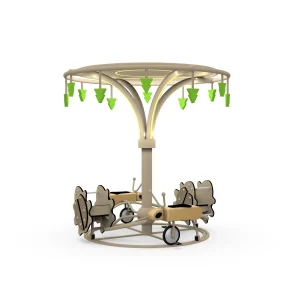
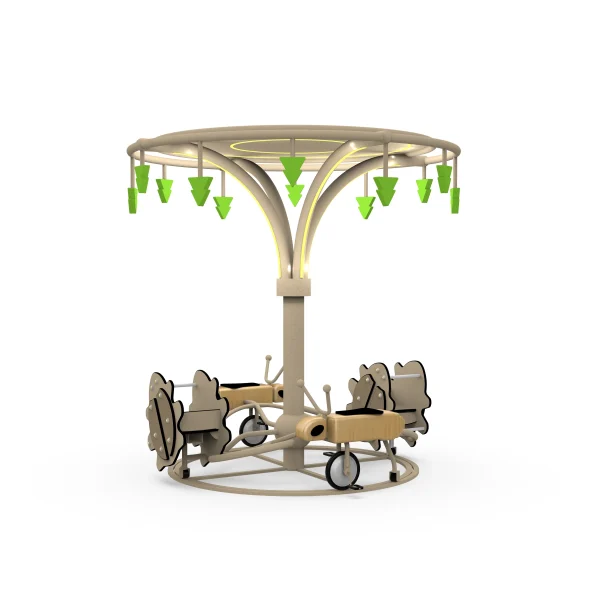
For example, a single-player spinning unit can have a footprint of about 60 cm × 60 cm and a maximum falling height around 34 cm. That keeps the required safety surfacing compact while still allowing vestibular and balance play. Spring riders with lengths under 1 m and fall heights around 50 cm also fit queue-adjacent corners. Wall-mounted panels use almost no floor area and can be positioned at accessible reaching heights.
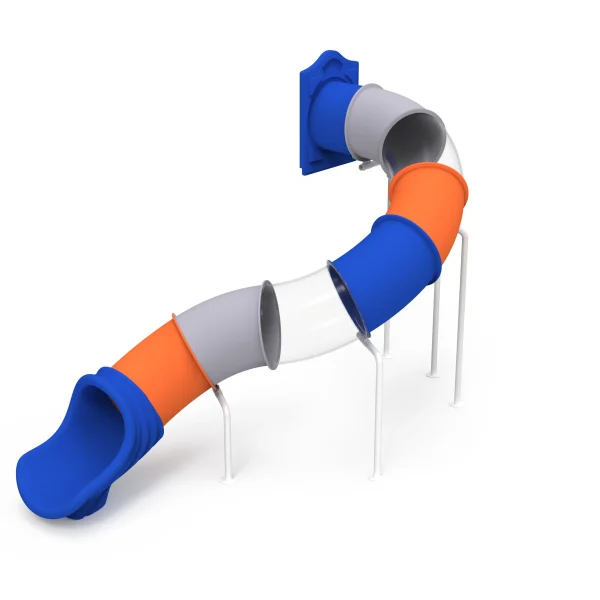
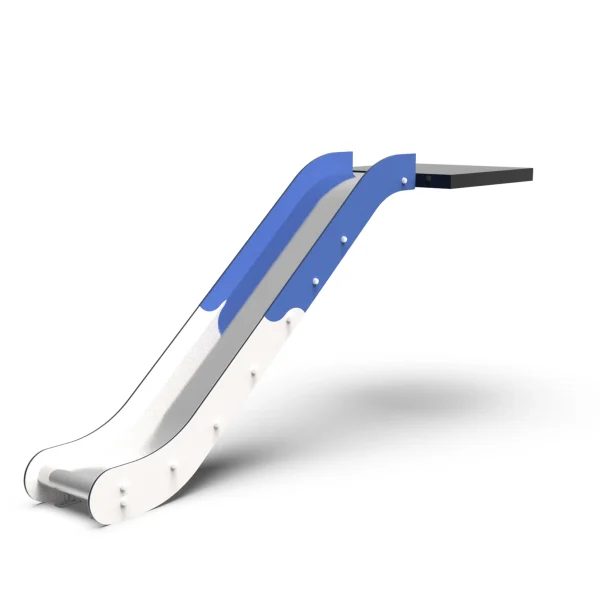
If a slide is desired, a low curved or short tunnel slide integrated into a family lounge generally works better than a tall freestanding slide in the main concourse. The slide should discharge away from concession queues and into a defined runout buffer.
If your concourse width is fixed, send a dimensioned plan before selecting equipment. LvDong’s design team can check fall zones, egress clearances, and anchor points for the specific models under consideration. Contact [email protected] or WhatsApp +8613915684545 for a layout review.
Fall Zones, Surfacing, and Supervision
Lower fall heights reduce both the surfacing depth and the total impact area required. ASTM F1487 and EN 1176 approach fall protection through tested impact attenuation and controlled head and limb entrapment openings [1][2].
In a stadium, this engineering matters twice. A product with a 34 cm fall height can sit on a smaller engineered surface than a tall modular unit, and it is easier to supervise from queue lines and seating areas. Specify surfacing to the tested fall height of the installed product, not a generic rule. If the area serves younger children, keep the zone visible across the full play cycle.
Accessible routes are not optional. Under U.S. ADA Standards, play areas served by public facilities must provide an accessible route to the play area and clear floor space at ground-level components [3]. In practice, that means a stable, slip-resistant path to at least one play element rather than placing equipment in an isolated carpeted corner.
Flow, Concessions, and Cleaning
Concessions create spills, crumbs, and sticky hand contact. The play zone should use sealed, cleanable surfaces: rotomolded plastic, stainless steel hardware, and powder-coated frames with no open seams or water traps. Interactive panels near food service need to handle repeated wet wiping and should be positioned away from direct drink lines unless enclosure ratings are specified for the cleaning environment.
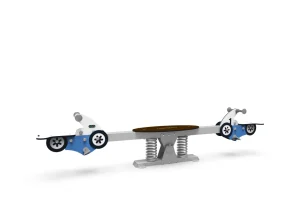
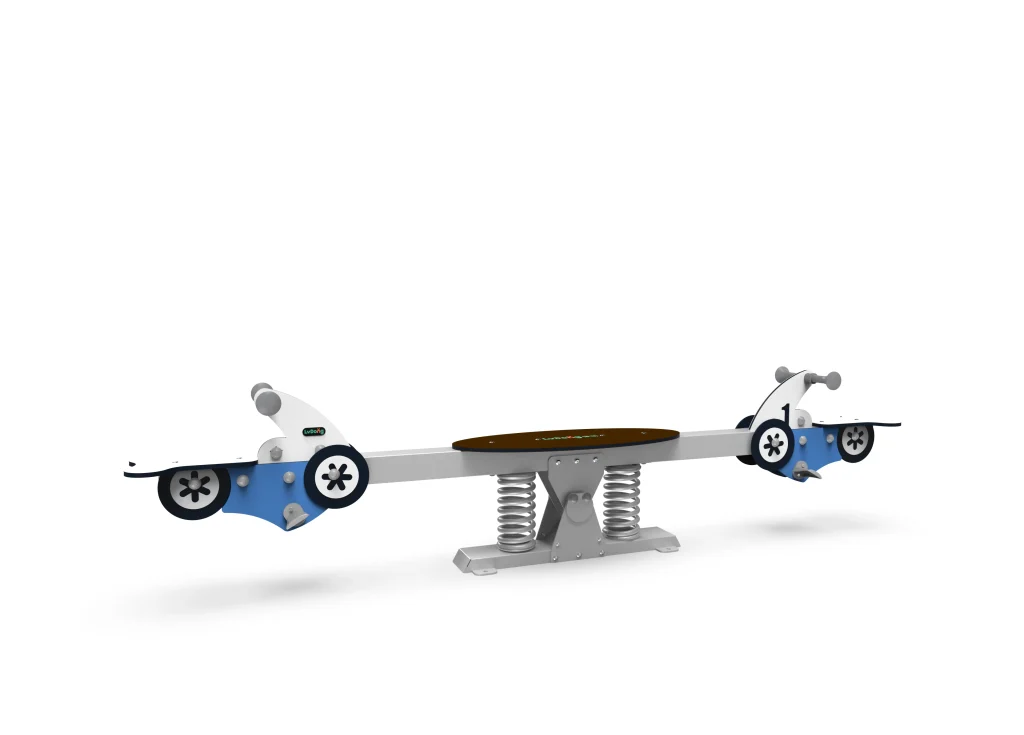
Play loops in concourses should be short and self-limiting. Single-child spinners and spring rockers produce predictable cycles, while wall panels allow a child to finish and move on. Multi-child seesaws can work in family lounges, but they need more depth and a supervised buffer away from the main pedestrian stream.
Stadium Maintenance and Spare Parts
High-traffic stadium equipment sees more cycles in one event weekend than many park installations see in a month. Daily tightening checks, cleaning of hand contact surfaces, and inspection of moving parts should be written into event operations. When a part fails, the operator needs access to the original bearing, spring, or panel component quickly.
Stadium teams cannot wait through long lead times when a popular play element is down. Optimizing Playground Equipment Spare Parts Lead Time and Stock covers practical stock planning for high-use playground installations.
Plan Your Stadium Family Section With the Right Support
Stadium projects benefit from a drawing-led process. A to-scale plan should mark concourse depth, column lines, swing clearances, queue paths, and the closest service corridor. That plan becomes the test for every product before purchase.
Drawing first prevents the common mistake of buying equipment that fits the floor but not the required safety zone. Free 3D Design for Community Park Playground Equipment Solutions covers 3D layout reviews that catch circulation and surfacing conflicts before installation.
For a site-specific layout, send the scaled concourse plan, expected peak crowd and age mix, required safety standards, and any concession adjacency or egress constraints. LvDong will prepare a dimensioned 3D design and a no-obligation quotation. Contact [email protected] or WhatsApp +8613915684545.
Frequently Asked Questions
How much floor area does a stadium concourse play zone need?
The zone must include the equipment footprint, the required impact surface, and a clear approach path. Low-fall-height equipment such as spinners and spring riders typically requires less total area than a tall modular slide.
Can play equipment be placed next to food concessions?
Yes, when the surfaces are sealed, cleanable, and free of food traps. Position the equipment so slide exits and rocking movements discharge away from drink queues, and specify panels or components that tolerate wet wiping and cleaning agents.
What standards govern stadium play equipment?
Playground equipment should meet the applicable market requirements, typically EN 1176 or ASTM F1487, along with accessibility and local building or egress standards. Request current test reports and confirm the fall height and surfacing requirements for each installed item.
How do you keep a concourse play area accessible without blocking egress?
Use a stable, slip-resistant accessible route to at least one ground-level component, keep the required egress width clear, and avoid raised lips or loose mats. Wall panels and low-profile single-child units are usually the most compatible with accessible concourse circulation.
What maintenance does high-traffic stadium equipment need?
Daily visual inspection, sanitization of hand contact surfaces, and periodic tightening checks are the baseline. Moving parts should receive monthly attention, and an annual structural review should verify anchors, fasteners, surfacing, and wear items.
References
- EN 1176-1:2017. Playground equipment and surfacing — Part 1: General safety requirements and test methods. European Committee for Standardization. https://standards.cencenelec.eu/
- ASTM F1487-21. Standard Consumer Safety Performance Specification for Playground Equipment for Public Use. ASTM International. https://www.astm.org/f1487-21.html
- U.S. Access Board. ADA Accessibility Standards. https://www.access-board.gov/ada/
If you’re interested, check out these related articles:
Eco Friendly Playground Equipment SGS REACH RoHS Standards Explained
Child Development Benefits Playground Spinning Toy Impact
Weatherproof Play Panels Material Durability Comparison
To discuss your stadium family-zone layout, contact the LvDong team with your project requirements.