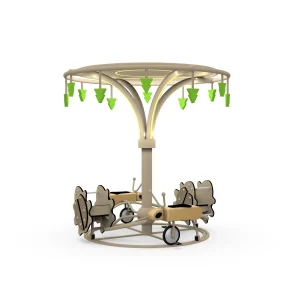
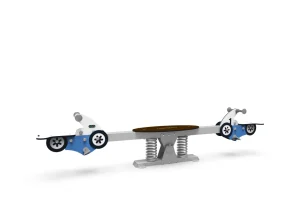
Grandchild visits transform quiet retirement community grounds into active intergenerational spaces. A seesaw or spinner quickly becomes the center of a short, high-emotion play session, but it also introduces fall, entrapment, and collision risk when selected as an afterthought. The goal is not to build a full public playground; it is to create a compact, observable play edge where grandchildren can burn energy and grandparents can stay close without entering high-impact movement zones.
In a retirement community, the equipment profile should look different from a school playground. Low fall height, stable seating, graspable handrails, predictable motion, and clear supervision lines matter more than maximum height or high-speed features. The safety envelope is defined by EN 1176-1 for equipment and impact surfacing [1], ASTM F1487 for public-use equipment [3], and the CPSC Public Playground Safety Handbook for layout and use zones [2].
Why Retirement Communities Need Purpose-Built Grandchild Visit Spaces
A retirement community playground is not usually a destination playground. It is a visit amenity: used for 20 to 45 minutes, often by one family at a time, sometimes by several families during holidays or open-house events. The equipment must stay quiet enough for neighboring residences, compact enough for courtyard and garden settings, and low enough to keep a seated grandparent within easy conversation distance.
Equipment that works well in a municipal park may be too large or too fast for this setting. A tall multi-level structure creates supervision gaps. A high-speed spinner may exclude grandparents from close interaction because they must stand back from the use zone. By contrast, low-fall-height seesaws, spinners, and spring riders create a defined movement boundary that adults can watch from an adjacent bench, path, or shaded seat.
The physical activity also supports broader health goals. The Physical Activity Guidelines for Americans recommend that children get regular active play through the day [5]. When retirement communities provide a safe, attractive movement option, they make grandchild visits more successful without turning the entire grounds into a high-maintenance play area.
Design Principles for Intergenerational Play Areas
A retirement community play edge should be organized around four principles: supervised adjacency, low fall height, predictable motion, and accessible approach.
Supervised adjacency means adult seating is placed close enough for clear sight and conversation, but outside the required use zone around moving equipment. CPSC guidance recommends a use zone extending at least 1.8 m (6 ft) in all directions from equipment [2]. Benches, planter walls, and shade structures belong outside that envelope, not inside it.
Low fall height reduces both the severity of falls and the depth of safety surfacing required. For seesaws and spinners, choosing equipment with the lowest practical fall height simplifies site preparation and makes the area feel less imposing for older adults.
Predictable motion is especially important for intergenerational play because grandparents often become the de facto supervisors, even when they are not participating directly. Spring-assisted seesaws, damped teeter-totters, and spinner designs with mechanical speed control are easier to supervise than free-pivoting equipment with jarring stops.
Accessible approach means a firm, stable route connects the retirement community walkway to the play edge. The ADA Standards require accessible routes to ground-level play components and, in many public settings, to elevated play areas [4]. Even where full accessibility is not legally triggered, an accessible surface makes the space usable for grandparents who use wheelchairs, walkers, or canes.
Seesaw Configuration for Mixed-Age Visits
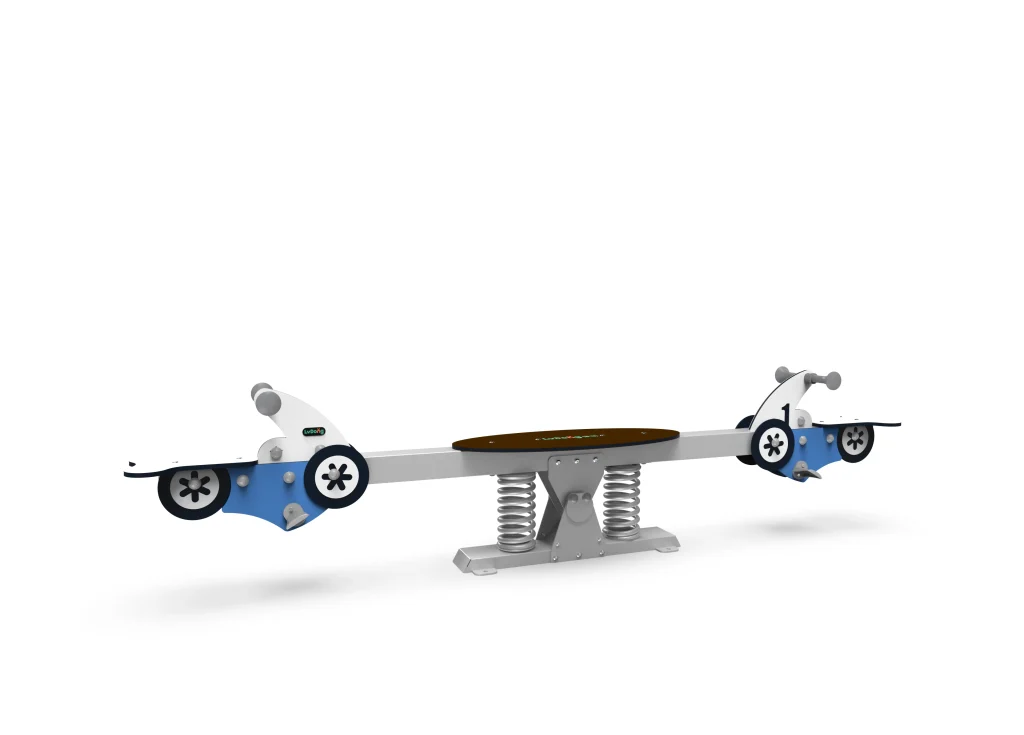
For grandchild visits, a multi-person seesaw or spring-assisted teeter-totter is often a better fit than a traditional high-pivot seesaw. The smoother, controlled up-and-down motion reduces the jarring impact that can frighten young children and make adults uneasy. EN 1176-6 sets additional safety requirements for rocking and seesaw-type equipment, including handgrip and seat stability considerations [6].
Look for seating that provides back support or deep side guard panels, especially for children aged three to six. Handrails should be easy to grasp from a seated position, and the pivot or spring base should limit sudden rebound when one child exits. A well-designed multi-person seesaw allows two or more children to share the movement, which is useful when siblings visit together.
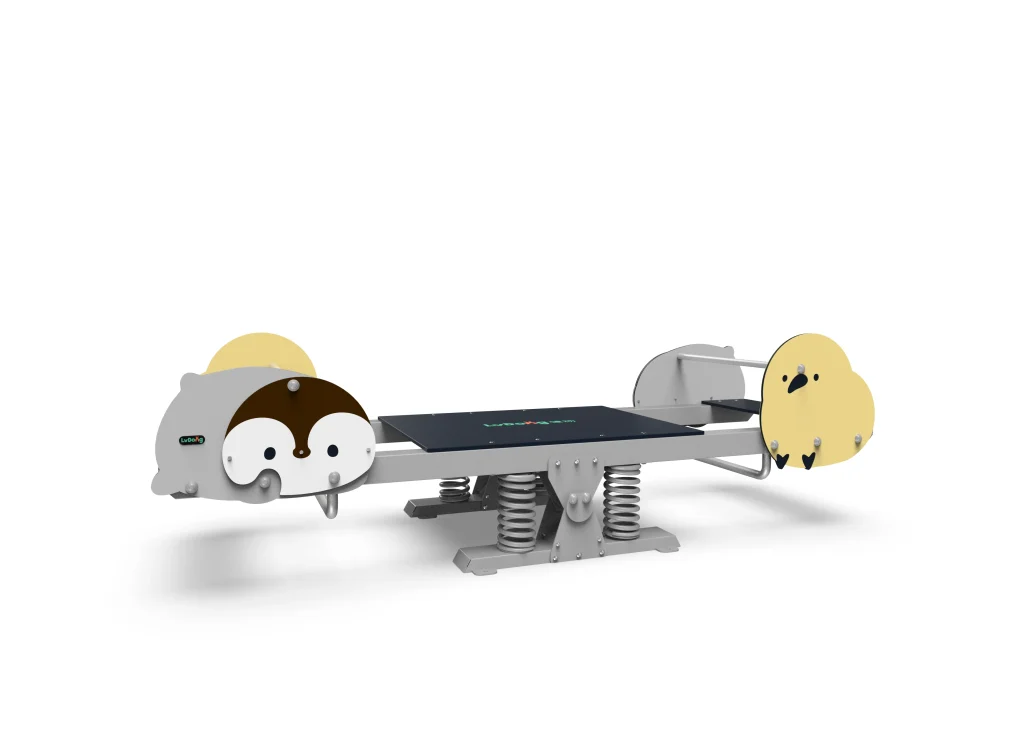
The product profile below shows the general range for seesaw and related equipment suitable for retirement community settings.
| Equipment type | Suitable age range | User capacity | Maximum fall height | Intergenerational note |
|---|---|---|---|---|
| Multi-person outdoor seesaw / teeter-totter | 3+ years | 2–10 children | 60 cm | Controlled spring-assisted motion; choose models with handrails |
| Multi-player playground spinning wheel | 2+ to 6+ years | 6–10 children | 55–77 cm | Stable platform spinner; verify speed control |
| Single-player playground spinning equipment | 2+ years | 1 child | 34 cm | Compact low-fall-height option for small courtyards |
| Spring playground equipment / outdoor spring rider | 2+/3+ years | 1 child | 50 cm | Single-user rocking; good for younger grandchildren |
Spinner Selection: Controlled Motion and Low Fall Height
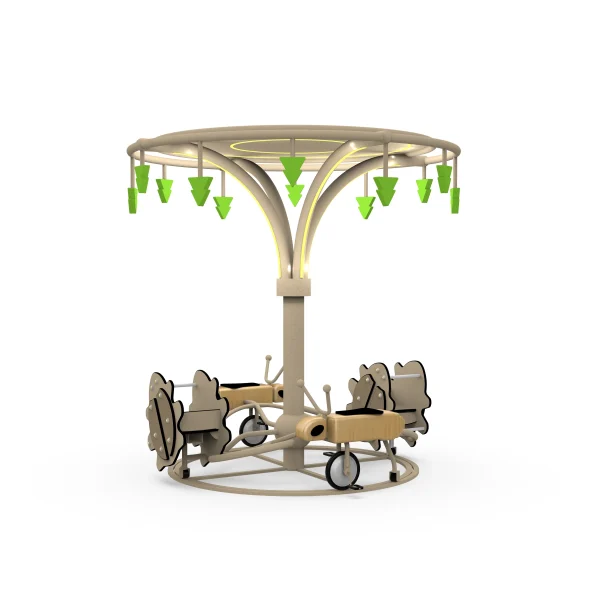
Spinners offer high play value in a small footprint, which makes them useful for retirement communities with limited green space. The key selection questions are not only diameter and capacity, but also how motion is controlled and how high the standing or seated platform sits.
A low-platform spinner with a center handrail or perimeter grips allows children to hold on while pushing or being pushed. EN 1176-1 requires equipment design to limit hazards such as crushing, shearing, and unintentional high-speed movement [1]. Speed governors, frictional resistance, or weighted base designs help prevent the sudden acceleration that can lead to dizziness or falls.
For mixed-age visits, choose spinners that can accommodate both seated and standing users, or specify a seated spinner for the youngest grandchildren. If older grandchildren are likely to push, a heavier base and controlled rotation are safer than a light, freely spinning disc. Adult grandparents generally should not climb onto children’s spinners unless the equipment is expressly designed for adult use; the better pattern is to keep adults on the edge of the use zone where they can speak, guide, and watch.
Surfacing, Use Zones, and Accessible Routes
Impact-attenuating surfacing beneath seesaws and spinners should match the fall height of the selected equipment. Engineered wood fiber, rubber tiles, poured-in-place rubber, and rubber mulch each have different depth requirements depending on fall height. CPSC guidance identifies minimum use zones around equipment and recommends protective surfacing in those zones [2]. The surfacing should extend across the full use zone, not just under the visible footprint of the equipment.
For retirement communities in hot climates, surface temperature also matters. A spinner platform facing full afternoon sun can become uncomfortable even when the structural temperature is safe. Shade sails, tree canopy, or site orientation should be part of the design conversation early, not added after installation.
An accessible route from the main visitor gathering area to the play edge should be at least 915 mm (36 in) wide in most public settings, with stable, slip-resistant surfacing [4]. This supports grandparents who use mobility devices and also makes it easier to push strollers or carry young grandchildren to the play area.
Project inquiry note: If you are comparing equipment for a specific courtyard, garden, or entry plaza, send the site dimensions, age profile, and surfacing type to [email protected]. That helps route the inquiry toward a layout review rather than a generic product list.
Site Layout and Supervision Sight Lines
Place equipment where a seated grandparent can see the child’s face during active play. Avoid placing a spinner behind a dense hedge, a masonry wall, or a large planter. Low plantings are fine; tall visual barriers are not. The CPSC handbook highlights the value of clear supervision because many playground injuries are associated with activities that caregivers cannot easily see [2].
The play edge should be separated from vehicle movement, service areas, and building entrances. Even though retirement communities often have low traffic speeds, a play area should not sit between a drop-off circle and a main door. A natural buffer or low fence helps keep grandchildren from wandering toward hardscape or parking.
For multi-building campuses, locate the visit play space near a central garden, resident lounge, or family event room. This encourages use without forcing equipment into private resident patios or narrow side yards where noise and sight-line conflicts are more likely.
Operators balancing price and long-term performance when selecting mixed-age equipment should compare structural materials and warranty coverage. <Playground Equipment Balancing Price and Quality for Lasting Value> covers procurement factors that protect multi-year retirement community budgets.
Installation, Acceptance, and Maintenance
Seesaws and spinners need secure anchoring. Seesaw and spring-based equipment should be installed on firm footings that resist uplift and repeated lateral movement. Rotating equipment requires level bases and properly torqued fasteners; even small movement can accelerate wear on bearings and pivots.
After installation, the equipment should be checked before the first grandchild visit. Acceptance tests should include surface depth, use-zone clearances, handrail security, fastener torque, and moving-part operation. A structured acceptance pass helps identify issues that are easier to correct before residents begin using the area.
Maintenance should be seasonal, with more frequent checks when equipment is used heavily during summer visits or holiday periods. Moving parts on seesaws and spinners should be inspected for lubrication, debris, and wear markers. Loose fasteners, degraded rubber bumpers, cracked seats, and worn bearing seals should be corrected promptly.
For communities that already own seesaws and spinners, lifecycle planning changes replacement timing and budget confidence. <Annual Maintenance Calendar for Outdoor Play Equipment A Guide> covers seasonal inspection tasks that keep intergenerational fixtures safe.
For a safer opening, surfacing and anchoring issues should be caught before the first visit. <12 Critical Post Installation Acceptance Tests for Playgrounds> covers checks that align with intergenerational safety requirements.
Plan the Visit Space With a Low-Fall-Height Focus
Start with a site sketch, the likely age range of visiting grandchildren, and a realistic visitation pattern. Select low-fall-height seesaws and spinners that fit within the available green space, then plan surfacing, seating, and shade around them. The result should feel like a welcoming garden edge, not a fenced-off playground island.
For specification support or a layout review, contact Suzhou LvDong Amusement Equipment Co., Ltd. by email at [email protected] or on WhatsApp at +8613915684545. Include the project timeline, the retirement community visitation pattern, and whether older adult seating, wheelchair access, or shade coverage is required. If the space is under 200 square meters, request a compact layout review so the equipment works with the site rather than against it.
Frequently Asked Questions
What makes a seesaw intergenerational for retirement community visits?
A suitable seesaw has a low fall height, controlled spring-assisted motion, handrails or side supports, and a stable base. These features reduce sharp jarring and make the movement easier for a seated grandparent to supervise from nearby.
Are low-fall-height spinners suitable for grandchildren of different ages?
Yes, when the spinner is selected for the youngest likely user. Low-platform spinners with speed control, handrails, and stable rotation work for mixed ages, but the supervising adult should set clear rules about pushing speed and seated versus standing use.
What surfacing is best beneath seesaws and spinners?
Impact-attenuating surfacing should match the fall height of the equipment. Engineered wood fiber, rubber tiles, poured-in-place rubber, or rubber mulch can work, provided the depth and maintenance follow CPSC guidance for the measured fall height [2].
How much clear space should be left around intergenerational equipment?
The minimum use zone around equipment should extend at least 1.8 m (6 ft) in all directions, based on CPSC playground guidance [2]. Benches and shade structures should sit outside that perimeter to keep the movement space clear.
How should retirement communities plan for maintenance and inspections?
Plan for seasonal inspections, with additional checks after peak visit periods. See equipment should be examined for uplift, loose fasteners, cracked seats, and bearing wear. Spinners should be checked for debris, lubrication, and speed-control function before each high-use season.
References
[1] CEN. EN 1176-1:2017 Playground equipment and surfacing — Part 1: General safety requirements and test methods. European Committee for Standardization, Brussels, 2017.
[2] U.S. Consumer Product Safety Commission. Public Playground Safety Handbook, Publication No. 325. Bethesda, MD, 2015.
[3] ASTM International. ASTM F1487-21 Standard Consumer Safety Performance Specification for Playground Equipment for Public Use. West Conshohocken, PA, 2021.
[4] U.S. Access Board. ADA Accessibility Standards for Play Areas. 2010. https://www.access-board.gov/ada/
[5] U.S. Department of Health and Human Services. Physical Activity Guidelines for Americans, 2nd edition. Washington, DC, 2018.
[6] CEN. EN 1176-6:2017 Playground equipment and surfacing — Part 6: Additional specific safety requirements and test methods for rocking equipment. European Committee for Standardization, Brussels, 2017.
If you’re interested, check out these related articles:
Factory Visit Checklist Outdoor Playground Equipment Quality
Effectively Compare Playground Equipment Suppliers Services
Weatherproof Play Panels Material Durability Comparison
DIY vs Supplier Playground Equipment Installation Guide
Small Space Solutions for Restaurant Childrens Play Areas
To discuss play-area planning for grandchild visits, contact the LvDong team with your project requirements.